
Health
Heatwaves Across Europe Raise Alarms Over Worker Safety Amid Lack of Unified Protections


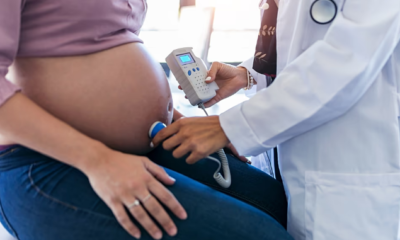









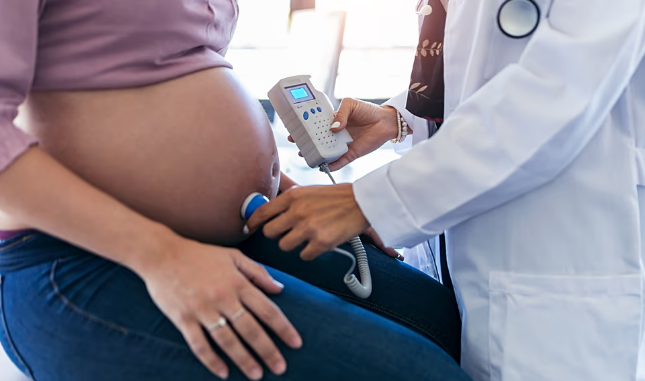
Children born with certain infections acquired during pregnancy face substantially higher risks of autism and intellectual disability later in life, according to a study of more than 3.7 million people in Sweden.
Researchers found that children with congenital infections were about three times more likely to be diagnosed with autism and more than seven times more likely to receive a diagnosis of intellectual disability than those without such infections.
The findings suggest that infections transmitted from a pregnant woman to her foetus may have lasting effects on brain development, although the study identifies an association rather than proving that the infections directly cause autism or intellectual disability.
The research focused on TORCH infections, a group that includes syphilis, rubella, toxoplasmosis, cytomegalovirus and herpesvirus. These infections can cross the placenta and affect the developing foetus, potentially increasing the risk of miscarriage, stillbirth and other pregnancy complications.
“Although these congenital infections are rare, some of them can be prevented, which makes them important from a public health perspective,” said Reneé Gardner of the Department of Global Public Health at Karolinska Institutet, who contributed to the study.
The researchers examined people born in Sweden between 1987 and 2021 and followed them for up to 30 years. Among the 3.7 million participants, 975 had been diagnosed with a congenital TORCH infection.
Although congenital infections accounted for only a small proportion of autism cases across the population, the risk among affected children was considerably higher. The researchers estimated that about one in five children born with a TORCH infection could later develop autism.
The study also found elevated risks of intellectual disability across different levels of severity. The risk of severe to profound intellectual disability was as much as 30 times higher among children with a congenital infection than among those without one.
The researchers found evidence of an impact on educational outcomes even among people who were not diagnosed with autism or intellectual disability. A total of 420 participants with a TORCH infection showed poor school performance without receiving either diagnosis.
Congenital cytomegalovirus, or CMV, is the most common of these infections globally and affects roughly one in 150 newborns. Its burden is substantially greater in low- and middle-income countries.
The researchers said the findings highlight the importance of prevention, particularly in regions where these infections are more common. They pointed to vaccination programmes and other preventive measures as important tools for reducing congenital infections.
They also called for improved identification of affected newborns. Current screening systems, including those used in Sweden, may miss asymptomatic infections because universal screening for TORCH infections is not routinely carried out.
The authors said stronger screening and prevention strategies could help identify children at risk earlier and improve long-term support and care.

Artificial intelligence chatbots may make faster and more confident decisions than human doctors when determining which patient should receive a life-saving kidney transplant, but a new study found that the systems often rely on fewer factors and show less sensitivity to the ethical complexity of such choices.
Researchers from Penn State University in the United States compared decisions made by large language models (LLMs) with choices made by people in earlier studies on kidney allocation. The researchers presented AI models with hypothetical cases based on existing datasets in which human participants had previously chosen between two patients competing for a single available kidney.
The patients were described using characteristics including age, health and drinking habits. Both were considered eligible for the transplant, requiring the decision maker to determine which patient should receive the available organ.
The researchers tested the AI systems in several ways. Some scenarios focused on individual characteristics, while others combined several traits to examine how the models handled competing considerations. In some tests, participants and AI systems were also given the option of flipping a coin, allowing researchers to assess indecision as part of moral decision-making.
Human participants generally placed greater importance on age, often favouring younger patients over older patients. Many of the AI models, however, placed greater weight on lower alcohol consumption.
Hadi Hosseini, the study’s lead researcher at Penn State University, said the findings showed that AI chatbots can diverge from human values when weighing characteristics of patients.
The researchers found that human decisions tended to consider several factors together and were more sensitive to context. LLMs, by contrast, frequently focused on a single characteristic when making their choices.
Another difference involved uncertainty. Human participants were more likely to recognise that organ allocation can involve competing ethical considerations and that there may not be one objectively correct answer. AI models generally showed little hesitation and committed to one choice.
John Dickerson, chief executive officer of Mozilla.ai and a collaborator on the study, said humans recognise ambiguity when allocating scarce resources and use debate to shape how such decisions are made.
The findings come as AI systems are increasingly being used in healthcare for clinical workflows, diagnosis, treatment planning and decisions involving limited medical resources.
The researchers said kidney allocation presents a particularly important test because decisions over deceased-donor and living-donor organs involve medical, ethical and moral considerations.
Hosseini said the ethical stakes are high because decisions involving organ allocation can directly affect patients’ lives. He stressed that the study was not intended to encourage replacing professional medical judgment with AI.
Instead, the researchers said understanding how AI systems behave in high-stakes situations is becoming increasingly important as individuals, organisations and businesses use AI to make decisions or provide recommendations.

Health authorities in Frankfurt have warned residents and people working near the city’s airport to seek medical advice if they develop an unexplained fever after six malaria cases were reported in the city since July.
Two of the cases have been fatal, while two additional infections have recently been identified in the Schwanheim district, which is located close to Frankfurt Airport. The city’s public health authority is investigating whether the latest cases are connected.
Several of the recent infections have involved airport employees. Authorities suspect that mosquitoes capable of transmitting malaria may occasionally arrive in Germany on aircraft travelling from regions where the disease is widespread. If the insects survive and later bite people, they can potentially transmit the infection.
Malaria is a tropical disease transmitted through the bite of an infected mosquito. It is not normally spread directly from one person to another.
Frankfurt’s health authority said early diagnosis is important because malaria can initially resemble common illnesses such as influenza or a cold. Typical symptoms include fever, chills, headaches, pain in the limbs and gastrointestinal problems.
The Robert Koch Institute has warned that these symptoms can sometimes be mistaken for flu-like illnesses or stomach infections. The most dangerous form of the disease is malaria tropica, caused by the Plasmodium falciparum parasite. Without prompt diagnosis and treatment, it can become life-threatening.
People who live, work or spend significant amounts of time near Frankfurt Airport have been advised to consult a doctor if they develop unexplained fever. They should tell medical staff that they live or have recently spent time in the area around the airport.
The city’s public health authority is also providing information through a telephone hotline, available from 9am to 6pm on 069/212-30030.
Residents can take measures to reduce the risk of mosquito bites by using insect repellents and wearing clothing that covers the skin. Insect nets can also provide protection. Repellents containing DEET or icaridin are among the products recommended by Germany’s Federal Foreign Office.
Cases of so-called airport malaria remain rare in Germany. Research cited by the Robert Koch Institute indicates that more than 99% of malaria cases recorded in Europe are acquired in endemic regions outside the continent.
Between 1969 and early 2024, databases recorded 145 malaria cases in which patients were infected within Europe. More than two-thirds were classified as airport malaria. France recorded 52 cases, Belgium 19 and Germany nine, including eight in Frankfurt and one in Munich.
The two people recently infected in Frankfurt’s Schwanheim district are receiving hospital treatment, according to the city authorities.
The latest cases have prompted renewed attention to the possibility of malaria transmission in areas surrounding international airports, particularly when unexplained fever occurs without a recent trip to a malaria-endemic country.

Congenital Infections Linked to Higher Risks of Autism and Intellectual Disability

Spain’s Housing Market Faces Growing Pressure as Big Landlords Expand

Oxfam Calls for Reform of France’s Dutreil Pact to Raise Billions

Volkswagen Removed From Euro Stoxx 50 After Profit Warning

French Diesel Prices Hit Record as Middle East War Drives EU Fuel Costs Higher

Volvo Cars Names Škoda Chief Klaus Zellmer as Next CEO


US Embassies Warn Americans of Rapidly Escalating Middle East Conflict

Baby Essentials Cost Thousands of Euros Across Europe, Study Finds

Global Survey Finds Growing Concern Over AI-Driven Job Losses

Meta Acquires Tilda Swinton VR Doc ‘Impulse: Playing With Reality’

China’s Historic Olympic Victory Sparks National Pride Amid Controversy

Saudi Arabia’s Model for Sustainable Aviation Practices

Recent Developments in Small Business Taxes

Effective Drain Cleaning: A Key to a Healthy Plumbing System

Who was Ebrahim Raisi and his status in Iranian Politics?

Keely Hodgkinson Wins Britain’s First Athletics Gold at Paris Olympics in 800m

Carrectly: Revolutionizing Car Care in Chicago

Nobel Laureate Muhammad Yunus Proposed as Head of Bangladesh’s Interim Government Following Hasina’s Resignation

Chinese Hackers Infiltrate Major U.S. Telecom Firms in Possible National Security Breach

Sony WF-10XM4: Headphones Are Our Absolute Favorite

10 Places You Can’t Miss If It’s Your First Time in European

New Census Data Will Shake Up Alabama Politics

16 Top of Our Favorite Outdoor Clothing Brands

Fashionable Summer Accessories to Dress Up Your Travel Look

How Sleeping Less than 7 Hours a Night Can Lead to Weight Gain
-
 Entertainment2 years ago
Meta Acquires Tilda Swinton VR Doc ‘Impulse: Playing With Reality’
-
 Sports2 years ago
China’s Historic Olympic Victory Sparks National Pride Amid Controversy
-
 Business2 years ago
Saudi Arabia’s Model for Sustainable Aviation Practices
-
 Business2 years ago
Recent Developments in Small Business Taxes
-
 Home Improvement2 years ago
Effective Drain Cleaning: A Key to a Healthy Plumbing System
-
 Politics2 years ago
Who was Ebrahim Raisi and his status in Iranian Politics?
-
 Sports2 years ago
Keely Hodgkinson Wins Britain’s First Athletics Gold at Paris Olympics in 800m
-
 Business2 years ago
Carrectly: Revolutionizing Car Care in Chicago