
Tech
Iranian Missiles Breach Israeli Defences, Sparking Questions Over Effectiveness of Missile Shield


As Iranian missile strikes continue to penetrate Israeli airspace, a renewed focus is falling on the country’s sophisticated aerial defence systems, developed with extensive U.S. support. On Thursday, several Iranian projectiles struck a major hospital in southern Israel and hit residential areas in the centre of the country, raising fresh concerns about the resilience of Israel’s multi-layered defence array.
Since fighting began on June 13, Iranian missile attacks have killed at least 24 people in Israel, according to government figures. The strikes have also destroyed homes, infrastructure, and public buildings in multiple regions, including urban population centres thought to be heavily shielded by Israel’s missile defence systems.
While Israeli officials insist that interception rates remain high, they acknowledge the system is not impenetrable. Military sources point to the sheer volume of simultaneous launches as a major factor — overwhelming even the most advanced radar and targeting systems. Despite its sophistication, the country’s defence architecture, which relies on both automated tracking and human decision-making, can be overrun during mass barrages.
Israel’s missile defence system operates on a tiered basis:
Arrow System
Co-developed with the United States, the Arrow system is designed to intercept long-range ballistic missiles, such as those fired by Iran and the Houthis in Yemen. The system operates in outer space and has been deployed multiple times during the current conflict.
David’s Sling
Targeting medium-range threats, David’s Sling is another Israeli-American collaboration. It is particularly suited to defend against missiles from Hezbollah in Lebanon and has seen repeated use in recent months.
Iron Dome
Perhaps the most widely known of Israel’s defence tools, the Iron Dome is designed to counter short-range rockets and artillery shells. In service since the early 2010s, it has recorded thousands of interceptions, including during the current confrontations with Hamas and Hezbollah. Israel claims a success rate exceeding 90 per cent.
Iron Beam
A potential future game-changer, Iron Beam is Israel’s laser-based interceptor still under development. Officials say it promises to be significantly more cost-effective, with interceptions costing only a few dollars — compared to roughly $50,000 for Iron Dome and up to $2 million for Arrow or David’s Sling. Although field tests have been conducted over the past 20 months, Iron Beam is not yet fully operational.
As the missile threat grows in intensity and complexity, defence analysts warn that no shield is invulnerable. Israel’s current system is being tested under unprecedented pressure — raising the stakes for both its technological innovation and strategic military posture.







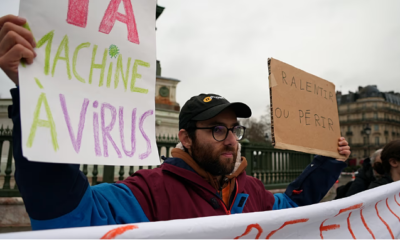



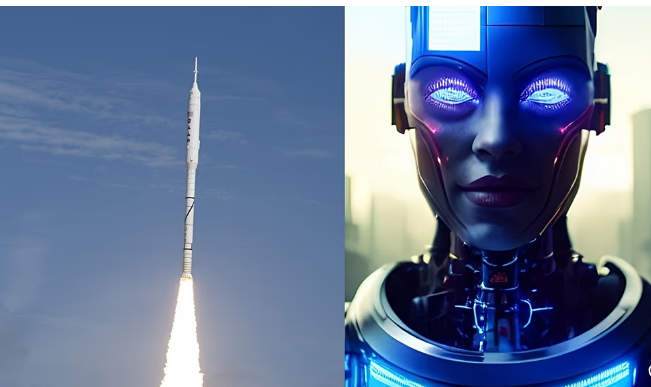
The malicious use of artificial intelligence and nuclear conflict are among 17 major threats to global health that could put humanity at risk of extinction by 2100, according to a new assessment published in The Lancet.
The study, conducted by the Lancet Commission on 21st-century global threats to health, examines risks ranging from nuclear war and antimicrobial resistance to climate change, pandemics, income inequality, obesity, tobacco use and mental health problems.
The commission brings together 37 experts in health, economics, security and technology. Researchers assessed the potential impact of the threats across 204 countries and territories between 2025 and 2100, using disability-adjusted life years, or DALYs, to estimate the loss of healthy human life.
The measure accounts for years lost through premature death and years lived with illness or disability. The researchers used best-case and worst-case scenarios to examine how much harm each threat could cause and how preventive action might reduce the consequences.
The estimated burden across the 17 threats ranges from 1.02 billion to 23.1 billion DALYs. For comparison, the COVID-19 pandemic caused an estimated 500 million DALYs. Obesity represents the largest cumulative burden that could potentially be reduced through intervention.
The researchers warned that nuclear conflict could cause widespread destruction beyond the immediate effects of weapons, including nuclear famine resulting from the disruption of food production and supply. The malicious use of AI could also create severe dangers, including the development or deployment of biological weapons.
The commission stressed that the assessment is not intended to rank threats or prescribe a fixed order for government action. Instead, it provides a framework for understanding their potential effects, recognising that the findings will change as new evidence emerges.
The experts said the threats are closely connected and require coordinated responses rather than separate efforts focused on individual problems. They called for a comprehensive approach based on scientific evidence, human rights and international solidarity.
One key recommendation is for governments to build health systems capable of responding quickly to major emergencies. The COVID-19 pandemic demonstrated the importance of preparedness, adequate resources and effective coordination when confronting a global crisis.
The commission also urged greater investment in potentially transformative technologies, including nuclear fusion, carbon removal and vaccines, which could help address climate change, infectious diseases and other major risks.
Regular monitoring and updated risk assessments are another priority. The researchers recommended sharing findings with international bodies, including the United Nations and the G20, to encourage governments to cooperate before emerging threats develop into full-scale crises.
According to the commission, the current competitive approach to tackling global challenges is limiting the prospects for effective action.
The findings were presented on Sunday at the World Health Summit in Berlin, Germany. The assessment is due to be updated annually to reflect new evidence, changes in existing risks and the emergence of additional threats.
The researchers said early action could help governments limit the potential damage and reduce the likelihood of the worst-case scenarios identified in the report.

Denmark is set to introduce legislation on Thursday that would prohibit the sharing of realistic deepfakes depicting people’s faces or voices without their consent, as governments around the world seek to address the growing risks posed by artificial intelligence.
The proposed amendment to Denmark’s copyright law would give people greater control over digital versions of their appearance and voice. The protections would apply to ordinary individuals as well as artists whose performances could be digitally copied or manipulated.
Deepfakes are digitally generated or altered images, videos and audio designed to make people appear to say or do things they did not. They have increasingly been used to spread false information, damage reputations and create humiliating or abusive material.
Denmark’s Culture Minister Zenia Stampe said the technology allows manipulated content to be produced and distributed on social media with little effort.
One of the government’s key aims is to ensure that major technology companies remove harmful manipulated material quickly, reducing the potential damage to people targeted by such content.
The legislation follows a broad political agreement reached in June 2025 under the previous Danish government. That agreement was aimed at protecting people from unauthorised digital imitations.
The proposed rules would not impose a blanket ban on digitally altered content. Exceptions would cover satire, parody, caricature and criticism of politicians, institutions and society.
Those protections would not apply where misinformation creates serious risks to other people’s rights, essential interests, lives or property.
The Danish government hopes the legislation will come into force at the beginning of 2027.
The move comes as countries and international institutions introduce new measures to address the misuse of synthetic media.
EU member states covered by the bloc’s directive on violence against women must implement the legislation by June 14, 2027. It requires countries to criminalise the creation of sexually explicit manipulated material and its subsequent public distribution without the consent of the person depicted when the material is likely to cause serious harm.
Denmark is not bound by that directive because it has an opt-out from EU justice and home affairs rules.
France already prohibits the distribution of AI-generated images or audio depicting another person without consent when the artificial nature of the material is not obvious or clearly disclosed. French law also prohibits the non-consensual sharing of sexual deepfakes regardless of whether they are labelled as manipulated.
In England and Wales, creating or requesting non-consensual intimate deepfakes became a criminal offence in February. Sharing such material can result in a prison sentence of up to two years.
Denmark’s proposed law would add to a growing set of national measures aimed at giving individuals greater protection as increasingly realistic digital impersonations become easier to create and distribute.

Artificial intelligence agents that can perform tasks on behalf of users were a major focus at the Google Cloud Summit in Doha, as Qatar expands its efforts to train workers and test new AI applications.
The technology is moving beyond generative AI, which produces text, images and answers in response to prompts. AI agents are designed to take additional steps independently to complete specific tasks, creating new opportunities for businesses while raising questions about oversight and the future of work.
Alex Rutter, managing director of Google Cloud’s artificial intelligence business across Europe, the Middle East and Africa, said generative AI is primarily used to create new content through large language models. Agentic AI, by contrast, can be used to carry out processes after receiving instructions.
Rutter cited invoice reconciliation as an example. An AI agent could check information on an invoice against payment and supplier records before a payment is approved. Such repetitive work involving multiple databases could be suitable for automation, he said.
Greater autonomy also increases the need for safeguards. Rutter said Google currently recommends keeping a person involved in reviewing the results produced by AI agents. Instead of checking every piece of data, employees could focus on exceptions identified by the systems.
The level of human oversight would depend on the nature of the task and the risks an organisation is prepared to accept. In fields such as medicine, Rutter said AI should assist clinicians rather than replace their decisions.
The Doha summit also marked three years since Google Cloud opened its cloud region in Qatar. The company announced a new national training programme with Qatar Digital Academy that is expected to provide more than 50,000 learning opportunities in the country by 2030.
The programme will target several groups, including workers, executives and software developers, as Qatar seeks to expand its pool of people with skills needed to use and manage AI technologies.
Ghassan Kosta, Google Cloud’s regional general manager for Qatar, Oman, Bahrain and Iraq, said the company was expanding its services to support the growing demands of agentic AI. He said data centre infrastructure would need to develop alongside advances in AI.
Qatar’s Ministry of Communications and Information Technology also announced an innovation lab developed with Google Cloud. The facility will allow AI projects to be tested before they are deployed more widely.
Amna Al-Kaabi, head of emerging technologies at the ministry, said the partnership was intended to connect technology experiments with practical needs in different sectors and help projects progress from early testing to real-world applications.
The increasing ability of AI systems to perform tasks is also prompting questions about employment. Rutter said it was difficult to predict the pace of change, but suggested that managing AI agents could become a responsibility for some workers.
He said future workplaces could include employees managing people, AI agents or both, although businesses are still determining which tasks can safely and effectively be assigned to autonomous systems.

France Considers Exit Tax on Crypto Gains and €10,000 Fine for Undeclared Wallets

Portuguese Teenagers Report Lower Drug and Alcohol Use, but High-Risk Behaviour Persists

Lancet Study Warns AI Misuse and Nuclear War Could Threaten Humanity by 2100

Spanish Police Clear Ceuta’s Last Migrant Camp Ahead of Royal Visit

Macron to Push ‘Made in Europe’ Agenda at Final Paris Motor Show Visit

Scientists Warn of Possible Major Rockslide at Germany-Austria Border Mountain

EU May Need to Cut Gas Consumption by 7% This Winter as Reserves Hit Record Low

Russian Escalation Raises Questions Over EU’s €90 Billion Ukraine Support Plan

Teacher Salaries Across Europe: Germany Leads as Major Pay Gaps Persist

Etihad Airways and flydubai Cancel Saudi Flights After Riyadh Airport Attacks

Meta Acquires Tilda Swinton VR Doc ‘Impulse: Playing With Reality’

China’s Historic Olympic Victory Sparks National Pride Amid Controversy

Saudi Arabia’s Model for Sustainable Aviation Practices

Recent Developments in Small Business Taxes

Effective Drain Cleaning: A Key to a Healthy Plumbing System

Who was Ebrahim Raisi and his status in Iranian Politics?

Keely Hodgkinson Wins Britain’s First Athletics Gold at Paris Olympics in 800m

Carrectly: Revolutionizing Car Care in Chicago

Nobel Laureate Muhammad Yunus Proposed as Head of Bangladesh’s Interim Government Following Hasina’s Resignation

Chinese Hackers Infiltrate Major U.S. Telecom Firms in Possible National Security Breach

Sony WF-10XM4: Headphones Are Our Absolute Favorite

10 Places You Can’t Miss If It’s Your First Time in European

New Census Data Will Shake Up Alabama Politics

16 Top of Our Favorite Outdoor Clothing Brands

Fashionable Summer Accessories to Dress Up Your Travel Look

How Sleeping Less than 7 Hours a Night Can Lead to Weight Gain
-
 Entertainment2 years ago
Meta Acquires Tilda Swinton VR Doc ‘Impulse: Playing With Reality’
-
 Sports2 years ago
China’s Historic Olympic Victory Sparks National Pride Amid Controversy
-
 Business2 years ago
Saudi Arabia’s Model for Sustainable Aviation Practices
-
 Business2 years ago
Recent Developments in Small Business Taxes
-
 Home Improvement2 years ago
Effective Drain Cleaning: A Key to a Healthy Plumbing System
-
 Politics2 years ago
Who was Ebrahim Raisi and his status in Iranian Politics?
-
 Sports2 years ago
Keely Hodgkinson Wins Britain’s First Athletics Gold at Paris Olympics in 800m
-
 Business2 years ago
Carrectly: Revolutionizing Car Care in Chicago