
News
Russian Escalation Raises Questions Over EU’s €90 Billion Ukraine Support Plan

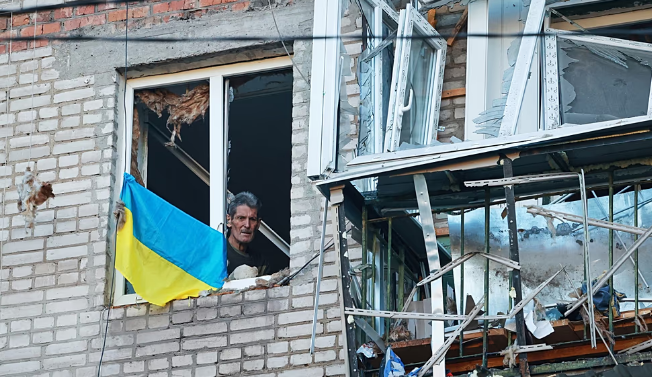
Russia’s intensified attacks on Ukraine are raising doubts about the European Union’s financial support strategy, as Kyiv faces mounting economic damage, growing military needs and a significant funding shortfall for 2027.
European diplomats acknowledge that the war is likely to continue longer than previously expected, putting pressure on the bloc to reconsider how it will finance Ukraine’s defence and public services in the coming years.
“This war will last longer than we thought,” one European diplomat said, warning that Ukraine’s needs would continue to grow without a clear agreement on how additional assistance would be funded.
Another diplomat said the EU needed to demonstrate that its position remained unchanged, maintaining support for Ukraine while increasing pressure on Moscow.
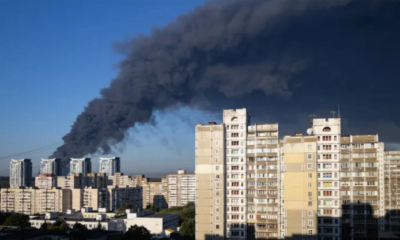
Russian attacks have struck infrastructure, including railways, bridges, power stations, warehouses, medical facilities, schools and data centres. Recent strikes have killed civilians, including more than 30 people in Kramatorsk after a glide bomb attack set two public buses on fire, according to reports cited by Euronews.
Kyiv also suffered a major power disruption, raising concerns about the impact of further attacks as winter approaches. Ukrainian President Volodymyr Zelenskyy condemned the bombardment, describing it as terror against civilians, while European Commission President Ursula von der Leyen said the attacks amounted to war crimes.
The escalation is also damaging Ukraine’s economy. Repeated airstrikes have disrupted businesses, forced closures, increased costs and reduced profits. Russia’s blockade in the Black Sea has added to the pressure by restricting Ukrainian farmers’ ability to export grain, cutting off an important source of national income.
The worsening situation has placed the EU’s €90 billion support loan under scrutiny. Agreed last year, the package was intended to cover about two-thirds of Ukraine’s financial needs in 2026 and 2027, based on expectations that the war could end this year.
Ukraine’s Finance Minister Sergii Marchenko has warned that preparing the 2027 budget will be particularly difficult. Kyiv estimates it needs international assistance to address a funding gap of $78 billion, equivalent to about €70 billion.
The European Commission has not endorsed that full estimate, but Economy Commissioner Valdis Dombrovskis acknowledged on Friday that Ukraine faced a substantial shortfall. Brussels plans to provide €45 billion next year under the existing loan and has promised faster payments, subject to domestic reforms.
EU leaders have yet to formally reopen discussions on additional assistance, as member states negotiate the bloc’s next long-term budget. However, diplomats expect the issue to return to the agenda amid rising borrowing costs, sluggish economic growth and opposition from far-right parties.
The absence of US aid, previously a major source of military support, has further complicated the outlook.
Some EU countries have renewed calls to use frozen Russian assets to finance Ukraine, arguing that the existing loan will not be sufficient. Belgium, which holds much of the immobilised assets, has resisted the proposal, while France and Italy remain cautious.
Issuing more joint EU debt is also politically difficult because of rising borrowing costs. Increasing national contributions could place a disproportionate burden on Germany, the Netherlands and Nordic countries.
Brussels is therefore urging allies, including the United Kingdom, Canada and Japan, to increase their support while officials examine alternative funding options.
Dombrovskis said the EU remained committed to ensuring Ukraine received the financial assistance it needed for as long as the war continued.
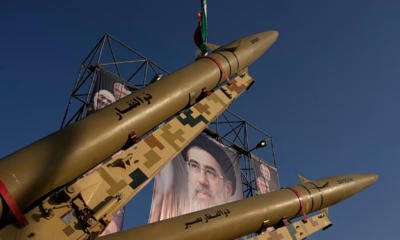







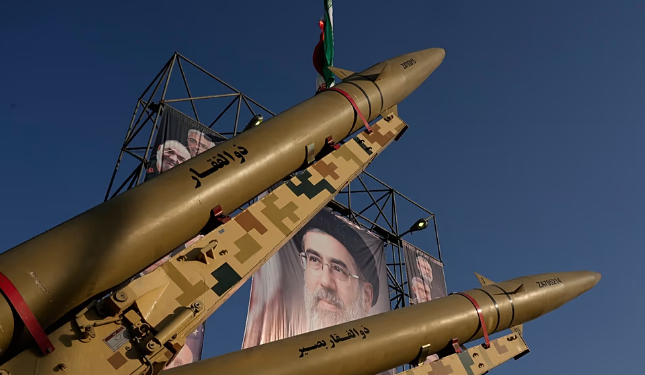
Iran’s military said it retained full control of the Strait of Hormuz on Monday, while Foreign Minister Abbas Araghchi said the strategic waterway could be fully reopened within seven days if Tehran’s conditions were met and hostile measures against the country were lifted.
The statements came as Iran faced growing economic pressure, with the rial falling to record lows, Oil Minister Mohsen Paknejad resigning and the United States claiming that Tehran had not loaded any crude onto tankers during September.
Brigadier General Aziz Jafari, commander of Iran’s Khatam al-Anbiya Joint Air Defence Headquarters, said all movements through the Strait remained under the control of the Iranian armed forces despite changes in US tactics.
“All movements (in Hormuz) are under the control of the armed forces of the Islamic Republic,” Jafari said.
US Treasury Secretary Scott Bessent said on Thursday that Iran had not loaded crude oil onto tankers during September, arguing that the Trump administration was targeting Tehran’s main source of revenue.
Iranian President Masoud Pezeshkian acknowledged in August that restrictions were disrupting oil exports, saying the country had previously been able to sell oil but was now unable to do so at the same level.
Paknejad’s resignation was officially attributed to family and personal matters. However, his departure came amid speculation about the impact of reduced oil exports on government finances. Before his resignation was announced, Paknejad said in a video carried by Iranian media that revenue from oil already sold would be collected and that the process would continue.
The acting oil minister has pledged to maximise production and maintain exports through new strategies.
Despite pressure on Iranian exports, oil shipments from other parts of the region remained high. Ship-tracking company Kpler estimated crude exports from the region excluding Iran at between 19.5 million and 22.5 million barrels per day during the final week of September, compared with a pre-war regional average of about 18 million barrels per day.
Iran’s currency has also come under severe pressure. The euro rose above 300,000 tomans on the informal market, while the US dollar reached 270,000 tomans, more than double its level of about 135,000 tomans at the beginning of the year. One toman is equal to 10 rials.
The UK Maritime Trade Operations agency reported at least one attack each day in the Strait of Hormuz or the Gulf of Aden since October 2.
Araghchi told foreign ambassadors in Tehran that the conflict could not be resolved militarily and called for negotiations based on fairness. He warned that any renewed military confrontation would trigger a stronger Iranian response.
Parliament Speaker Mohammad Bagher Ghalibaf said Tehran had received US proposals through intermediaries but rejected what he described as one-sided demands.
He said the Strait would remain closed until Iran’s seven conditions, based on the Islamabad memorandum, were met.

EU May Need to Cut Gas Consumption by 7% This Winter as Reserves Hit Record Low

Russian Escalation Raises Questions Over EU’s €90 Billion Ukraine Support Plan

Teacher Salaries Across Europe: Germany Leads as Major Pay Gaps Persist

Etihad Airways and flydubai Cancel Saudi Flights After Riyadh Airport Attacks

EU Agrees to Expand Financial Markets Watchdog Powers to Boost Cross-Border Investment

Paris Motor Show Opens Amid Rising Chinese Competition and Pressure on European Carmakers

Plague Fears Return After Russian Death, but Europe Faces Very Low Risk

Samsung Profit Soars as AI Chip Demand Drives Record Results

Denmark Moves to Ban Sharing of Realistic Deepfakes Without Consent

Moonshot AI Targets 2027 Hong Kong IPO as DeepSeek Funding Race Intensifies

Meta Acquires Tilda Swinton VR Doc ‘Impulse: Playing With Reality’

China’s Historic Olympic Victory Sparks National Pride Amid Controversy

Saudi Arabia’s Model for Sustainable Aviation Practices

Recent Developments in Small Business Taxes

Effective Drain Cleaning: A Key to a Healthy Plumbing System

Who was Ebrahim Raisi and his status in Iranian Politics?

Keely Hodgkinson Wins Britain’s First Athletics Gold at Paris Olympics in 800m

Carrectly: Revolutionizing Car Care in Chicago

Nobel Laureate Muhammad Yunus Proposed as Head of Bangladesh’s Interim Government Following Hasina’s Resignation

Chinese Hackers Infiltrate Major U.S. Telecom Firms in Possible National Security Breach

Sony WF-10XM4: Headphones Are Our Absolute Favorite

10 Places You Can’t Miss If It’s Your First Time in European

New Census Data Will Shake Up Alabama Politics

16 Top of Our Favorite Outdoor Clothing Brands

Fashionable Summer Accessories to Dress Up Your Travel Look

How Sleeping Less than 7 Hours a Night Can Lead to Weight Gain
-
 Entertainment2 years ago
Meta Acquires Tilda Swinton VR Doc ‘Impulse: Playing With Reality’
-
 Sports2 years ago
China’s Historic Olympic Victory Sparks National Pride Amid Controversy
-
 Business2 years ago
Saudi Arabia’s Model for Sustainable Aviation Practices
-
 Business2 years ago
Recent Developments in Small Business Taxes
-
 Home Improvement2 years ago
Effective Drain Cleaning: A Key to a Healthy Plumbing System
-
 Politics2 years ago
Who was Ebrahim Raisi and his status in Iranian Politics?
-
 Sports2 years ago
Keely Hodgkinson Wins Britain’s First Athletics Gold at Paris Olympics in 800m
-
 Business2 years ago
Carrectly: Revolutionizing Car Care in Chicago
You must be logged in to post a comment Login