
News
EU Seeks Satellite Alternatives Amid Concerns Over Starlink’s Role in Ukraine

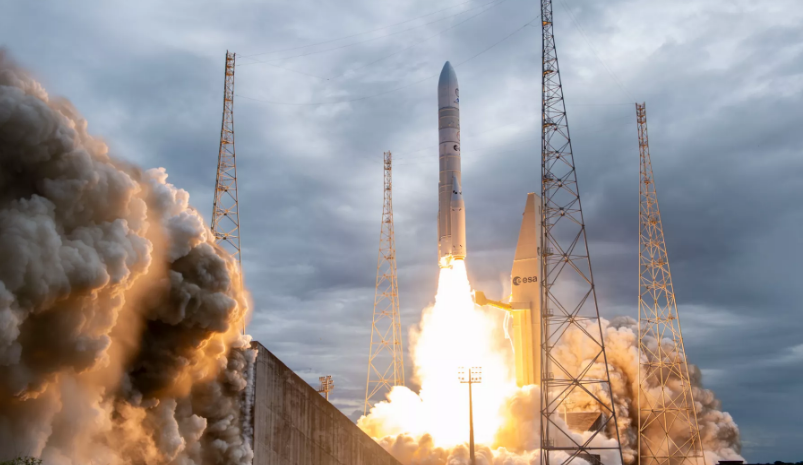
The European Union is actively exploring alternative satellite communication systems for Ukraine, as concerns grow over the country’s reliance on Elon Musk’s Starlink network during its ongoing conflict with Russia.
Ukraine’s military currently depends heavily on Starlink, the satellite internet service developed by Musk’s SpaceX, for secure and reliable connectivity on the battlefield. However, the unpredictable decisions of the tech billionaire have prompted officials in Kyiv and Brussels to seek other options to avoid what many view as a significant strategic risk.
“Elon Musk is effectively the gatekeeper of Ukraine’s battlefield connectivity. That’s a strategic vulnerability,” said Arthur De Liedekerke, Senior Director of European Affairs at consultancy Rasmussen Global.
One alternative being considered is Govsatcom, a secure satellite network operated by EU governments. French MEP Christophe Grudler, a member of the Renew Europe group, said the service will be operational by June and could help supplement Starlink’s coverage in Ukraine if needed. “It is clear that if Starlink decides to cut the signal today, we have options,” he noted.
Ukraine has already shown interest in Govsatcom, which is designed to support public sector communication across the EU. However, De Liedekerke cautioned that while Govsatcom is valuable for government communications, it may not provide the kind of rapid, front-line connectivity currently needed by Ukrainian forces.
Another potential solution is Eutelsat, a Franco-British satellite operator with a growing low-Earth orbit network. While it currently operates only 630 satellites—far fewer than Starlink’s 7,000—it also deploys geostationary satellites and is ramping up its capacity in Ukraine. Eutelsat currently has 2,000 terminals on the ground, with an additional 14,000 expected to be deployed soon. However, the cost per terminal—estimated at €9,000—is significantly higher than Starlink’s €500 units.
Still, Eutelsat’s independence from the U.S. gives it a political edge. “Eutelsat is our European champion… and one we need to support through funding and political will,” said De Liedekerke.
Looking further ahead, the EU is investing in Iris2, a €6 billion satellite constellation aimed at offering ultra-secure connectivity with post-quantum encryption. Developed by a consortium including Eutelsat, Airbus, and Deutsche Telekom, Iris2 is expected to become operational by 2028 and fully complete by 2030.
While the Iris2 project holds promise for future resilience, experts stress the urgent need for diversity in Ukraine’s current communications landscape. “We’ve let Ukraine’s war zone connectivity be in the hands of one man,” said De Liedekerke. “By having options, by diversifying partnerships, we avoid that single point of failure.”







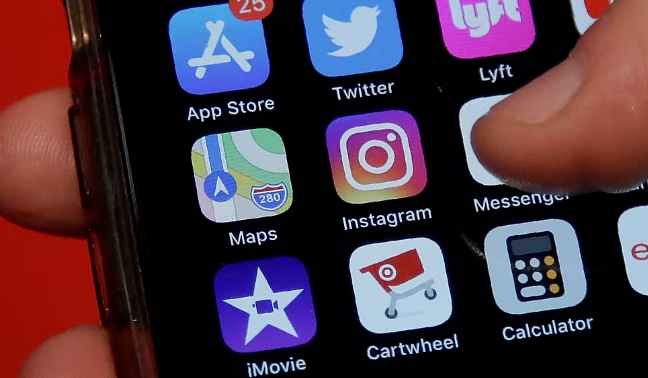
Smartphones and social media have become part of everyday life, but experts are increasingly examining what happens when digital habits become difficult to control. Behaviours such as doomscrolling, FOMO, nomophobia and problematic social media use are attracting growing attention as they begin to interfere with sleep, work, education, relationships and physical activity.
Not every person who spends hours online has an addiction. The key issue is whether someone can control their behaviour and whether excessive use causes significant problems in daily life.
Gaming disorder is currently the clearest example of a recognised digital condition. The World Health Organization includes it in the ICD-11 classification. It involves losing control over gaming, giving it greater priority than other activities and continuing to play despite harmful consequences. Symptoms generally need to persist for at least 12 months and cause substantial disruption to personal, social, educational or professional life.
Social media addiction is less clearly defined. It is not currently recognised as a separate ICD-11 diagnosis, but researchers often describe problematic social media use. Warning signs include repeatedly checking platforms, spending longer online than intended, becoming distressed when access is unavailable and neglecting other responsibilities.
A major WHO survey involving almost 280,000 adolescents aged 11, 13 and 15 across 44 countries and regions found that 11% showed signs of problematic social media use, up from 7% in 2018. The figure was 13% among girls and 9% among boys.
FOMO, or the fear of missing out, can also encourage repeated checking of messages, social networks and news. Researchers have linked FOMO with problematic online behaviour and difficulties managing emotions.
Doomscrolling describes repeatedly consuming negative news about wars, disasters, accidents and other crises. Although people may seek information to feel prepared, constant exposure to distressing material can increase anxiety and create a cycle of worry and further checking.
Nomophobia refers to anxiety associated with being without a mobile phone or losing access to digital connections. It is not an official medical diagnosis, but researchers are studying its relationship with FOMO, social media use and anxiety.
Other technology-related experiences include phantom vibration syndrome, where people believe their phone has vibrated when it has not, and sleep problems caused by late-night screen use.
The physical effects can also matter. Long periods on smartphones may contribute to inactivity, eye strain and neck or muscle discomfort.
Experts say the most important question is not simply how many hours someone spends on a phone. It is whether they can put it down and whether continued use is damaging other parts of their life.
When digital activity begins taking priority over sleep, work, study, relationships or physical activity, it may be time to reconsider how technology is being used.
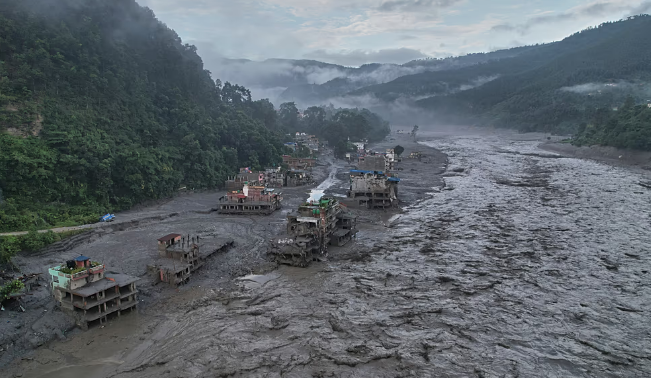
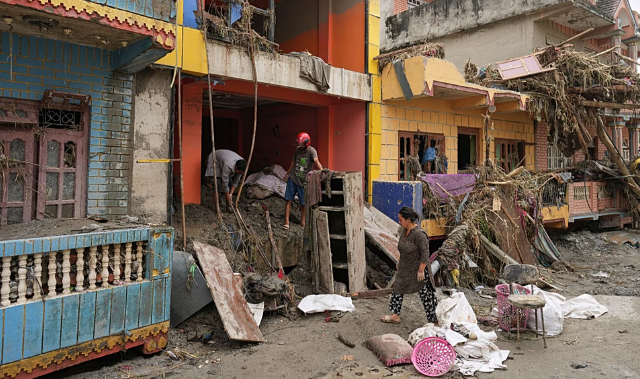
Rescuers in Nepal and China’s Tibet region are searching through mud and debris as the number of people missing after a devastating glacial flood approached 3,000, while authorities warned of further flooding in areas where emergency teams are working.
Emergency crews have recovered 633 bodies so far, with some victims reportedly carried downstream as far as India. The disaster is the deadliest to hit Nepal since the 2015 earthquake, according to the US Geological Survey, which said a glacial collapse triggered the enormous flow of ice, water, mud and debris.
Nepal’s disaster authority has added 933 hydropower workers to its missing persons list, alongside trekkers and pilgrims travelling toward Tibet’s sacred Mount Kailash.
The scale of the disaster has left families searching desperately for relatives. Hospitals in Kathmandu have been crowded with people looking for missing loved ones, while photographs and names have been displayed on posters around the facilities.
The search has also been complicated by the risk of additional flooding. Huge lakes formed after debris blocked waterways, and one such body of water became a direct threat to rescuers.
Nepali police warned emergency workers to move immediately to safer locations after receiving reports that another water barrier had burst on the Tibetan side.
China temporarily halted rescue operations in the worst-hit Gyirong area on Friday because of renewed flooding concerns. Chinese state broadcaster CCTV later reported that the threat had eased after the water level of a debris-formed lake fell, allowing rescue operations to resume.
Chinese President Xi Jinping chaired a meeting on the disaster and offered China’s assistance to Nepal’s emergency response.
In Nepal, military teams have been working to rescue people trapped inside the Trishuli 3A hydropower project. Army spokesman Raja Ram Basnet said helicopters had been sent to the area, but locating the tunnel entrances was difficult because of extensive destruction.
Around 350 workers and residents had been brought to safety from the site, while efforts continued to reach more than 100 people still trapped.
Survivors described the flood as striking with extraordinary speed. Buddha Tamang, a worker at one of the dams along the Trishuli valley, said he survived because he was inside a tunnel when the water arrived. He said senior workers on the other side of the facility were swept away.
Aid has begun reaching some survivors, with makeshift army relief centres providing shelter and assistance. Children separated from their families are also being housed while authorities work to reunite them with relatives.
UNICEF said at least 17,000 children urgently need humanitarian assistance. Eighteen schools have been destroyed and another 20 damaged.
The International Red Cross estimates that at least 93,000 people have been affected and require significant assistance.
The European Union has pledged €2 million in emergency aid for Nepal. European Commission President Ursula von der Leyen said the funding would help provide life-saving assistance to families and communities most severely affected.
With thousands still missing and unstable water bodies threatening rescue areas, authorities face a race against time to find survivors while preventing further loss of life.

John Ternus Takes Over as Apple CEO After 15-Year Tim Cook Era

Taiwan’s AI Stock Boom Fuels Borrowing Frenzy as Investors Chase Big Gains

Wegovy Weight-Loss Pill Hits German Pharmacies at Up to €280

Shein Shares Slide on Hong Kong Debut as Tariffs Hit Fast-Fashion Business

Eurozone Inflation Jumps to 3.3% as Energy Costs Surge

White House Details Major Venezuela Oil Deal as US Secures Stake in Reserves

Google Maps Renames Lake Ontario ‘Lake America’ for US Users Amid Canada Trade Tensions

Trump Hails Major Venezuela Oil Deal as Questions Grow Over Terms

Oil Prices Rise as US-Iran Tensions Return and Rate Hike Bets Grow

Zurich Leads Europe as City-Centre Home Prices Soar Above €22,000 per Square Metre

Meta Acquires Tilda Swinton VR Doc ‘Impulse: Playing With Reality’

China’s Historic Olympic Victory Sparks National Pride Amid Controversy

Saudi Arabia’s Model for Sustainable Aviation Practices

Recent Developments in Small Business Taxes

Effective Drain Cleaning: A Key to a Healthy Plumbing System

Who was Ebrahim Raisi and his status in Iranian Politics?

Keely Hodgkinson Wins Britain’s First Athletics Gold at Paris Olympics in 800m

Carrectly: Revolutionizing Car Care in Chicago

Nobel Laureate Muhammad Yunus Proposed as Head of Bangladesh’s Interim Government Following Hasina’s Resignation

Chinese Hackers Infiltrate Major U.S. Telecom Firms in Possible National Security Breach

Sony WF-10XM4: Headphones Are Our Absolute Favorite

10 Places You Can’t Miss If It’s Your First Time in European

New Census Data Will Shake Up Alabama Politics

16 Top of Our Favorite Outdoor Clothing Brands

Fashionable Summer Accessories to Dress Up Your Travel Look

How Sleeping Less than 7 Hours a Night Can Lead to Weight Gain
-
 Entertainment2 years ago
Meta Acquires Tilda Swinton VR Doc ‘Impulse: Playing With Reality’
-
 Sports2 years ago
China’s Historic Olympic Victory Sparks National Pride Amid Controversy
-
 Business2 years ago
Saudi Arabia’s Model for Sustainable Aviation Practices
-
 Business2 years ago
Recent Developments in Small Business Taxes
-
 Home Improvement2 years ago
Effective Drain Cleaning: A Key to a Healthy Plumbing System
-
 Politics2 years ago
Who was Ebrahim Raisi and his status in Iranian Politics?
-
 Sports2 years ago
Keely Hodgkinson Wins Britain’s First Athletics Gold at Paris Olympics in 800m
-
 Business2 years ago
Carrectly: Revolutionizing Car Care in Chicago