
Tech
British Tech Tycoon Among Six Missing After Tornado Sinks Luxury Yacht Near Sicily

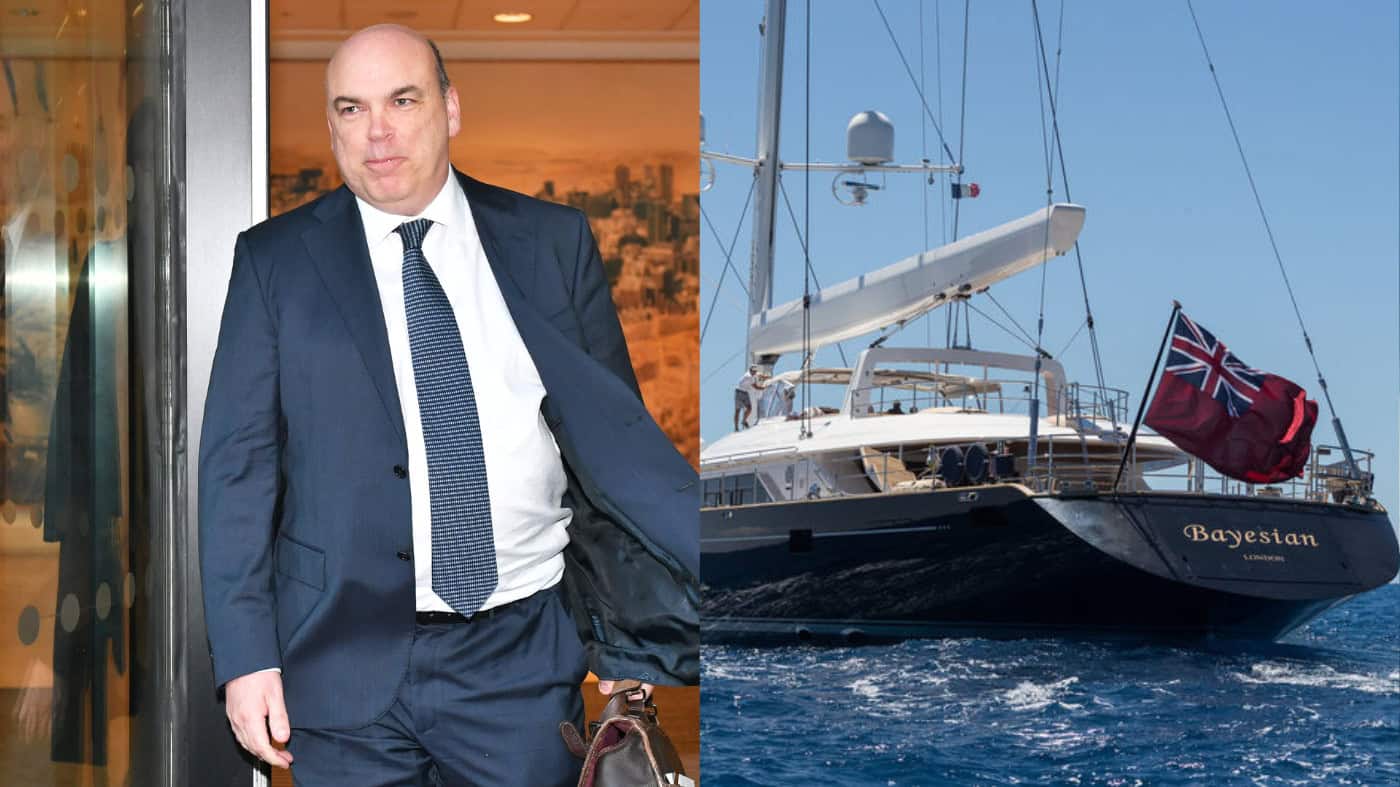
Search and rescue operations are underway for six individuals, including British technology tycoon Mike Lynch, after a luxury yacht was struck by a tornado and sank off the coast of Sicily early Monday morning. The tragic incident has claimed the life of one person, while 15 others have been rescued, including Lynch’s wife, Angela Bacares.
The yacht, identified as the “Bayesian,” a 56-meter vessel flying under a British flag, was anchored approximately half a mile from the port of Porticello on the Mediterranean island when it was hit by a tornado around 5 a.m. The Italian Coast Guard, which is leading the rescue efforts, reported that the missing include four Britons and two Americans.
According to sources, Lynch, the founder of the software giant Autonomy, was aboard the yacht when the disaster occurred. His wife was among the survivors, while Lynch remains unaccounted for. The couple’s daughter, Sofia, was also rescued after a harrowing struggle to stay afloat in the turbulent waters.
Charlotte, 35, another survivor, recounted the terrifying moment when the yacht was engulfed by the sea. “In two seconds I lost the baby in the sea, then I immediately hugged her again amidst the fury of the waves,” she told Italian news agency ANSA. “Many were screaming.”
The severe weather that led to the yacht’s sinking was part of a broader storm system that swept across Sicily, bringing torrential rains and strong winds. The European Severe Weather Database reported that a waterspout, a type of tornado, developed over the area early Monday. The storm also caused significant flooding in the region, with some areas receiving over 100mm of rain in less than four hours.
The Italian fire brigade has been actively involved in the rescue operations, with divers reaching the yacht’s hull, now resting 49 meters (160 feet) below sea level. Helicopters have also been deployed to assist in the search for the missing.
The captain of a nearby vessel described the fierce conditions, stating that he had to start his engine to avoid crashing into the Bayesian as the tornado struck. “After the storm was over, we noticed that the ship behind us was gone,” he told reporters.
Mike Lynch, who has been embroiled in legal battles since selling Autonomy to Hewlett-Packard (HP) for $11 billion in 2011, is among those still missing. Despite recent legal victories, his fate now hangs in the balance as rescuers continue their efforts to locate the missing passengers and crew.












Uber is preparing to expand its driverless taxi services across Europe after launching autonomous vehicle operations in Zagreb, Croatia, in partnership with local startup Verne and Chinese artificial intelligence company Pony.ai.
The companies began offering robotaxi rides in Zagreb in April, with vehicles initially operating under the supervision of human safety operators. After covering 200,000 kilometres on the city’s roads, the partnership has started limited fully driverless trips and is preparing to expand to Manchester in the United Kingdom.
The first fully driverless journeys began on September 10 for a limited group of invited users. The service operates along a 22-kilometre route connecting Verne’s headquarters with Zagreb’s Franjo Tuđman Airport.
Uber is also considering more than 30 European cities for potential expansion, with projects at different stages in London, Madrid, Munich and Zurich.
Passengers using the existing service can select autonomous rides when booking UberX or Comfort journeys through the platform. They can unlock the vehicle using their phones and access Uber support during the trip.
The vehicles are BAIC Arcfox Alpha T5 electric SUVs manufactured in China. Uber and Verne currently operate about 30 autonomous vehicles in Zagreb, which return to a central facility each night for cleaning and maintenance.
Although the initial service includes a safety operator, the latest trials are designed to demonstrate that the vehicles can complete journeys without anyone behind the wheel.
Annie Duvnjak, Uber’s global head of autonomous mobility operations, described the experience as “a little bit magically boring”, explaining that passengers initially notice the absence of a driver before becoming accustomed to the journey.
The vehicles follow traffic rules cautiously, stopping at stop signs even when roads are empty and pulling over when confronted by aggressive drivers. The companies are using the trials to assess performance and improve the technology before expanding operations.
The programme operates within a restricted area and falls under Level 4 autonomous driving, which allows vehicles to operate without human intervention under specified conditions. Level 5 autonomy, which would permit unrestricted operation in all driving environments, has not yet been achieved commercially.
Pony.ai supplies the technology through its Virtual Driver system, which uses artificial intelligence to control the vehicle. The cars are equipped with 34 sensors, including nine LiDAR sensors, 14 cameras and four millimetre-wave radars, alongside microphones and other detection equipment.
Dr Ludi Wang, Pony.ai’s director of global communications, said the system is trained in a virtual environment before being deployed on public roads. The training process allows the AI to learn driving behaviour without relying on remote control during journeys.
Verne, co-founded by Croatian entrepreneur Mate Rimac, manages the fleet, daily operations and regulatory approvals. The company has worked on autonomous mobility since 2019 and is developing its own robotaxi service.
Uber provides the booking platform and passenger experience, while Pony.ai contributes autonomous driving technology. The companies say their partnership combines expertise from the United States, Europe and China despite differences in their regulatory approaches and technology policies.
Manchester is expected to become the partnership’s next European destination, with testing already under way and a potential service launch in the coming months.
Verne executive representatives have also confirmed discussions with Brussels, although any expansion will depend on whether the city can eventually support a fully driverless service. The companies say their broader ambition is to establish commercially viable autonomous taxi operations across Europe.

Attacks on data centres in Ukraine, Russia and the Middle East are raising concerns over the security of artificial intelligence infrastructure, prompting calls for European governments to rethink where and how they build major computing facilities.
Mehdi Paryavi, an adviser to the United Nations and founder of the International Data Center Authority, said recent strikes demonstrated how vulnerable data centres had become as military targets and warned that damage to critical facilities could disrupt entire economies.
“When you hit enough important targets, you can take down the entire economy,” Paryavi told Euronews Next.
He said attacks on data centres could affect essential services, including banking, healthcare and military operations, as countries become increasingly dependent on digital systems.
Russia has struck data centres in Kyiv, while Ukrainian drones have targeted multiple facilities in Russia in recent weeks. Kyiv has described some of its attacks as targeting infrastructure that generates revenue for Moscow’s war effort.
Data centres house servers and store the information needed to run digital services. They are also essential to the development of AI because they provide the computing capacity and energy required to train and operate advanced systems.
Their strategic importance has increased as Ukraine uses artificial intelligence for drone targeting and other military applications.
Paryavi said traditional approaches to choosing data centre locations and keeping them discreet might no longer provide sufficient protection. He suggested that countries may need to consider underground facilities, reinforced bunkers and air defence systems.
“The days that you would just build data centres in random locations are over,” he said.
However, he acknowledged that governments and the technology industry had yet to find a clear solution that would improve security without slowing the expansion of AI computing capacity.
European AI expansion faces security questions
Asked whether the attacks would prompt European governments to reconsider plans for large-scale AI facilities, known as AI gigafactories, Paryavi said they would.
The European Commission told Euronews Next that a tender had been launched to establish up to seven AI gigafactories across Europe. The application process was scheduled to close on November 12, after which proposals would be evaluated and decisions made.
The Commission did not specifically address whether attacks on data centres would affect its plans.
Paryavi warned that the financial consequences of a major attack could be severe. Individual data centres can cost as much as $25 billion to build and take up to three years to complete, making destroyed facilities expensive and difficult to replace.
“Europe cannot afford to finance hundreds of billions of dollars of assets and then somebody takes them out,” he said, adding that the pace of construction might need to slow.
He urged European countries to coordinate their approach rather than develop infrastructure independently. Shared planning, he argued, could help address security threats alongside energy shortages and a lack of skilled workers.
Paryavi also suggested concentrating data centres in designated digital hubs instead of scattering facilities across multiple locations. Such clusters could make it easier to establish coordinated protection systems, including air defence.
The debate highlights a growing challenge for governments seeking to expand AI capacity while protecting the infrastructure on which digital economies increasingly depend.

Europe is accelerating plans to establish its own satellite communications network as restrictions affecting Starlink services in Ukraine highlight the risks of relying on privately operated systems for military operations.
The Ukrainian army reported restrictions to Starlink on Wednesday, saying connections dropped when receivers travelled at speeds exceeding 160 kilometres per hour, including during drone operations. Although the service was partially restored, a speed limit remained in place. It was unclear who ordered the restrictions.
SpaceX chief executive Elon Musk denied that his company had ordered the shutdown, saying on social media platform X that Starshield was under the direct control of the US government.
Starlink provides satellite internet services to consumers and businesses, while Starshield is designed for government and military customers. The distinction has renewed concerns about how much control governments and armed forces have over the communications systems they depend on.
Polish Foreign Minister Radosław Sikorski criticised Musk publicly, warning that European customers were closely monitoring the company’s decisions. Poland has financed a significant share of the Starlink terminals used by Ukraine.
The European Union has been developing its own alternative, known as IRIS², short for Infrastructure for Resilience, Interconnectivity and Security by Satellite. The network is intended to provide secure communications for governments, businesses and citizens, while improving coverage in areas of Europe and Africa where connectivity remains limited.
Under the project, the network will comprise 348 satellites, including 330 in low Earth orbit and 18 in medium Earth orbit. A further 66 satellites are planned to strengthen defence, security and emergency services. The European Commission estimates that the additional capacity will increase secure communications capacity for public-sector users by 60% within the EU and 54% worldwide.
The first satellites are scheduled to launch in 2029, with initial services expected to become available gradually from 2029 or 2030. The network is also expected to use quantum communication technology through the European quantum communication infrastructure, EuroQCI.
Germany will play a significant role in the programme through Bremen-based satellite manufacturer Orbitale Hochtechnologie Bremen (OHB). On August 31, OHB signed a contract worth almost €1 billion with satellite operator SES to supply 18 medium-orbit satellites.
Each satellite will weigh around 2.6 tonnes at launch. OHB chief executive Marco Fuchs has described the project as an important step towards greater European independence in space communications.
Belgian company Aerospacelab, founded in 2018 and based in Charleroi, is building 264 low-orbit satellites under a contract valued at €2.4 billion, according to the company. Production is expected to take place at a new factory designed to manufacture up to 500 satellites annually from 2027. Airbus is building at least 66 additional satellites for military communications, completing the allocation of the low-orbit segment.
Germany is also planning a separate satellite network for its armed forces, known as SATCOMBw 4. The project is intended to operate under national control and eventually include hundreds of low-orbit satellites. An initial constellation of up to 40 satellites is planned to become operational in 2029, with full operations targeted for 2030. The estimated cost is between €8 billion and €10 billion.
Defence Minister Boris Pistorius announced in September 2025 that Germany would invest €35 billion in military space projects by 2030. A joint venture between OHB and Rheinmetall is bidding for the SATCOMBw 4 contract, but no award has been announced.
Meeting the timetable for Europe’s satellite programmes remains uncertain. Experts have identified rocket-launch capacity as a major obstacle, with Europe relying on Ariane 6, which has a limited launch schedule. The European Commission has identified securing launch services as a key next step for IRIS².
The projects are intended to give Europe greater control over secure communications, reducing its dependence on foreign providers at a time when satellite connectivity has become increasingly important to military operations and national security.

UAE Residents Express Strong Confidence in Disaster Preparedness, Survey Finds

European Stocks Fall as French Riots and Political Uncertainty Rattle Markets

Oil Prices Fall From Five-Month High as US Eases Russia Sanctions

Around 46 Million EU Residents Cannot Afford Regular Leisure Activities

Looting Across France Leaves Shops Damaged as More Than 2,000 Arrested

Uber Plans European Robotaxi Expansion After Driverless Taxi Trials in Zagreb

Iran Says Oil Super Tanker Catches Fire After Hitting Mine in Strait of Hormuz

European Trade Unions Push for Menopause Protections in EU Workplace Law

Ukraine War Strikes Raise Questions Over Security of Europe’s AI Data Centres

Europe Develops 348-Satellite Network to Reduce Dependence on Starlink

Meta Acquires Tilda Swinton VR Doc ‘Impulse: Playing With Reality’

China’s Historic Olympic Victory Sparks National Pride Amid Controversy

Saudi Arabia’s Model for Sustainable Aviation Practices

Recent Developments in Small Business Taxes

Effective Drain Cleaning: A Key to a Healthy Plumbing System

Who was Ebrahim Raisi and his status in Iranian Politics?

Keely Hodgkinson Wins Britain’s First Athletics Gold at Paris Olympics in 800m

Carrectly: Revolutionizing Car Care in Chicago

Nobel Laureate Muhammad Yunus Proposed as Head of Bangladesh’s Interim Government Following Hasina’s Resignation

Chinese Hackers Infiltrate Major U.S. Telecom Firms in Possible National Security Breach

Sony WF-10XM4: Headphones Are Our Absolute Favorite

10 Places You Can’t Miss If It’s Your First Time in European

New Census Data Will Shake Up Alabama Politics

16 Top of Our Favorite Outdoor Clothing Brands

Fashionable Summer Accessories to Dress Up Your Travel Look

How Sleeping Less than 7 Hours a Night Can Lead to Weight Gain
-
 Entertainment2 years ago
Meta Acquires Tilda Swinton VR Doc ‘Impulse: Playing With Reality’
-
 Sports2 years ago
China’s Historic Olympic Victory Sparks National Pride Amid Controversy
-
 Business2 years ago
Saudi Arabia’s Model for Sustainable Aviation Practices
-
 Business2 years ago
Recent Developments in Small Business Taxes
-
 Home Improvement2 years ago
Effective Drain Cleaning: A Key to a Healthy Plumbing System
-
 Politics2 years ago
Who was Ebrahim Raisi and his status in Iranian Politics?
-
 Sports2 years ago
Keely Hodgkinson Wins Britain’s First Athletics Gold at Paris Olympics in 800m
-
 Business2 years ago
Carrectly: Revolutionizing Car Care in Chicago