Connect with us

News

India Launches Urgent Inspections of Boeing 787 Fleet Following Deadly Air India Crash

Published

on

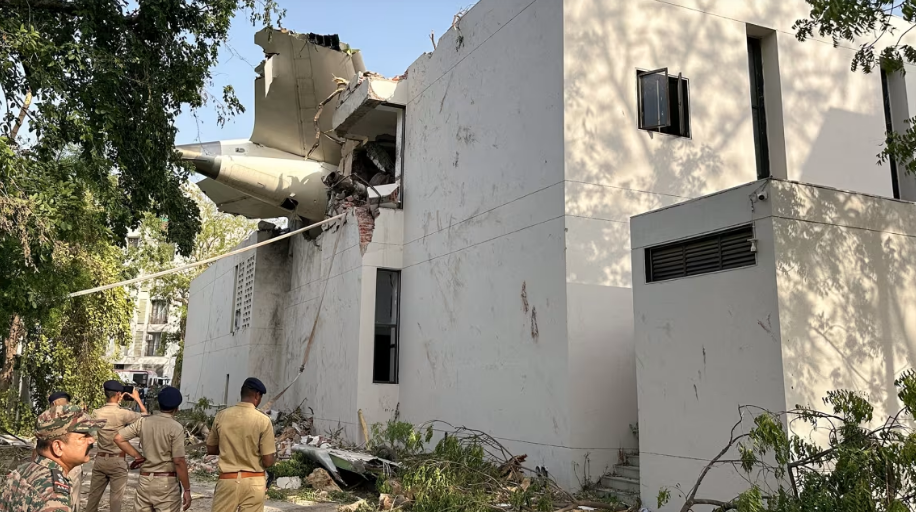
India’s civil aviation ministry has launched an urgent inspection of all Boeing 787 aircraft in the country following a catastrophic Air India crash that killed at least 270 people this week, in what is being described as the world’s worst aviation disaster in a decade.

Aviation Minister Ram Mohan Naidu announced the move at a press briefing on Saturday, confirming that inspections were already underway across India’s 34 Boeing 787 aircraft. “Eight have already been inspected and, with immediate urgency, all of them are going to be done,” Naidu said.

The Directorate General of Civil Aviation (DGCA) has ordered additional maintenance checks on all Boeing 787-8 and 787-9 aircraft fitted with GEnx engines. These checks include engine fuel systems, electronic engine controls, and parameters related to take-off performance.

While the aircraft have not been grounded, a source told Reuters that the government is considering grounding them if safety concerns persist.

Air India operates 33 of these aircraft, while budget carrier IndiGo owns one, according to flight tracking data. The inspections come in response to Thursday’s crash of an Air India Dreamliner shortly after take-off from Ahmedabad. The London-bound plane lost altitude seconds after take-off and crashed into residential buildings, including a hostel at B.J. Medical College, erupting into flames.

Only one person out of 242 passengers and crew survived.

Dhaval Gameti, president of the Junior Doctors Association at the medical college, confirmed that 270 bodies have been recovered. Many of the victims, including students and staff housed in the hostel, were burned beyond recognition.

Authorities are now using dental records and DNA samples to identify the deceased. Forensic dentist Jaishankar Pillai said 135 sets of dental records are currently being analyzed for matches.

See also  China to Showcase New Stealth Fighter J-35A at Upcoming Zhuhai Air Show

The identification process has led to painful delays for grieving families. Outside Ahmedabad Civil Hospital, dozens waited desperately for news. Rafiq Abdul Hafiz Memon, who lost four relatives in the crash, said, “We have lost our children … please help us get information. Tell us when they are going to release their bodies.”

Another grieving father, still awaiting the remains of his son, expressed frustration over delays in the DNA testing process, which authorities estimate may take up to 72 hours.

The crash has cast a dark cloud over Air India’s efforts to revamp its image and modernize its fleet since being acquired by the Tata Group in 2022. Tata chairman N. Chandrasekaran said the company is cooperating with the investigation but admitted, “We don’t know what happened right now.”

Minister Naidu said an official investigation panel is reviewing the incident and a report will be submitted within three months. “We are going to improve every necessary thing that is going to come our way, to improve the safety,” he added, declining to take further questions.

Meanwhile, at B.J. Medical College, where many of the victims were housed, doctors are also grappling with the emotional toll. “Most of us are struggling with our emotions,” said one doctor. “The loss of so many colleagues and friends in this incident is difficult.”

News

Climate Concerns Rise Over Sponsorships at 2026 Winter Olympics

Published

on

The 2026 Winter Olympics in northern Italy are facing mounting criticism over the environmental impact of their sponsorship deals, with scientists and athletes warning that the Games’ carbon footprint could threaten the future of winter sports.

A report by Scientists for Global Responsibility and the New Weather Institute, titled Olympics Torched, estimates that the Games themselves will produce around 930,000 tonnes of CO2 emissions. However, just three sponsorship agreements with major corporations could add 1.3 million tonnes more, more than doubling the total impact. The sponsors identified are oil and gas company Eni, car manufacturer Stellantis, and Italy’s national airline, ITA Airways, with Eni responsible for over half of the added emissions.

The report warns that the combined emissions could result in the loss of 5.5 square kilometres of snow cover in the Dolomites, equivalent to more than 3,000 Olympic-sized ice hockey rinks. Organisers have already announced plans to produce 2.4 million cubic metres of artificial snow for the Games, requiring 948,000 cubic metres of water, as warming temperatures continue to reduce natural snow and glaciers in the region.

“Even without the growing mountain of scientific evidence on the impact of global heating on winter sports, it is plain enough to anyone visiting actual mountains that snow cover is being lost and glaciers are melting,” said Stuart Parkinson, director of Scientists for Global Responsibility. He added that winter sports contribute directly to climate change through emissions and indirectly by promoting major polluters through sponsorship.

The report calls for urgent action, urging the Winter Olympics to end partnerships with high-carbon corporations, avoid new venue construction, and reduce spectator travel by air. Swedish cross-country skier Björn Sandström said the Games’ greatest influence is the signal they send to the world. “When that signal is driven by fossil-fuel sponsorship, it directly contradicts climate science and threatens the future of winter sport,” he said.

See also  Russia to Prioritize Military Spending in 2025 Amid Escalating Ukraine War

Greenlandic biathlete Ukalew Slettermark echoed the concern, arguing that giving oil companies a platform at the Games is unjustifiable. “It’s a complete contradiction when the fossil fuel industry, the biggest contributor to climate change, is allowed to sponsor winter sports, which they are simultaneously threatening,” she said.

The report also highlights broader environmental challenges in the Alps. Italy has lost 265 ski resorts in the past five years due to rising temperatures, and recent studies show mountain regions are warming faster than lowland areas, putting winter sports at risk.

The Milan-Cortina Olympics, spread across the Dolomites, have become a focal point for debates about climate responsibility in global sporting events. Critics say sponsorship deals with polluting corporations undermine efforts to promote sustainability and could damage the credibility of winter sports in a warming world.

Euronews Green has reached out to the International Olympic Committee for comment.

Continue Reading

News

EU-Mercosur Trade Deal Signed Amid Rising Political Tensions in France

Published

on

European leaders signed the EU-Mercosur trade deal on Saturday with Argentina, Brazil, Paraguay, and Uruguay, aiming to strengthen the bloc’s strategic and economic position. European Commission President Ursula von der Leyen called the agreement “25 years in the making” and described it as an “achievement of a generation” that prioritizes long-term partnerships over tariffs.

The deal, which would create a transatlantic free-trade zone, is seen by supporters as vital for countering China’s growing influence in Latin America. EU imports from Mercosur countries have fallen behind China’s share, reversing a trend seen in 2000 when the EU’s presence was six times larger. Advocates also argue the deal will diversify EU trade amid tighter US market access and growing reliance on Chinese materials and technology.

However, the agreement has exposed deep political divisions within the EU, with France emerging as the most vocal opponent. Paris voted against the deal in a key Council vote on 9 January, despite a majority of member states backing it. Critics in France argue the deal threatens domestic agriculture, exposing farmers to competition from Latin American imports that may not meet EU production standards.

The debate has intensified ahead of the European Parliament’s ratification process, scheduled to begin Monday. Lawmakers remain divided along national lines. France, Poland, Hungary, Ireland, and Austria opposed the deal, while Belgium abstained. In France, the issue has become a political flashpoint, feeding eurosceptic sentiment and prompting far-right Rassemblement National leader Jordan Bardella to launch a no-confidence motion in both the European Parliament and the National Assembly.

Supporters of the deal counter that France’s agricultural struggles are largely home-grown and point to concessions built into the agreement, including environmental safeguards, tariff-rate quotas for sensitive products such as beef and poultry, and a €45 billion support package for EU farmers from 2028. Despite these measures, Paris remains unconvinced, with President Emmanuel Macron noting that the deal would raise EU GDP by just 0.05% by 2040 and that tariff reductions on EU cars would be phased in over 18 years.

See also  Leaders Gather in Brussels for Landmark Euronews Enlargement Summit on Europe’s Future

Other EU sectors stand to benefit from the agreement, particularly services, dairy, wine, spirits, and access to public procurement markets. Spanish MEP Javier Moreno Sánchez emphasized the deal’s importance in a “geopolitical and geo-economic context,” citing the need to negotiate on equal terms amid global trade tensions. German MEP Svenja Hahn highlighted that fears of agricultural disruption may be overstated, noting low utilization of quotas in similar deals like CETA.

After 25 years of negotiations, the Mercosur deal represents one of the EU’s most ambitious trade agreements. While supporters hope to build momentum for ratification in the European Parliament, opposition in France and a broader eurosceptic wave in parts of the bloc could complicate its implementation. Analysts warn that the deal’s political fallout may last longer than its economic impact, particularly in France, where public resistance to free-trade agreements runs deep.

Continue Reading

News

New Tashkent Aims to Redefine Urban Living with Sustainability and Smart Infrastructure

Published

on

Uzbekistan is moving forward with an ambitious plan to reshape its capital with the “New Tashkent” project, a purpose-built city designed to meet the demands of rapid population growth while promoting sustainability and modern urban living. Launched in March 2023 under Tashkent’s Master Plan through 2045, New Tashkent is planned to cover 20,000 hectares between the Chirchik and Korasuv rivers, positioning it as a major new urban hub rather than a suburban extension.

The city is expected to accommodate around 2 million residents and generate 200,000 high-income jobs driven by technology and innovation. It will feature smart-city innovations, modern amenities, and buildings built to international green standards, ensuring energy efficiency, climate resilience, and healthy living environments.

Urbanization pressures in Uzbekistan are mounting. By mid-2025, more than 19.3 million people, roughly 51 percent of the population, are projected to live in urban areas, compared with 18.6 million in rural regions. Tashkent itself officially has 3.1 million residents, but daily numbers may be 30–35 percent higher when including students and internal migrants. The concentration of 98 universities in the city continues to draw young people, intensifying demand for housing, transport, and social services.

Sustainability is central to New Tashkent’s design. Buildings will adhere to internationally recognised standards such as LEED, BREEAM, and EDGE, promoting energy efficiency, water conservation, and the use of sustainable materials. Green roof technology, rainwater collection systems, and other measures aim to reduce energy demand and improve resilience to climate extremes. The city’s energy infrastructure includes existing hydropower, a 400-megawatt solar farm, a new 100-megawatt solar installation, and a tri-generation facility converting waste into electricity and heat. Experts estimate that even modest efficiency gains could save over 900 million kilowatt-hours annually.

See also  Man Causes Minor Damage at St. Peter’s Basilica After Jumping onto Main Altar

Transport planning is integral to the project. A 21-kilometre metro line will connect New Tashkent to the capital, while tram lines and eight multimodal transfer hubs will allow seamless switching between metro, tram, buses, bicycles, and scooters. The city is being designed around the 15-minute city concept, making walking, cycling, and public transport convenient for residents.

Urban planners are using a radial city model to prioritize walkability and access to services. Green infrastructure, parks, riverfronts, and cycling lanes will be integrated to create a connected, pedestrian-friendly environment. A cultural island at the intersection of artificial canals will serve as a social and recreational focal point, while the city’s waterways and green spaces will foster a comfortable microclimate.

By the end of 2025, construction had reached 3 million square metres. Several ministries have started operations from temporary facilities, and infrastructure projects include a €86 million underground parking facility with automated systems, bicycle rentals, and EV charging stations. Residential development includes the 95-hectare Sharq Bahori complex for 15,000 households, while New Uzbekistan University is being built to serve 10,000 students. A 55,000-seat FIFA-standard stadium is under construction ahead of the 2027 U-20 World Championship, which Uzbekistan will co-host with Azerbaijan.

New Tashkent is positioned as a blueprint for sustainable urban development in Central Asia, combining technology, green infrastructure, and strategic planning to support Uzbekistan’s rapidly growing urban population.

Continue Reading

Trending