Connect with us

News

EU Ministers Voice Alarm Over Democratic Backsliding in Georgia Amid Strained Accession Talks

Published

on

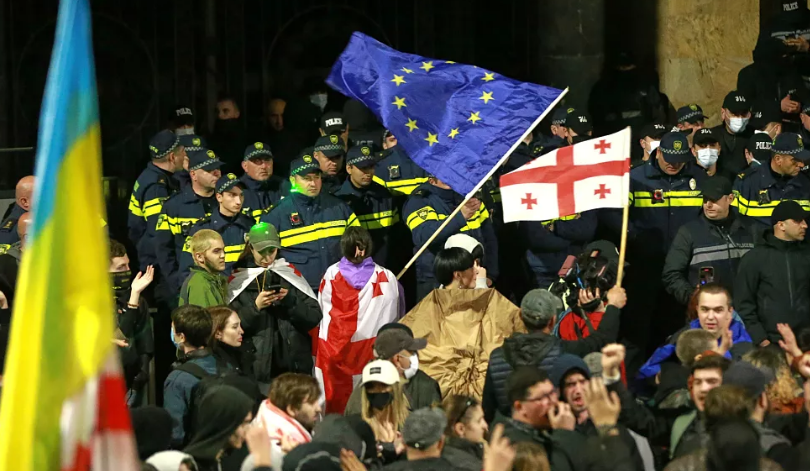
European foreign ministers have issued a joint statement expressing deep concern over what they described as a “deteriorating situation” in Georgia, warning that the country is veering away from democratic norms and risking its path to European Union membership.

The strongly worded statement follows a recent progress report approved by the European Parliament assessing Georgia’s accession process. A majority of EU lawmakers condemned what they called a regression in the rule of law and increasing Russian influence over the ruling Georgian Dream party.

“We are disturbed and deeply concerned by the growing authoritarian tendencies in Georgia,” the statement read, adding that the country’s democratic achievements are “rapidly being dismantled.”

Tensions between Brussels and Tbilisi have escalated in recent months, particularly after a wave of arrests targeting opposition politicians and journalists. The European Parliament also raised alarm over Georgia’s growing alignment with Moscow, which NATO and the EU see as a strategic threat in the South Caucasus region.

Last month, several prominent opposition figures were jailed amid a broader crackdown that followed a controversial election in October 2023. Critics allege the vote, which handed Georgian Dream another term, was neither free nor fair. Protests have since erupted in the capital Tbilisi, with demonstrators demanding democratic reforms and renewed efforts to join the EU.

Georgian Dream has rejected allegations of political persecution. Party Secretary General Kakha Kaladze defended the arrests, stating, “No one is above the law, including politicians.” He insisted the actions were not politically motivated.

However, the joint statement by European foreign ministers claimed the detentions contribute to the erosion of democratic governance and urged Georgian authorities to release those “unjustly imprisoned.” They called for immediate national dialogue involving all political actors to restore trust and prevent further deterioration in EU-Georgia relations.

See also  UK Hosts Emergency Defence Summit Amid Uncertainty Over US Support for Europe

“The authoritarian and anti-European course adopted by the current leadership threatens Georgia’s European aspirations,” the ministers warned.

Prime Minister Irakli Kobakhidze has pushed back against the criticism, telling Euronews in May that Georgia plays a “vital role for Europe,” particularly for the eurozone’s strategic interests in the region. “Dialogue with Georgian leaders is more important now than ever,” he said.

Georgia applied for EU membership in March 2022 alongside Ukraine and Moldova, and was granted candidate status in December 2023. However, the latest developments have cast doubt over the country’s accession timeline and its commitment to EU principles.

News

Suspected Drone Strike Hits UK Base in Cyprus Amid Escalating Iran Conflict

Published

on

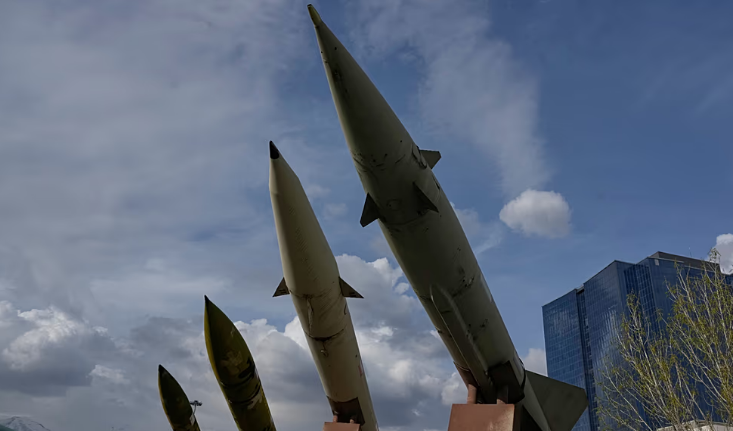
A suspected drone strike hit a British military base in Cyprus shortly after Prime Minister Keir Starmer said the United Kingdom had agreed to allow the United States to use its bases for attacks on Iran’s missiles and launch sites, marking the first apparent impact of the Iran war on European soil.

The UK Ministry of Defence said a drone struck RAF Akrotiri, a key Royal Air Force base on Cyprus’ southern coast, just after midnight on Monday. British Defence Secretary John Healey told officials that ballistic missiles had been fired toward Cyprus around the same time. He said there were no casualties.

Cyprus confirmed the incident, describing it as involving an unmanned drone that caused limited damage at the base. Government spokesperson Constantinos Letymbiotis said the event occurred shortly after midnight and that authorities were assessing the situation. He did not provide further operational details.

RAF Akrotiri is one of the UK’s most strategically important overseas bases and has played a role in regional security operations. The reported strike comes amid rising tensions following US and Israeli attacks on Iranian military targets and Tehran’s retaliatory strikes across the Gulf.

Earlier, Starmer confirmed that the UK had agreed to permit the US to use British bases for operations targeting Iran’s missile systems and launch infrastructure. The decision signaled deeper British involvement in efforts to counter Iran’s military capabilities.

European leaders condemned Iran’s recent attacks. In a joint statement, French President Emmanuel Macron and German Chancellor Friedrich Merz strongly criticised Iranian strikes on countries in the region and said they would take steps to defend their interests and those of their allies. They indicated that defensive measures could include proportionate action aimed at stopping missile and drone launches at their source.

See also  U.S. Homelessness Rises by 18%, Driven by Housing Crisis and Natural Disasters

Iran’s foreign minister, Abbas Araghchi, suggested in a television interview that some of the country’s military units were acting independently under general pre-issued instructions. His comments came after questions about Iranian strikes on Gulf Arab nations that have previously mediated between Tehran and Western powers.

Iran has launched attacks against Qatar, which shares a major offshore gas field with the Islamic Republic and has played a diplomatic role in regional negotiations. The United Arab Emirates and Oman have also been targeted. Oman had recently served as an intermediary in nuclear discussions between Iran and the United States.

The strike on RAF Akrotiri underscores the widening scope of the conflict, with military actions now extending beyond the Middle East and into European territory linked to allied operations.

Continue Reading

News

Cruise Passengers Stranded Amid Escalating Middle East Crisis

Published

on

The Persian Gulf is currently characterised by hostilities. The Strait of Hormuz is closed to shipping, with only vessels connected to China or Russia allowed to pass. The escalating crisis in the region has left thousands of tourists stranded on cruise ships and disrupted air travel.

On Sunday afternoon, a missile struck the water near the Mein Schiff 4, operated by TUI Cruises, while the ship was docked in Abu Dhabi, United Arab Emirates. Clouds of black smoke were reported over the water, according to the Bild newspaper. The vessel carries approximately 2,500 passengers and 1,000 crew members, with many due to return to Germany from Dubai. The situation on board is tense, and it is not yet clear if anyone was injured.

Security measures on the ship remain strict. Passengers are prohibited from entering outside decks, are advised to avoid windows, and receive regular alerts on their smartphones about potential incoming missile threats.

A sister ship, Mein Schiff 5, berthed in Doha, Qatar, is also affected. Passengers attempting to fly home from Doha on Saturday were forced to return to the ship after flights were canceled. Many had already boarded aircraft and had to leave luggage at the airport, waiting around ten hours before being taken back to the ship in the evening.

Other cruise lines are similarly affected. Six vessels are currently docked across ports in Dubai, Abu Dhabi, and Doha. These include the MSC Euribia from MSC Cruises, the Celestyal Discovery and Celestyal Journey from Celestyal Cruises, and the Aroya from the Saudi operator Aroya Cruises.

See also  WHO Calls on China for Transparency in COVID-19 Origins, Five Years After Pandemic Began

The closure of airspace in multiple countries in the region has compounded the situation, preventing passengers from flying home. Thousands remain stranded, unsure when they will be able to continue their journeys or be evacuated safely.

The crisis follows US and Israeli strikes in the region on Saturday, which prompted retaliatory attacks by Iran targeting military positions in the Persian Gulf. Cruise passengers, many of whom expected a calm holiday, have instead faced a sudden escalation in regional tensions.

Authorities in ports and embassies are coordinating with shipping companies to maintain safety and provide updates, but the rapidly evolving security situation has made evacuation and travel plans uncertain. Tourists are advised to follow official guidance and avoid unnecessary movement on or around their vessels.

The disruption highlights the wider impact of escalating hostilities in the Gulf, affecting not only commercial shipping but also tourism and international travel. Passengers on affected cruise ships and flights face prolonged delays as authorities work to stabilize the situation and ensure safety in the region.

Continue Reading

News

Azerbaijan Commemorates Khojaly Massacre with New Memorial and National Ceremony

Published

on

Azerbaijan held nationwide commemorations on Thursday to mourn the hundreds of civilians killed in February 1992 in the town of Khojaly during the Karabakh conflict with Armenia. President Ilham Aliyev led the ceremonies, inaugurating a new Khojaly Genocide Memorial Complex in Baku to honor the victims of what he described as “the greatest tragedy for the Azerbaijani people.”

Thousands of people gathered at the Khojaly Massacre Memorial in Baku for the National Day of Remembrance. A minute of silence was observed across the country as citizens paid tribute to those who lost their lives over 30 years ago.

Azerbaijani authorities state that 613 civilians, including women and children, were killed when Armenian forces, with the support of the former Soviet Union’s 366th Guards Motor Rifle Regiment, attacked Khojaly. Dozens more were reported missing or injured during the assault, which occurred amid the war between ethnic Armenian forces backed by Armenia and Azerbaijani troops over the Karabakh region and surrounding areas.

Human Rights Watch conducted its own investigation into the incident, attributing direct responsibility for the civilian deaths to Karabakh Armenian forces. Armenia has repeatedly denied the accusations, arguing that the reported death toll was exaggerated and that casualties resulted from fighting between the two sides.

Despite differing accounts, the Khojaly tragedy remains a deeply significant event in Azerbaijan’s collective memory. Commemorations continue to emphasize the human cost of the conflict and the impact on generations of Azerbaijanis.

This year’s ceremonies took place against the backdrop of a peace and reconciliation process between Azerbaijan and Armenia. Both nations have pledged to work toward a more stable and peaceful future following decades of conflict and suffering on both sides.

See also  Poland Heads to Decisive Presidential Runoff Between Trzaskowski and Nawrocki

President Aliyev emphasized the importance of remembering the past while looking forward. The newly inaugurated memorial complex aims to provide a permanent site for reflection, ensuring that the victims of Khojaly are remembered by future generations.

The National Day of Remembrance has become a focal point for public reflection and national unity, drawing participants from across Azerbaijan. Observers note that the ceremonies serve both to honor the victims and to reinforce awareness of the historical and ongoing challenges in the Karabakh region.

Over 30 years after the massacre, Khojaly continues to hold a central place in Azerbaijani history. Thursday’s events highlighted the nation’s efforts to commemorate the past while supporting dialogue and cooperation with Armenia to foster lasting peace in the South Caucasus.

Continue Reading

Trending