Connect with us

Health

Study Finds Rising Temperatures Linked to Fewer Male Births

Published

on

A new international study has found that higher temperatures linked to climate change may influence the number of boys and girls born, with heat above 20°C associated with a decline in male births.

Researchers from the University of Oxford analysed more than five million birth records from 33 countries in sub-Saharan Africa and India. Their findings suggest that exposure to higher temperatures during early pregnancy increases prenatal mortality, particularly among male fetuses.

The study, published in the Proceedings of the National Academy of Sciences of the United States of America (PNAS), challenges the long-held belief that the ratio of boys to girls at birth is largely fixed and determined only by genetics.

“For many years, human sex ratios at birth were thought to be constant and unaffected by social or environmental factors,” the researchers wrote. Their findings indicate that environmental conditions such as heat may also play a role in shaping birth patterns.

According to the research team, temperatures above 20°C appear to be a critical threshold. When daily temperatures exceed this level, the proportion of male births declines as male fetuses are more vulnerable to heat-related stress in early pregnancy.

“We show that temperature fundamentally shapes human reproduction by influencing who is born and who is not born,” said Abdel Ghany, a co-author of the study. He added that temperature changes can have measurable effects on fetal survival and family planning behaviour.

The researchers explained that heat exposure can affect the body’s ability to regulate temperature during pregnancy. This stress can increase the risk of pregnancy loss, particularly when dehydration reduces blood flow and the supply of oxygen and nutrients to the fetus.

See also  Europe Pays Less for Medicines Than the U.S., but Prices Still Vary Widely by Country

Scientists also noted that the impact of heat is not limited to biological factors. Extreme temperatures may influence social and economic conditions that shape family planning decisions.

For example, very hot weather can disrupt transportation and daily activity, which may affect access to medical services, including reproductive care. High temperatures may also affect household income and economic stability, factors that can influence decisions about pregnancy.

The study highlighted that the effects of heat are not evenly distributed. Women living in vulnerable conditions or with fewer resources are more likely to experience the health risks associated with rising temperatures. Researchers warned that climate change could deepen existing health inequalities if these challenges are not addressed.

The findings come as many regions around the world experience increasingly frequent heatwaves. In Europe, countries including Albania, Greece, Portugal and Spain have reported longer heat seasons, sometimes exceeding 100 days each year.

The World Meteorological Organization said that 2024 recorded the second-highest number of heat stress days and tropical nights, when temperatures remain above 20°C overnight.

At the same time, many countries are experiencing declining birth rates. In several European nations, fertility rates have fallen well below the 2.1 children per woman needed to maintain stable population levels.

Researchers say further studies are needed to better understand how environmental factors such as extreme heat affect pregnancy, fertility and population trends in a warming world.

Health

Women Still Underrepresented Among Europe’s Inventors Despite Growth in Science Careers

Published

on

Women remain significantly underrepresented among inventors in Europe despite a steady increase in the number of female scientists across the continent, according to a new report from the European Patent Office.

The study found that women accounted for just 13.8 percent of inventors listed in European patent applications in 2022. Although the share has grown from about two percent in the late 1970s and from 13 percent in 2019, progress remains slow.

“Gender gaps still run through the entire innovation system — from the day you sign up to university, to the day you become a team leader or open your own start-up,” Roberta Romano-Götsch, chief sustainability officer and spokesperson at the European Patent Office, said in an interview.

She warned that the pace of change remains far from balanced. “The pace is too slow and far from being balanced,” Romano-Götsch said.

The findings come at a time when the number of women working in science and engineering in the European Union has increased significantly. EU data show that female scientists and engineers rose from 3.4 million in 2008 to 5.2 million in 2014, reaching around 7.9 million in 2024.

In certain research areas, women now make up a large share of the workforce. In medical and health sciences, women represent about 54 percent of all researchers, the highest proportion across research and development fields.

Yet the increase in women working in science has not translated into similar representation in innovation and patenting. Experts often refer to this trend as the “leaky pipeline,” where women are well represented in education and early careers but gradually disappear from senior roles and leadership positions.

See also  Early Introduction of Peanuts Linked to Sharp Decline in Childhood Allergies, Study Finds

The European Patent Office report said the inventive potential of female researchers is comparable to that of men, suggesting the patent gap cannot be explained by differences in ability or productivity.

Women’s contributions to research and innovation can be seen in several high-profile breakthroughs. Rochelle Niemeijer developed a portable artificial intelligence-based test kit designed to quickly diagnose bacterial infections. Laura van’t Veer and her team created a gene-based test that helps doctors assess the risk of breast cancer returning, allowing many patients to avoid unnecessary chemotherapy. Katalin Karikó, who received the Nobel Prize in Physiology or Medicine in 2023, helped develop modified messenger RNA technology that later became the foundation for COVID-19 vaccines and potential treatments for other diseases.

The report also found that women are more visible in certain fields. In life sciences, including pharmaceuticals, biotechnology and food chemistry, women account for more than 30 percent of inventors, the highest level among all sectors.

Despite these achievements, several barriers continue to affect women’s recognition and advancement. Researchers point to the “Matilda effect,” a term describing how women’s scientific contributions are sometimes overlooked or attributed to male colleagues.

Romano-Götsch said this issue can affect recognition in both academic publications and patent applications. In some cases, women contribute to research but are not credited as inventors when patents are filed.

She said closing these gaps is important not only for fairness but also for innovation and competitiveness. Increasing women’s participation in invention could strengthen research teams, expand the talent pool and improve outcomes across Europe’s scientific and technology sectors.

See also  US Expands Measles Vaccination Guidance Amid Global Surge in Cases
Continue Reading

Health

Sugar Drops Can Reduce Pain for Babies During Needle Procedures, Study Finds

Published

on

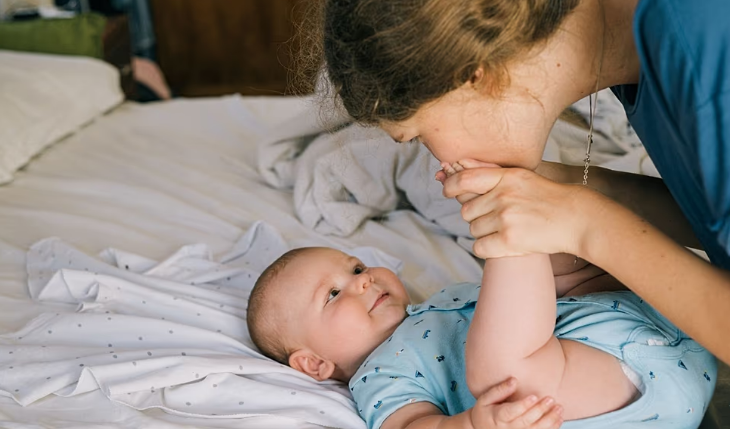
A simple dose of sugar placed in a baby’s mouth before a needle procedure can significantly reduce pain, according to a new scientific review. The findings, published by researchers from the University of Toronto and the University of Ottawa, suggest that sucrose may offer an effective, low-cost way to comfort newborns and infants undergoing routine medical procedures.

Infants, particularly those in neonatal and pediatric intensive care units, frequently undergo procedures such as vaccinations, blood tests, or intravenous line insertions. Because their pain regulation systems are still developing, babies can experience pain more intensely than adults, making effective pain relief crucial.

The review, conducted by the Cochrane Collaboration, analyzed 29 trials involving 2,764 babies worldwide. In each study, infants were randomly assigned to receive either sugar solution, other pain relief methods such as pacifiers, breastfeeding, skin-to-skin contact, or no intervention. Researchers found that sugar reduced pain both during and immediately after needle procedures. In comparison, sugar appeared to provide more immediate relief than pacifiers alone.

“Parents may be surprised to learn that something as simple as a few drops of sugar solution can make a real difference to their baby’s comfort during blood tests,” said Ligyana Candido, co-author of the study from the University of Ottawa.

The study highlighted that while sugar is effective in the short term, its benefits compared with breastfeeding or skin-to-skin care remain less clear, due to limited evidence. Still, sugar offers a practical alternative, especially in situations where other comforting methods are unavailable.

Hospitalized newborns, including premature babies or those receiving treatment for specific conditions, are often exposed to repeated needle procedures. The review noted that untreated pain during these early stages of life can negatively affect growth and development. “Newborn babies undergo frequent needle procedures in hospital without any pain relief or comforting measures, even though older children and adults rarely have these procedures done without pain care,” said lead author Mariana Bueno from the University of Toronto.

See also  Eli Lilly’s Oral Pill Shows Strong Weight Loss Results in Clinical Trials

Researchers emphasized that sugar works quickly, usually within minutes, and can be easily administered at a low cost. However, they cautioned that the long-term effects of repeated sucrose use in infants require further study.

“The message from our findings is ultimately that infants need and should receive pain management before a procedure such as venepuncture,” Bueno added.

The review provides strong evidence supporting the use of sugar as a safe and effective method to ease procedural pain in babies, potentially improving the hospital experience for both infants and their parents.

Continue Reading

Health

European Environment Agency Links Pollution to Rising Mental Health Risks

Published

on

Air pollution, environmental noise, and exposure to toxic chemicals are contributing to a growing burden of mental health problems in Europe, the European Environment Agency (EEA) warned on Thursday. The agency called for “urgent and drastic action” to reduce pollution, noting that even modest improvements could significantly benefit mental well-being.

Mental health is influenced by a combination of genetics, social and economic conditions, lifestyle factors, and environmental exposures. The EEA highlighted that long-term exposure to pollution can trigger or worsen mental health conditions, affecting people from childhood into adulthood.

Air pollution, particularly fine particulate matter (PM2.5) and nitrogen dioxide (NO2), has been linked to structural and functional changes in the brain. Systematic reviews show a consistent association between long-term exposure to poor air quality and depression. Short-term spikes in pollution have also been connected to worsening symptoms of schizophrenia. The agency emphasized that prenatal and early-life exposure to polluted air can have lasting effects on mental health.

Environmental noise is another major factor. Most research focuses on transportation noise from road traffic, railways, and aircraft. Chronic exposure can trigger stress responses, increase inflammation, and exacerbate mental health issues. The EEA noted that aircraft noise has the strongest link to depression, with studies showing a 12 percent increase in risk per 10-decibel rise. Annoyance from noise, especially in socially vulnerable populations, also contributes to depression and anxiety.

Chemical exposure presents additional risks. The EEA reviewed studies on heavy metals, pesticides, second-hand smoke, and endocrine-disrupting chemicals such as bisphenol A and PFAS. Lead and second-hand smoke have been associated with depression and schizophrenia, particularly when exposure occurs prenatally or during childhood. Pesticides have been consistently linked to depression, schizophrenia, and anxiety, while prenatal exposure to endocrine disruptors like bisphenol A has been tied to childhood depression and anxiety.

See also  Study Finds Diminishing Returns in Health Spending After a Certain Threshold

Mental health challenges remain widespread in Europe. According to the World Health Organization, one in six Europeans lives with a mental health condition, and one in three of those affected does not receive adequate treatment. In 2023, mental health disorders accounted for more than 11 million disability-adjusted life years lost across the European Union. These figures are expected to rise, particularly among young people and vulnerable communities.

The EEA stressed that tackling pollution could not only improve physical health but also have a meaningful impact on mental well-being. By reducing air and chemical pollutants and mitigating environmental noise, policymakers could ease the growing societal and economic burden of mental health conditions in Europe.

Continue Reading

Trending