
Health
Irish Hospital Leads Charge to Cut Nitrous Oxide Waste Amid Climate Concerns

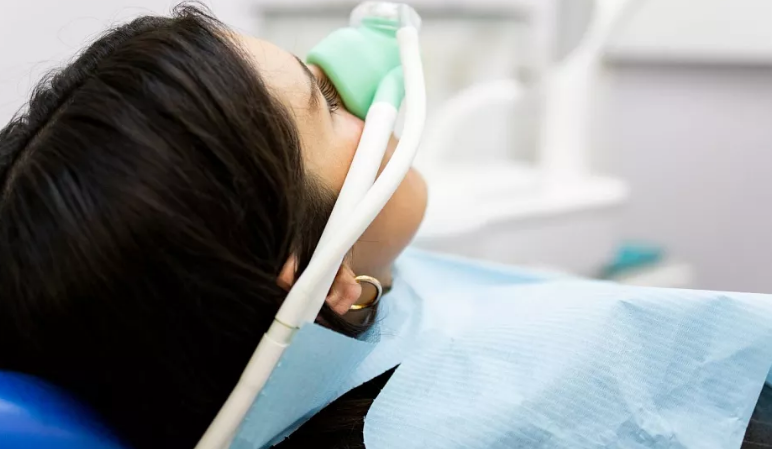
St John’s Hospital in Limerick has become one of the first medical facilities in Ireland to take decisive action against the environmental impact of nitrous oxide emissions by deactivating its central pipeline system for the gas, long used as an anaesthetic. The move is part of a growing effort in the healthcare sector to reduce its carbon footprint and curb avoidable waste.
Nitrous oxide, commonly known as laughing gas, has been used in hospitals for decades to relieve pain and anxiety during procedures. However, studies have shown that large volumes of the gas leak into the atmosphere due to outdated infrastructure, where it can remain for up to 120 years and contribute significantly to global warming.
Dr Hugh O’Callaghan, a consultant anaesthetist at St John’s, explained that while nitrous oxide remains safe and effective for clinical use, its delivery through centralised piping systems leads to “inevitable waste.” Instead, the hospital will now use portable canisters brought directly into operating rooms, a method that reduces gas leakage and emissions.
This initiative aligns with Ireland’s national plan to cut carbon emissions from anaesthetic gases by 50% by 2030. Other hospitals across the country are expected to follow St John’s lead in the coming months, according to the Health Service Executive (HSE).
Similar steps have already been taken in parts of the United Kingdom and the Netherlands. In England, hospitals that replaced central gas systems with mobile units saw a 55% drop in monthly nitrous oxide emissions, according to the NHS. In Manchester, the switch reportedly lowered the local health trust’s overall carbon footprint by up to 5%.
“It’s not about limiting clinical care—it’s about smarter, more sustainable delivery,” said Dr Cliff Shelton, a UK anaesthetist and co-chair of the environmental committee at the Association of Anaesthetists. The group has recommended decommissioning hospital nitrous oxide pipelines across the UK and Ireland by 2027.
Healthcare professionals increasingly acknowledge their sector’s role in climate change. Globally, the health sector accounts for about 4.4% of total emissions, with the European Union responsible for 248 million metric tons of carbon dioxide annually—trailing only the United States and China.
Although nitrous oxide and other anaesthetic gases contribute significantly to this footprint, experts stress that the bulk of emissions stem from the healthcare supply chain, including pharmaceuticals and medical equipment.
Still, efforts like those at St John’s Hospital are seen as important first steps. “When we looked into this, we found we were buying 100 times more nitrous oxide than we were actually using,” said Dr Shelton. “It’s a moral imperative to address that kind of waste.”








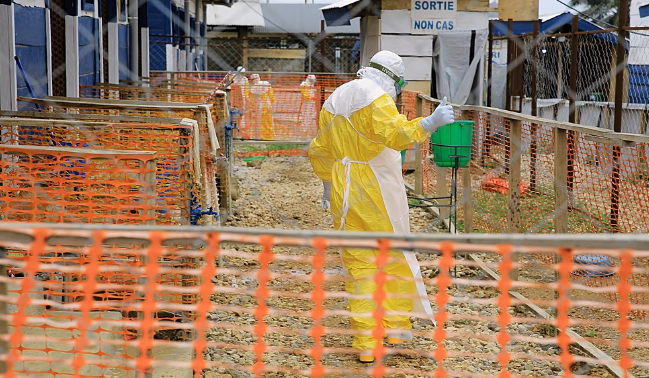
Artificial intelligence is helping health authorities respond more quickly to the Ebola outbreak in the Democratic Republic of Congo (DRC), cutting the time needed to prepare a situation report from a full working day to about an hour. However, experts warn that concerns over transparency, reliability and accountability must be addressed before the technology becomes more widely used in healthcare.
Since May, health workers in the DRC have been responding to an outbreak of the Bundibugyo strain of the Ebola virus. Teams visit communities, provide advice, record deaths and recoveries, and refer people with suspected symptoms to medical facilities.
Information collected by these workers has been digitised and analysed using Anthropic’s Claude artificial intelligence model. The initiative involved the Coalition for Epidemic Preparedness Innovations (CEPI), the World Health Organization’s Regional Office for Africa and the country’s National Institute of Biomedical Research (INRB).
The system helps identify people who may have been exposed to the virus, trace contacts and locate potential outbreak hotspots. This information allows authorities to prepare medical supplies and position resources in areas considered at higher risk.
Marie Roseline Darnycka Belizaire, director for emergency preparedness and response at the WHO Regional Office for Africa, said the technology had reduced the time required to produce situation reports to around one hour.
Speaking at the World Health Summit, she said AI could help health authorities assess the spread of an outbreak more quickly and direct medical assistance where it was needed most.
Supporting overstretched healthcare systems
Thomas Zapata, director of the WHO Academy in Lyon, said AI could help address growing demand for healthcare amid persistent shortages of medical staff and resources.
However, he cautioned against treating the technology as a solution in itself, arguing that it must be integrated into existing health systems and support the work of healthcare professionals.
AI could reduce administrative workloads, improve diagnostic processes and assist clinical decision-making, allowing medical staff to spend more time examining patients, listening to their concerns and arranging appropriate treatment.
Cecilia Mbaka, a senior technical adviser for health and emergencies at aid organisation CARE, said the technology could be particularly useful for repetitive tasks and information processing. She stressed that its value should be measured by whether it improves care and gives medical professionals more time to attend to patients.
In the DRC, however, shortages of equipment and limited public confidence in healthcare facilities remain major challenges. Epidemiologist Maximilian Gertler has estimated that around half of deaths in villages occur outside medical facilities, highlighting difficulties in accessing formal care.
Germany recently increased its assistance to the country by €21 million.
Questions over transparency and reliability
Despite the potential benefits, experts warn that many AI systems cannot clearly explain how they reach particular results.
Thomas Thesen, a professor of medical education and informatics at Dartmouth University’s Geisel School of Medicine, said AI models were highly effective at identifying patterns but often struggled to explain what those patterns meant.
This creates concerns when AI systems offer diagnoses or treatment recommendations. Medical professionals need to assess whether a recommendation is appropriate for an individual patient and understand its limitations. Questions also remain over who should be held responsible when an AI-generated recommendation is wrong.
AI should not replace medical education
Experts also warn that excessive reliance on AI could weaken the training of future healthcare professionals.
Thesen cited research suggesting that students who used AI chatbots to find information developed more superficial knowledge than those who relied on conventional search methods.
He said independent learning and mental effort were essential to retaining information, particularly in medicine, where professionals must make decisions even when technological assistance is unavailable.
The Ebola response demonstrates how AI can help process information quickly during emergencies. Experts say its wider use in healthcare will depend on maintaining human oversight, protecting patients and ensuring that technology strengthens, rather than replaces, professional judgement.

Portuguese teenagers are reporting lower levels of alcohol and drug use and fewer problems linked to addictive behaviours, but risks are becoming increasingly concentrated among young people facing multiple personal and social difficulties, according to a new study.
The findings come from the 2024 Study on Alcohol, Tobacco, Drugs and Other Addictive Behaviours (ECATD-CAD), conducted by the Institute for Addictive Behaviours and Dependencies (ICAD). The research examines addictive behaviours among pupils aged 13 to 18 attending state schools across Portugal.
Compared with the previous study in 2019, the latest results show a consistent decline in reported problems, including violence, accidents, hospitalisations, risky sexual behaviour and other incidents with potentially serious consequences.
Researchers linked the broader improvement to several protective factors. Students reported better academic performance, closer parental supervision and fewer nights out, suggesting that changes in family and school environments may be helping reduce risky behaviour.
However, ICAD warned that the overall decline does not mean the problem has disappeared. The most serious behaviours are increasingly concentrated in a relatively small group of adolescents who face greater individual and social vulnerabilities.
Recent alcohol consumption and, particularly, illicit drug use remain strongly associated with problematic situations. Young people who use psychoactive substances report higher rates of risky sexual behaviour, violence between individuals, accidents and trouble with the police.
The report noted that these problems do not necessarily occur immediately after substance use, but the association remains significant.
Combining alcohol with illicit drugs appears to carry additional risks. Adolescents who reported recent use of both substances experienced higher levels of accidents, police-related problems, cyberbullying and risky sexual behaviour than those who consumed alcohol alone.
Alcohol use also raises concerns about why some teenagers drink. While pleasure, entertainment and socialising remain the main motivations, a significant proportion said they consumed alcohol to forget their problems. ICAD identified this as a warning sign associated with potentially harmful drinking patterns and dependence.
Cannabis use presented a mixed picture. Although most users showed no indicators of dependency risk, the proportion classified as being at high risk increased, alongside growth in the group with no identified risk.
Social media remained the main concern among behaviours not involving substances. A significant number of young people acknowledged spending excessive time on these platforms. Indicators of problematic electronic gaming remained broadly stable, while gambling for money became more prevalent among adolescents, despite a slight decline in some indicators of problematic gambling.
The study also identified differences between boys and girls. Boys were more likely to report problems with the police, risky gaming and gambling. Girls reported higher levels of problematic social media use and were more likely to use alcohol to cope with emotional difficulties.
Family circumstances and wellbeing were also important. Low academic achievement, limited parental supervision, frequent nights out and poorer physical and emotional health were associated with greater risk. Better school performance, stronger parental involvement and improved wellbeing appeared protective.
Regional differences were also evident. Alentejo recorded the highest concentration of unfavourable indicators, followed by the Azores. Lisbon, which showed the greatest vulnerability in the 2019 study, no longer held that position.
ICAD’s findings point to the need for targeted support for vulnerable adolescents, even as overall patterns of substance use and related problems improve.

The death of a scientist in Russia’s Siberian region of Irkutsk has revived concerns about plague, but health authorities say there is currently no evidence of an outbreak or sustained transmission in Europe.
The woman died from pneumonia of unknown origin, prompting speculation that she could have contracted pneumonic plague. Russian authorities have said no plague cases have been confirmed in the region, while tests conducted on people who had contact with the woman were negative.
The World Health Organization has asked Russia for additional information about the incident and offered assistance to local health authorities.
Plague is caused by the bacterium Yersinia pestis, which remains present in wild animal populations in parts of the world. It is commonly associated with rodents and the fleas that live on them. People can become infected through bites from infected fleas, contact with tissues or bodily fluids from infected animals, or respiratory particles from people suffering from pneumonic plague.
For Spain and most of Europe, however, the current risk is considered very low. The European Centre for Disease Prevention and Control says routine transmission has not been recorded in Europe for more than five decades.
That does not mean the bacterium has disappeared. Its continued presence in animal reservoirs means isolated human infections remain possible, particularly in areas where infected wildlife and fleas are found.
Spain has maintained epidemiological surveillance despite the absence of locally acquired cases for decades. In April 2026, its Public Health Commission updated the national plague protocol, including case definitions, epidemiological information and procedures for investigating suspected infections.
European authorities have also been monitoring the Siberian incident. The European Union discussed the case at a Health Security Committee meeting on October 7, while the ECDC said there was no evidence of secondary cases or sustained person-to-person transmission.
The WHO has assessed the risk to the European region as very low.
Plague continues to occur in parts of Africa, Asia and the Americas. According to the WHO, most reported human cases between 2019 and 2025 were concentrated in Madagascar and the Democratic Republic of the Congo. Madagascar records bubonic plague cases during its annual epidemic season, generally from September to April. In the United States, about seven human cases are reported each year, mainly in rural areas of western states.
The disease can occur in bubonic, pneumonic or septicaemic forms. Bubonic plague usually causes fever and painful swollen lymph nodes after an infected flea bite. Pneumonic plague affects the lungs and can spread between people through respiratory particles. Septicaemic plague occurs when the infection enters the bloodstream.
Modern antibiotics can successfully treat plague, but early diagnosis is critical. Health surveillance, rapid identification and treatment remain important in preventing isolated infections from developing into wider outbreaks.

AI Speeds Up Ebola Response in Congo, but Experts Warn of Healthcare Risks

Asian Stocks Plunge as Technology Sell-Off Deepens on Inflation Concerns

Eurozone Faces Record Bond Sales in 2027 as Borrowing Costs Reach Two-Decade High

European Household Energy Costs Rise as Gas Prices Near Four-Year High

Oil and European Gas Prices Rise as Hormuz Attacks Heighten Supply Fears

ASML Reports Record €11.7 Billion Quarterly Sales as AI Chip Demand Outstrips Supply

Young Uzbek Engineers Showcase Medical, Communication and Industrial Innovations

France Considers Exit Tax on Crypto Gains and €10,000 Fine for Undeclared Wallets

Portuguese Teenagers Report Lower Drug and Alcohol Use, but High-Risk Behaviour Persists

Lancet Study Warns AI Misuse and Nuclear War Could Threaten Humanity by 2100

Meta Acquires Tilda Swinton VR Doc ‘Impulse: Playing With Reality’

China’s Historic Olympic Victory Sparks National Pride Amid Controversy

Saudi Arabia’s Model for Sustainable Aviation Practices

Recent Developments in Small Business Taxes

Effective Drain Cleaning: A Key to a Healthy Plumbing System

Who was Ebrahim Raisi and his status in Iranian Politics?

Keely Hodgkinson Wins Britain’s First Athletics Gold at Paris Olympics in 800m

Carrectly: Revolutionizing Car Care in Chicago

Nobel Laureate Muhammad Yunus Proposed as Head of Bangladesh’s Interim Government Following Hasina’s Resignation

Chinese Hackers Infiltrate Major U.S. Telecom Firms in Possible National Security Breach

Sony WF-10XM4: Headphones Are Our Absolute Favorite

10 Places You Can’t Miss If It’s Your First Time in European

New Census Data Will Shake Up Alabama Politics

16 Top of Our Favorite Outdoor Clothing Brands

Fashionable Summer Accessories to Dress Up Your Travel Look

How Sleeping Less than 7 Hours a Night Can Lead to Weight Gain
-
 Entertainment2 years ago
Meta Acquires Tilda Swinton VR Doc ‘Impulse: Playing With Reality’
-
 Sports2 years ago
China’s Historic Olympic Victory Sparks National Pride Amid Controversy
-
 Business2 years ago
Saudi Arabia’s Model for Sustainable Aviation Practices
-
 Business2 years ago
Recent Developments in Small Business Taxes
-
 Home Improvement2 years ago
Effective Drain Cleaning: A Key to a Healthy Plumbing System
-
 Politics2 years ago
Who was Ebrahim Raisi and his status in Iranian Politics?
-
 Sports2 years ago
Keely Hodgkinson Wins Britain’s First Athletics Gold at Paris Olympics in 800m
-
 Business2 years ago
Carrectly: Revolutionizing Car Care in Chicago