Connect with us

Business

WH Smith to Exit UK High Streets in £76M Deal, Marking Another Blow to Retail Sector

Published

on

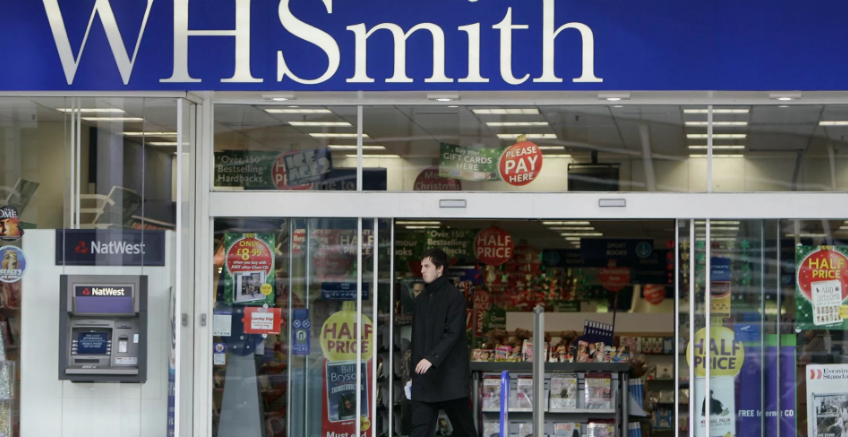
British books and stationery retailer WH Smith is set to disappear from UK high streets following a £76 million (€91.2 million) deal to sell its 480 retail outlets to private equity firm Modella Capital, the owner of Hobbycraft.

The move is the latest in a series of high-profile closures affecting the UK retail landscape, which has struggled to recover from the pandemic. WH Smith, a brand with over two centuries of history, will continue to operate under its name in airports, railway stations, and hospitals, but its high street stores will be rebranded as TGJones.

Retail Shake-Up as Modella Capital Expands Portfolio

Modella Capital, which has previously acquired The Original Factory Shop and Hobbycraft, will take control of WH Smith’s high street operations, including several stores in shopping centres and retail parks. However, the exact timeline for the transition remains undisclosed.

WH Smith’s Post Office counters will continue running as usual, and the company has reassured customers that business operations will remain normal during the transition. The retailer, which employs around 5,000 people across more than 1,100 stores in the UK, has also hinted at exploring further strategic changes, including the potential sale of its digital greetings card brand, Funky Pigeon.

Despite the deal, concerns remain over potential job losses, though Modella has not confirmed whether redundancies will follow. The firm has stated that new product ranges will be introduced, but further operational details have not yet been revealed.

WH Smith Shifts Focus to Travel Business

The decision to exit high streets comes as WH Smith pivots towards its more profitable travel division. Group CEO Carl Cowling highlighted that the high street business, while still profitable, had become a smaller part of WH Smith’s overall operations amid the company’s international expansion.

See also  Flexible Work Could Boost Employment for Parents, Carers, and Disabled Workers, UK Report Finds

“Our UK High Street business has been a good, cash-generating operation, but with our rapid international growth, now is the right time for a new owner to take it forward,” Cowling said. “This will allow WH Smith’s leadership team to focus exclusively on our travel business, which has stronger growth prospects.”

Russ Mould, investment director at AJ Bell, noted that the deal enables WH Smith to concentrate on expanding its travel retail footprint. However, he cautioned that losing the WH Smith name from high streets could negatively impact footfall.

“The WH Smith brand was a key reason why its stores survived in an increasingly challenging retail environment,” Mould said. “Shoppers relied on the retailer for specific items, and removing the brand could see customer traffic decline under the new TGJones name.”

High Streets Continue to Struggle

The departure of WH Smith from UK high streets is expected to further weaken an already struggling retail sector. The pandemic and changing consumer habits have led to a wave of closures, including Debenhams, Daniel of Ealing, and Cool Britannia. Retailers like New Look, Quiz Clothing, and Select Fashion have also been forced to shut multiple locations.

High street banks have followed a similar trend, with major lenders like Halifax, Lloyds, Bank of Scotland, and Barclays closing branches in response to shifting consumer behaviour.

Despite these challenges, the retail sector showed resilience in February, with the Office for National Statistics (ONS) reporting a 1% monthly increase in sales volumes. This exceeded market expectations of a 0.3% decline and followed a 1.4% rise in January.

See also  Microsoft and Meta Beat Earnings Expectations, Fueled by AI Demand

Household goods led the growth, experiencing their strongest monthly performance since April 2021, while clothing and footwear sales also contributed positively. However, food store sales saw a decline.

On an annual basis, retail sales in February rose 2.2%, surpassing analyst projections of a 0.5% gain.

Consumer Spending Outlook Remains Mixed

Looking ahead, consumer spending trends appear uncertain. A McKinsey & Company report found that while 22% of shoppers plan to increase spending on garden furniture and 17% on hotels, many are cutting back in other areas.

“Nearly 40% of consumers plan to reduce clothing purchases, and almost half (49%) intend to spend less on jewellery,” said Sagar Shah, associate partner at McKinsey & Company.

He also noted that while inflation is easing, it has yet to drive stronger sales volume growth. Rising wages are putting pressure on retailers’ margins, forcing them to adjust pricing strategies and promotional tactics to maintain profitability.

As WH Smith transitions out of the high street retail landscape, the sector faces ongoing uncertainties, with businesses having to adapt to changing consumer preferences and economic conditions.


Business

Silver Surges Past $60 as Supply Strains, Rate Expectations and Tariff Concerns Drive Rally

Published

on

Silver prices have surged to levels not seen before, rising above $60 an ounce this week after months of rapid gains driven by tightening supply, shifting Federal Reserve expectations and uncertainty around potential US trade actions. The metal hovered near $62 on Wednesday, extending a rally that began early this year when prices averaged around $30.

The latest jump came ahead of the Federal Reserve’s meeting, where investors expect another cut to the benchmark interest rate. The timing of the central bank’s leadership transition has added another layer of speculation. The US administration is reviewing finalists to replace Jerome Powell as chair, with Kevin Hassett, a senior economic adviser during Donald Trump’s presidency, reported to be the leading contender.

Market analysts say the candidates under consideration favour sharper rate reductions than those overseen by Powell. Since September, the Fed has trimmed rates twice by a quarter point each time. The gentler pace of easing has already pressured returns on cash and fixed-income assets, prompting many investors to shift into precious metals, which typically attract interest when rates fall. Silver, which does not generate yield, becomes more appealing in such an environment. Its performance has even outpaced gold, which has risen about 60 percent this year to reach record highs.

At the same time, traders are monitoring signals from Washington about whether silver could be targeted with tariffs. The metal was added in early November to the US government’s 2025 Critical Minerals List, a classification usually applied to resources seen as essential for national economic security. The designation places silver within the range of potential Section 232 investigations, the mechanism used in past years to justify tariffs on imported steel and aluminium.

See also  BHP Withdraws Bid for Anglo American, Clearing Path for Competitors and Restructuring Plans

Section 232 allows restrictions on imports deemed to put the country at risk through heavy dependence on overseas supply. No investigation has been launched, and officials have not indicated that tariffs are imminent. Still, the possibility has unsettled markets. Any duties on imported silver could reshape trade patterns and raise costs for domestic manufacturers, leading some buyers to boost inventories as a precaution.

Industrial use is also adding upward pressure. Demand from electric vehicle and solar panel manufacturers continues to rise, with these sectors relying on silver for components essential to production. Industrial consumption represents more than half of global silver use, and the combination of tight supply and strong manufacturing needs has intensified the rally.

Analysts say the market remains highly sensitive to signals from the Fed and the White House, with both interest-rate policy and trade decisions poised to shape the direction of prices in the months ahead.

Continue Reading

Business

US Allows Nvidia to Sell H200 Chips to Approved Chinese Customers With 25% Surcharge

Published

on

The United States has granted Nvidia permission to sell its H200 semiconductor chips to selected customers in China, provided the company pays a 25% surcharge to the US government. President Donald Trump announced the decision on Monday, marking a shift in Washington’s export policy after months of lobbying from Nvidia chief executive Jensen Huang.

The approval, which will also extend to other American chipmakers such as Intel and AMD, follows earlier restrictions imposed over concerns that advanced US-made chips could strengthen China’s military and cyber capabilities. The agreement does not cover Nvidia’s more powerful Blackwell chips or the upcoming Rubin series, which remain prohibited for export.

Trump said in a post on Truth Social that he had personally informed Chinese President Xi Jinping of the decision and that the move would maintain strong national security protections. He described Xi’s response as “positive”.

The H200 chip is used in a wide range of high-performance computing applications, from medical technology to artificial intelligence systems. While not as powerful as the Blackwell line—considered the current benchmark in AI processing—the H200 remains significantly more advanced than chips produced by Chinese manufacturers.

Restrictions on China’s access to American semiconductors have been a central component of Washington’s technology policy. In April, the US barred sales of Nvidia’s H20 chip to China on national security grounds, even though the chip had been specifically designed to comply with existing export rules. That decision was later softened in July after Nvidia agreed to return 15% of its China revenue to the US government. AMD accepted a similar arrangement.

See also  BHP Withdraws Bid for Anglo American, Clearing Path for Competitors and Restructuring Plans

Critics of the export controls argue that limiting access to foreign technology pushes China to accelerate its domestic semiconductor development. Beijing has already discouraged state-linked firms from buying Nvidia products, warning that reliance on US hardware could leave companies vulnerable to abrupt policy changes.

Nvidia said in a statement that allowing the sale of H200 chips to vetted commercial customers “strikes a thoughtful balance that is great for America”, adding that the arrangement would support well-paid US jobs and strengthen domestic production.

Despite the added safeguards, several Democratic senators have opposed the approval. They warned that giving China access to more capable chips could assist its military and expand its ability to carry out cyberattacks on American infrastructure. Their concerns were amplified by a recent admission from Chinese AI firm DeepSeek, which said its biggest competitive obstacle was the lack of access to cutting-edge semiconductors designed in the United States.

The decision opens one of Nvidia’s most important markets at a time when demand for advanced chips continues to surge globally, setting another stage in the ongoing technological and geopolitical rivalry between Washington and Beijing.

Continue Reading

Business

Gold Looks to 2026 After a Record-Breaking Year Marked by Geopolitical Tension and Strong Central Bank Demand

Published

on

Gold enters 2026 after one of the strongest years in its modern history, rising more than 60% in 2025 and setting over 50 record highs. The surge placed the metal ahead of all major asset classes and delivered its best performance since 1979. Now, investors are assessing whether gold can extend its momentum over the next year or whether the market is nearing a turning point.

Analysts say the 2025 rally was the product of several overlapping global forces. Persistent geopolitical risks, trade uncertainty, a softening US dollar, and expectations of lower interest rates all helped drive demand. Central banks also played a decisive role by continuing to absorb large volumes of gold, keeping official-sector buying well above pre-pandemic levels.

Data from the World Gold Council (WGC) highlights how these factors contributed to the metal’s rise. Geopolitical tensions alone added roughly 12 percentage points to year-to-date performance, while a weaker dollar and modestly lower rates provided another 10 points. Economic expansion and investor positioning also offered meaningful support.

Looking ahead, the WGC expects many of the same pressures to influence the market in 2026. But it cautions that gold begins the year from a very different starting point. Prices have already factored in broad expectations of steady global growth, moderate rate cuts, and a stable dollar. With real interest rates no longer falling sharply and momentum cooling, the Council describes gold as fairly valued at current levels.

In its central outlook, the WGC projects gold trading in a narrow band next year, with returns likely ranging between a 5% decline and a 5% gain. The group notes that investor sentiment is balanced rather than defensive, reducing the likelihood of outsized moves unless economic conditions shift significantly.

See also  CVC Capital Partners Reportedly Seeking Buyer for Majority Stake in Genetic Group

Three alternative scenarios could force a deviation from this baseline. In a mild economic slowdown marked by extra US rate cuts, gold could rise 5% to 15% as investors position more cautiously. A deeper recession could push gains even higher, with the WGC estimating a potential 15% to 30% jump driven by aggressive policy easing and renewed safe-haven flows. On the other hand, if pro-growth policies from the Trump administration lift yields and strengthen the dollar, gold could fall 5% to 20% as opportunity costs rise.

Despite the WGC’s measured tone, major Wall Street institutions remain bullish. J.P. Morgan Private Bank expects prices to climb to between $5,200 and $5,300 per ounce, while Goldman Sachs forecasts around $4,900. Deutsche Bank and Morgan Stanley also see room for appreciation, though both acknowledge possible volatility in the coming months.

Much of this optimism is tied to ongoing demand from central banks, especially in emerging markets, and the belief that many global investors remain underexposed to gold. Softening real yields and persistent geopolitical uncertainty are also seen as supportive.

At the same time, risks could hinder further gains. A stronger US economy, renewed inflation pressures, or reduced central bank buying could weigh on the market. Rising supply from recycled gold, particularly in India where the metal is widely used as collateral, may also place pressure on prices.

While a repeat of 2025’s dramatic rise appears unlikely, analysts agree that gold enters the new year from a position of strength. Its reputation as a hedge during unpredictable times remains firmly intact, keeping it central to many investors’ long-term strategies.

See also  BBVA’s Takeover Bid for Sabadell Collapses After Failing to Secure Shareholder Support
Continue Reading

Trending