Connect with us

Business

Oil Market Faces Near-Term Oversupply but Long-Term Supply Risks, Forecasts Show

Published

on

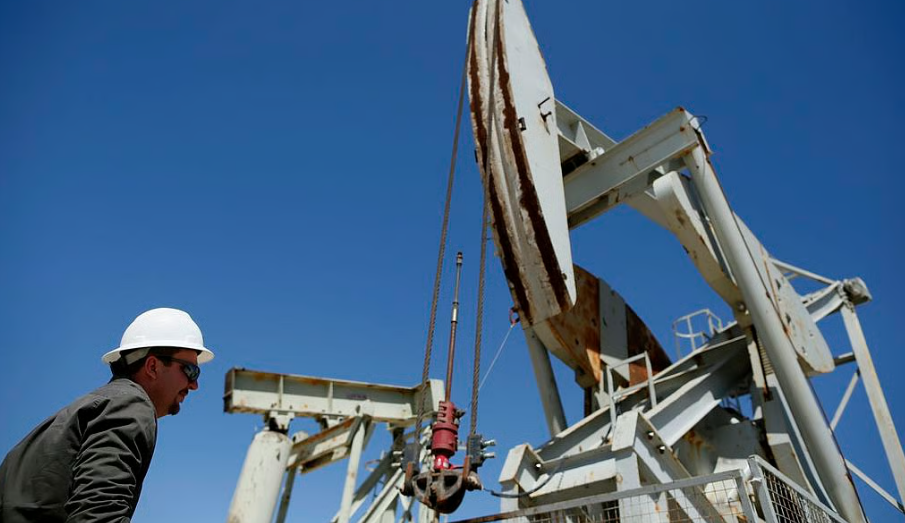
The global oil market is set to enter 2026 with a comfortable surplus that is expected to weigh on prices, even as analysts warn of deeper structural challenges looming later in the decade. New projections from Oxford Economics indicate Brent crude could finish 2026 at around $58 per barrel and ease to roughly $55 in 2027, well below prevailing market expectations. The forecasts are anchored in a sustained supply surplus projected to exceed 2 million barrels per day.

Global production is expected to rise by about 1.6 million barrels per day next year, bringing total output to around 106 million barrels per day. Demand is forecast to increase at a slower pace, climbing to 104 million barrels per day in 2026. The supply outlook has been lifted by stronger US shale performance and faster progress on major developments in Brazil. Despite lower rig numbers and expectations of West Texas Intermediate trading below $55, improvements in drilling efficiency are allowing US production to grow by approximately 400,000 barrels per day.

Latin America continues to play an important role in the supply picture. Brazil and Guyana are set to add a combined 1.6 million barrels per day across 2025 and 2026. OPEC is projected to restore nearly 1 million barrels per day in the second half of 2026 as key members, including Saudi Arabia and the UAE, start trimming back voluntary cuts.

On the demand side, growth is expected to slow to around 600,000 barrels per day next year, led mainly by emerging markets and OPEC economies. Consumption in advanced economies is forecast to level off due to efficiency improvements and rising electrification. China remains a central driver, supported by manufacturing and petrochemical activity, while demand in the United States is expected to decline structurally.

See also  Keurig Dr Pepper to Acquire JDE Peet’s in €16 Billion Deal, Reshaping Coffee and Soft Drinks Businesses

Against this backdrop of near-term abundance, some analysts are drawing attention to risks that could arise in the next decade. Ole Hansen, Head of Commodity Strategy at Saxo Bank, said current prices may not support the level of upstream investment needed to offset natural declines in existing fields. He noted global fields lose between 6 million and 8 million barrels per day each year, requiring roughly $500 billion in annual investment just to maintain today’s output levels.

Hansen warned that the industry may face a supply shortfall early in the 2030s if investment continues to lag. He pointed out that Saudi Arabia and the UAE remain the only major producers with meaningful spare capacity, while US shale growth is showing signs of slowing.

The International Energy Agency recently revised its long-term outlook, now projecting oil demand to grow well beyond 2040. The shift heightens concerns that delays in investment could lead to sharper price increases later.

Analysts say risks to the 2026 outlook cut both ways. A faster slowdown in US shale, renewed OPEC restraint or geopolitical disruptions could push prices higher, while a larger-than-expected surplus early next year could trigger steeper price drops.

Despite the near-term softness, the debate over long-term supply needs is intensifying. Some analysts warn that postponing investment today could set the stage for tighter markets later in the decade.

Business

Crypto Ownership Rises Across Europe Despite Volatile 2025

Published

on

Crypto assets faced a turbulent year in 2025, with a sharp market sell-off in October triggered by US President Donald Trump’s threat of new tariffs on China. Despite volatility, European interest in cryptocurrencies continues to grow, with ownership rates rising across the continent.

According to the ‘Web3 Industry in France and Europe’ report by Adan, more than 90 percent of adults in major European economies are aware of crypto assets. Data from the European Central Bank shows that nine percent of eurozone adults held crypto in 2024, up from four percent in 2022. Ownership varies across countries, ranging from six percent in the Netherlands and Germany to 15 percent in Slovenia. Greece, Ireland, Croatia, Cyprus, Lithuania, and Austria follow closely, reflecting modest differences among nations.

James Sullivan, chief risk and compliance officer at BCB Group, said ownership patterns are shaped by digital adoption, investor risk appetite, and local market conditions. “Countries with strong financial innovation and a younger, predominantly male investor base tend to lead,” he told Euronews Business. Regulatory and economic factors also play a role. In markets with limited traditional investment options, crypto is often used speculatively, while awareness campaigns, like those in Italy, can boost adoption.

The UK, though not part of the eurozone, shows strong crypto activity, ranking third globally in transaction volumes behind the US and India as of 2024.

Across the eurozone, ownership more than doubled between 2022 and 2024. Greece and Lithuania recorded the largest increases, rising by ten percentage points, while Cyprus, Belgium, Ireland, Austria, Slovakia, Slovenia, Portugal, and Italy also saw gains of seven points or more. The Netherlands remained stable, while data for Croatia in 2022 is unavailable. Sullivan said this trend reflects growing consumer confidence, supported by global market momentum and the European Union’s Markets in Crypto-Assets (MiCA) regulation.

See also  High Electricity Prices Threaten Europe’s Green Transition and Industrial Competitiveness

MiCA establishes uniform rules for crypto assets, providing regulatory clarity and consumer protection. Sullivan said the framework signals mainstream recognition of crypto, encouraging cautious investors to enter the market.

Investment remains the primary use for crypto. In the eurozone, 64 percent of holders use it for investment, while 16 percent use it for payments, and 19 percent for both. The Netherlands and Germany show the highest focus on investment despite lower overall ownership, while France has the largest share of users leveraging crypto for payments at 25 percent.

Sullivan noted that most European consumers still use crypto primarily for speculation rather than daily transactions. While stablecoins could offer practical payment solutions, their adoption remains limited compared with traditional methods such as cards and cash. He added that the long-term success of crypto as a transactional tool will depend on MiCA’s effectiveness in regulating euro-denominated stablecoins and integrating them into existing payment systems.

Despite 2025’s volatility, the rise in ownership indicates that European retail interest in crypto remains strong, with regulation and market momentum supporting continued growth.

Continue Reading

Business

Crypto Ownership Rising Across Europe Despite Market Volatility

Published

on

Cryptocurrencies have experienced a turbulent 2025, including a sharp sell-off in October following US President Donald Trump’s threat of new tariffs on China. Despite these fluctuations, crypto ownership continues to grow across Europe, according to recent reports.

The ‘Web3 Industry in France and Europe’ report by Adan, using data from early 2025, found that more than 90 percent of adults in major European economies are aware of crypto-assets. Ownership of these digital assets, though still limited, has been steadily increasing.

Data from a European Central Bank survey shows that in 2024, nine percent of adults in the eurozone held crypto-assets. Ownership varies across countries, ranging from six percent in the Netherlands and Germany to 15 percent in Slovenia. Other nations with above-average adoption include Greece, Ireland, Croatia, Cyprus, Lithuania, and Austria.

Experts attribute these differences to factors such as digital adoption, risk appetite, and local market conditions. James Sullivan, chief risk and compliance officer at BCB Group, told Euronews Business that countries with younger, more digitally-savvy investors and higher levels of financial innovation tend to have higher ownership rates. Local regulatory frameworks and economic conditions also play a role. In markets with limited traditional investment options, crypto may be used more speculatively, while awareness campaigns, like those conducted in Italy, boost adoption.

The UK, though not part of the eurozone, ranks third globally in transaction volumes behind the US and India, reflecting continued strong consumer activity.

Ownership of crypto-assets across the eurozone more than doubled between 2022 and 2024, rising from four percent to nine percent. Greece and Lithuania saw the largest increases, each climbing by ten percentage points, while Cyprus, Belgium, Ireland, Austria, Slovakia, Slovenia, Portugal, and Italy saw gains of seven points or more. The Netherlands was the only country where the rate remained unchanged.

See also  European Countries Compete to Attract Wealthy Expats with Tax Perks Amid Budget Pressures

Sullivan highlighted that growing European interest in crypto reflects renewed confidence following previous market downturns. The introduction of the Markets in Crypto-Assets (MiCA) regulation, which sets uniform EU rules for previously unregulated crypto assets, has contributed to trust and encouraged new investors.

The majority of crypto holders use these assets primarily as an investment. In the eurozone, 64 percent of users cited investment as their main purpose, 16 percent for payments, and 19 percent for both. The Netherlands and Germany, despite relatively low ownership rates, had the highest shares of investment-focused users at 90 and 82 percent, respectively. France reported the highest use for payments at 25 percent.

Sullivan noted that while cryptocurrencies, particularly stablecoins, have transactional potential, day-to-day use remains limited. He said broader adoption for payments will depend on MiCA’s success in regulating stablecoins and integrating them into existing payment systems, a key focus for the European Central Bank.

Continue Reading

Business

Motherhood Can Narrow Career Opportunities Through Subtle Task Shifts, Study Finds

Published

on

Gender inequality in the workplace goes beyond measurable gaps in pay and representation, a recent study suggests, showing that subtle changes in women’s job tasks after having children can significantly hinder long-term career growth.

While disparities in earnings, employment, and leadership roles are well documented, women who take primary responsibility for childcare often face additional, less visible barriers just when their careers would otherwise accelerate. Research from Germany highlights that after childbirth, women are frequently assigned fewer analytical, complex, and interactive tasks, especially when they reduce working hours, quietly limiting opportunities for advancement.

The study, published in the Journal of Marriage and Family and titled The Job Task Penalty for Motherhood, was conducted by Wiebke Schulz of Bremen University and Gundula Zoch of Carl von Ossietzky University Oldenburg. Using data from the German National Educational Panel Study, the researchers tracked 1,978 women from 2011 to 2020, analyzing changes in five key dimensions of job tasks: analytical, complex, autonomous, interactive, and manual.

Schulz explained that interactive tasks, which often involve coordination and being “on call” for colleagues or clients, are easiest to reassign when caregiving responsibilities arise. Analytical or complex tasks, requiring sustained focus or ownership of long-term projects, also decline, sometimes because managers pre-emptively steer mothers away from high-responsibility work regardless of their actual capacity.

“After childbirth, many women see a shift from high-cognitive, high-interaction tasks to a narrower set of duties,” Schulz told Euronews Business. “Even small short-term downgrades can accumulate. Analytical and interactive tasks are where skills grow, performance is visible, and leadership pipelines are built. Losing access to them can slow wage growth, reduce promotion chances, and lock people into flatter career trajectories—even if job titles remain unchanged.”

See also  RedBird Capital to Acquire Telegraph Media Group in £500 Million Deal

While the research focuses on Germany, Schulz noted that similar patterns appear across Europe, though the magnitude varies depending on cultural norms and institutional support.

The study recommends that employers make task allocation more transparent, tracking who receives high-growth assignments before and after parental leave or part-time transitions. Part-time roles can also be redesigned, with complex work broken into modular tasks and team-based ownership to maintain access to analytical and high-responsibility projects.

Training managers to recognize expectation-based bias is crucial, the study adds, as anticipatory reassignment can be just as damaging as performance-related reassignment. Policymakers are encouraged to expand full-day childcare and school coverage, strengthen flexible work rights with career protections, and incentivize fathers’ leave to reduce the assumption that mothers must adjust their roles.

The findings underline that gender inequality in the workplace is not only about who is hired or promoted, but also about the subtle ways work is allocated, shaping the long-term career paths of women across industries.

Continue Reading

Trending