
Business
IMF Warns of Widening Growth Gap Between US and Europe

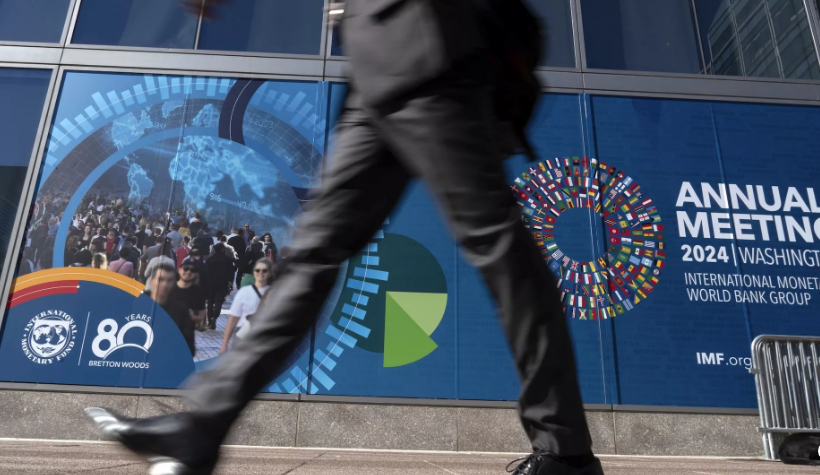
Washington, DC – The economic growth gap between the United States and Europe is expected to widen in the coming years, the International Monetary Fund (IMF) has warned, calling for urgent public investment in Europe to enhance productivity and maintain global competitiveness. In its latest World Economic Outlook, the IMF pointed to stronger-than-expected growth in the U.S. while the eurozone faces ongoing economic struggles.
The report highlights a significant contrast between the two regions. While the U.S. economy is benefiting from robust consumer spending and strong business investment, Europe’s major economies are being dragged down by persistent industrial challenges, particularly in manufacturing and real estate sectors.
Growth Projections: US Outpaces Eurozone
For 2024, the IMF has raised its growth forecast for the U.S. to 2.8%, a 0.2% increase from its July estimates, driven by consumer spending and business investment. Looking ahead to 2025, the U.S. economy is expected to slow slightly to 2.2% as fiscal policies tighten and the labor market cools.
In stark contrast, the eurozone’s growth is forecast to lag behind significantly. The IMF downgraded its 2024 growth outlook for the region to just 0.8%, a slight drop from its July forecast. While growth in the eurozone is expected to recover modestly to 1.2% in 2025, the forecast has been reduced by 0.3% from earlier projections.
Among Europe’s major economies, Germany and Italy are set to underperform. Germany’s economy is expected to contract by 0.3% in 2024, with no growth forecast for 2025. Italy is expected to grow by 0.7% in 2024, but its outlook for 2025 was revised down to 0.6%. Both countries are struggling with weak industrial output and real estate pressures. By contrast, France and Spain are performing relatively well. France is expected to maintain stable growth of 1.1% in both 2024 and 2025, while Spain’s growth forecast has been revised up to 2.7% in 2024 and 2.9% in 2025.
Calls for Public Investment in Europe
The IMF has called on European governments to increase public investment to tackle the continent’s slow growth. A report led by former European Central Bank President Mario Draghi emphasized the need for infrastructure, green technology, and productivity-enhancing projects to boost Europe’s competitiveness.
The IMF supported the Draghi report’s recommendation for a 1.5% rise in public investment from 2025 to 2030. This increase could lift eurozone GDP by up to 2.5% above baseline projections by the end of the decade. The investment surge would likely be funded through a mix of higher deficits and reallocating government spending, with the goal of attracting private investment and mitigating inflationary risks.
Economic Divergence
As the U.S. continues to outpace Europe in terms of economic growth, the IMF warns that without significant public investment, Europe risks entering a prolonged period of economic stagnation. While the U.S. is expected to maintain its growth momentum, European policymakers face the challenge of addressing structural weaknesses to prevent further divergence in global competitiveness.













Genetic Differences May Shape Effectiveness of Popular Weight-Loss Drugs, Study Finds

Seven-Day Meditation Retreat Linked to Measurable Changes in Brain and Body, Study Finds

Fuel Prices Surge Across Europe as Middle East Crisis Pushes Oil Above $100

Oil Prices Surge as Strait of Hormuz Closure Shakes Markets

Britain and Norway Step Up Naval Patrols to Protect Undersea Infrastructure from Russia

Meta Launches Muse Spark, Its First Major AI Model in Nine Months

Fresh Attacks Reported Across Gulf Despite US-Iran Ceasefire Announcement

Sweden Accuses Iran of Using Criminal Gangs to Target Dissidents as Teenagers Face Trial

US-Iran Ceasefire Eases Tensions as Europe Reacts; US Politics Spill Into Hungary Vote

ENI and Egypt Announce Major Gas Discovery Amid Rising Energy Costs

Meta Acquires Tilda Swinton VR Doc ‘Impulse: Playing With Reality’

Saudi Arabia’s Model for Sustainable Aviation Practices

Recent Developments in Small Business Taxes

Effective Drain Cleaning: A Key to a Healthy Plumbing System

Who was Ebrahim Raisi and his status in Iranian Politics?

China’s Historic Olympic Victory Sparks National Pride Amid Controversy

Carrectly: Revolutionizing Car Care in Chicago

Keely Hodgkinson Wins Britain’s First Athletics Gold at Paris Olympics in 800m

Saudi Arabia: Foreign Direct Investment Rises by 5.6% in Q1

Chinese Hackers Infiltrate Major U.S. Telecom Firms in Possible National Security Breach

Sony WF-10XM4: Headphones Are Our Absolute Favorite

10 Places You Can’t Miss If It’s Your First Time in European

New Census Data Will Shake Up Alabama Politics

16 Top of Our Favorite Outdoor Clothing Brands

Fashionable Summer Accessories to Dress Up Your Travel Look

How Sleeping Less than 7 Hours a Night Can Lead to Weight Gain
-
 Entertainment2 years ago
Meta Acquires Tilda Swinton VR Doc ‘Impulse: Playing With Reality’
-
 Business2 years ago
Saudi Arabia’s Model for Sustainable Aviation Practices
-
 Business2 years ago
Recent Developments in Small Business Taxes
-
 Home Improvement1 year ago
Effective Drain Cleaning: A Key to a Healthy Plumbing System
-
 Politics2 years ago
Who was Ebrahim Raisi and his status in Iranian Politics?
-
 Sports2 years ago
China’s Historic Olympic Victory Sparks National Pride Amid Controversy
-
 Business2 years ago
Carrectly: Revolutionizing Car Care in Chicago
-
 Sports2 years ago
Keely Hodgkinson Wins Britain’s First Athletics Gold at Paris Olympics in 800m