Business
French Businesses Face Uncertainty Amid Political Crisis and Slowing Growth
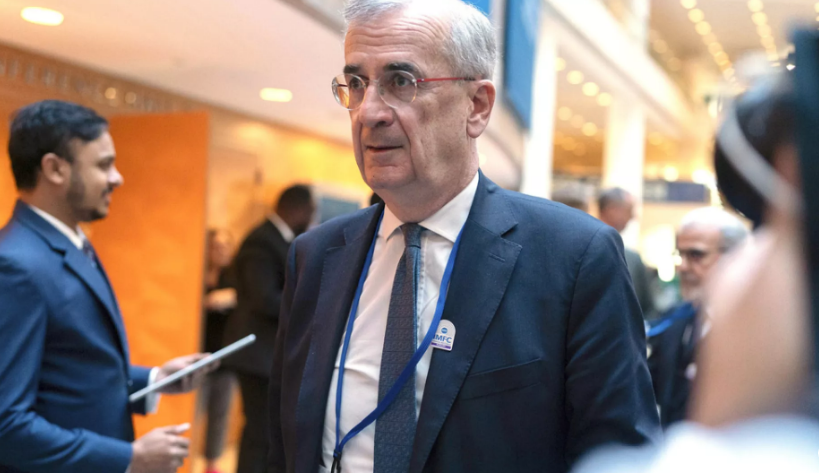
French businesses are grappling with heightened uncertainty, according to the latest economic survey from the Bank of France, which reported a slight uptick in activity for November. The findings highlight the challenges facing Europe’s second-largest economy amid a political crisis and ongoing economic pressures.
The survey, conducted before the recent collapse of Michel Barnier’s government, revealed significant unease across sectors. Business uncertainty in the industrial and construction sectors reached levels not seen since the energy crisis of 2022. The political turmoil, triggered by a no-confidence vote, has left France without a functioning government or a valid budget for 2025. President Emmanuel Macron is now tasked with appointing a new Prime Minister to form a government and address the political vacuum.
The Bank of France’s report noted that uncertainty remains “relatively high in all sectors,” with companies citing the domestic political situation, tax debates, and global economic conditions as major concerns.
Despite these challenges, the bank anticipates slight growth in underlying economic activity for the final quarter of the year, excluding the effects of the Paris Olympic and Paralympic Games. “We estimate that the country’s underlying activity would maintain its slightly positive growth trend in the fourth quarter,” the report stated.
This growth, pegged at approximately 0.2% of GDP, is expected to be counteracted by the waning effects of the Games, which the bank estimates will reduce GDP by 0.2%. As a result, the Bank of France projects no net growth for the quarter, marking a slowdown from the 0.4% growth recorded in the previous quarter, which was largely driven by Olympic-related activity.
The economic outlook remains clouded by political instability and broader global challenges. Businesses are increasingly cautious as they navigate the uncertain landscape, with some delaying investments or scaling back expansion plans.
Observers note that the political impasse could exacerbate existing economic pressures, particularly as debates over tax reforms and budgetary measures continue to weigh on business confidence.
The coming weeks will be critical as President Macron moves to stabilize the government and address the budgetary void. The resolution of these political challenges could play a key role in shaping France’s economic trajectory heading into 2025.
For now, the combination of political uncertainty, slowing growth, and global headwinds underscores the fragile state of the French economy, leaving businesses and policymakers bracing for potential challenges ahead.
Business
ECB Holds Interest Rates as Energy Prices Surge Amid Middle East Tensions
The European Central Bank (ECB) kept its key policy rates on hold on Thursday, as fresh spikes in oil and gas prices threaten to derail recent progress in reducing inflation.
The bank concluded its March meeting without altering borrowing costs, leaving the deposit facility rate at 2%. Other main policy rates, including the main refinancing operations (MRO) rate and the marginal lending facility rate, remain at 2.15% and 2.4% respectively. The move had been widely anticipated by analysts.
In its statement, the ECB warned that the ongoing war in the Middle East has added significant uncertainty, creating upward risks for inflation while posing downside risks for economic growth. The central bank noted that the conflict in Iran “will have a material impact on near-term inflation through higher energy prices,” and said its medium-term effects will depend on the conflict’s duration and intensity, as well as the broader impact on consumer prices and the European economy.
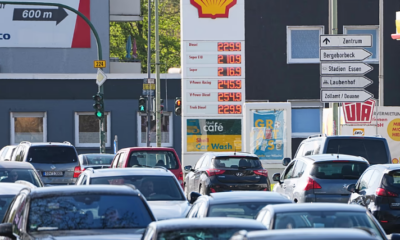
Thursday’s decision came amid a dramatic spike in energy costs. European natural gas futures jumped over 30% to €74 per megawatt hour, the highest level in more than three years. Oil prices also surged, with Brent crude climbing above $119 a barrel and West Texas Intermediate (WTI) exceeding $96, following Iranian attacks on key energy facilities in the Middle East. Analysts warn that if elevated energy costs persist for months, they could feed into wider price pressures and delay any rate cuts until well into 2027.
The ECB’s hold follows a similar decision in February, when the bank left rates unchanged and reaffirmed its commitment to bringing inflation back to its 2% medium-term target. Christine Lagarde, president of the ECB, emphasized the delicate balance policymakers face between supporting economic growth and containing inflationary pressures.
Markets responded cautiously to the announcement. Major European stock indices opened lower as investors weighed the energy shock against the ECB’s expected move. The euro edged slightly higher in early trading, while government bond yields rose modestly.
For households and businesses across the 21-country eurozone, the decision means that mortgage and loan rates linked to ECB policy will remain steady for now. However, money-market contracts have already adjusted to reflect the potential for one or two rate hikes later this year, rather than the cuts that had been forecast just weeks ago.
Economists noted that the ECB’s message signals continued vigilance. Any prolonged surge in oil and gas prices could force the central bank to maintain tight monetary conditions longer than anticipated, leaving both consumers and businesses to navigate higher financing costs while energy bills continue to rise.
The ECB’s action underscores the fragility of the eurozone recovery in the face of geopolitical shocks, highlighting the challenge of managing inflation while safeguarding economic growth.
Business
Ships Continue Passing Through Strait of Hormuz Despite Ongoing Conflict
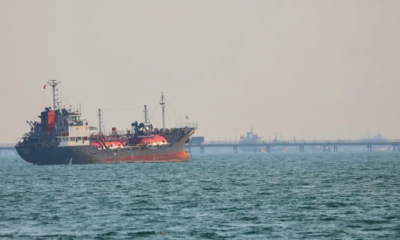
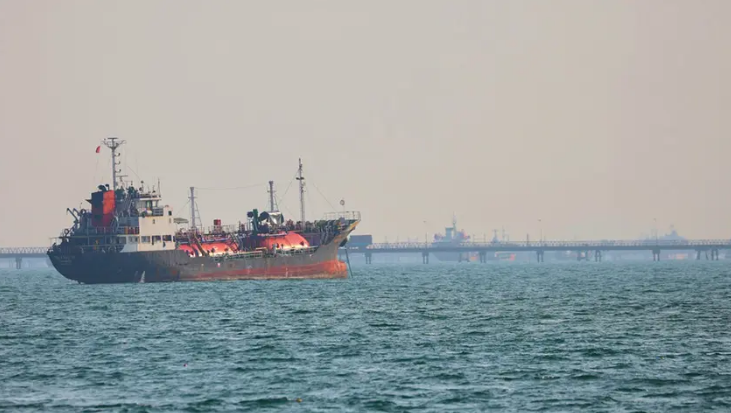
Dozens of ships are still navigating the Strait of Hormuz as Iran maintains oil exports despite continued attacks on one of the world’s most critical trade routes.
Around 90 vessels, including oil tankers, have crossed the strait since the conflict began earlier this month, according to maritime data. This comes even as most commercial traffic has been disrupted and nearly 20 ships have reportedly been targeted in the area. The strait, which normally carries about one-fifth of global oil supply, has seen a sharp drop in overall movement compared to pre-conflict levels.
Despite the risks, Iran has continued exporting oil, shipping more than 16 million barrels since the start of March, according to analytics firm Kpler. Much of this trade is believed to involve so-called “dark” shipping practices, where vessels avoid tracking systems to bypass sanctions and scrutiny. Analysts say many of these ships are linked to Iranian networks, while others have connections to countries such as China and Greece.
More recently, vessels tied to India and Pakistan have also passed through the strait following diplomatic engagement. Maritime data shows that the Pakistan-flagged tanker Karachi and India-linked gas carriers Shivalik and Nanda Devi successfully completed their journeys through the route in mid-March. Indian officials indicated that discussions with Tehran helped secure safe passage for the ships.
Experts say these crossings suggest the strait is not entirely closed but operating under selective conditions. Richard Meade, editor-in-chief of Lloyd’s List, said some vessels appear to be transiting with a degree of diplomatic coordination, often staying close to Iranian waters. There are also indications that certain ships have identified themselves as linked to China or staffed by Chinese crews, likely to reduce the risk of being targeted.
Oil markets remain highly sensitive to developments in the region. Prices have risen more than 40 per cent since the conflict began, briefly pushing Brent crude oil above $100 per barrel. The surge has prompted calls from Donald Trump for allied nations to help secure the waterway and restore stability to global energy supplies.
Iran has warned that it may block shipments destined for the United States, Israel and their allies, while allowing limited flows to continue. US officials have indicated that some Iranian exports are being tolerated to prevent further disruption to global markets.
Analysts say the current situation reflects a controlled but fragile balance, where the strait remains partially operational. While limited traffic continues, the risk of escalation remains high, and any further disruption could have significant consequences for global energy supply and prices.
Business
Iran Raises Minimum Wage by 60% Amid Inflation and Conflict Pressures
Authorities in Iran have announced a 60 percent increase in the national minimum wage as the country faces mounting economic strain driven by conflict and soaring inflation.
Labour Minister Ahmad Meydari confirmed the decision on Monday, saying the monthly minimum wage will rise from 103 million rials to 166 million rials. The increase is intended to ease the burden on workers struggling with rapidly rising living costs.
The move comes against a backdrop of economic hardship and recent unrest. Protests earlier in 2026, linked largely to inflation and declining living standards, were met with a crackdown by the Islamic Revolutionary Guard Corps. Independent sources reported a high number of casualties during the unrest.
Iran’s leadership, under Ali Khamenei, has faced growing pressure from labour groups to improve wages as the national currency weakens and the cost of essential goods rises sharply. With the rial trading at extremely low levels against the US dollar, many households have struggled to afford basic necessities.
The wage adjustment will take effect on March 20, marking the start of the Persian New Year. Authorities have also announced increases in family and child allowances as part of a broader effort to support households.
Despite the significant rise, analysts and labour representatives say the new wage level remains far below what is needed to cover basic expenses. Estimates suggest a typical family requires more than 580 million rials per month for essential goods, while labour groups had pushed for a higher threshold.
Inflation remains a major concern. Official figures indicate consumer prices rose by 44.6 percent in 2025, while other reports point to even higher levels. Food prices have been particularly affected, with sharp increases in staples such as bread, meat and cooking oil. In some cases, prices have more than doubled over the past year.
Economic pressures have intensified due to ongoing conflict involving Israel and the United States, along with continued sanctions that have disrupted supply chains and weakened the currency further.
Over the past decade, wages in Iran have lost much of their purchasing power. Many families have been forced to take on additional work or sell assets to cope with rising costs. Reports indicate that dietary patterns have shifted, with lower-income households reducing consumption of protein-rich foods in favour of cheaper alternatives.
The government’s latest decision is seen as a short-term measure to provide relief, though economists warn that without broader reforms to address inflation and currency instability, the benefits of the wage increase may be limited.
-
Entertainment2 years agoMeta Acquires Tilda Swinton VR Doc ‘Impulse: Playing With Reality’
-
Business2 years agoSaudi Arabia’s Model for Sustainable Aviation Practices
-
Business2 years agoRecent Developments in Small Business Taxes
-
Home Improvement1 year agoEffective Drain Cleaning: A Key to a Healthy Plumbing System
-
Politics2 years agoWho was Ebrahim Raisi and his status in Iranian Politics?
-
Business2 years agoCarrectly: Revolutionizing Car Care in Chicago
-
Sports2 years agoKeely Hodgkinson Wins Britain’s First Athletics Gold at Paris Olympics in 800m
-
Business2 years agoSaudi Arabia: Foreign Direct Investment Rises by 5.6% in Q1