Business
EU Warns Italy Over Golden Power Use in UniCredit-Banco BPM Merger
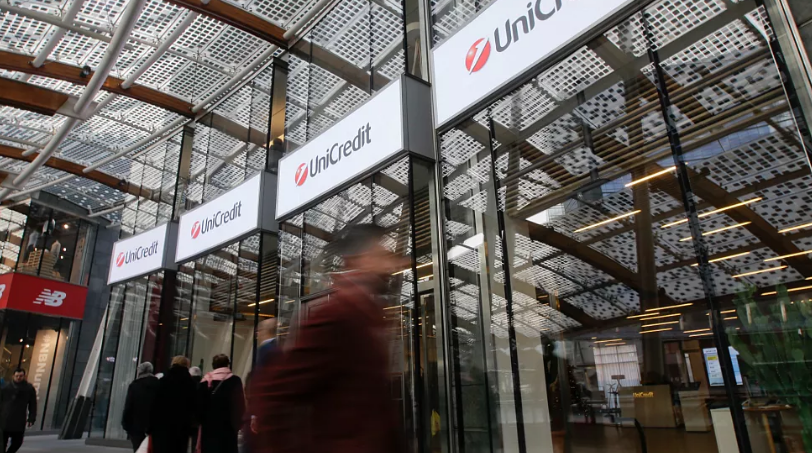
The European Commission has issued a formal warning to Italy over its use of special powers to impose conditions on UniCredit’s proposed €10 billion takeover of Banco BPM, raising concerns that the move may breach European Union law.
The warning, delivered on Monday, follows an investigation into a government decree issued by Rome in April. The Commission said that the Italian government’s use of the “Golden Power” rule may violate Article 21 of the EU Merger Regulation (EUMR), which governs competition and merger rules within the bloc, as well as other EU laws relating to the free movement of capital and the role of the European Central Bank.
Golden Power rules allow EU member states to restrict or impose conditions on corporate mergers in the interest of national security or strategic economic sectors. However, Brussels has questioned whether Italy’s use of the mechanism in this case—between two Italian banks—meets the criteria.
“The Commission considers that the obligations imposed by Italy may constitute a breach of Article 21 of the EUMR and other provisions of EU law,” the Commission said in a statement, adding that the government’s justification for the decree “currently lacks sufficient reasoning.”
The Italian Prime Minister’s office issued the decree on April 18, placing conditions on the potential merger. However, the European Commission had already approved the UniCredit-Banco BPM deal “subject to conditions” on June 19 and believes Italy should have notified Brussels prior to enforcing the decree.
The Commission requested further information from Italy on May 26, receiving a response on June 11. However, EU officials remain unconvinced and have warned that the unilateral move risks undermining the EU’s Single Market.
Banco BPM, Italy’s third-largest bank, was formed in 2017 through the merger of Banco Popolare and Banca Popolare di Milano. UniCredit, the country’s second-largest lender, has made a €10 billion bid to acquire it. Banco BPM rejected the offer last year, arguing that it did “not reflect the bank’s profitability or growth potential.”
The legality of the government decree has already been challenged domestically. An Italian court partially annulled the measure on July 12, adding pressure on the government to revise or withdraw its conditions.
The offer period for UniCredit’s proposed acquisition is currently set to expire on July 23. In the meantime, the Commission is awaiting further responses from Italy before deciding on any next steps, including potential legal action.
The case has reignited debate over the balance between national sovereignty in strategic sectors and the integrity of the EU’s internal market rules.
Business
Crypto Ownership Rises Across Europe Despite Volatile 2025
Crypto assets faced a turbulent year in 2025, with a sharp market sell-off in October triggered by US President Donald Trump’s threat of new tariffs on China. Despite volatility, European interest in cryptocurrencies continues to grow, with ownership rates rising across the continent.
According to the ‘Web3 Industry in France and Europe’ report by Adan, more than 90 percent of adults in major European economies are aware of crypto assets. Data from the European Central Bank shows that nine percent of eurozone adults held crypto in 2024, up from four percent in 2022. Ownership varies across countries, ranging from six percent in the Netherlands and Germany to 15 percent in Slovenia. Greece, Ireland, Croatia, Cyprus, Lithuania, and Austria follow closely, reflecting modest differences among nations.
James Sullivan, chief risk and compliance officer at BCB Group, said ownership patterns are shaped by digital adoption, investor risk appetite, and local market conditions. “Countries with strong financial innovation and a younger, predominantly male investor base tend to lead,” he told Euronews Business. Regulatory and economic factors also play a role. In markets with limited traditional investment options, crypto is often used speculatively, while awareness campaigns, like those in Italy, can boost adoption.
The UK, though not part of the eurozone, shows strong crypto activity, ranking third globally in transaction volumes behind the US and India as of 2024.
Across the eurozone, ownership more than doubled between 2022 and 2024. Greece and Lithuania recorded the largest increases, rising by ten percentage points, while Cyprus, Belgium, Ireland, Austria, Slovakia, Slovenia, Portugal, and Italy also saw gains of seven points or more. The Netherlands remained stable, while data for Croatia in 2022 is unavailable. Sullivan said this trend reflects growing consumer confidence, supported by global market momentum and the European Union’s Markets in Crypto-Assets (MiCA) regulation.
MiCA establishes uniform rules for crypto assets, providing regulatory clarity and consumer protection. Sullivan said the framework signals mainstream recognition of crypto, encouraging cautious investors to enter the market.
Investment remains the primary use for crypto. In the eurozone, 64 percent of holders use it for investment, while 16 percent use it for payments, and 19 percent for both. The Netherlands and Germany show the highest focus on investment despite lower overall ownership, while France has the largest share of users leveraging crypto for payments at 25 percent.
Sullivan noted that most European consumers still use crypto primarily for speculation rather than daily transactions. While stablecoins could offer practical payment solutions, their adoption remains limited compared with traditional methods such as cards and cash. He added that the long-term success of crypto as a transactional tool will depend on MiCA’s effectiveness in regulating euro-denominated stablecoins and integrating them into existing payment systems.
Despite 2025’s volatility, the rise in ownership indicates that European retail interest in crypto remains strong, with regulation and market momentum supporting continued growth.
Business
Crypto Ownership Rising Across Europe Despite Market Volatility
Cryptocurrencies have experienced a turbulent 2025, including a sharp sell-off in October following US President Donald Trump’s threat of new tariffs on China. Despite these fluctuations, crypto ownership continues to grow across Europe, according to recent reports.
The ‘Web3 Industry in France and Europe’ report by Adan, using data from early 2025, found that more than 90 percent of adults in major European economies are aware of crypto-assets. Ownership of these digital assets, though still limited, has been steadily increasing.
Data from a European Central Bank survey shows that in 2024, nine percent of adults in the eurozone held crypto-assets. Ownership varies across countries, ranging from six percent in the Netherlands and Germany to 15 percent in Slovenia. Other nations with above-average adoption include Greece, Ireland, Croatia, Cyprus, Lithuania, and Austria.
Experts attribute these differences to factors such as digital adoption, risk appetite, and local market conditions. James Sullivan, chief risk and compliance officer at BCB Group, told Euronews Business that countries with younger, more digitally-savvy investors and higher levels of financial innovation tend to have higher ownership rates. Local regulatory frameworks and economic conditions also play a role. In markets with limited traditional investment options, crypto may be used more speculatively, while awareness campaigns, like those conducted in Italy, boost adoption.
The UK, though not part of the eurozone, ranks third globally in transaction volumes behind the US and India, reflecting continued strong consumer activity.
Ownership of crypto-assets across the eurozone more than doubled between 2022 and 2024, rising from four percent to nine percent. Greece and Lithuania saw the largest increases, each climbing by ten percentage points, while Cyprus, Belgium, Ireland, Austria, Slovakia, Slovenia, Portugal, and Italy saw gains of seven points or more. The Netherlands was the only country where the rate remained unchanged.
Sullivan highlighted that growing European interest in crypto reflects renewed confidence following previous market downturns. The introduction of the Markets in Crypto-Assets (MiCA) regulation, which sets uniform EU rules for previously unregulated crypto assets, has contributed to trust and encouraged new investors.
The majority of crypto holders use these assets primarily as an investment. In the eurozone, 64 percent of users cited investment as their main purpose, 16 percent for payments, and 19 percent for both. The Netherlands and Germany, despite relatively low ownership rates, had the highest shares of investment-focused users at 90 and 82 percent, respectively. France reported the highest use for payments at 25 percent.
Sullivan noted that while cryptocurrencies, particularly stablecoins, have transactional potential, day-to-day use remains limited. He said broader adoption for payments will depend on MiCA’s success in regulating stablecoins and integrating them into existing payment systems, a key focus for the European Central Bank.
Business
Motherhood Can Narrow Career Opportunities Through Subtle Task Shifts, Study Finds
Gender inequality in the workplace goes beyond measurable gaps in pay and representation, a recent study suggests, showing that subtle changes in women’s job tasks after having children can significantly hinder long-term career growth.
While disparities in earnings, employment, and leadership roles are well documented, women who take primary responsibility for childcare often face additional, less visible barriers just when their careers would otherwise accelerate. Research from Germany highlights that after childbirth, women are frequently assigned fewer analytical, complex, and interactive tasks, especially when they reduce working hours, quietly limiting opportunities for advancement.
The study, published in the Journal of Marriage and Family and titled The Job Task Penalty for Motherhood, was conducted by Wiebke Schulz of Bremen University and Gundula Zoch of Carl von Ossietzky University Oldenburg. Using data from the German National Educational Panel Study, the researchers tracked 1,978 women from 2011 to 2020, analyzing changes in five key dimensions of job tasks: analytical, complex, autonomous, interactive, and manual.
Schulz explained that interactive tasks, which often involve coordination and being “on call” for colleagues or clients, are easiest to reassign when caregiving responsibilities arise. Analytical or complex tasks, requiring sustained focus or ownership of long-term projects, also decline, sometimes because managers pre-emptively steer mothers away from high-responsibility work regardless of their actual capacity.
“After childbirth, many women see a shift from high-cognitive, high-interaction tasks to a narrower set of duties,” Schulz told Euronews Business. “Even small short-term downgrades can accumulate. Analytical and interactive tasks are where skills grow, performance is visible, and leadership pipelines are built. Losing access to them can slow wage growth, reduce promotion chances, and lock people into flatter career trajectories—even if job titles remain unchanged.”
While the research focuses on Germany, Schulz noted that similar patterns appear across Europe, though the magnitude varies depending on cultural norms and institutional support.
The study recommends that employers make task allocation more transparent, tracking who receives high-growth assignments before and after parental leave or part-time transitions. Part-time roles can also be redesigned, with complex work broken into modular tasks and team-based ownership to maintain access to analytical and high-responsibility projects.
Training managers to recognize expectation-based bias is crucial, the study adds, as anticipatory reassignment can be just as damaging as performance-related reassignment. Policymakers are encouraged to expand full-day childcare and school coverage, strengthen flexible work rights with career protections, and incentivize fathers’ leave to reduce the assumption that mothers must adjust their roles.
The findings underline that gender inequality in the workplace is not only about who is hired or promoted, but also about the subtle ways work is allocated, shaping the long-term career paths of women across industries.
-
Entertainment1 year agoMeta Acquires Tilda Swinton VR Doc ‘Impulse: Playing With Reality’
-
Business2 years agoSaudi Arabia’s Model for Sustainable Aviation Practices
-
Business2 years agoRecent Developments in Small Business Taxes
-
Home Improvement1 year agoEffective Drain Cleaning: A Key to a Healthy Plumbing System
-
Politics2 years agoWho was Ebrahim Raisi and his status in Iranian Politics?
-
Business1 year agoCarrectly: Revolutionizing Car Care in Chicago
-
Sports1 year agoKeely Hodgkinson Wins Britain’s First Athletics Gold at Paris Olympics in 800m
-
Business2 years agoSaudi Arabia: Foreign Direct Investment Rises by 5.6% in Q1