
Business
EU Vows Strong Response to China’s Rare Earth Export Controls as Trade Tensions Deepen

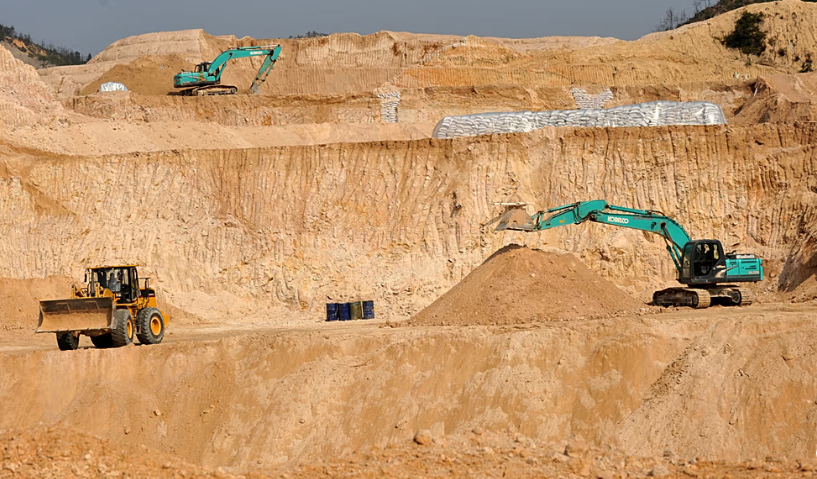
European Commission President Ursula von der Leyen has warned that the European Union is ready to deploy “all tools” at its disposal in response to China’s sweeping export controls on rare earth elements, a move that has disrupted global supply chains and rattled European industries.
The restrictions, imposed by Beijing on October 9, have intensified global concerns over access to critical minerals used in manufacturing electric vehicles, renewable energy systems, and advanced military technologies. China, which produces around 60% of the world’s rare earths and controls 90% of refining capacity, expanded its list of restricted minerals from seven to twelve, in what many see as retaliation for US tariffs.
Speaking over the weekend, von der Leyen said the EU “will not hesitate to act” if discussions with Beijing fail to restore stable trade conditions. “In the short term, we are focusing on finding solutions with our Chinese counterparts,” she said. “But we are ready to use all of the instruments in our toolbox to respond if needed.”
Her remarks came as EU officials prepared for emergency talks with Chinese representatives — beginning with a video conference on Monday, followed by in-person negotiations in Brussels later this week. The meetings come amid escalating global trade tensions, with US President Donald Trump and Chinese leader Xi Jinping also set to meet Thursday in South Korea to discuss their ongoing trade war.
The current standoff traces back to Washington’s decision in April to impose a 34% tariff on Chinese imports, raising total duties to 54%. Beijing responded by weaponising its dominance in rare earth exports, restricting supplies crucial to Western industries. Though the measures primarily target the United States, European manufacturers have been caught in the crossfire, struggling to secure the licenses required to import critical minerals.
European Council President António Costa raised the issue directly with Chinese Premier Li Qiang on Monday during the ASEAN summit in Kuala Lumpur. “I shared my strong concern about China’s expanding export controls on critical raw materials,” Costa said, urging Beijing to restore “fluid and predictable supply chains.”
Von der Leyen hinted that Brussels could invoke the EU’s Anti-Coercion Instrument — a 2023 mechanism allowing the bloc to impose countermeasures such as tariffs, procurement bans, or restrictions on intellectual property rights against countries engaging in economic coercion.
Meanwhile, the European Commission is pursuing a “de-risking” strategy aimed at reducing dependence on Chinese minerals. Over the weekend, von der Leyen announced RESourceEU, a new initiative to coordinate joint purchasing and stockpiling of rare earths, and to support European production and processing projects.
“We will speed up work on partnerships with countries like Ukraine, Australia, Canada, and Chile,” she said, adding that diversification is essential to safeguard Europe’s industrial resilience.
As diplomatic talks continue, tensions remain high. A planned ministerial meeting between EU Trade Commissioner Maroš Šefčovič and his Chinese counterpart Wang Wentao was abruptly cancelled, replaced by technical-level discussions — a sign of the deepening rift between Brussels and Beijing over critical raw materials.








Genetic Differences May Shape Effectiveness of Popular Weight-Loss Drugs, Study Finds

Seven-Day Meditation Retreat Linked to Measurable Changes in Brain and Body, Study Finds

Fuel Prices Surge Across Europe as Middle East Crisis Pushes Oil Above $100

Oil Prices Surge as Strait of Hormuz Closure Shakes Markets

Britain and Norway Step Up Naval Patrols to Protect Undersea Infrastructure from Russia

Meta Launches Muse Spark, Its First Major AI Model in Nine Months

Fresh Attacks Reported Across Gulf Despite US-Iran Ceasefire Announcement

Sweden Accuses Iran of Using Criminal Gangs to Target Dissidents as Teenagers Face Trial

US-Iran Ceasefire Eases Tensions as Europe Reacts; US Politics Spill Into Hungary Vote

ENI and Egypt Announce Major Gas Discovery Amid Rising Energy Costs

Meta Acquires Tilda Swinton VR Doc ‘Impulse: Playing With Reality’

Saudi Arabia’s Model for Sustainable Aviation Practices

Recent Developments in Small Business Taxes

Effective Drain Cleaning: A Key to a Healthy Plumbing System

Who was Ebrahim Raisi and his status in Iranian Politics?

China’s Historic Olympic Victory Sparks National Pride Amid Controversy

Carrectly: Revolutionizing Car Care in Chicago

Keely Hodgkinson Wins Britain’s First Athletics Gold at Paris Olympics in 800m

Saudi Arabia: Foreign Direct Investment Rises by 5.6% in Q1

Chinese Hackers Infiltrate Major U.S. Telecom Firms in Possible National Security Breach

Sony WF-10XM4: Headphones Are Our Absolute Favorite

10 Places You Can’t Miss If It’s Your First Time in European

New Census Data Will Shake Up Alabama Politics

16 Top of Our Favorite Outdoor Clothing Brands

Fashionable Summer Accessories to Dress Up Your Travel Look

How Sleeping Less than 7 Hours a Night Can Lead to Weight Gain
-
 Entertainment2 years ago
Meta Acquires Tilda Swinton VR Doc ‘Impulse: Playing With Reality’
-
 Business2 years ago
Saudi Arabia’s Model for Sustainable Aviation Practices
-
 Business2 years ago
Recent Developments in Small Business Taxes
-
 Home Improvement1 year ago
Effective Drain Cleaning: A Key to a Healthy Plumbing System
-
 Politics2 years ago
Who was Ebrahim Raisi and his status in Iranian Politics?
-
 Sports2 years ago
China’s Historic Olympic Victory Sparks National Pride Amid Controversy
-
 Business2 years ago
Carrectly: Revolutionizing Car Care in Chicago
-
 Sports2 years ago
Keely Hodgkinson Wins Britain’s First Athletics Gold at Paris Olympics in 800m