
Business
EBRD Lowers 2025 Growth Forecast Amid Trade Uncertainty and Slowing Investment

The European Bank for Reconstruction and Development (EBRD) has lowered its 2025 growth forecast for its economies to 3.2%, a 0.3 percentage point decrease from its September 2024 projection. The revision comes amid weaker external demand, slowing investment, and rising trade uncertainties, with the Bank warning that US trade tariffs could further impact growth.
Global Headwinds Affecting Growth
In its latest report released on Thursday, the EBRD cited geopolitical tensions, trade disruptions, and inflationary pressures as key challenges for economies within its regions, which span Central and Eastern Europe, the Caucasus, Central Asia, and the Southern and Eastern Mediterranean.
Despite inflation easing from its 2022 peak, fiscal imbalances and trade-related uncertainties are contributing to a cautious economic outlook. The Bank highlighted that weaker-than-expected recoveries in Central Europe, the Baltic states, and Southeastern European countries have negatively impacted manufacturing, exports, and investment.
Regional Growth Revisions
The EBRD’s forecast has been revised downward for most of its economies:
- Central Europe and the Baltic states: Growth now projected at 2.7%, down 0.5 percentage points, due to weak industrial activity and slower export recovery.
- Southeastern EU economies: Expected growth of 2.1%, a sharp 0.6-point downgrade, as investment remains subdued.
- Western Balkans: Minor downward revision to 3.6%, down 0.1 points.
- Central Asia: Still the fastest-growing region at 5.7%, though down 0.2 points, with Kazakhstan and Uzbekistan experiencing slower activity. Kyrgyzstan and Tajikistan are leading with 7% growth.
- Eastern Europe and the Caucasus: Growth outlook cut by 0.5 points to 3.6%, as the post-pandemic trade boom fades.
- Southern and Eastern Mediterranean: Weighed down by geopolitical instability and sluggish reforms, now projected at 3.7%, down 0.2 points.
- Turkey: No change to its 3.0% growth projection for 2025, but recovery to 3.5% is expected in 2026 as inflation eases and real wages rise.
Trade Tariffs Could Reshape Investment Flows
Trade uncertainty remains a significant risk. The EBRD estimates that a 10 percentage point increase in US tariffs on all imports could shave 0.1% to 0.2% off GDP in EBRD regions.
Countries with strong trade ties to the US—such as Jordan, Slovakia, Hungary, and Lithuania—could experience economic strain, while Georgia, Albania, Egypt, and Bulgaria would be vulnerable to higher tariffs on steel and aluminum.
However, some economies could benefit from trade shifts. Countries like Uzbekistan, Vietnam, Mexico, the UAE, and Saudi Arabia are expected to attract rising foreign investment as companies look to bypass tariff barriers and restructure supply chains.
Inflation and Fiscal Challenges Persist
While inflation in EBRD regions has fallen to 5.9% as of December 2024, it remains above pre-pandemic levels. Chief Economist Beata Javorcik warned that despite easing price pressures, shifting inflation drivers and delays in global interest rate cuts are complicating economic recovery.
Additionally, fiscal challenges are growing. Government deficits remain high, and military spending has doubled over the past decade, rising from 1.8% of GDP in 2014 to 3.5% in 2023. Further increases are expected, placing additional strain on public finances.
“Fiscal policy and wage dynamics now play a much greater role, and the path ahead requires careful policy calibration to ensure a stable growth trajectory,” Javorcik said.
As global uncertainties continue, the EBRD advises governments to focus on structural reforms, investment stability, and strategic fiscal planning to maintain economic momentum in 2025.











Genetic Differences May Shape Effectiveness of Popular Weight-Loss Drugs, Study Finds

Seven-Day Meditation Retreat Linked to Measurable Changes in Brain and Body, Study Finds

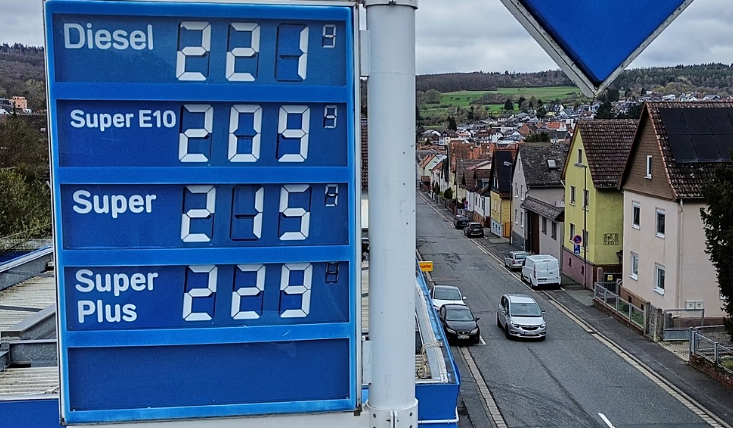
Fuel Prices Surge Across Europe as Middle East Crisis Pushes Oil Above $100

Oil Prices Surge as Strait of Hormuz Closure Shakes Markets

Britain and Norway Step Up Naval Patrols to Protect Undersea Infrastructure from Russia

Meta Launches Muse Spark, Its First Major AI Model in Nine Months

Fresh Attacks Reported Across Gulf Despite US-Iran Ceasefire Announcement

Sweden Accuses Iran of Using Criminal Gangs to Target Dissidents as Teenagers Face Trial

US-Iran Ceasefire Eases Tensions as Europe Reacts; US Politics Spill Into Hungary Vote

ENI and Egypt Announce Major Gas Discovery Amid Rising Energy Costs

Meta Acquires Tilda Swinton VR Doc ‘Impulse: Playing With Reality’

Saudi Arabia’s Model for Sustainable Aviation Practices

Recent Developments in Small Business Taxes

Effective Drain Cleaning: A Key to a Healthy Plumbing System

Who was Ebrahim Raisi and his status in Iranian Politics?

China’s Historic Olympic Victory Sparks National Pride Amid Controversy

Carrectly: Revolutionizing Car Care in Chicago

Keely Hodgkinson Wins Britain’s First Athletics Gold at Paris Olympics in 800m

Saudi Arabia: Foreign Direct Investment Rises by 5.6% in Q1

Chinese Hackers Infiltrate Major U.S. Telecom Firms in Possible National Security Breach

Sony WF-10XM4: Headphones Are Our Absolute Favorite

10 Places You Can’t Miss If It’s Your First Time in European

New Census Data Will Shake Up Alabama Politics

16 Top of Our Favorite Outdoor Clothing Brands

Fashionable Summer Accessories to Dress Up Your Travel Look

How Sleeping Less than 7 Hours a Night Can Lead to Weight Gain
-
 Entertainment2 years ago
Meta Acquires Tilda Swinton VR Doc ‘Impulse: Playing With Reality’
-
 Business2 years ago
Saudi Arabia’s Model for Sustainable Aviation Practices
-
 Business2 years ago
Recent Developments in Small Business Taxes
-
 Home Improvement1 year ago
Effective Drain Cleaning: A Key to a Healthy Plumbing System
-
 Politics2 years ago
Who was Ebrahim Raisi and his status in Iranian Politics?
-
 Sports2 years ago
China’s Historic Olympic Victory Sparks National Pride Amid Controversy
-
 Business2 years ago
Carrectly: Revolutionizing Car Care in Chicago
-
 Sports2 years ago
Keely Hodgkinson Wins Britain’s First Athletics Gold at Paris Olympics in 800m