Connect with us

Business

Britons Flock to Europe for Luxury Bargains as UK Loses VAT-Free Edge

Published

on

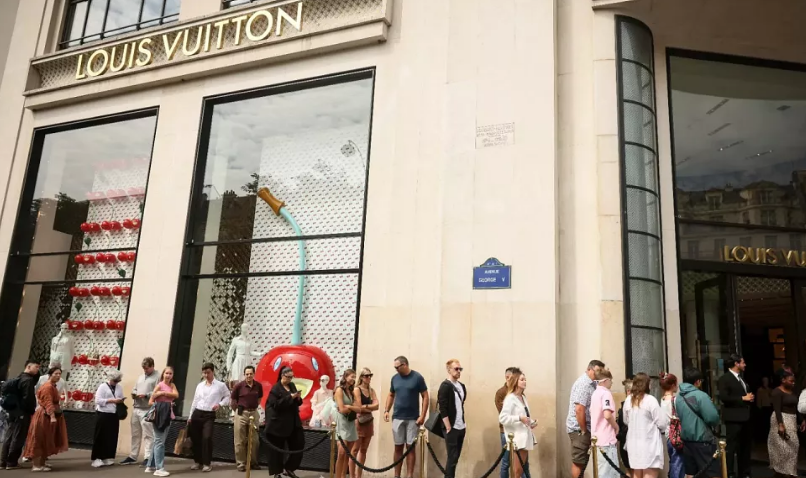
British shoppers are increasingly bypassing the UK’s luxury stores in favour of tax-free splurges in Paris, Milan, and other European hotspots, as the country remains the only major global shopping destination without VAT-free incentives for international visitors.

A new report from the Association of International Retail (AIR) reveals that Britons spent €854 million (£730 million) on VAT-free shopping in the EU in 2024 — a dramatic leap from €169 million in 2021, when post-Brexit rules first allowed UK residents to reclaim value-added tax on purchases made in the bloc.

“This is not just existing shoppers spending more,” the AIR report noted. “It’s an entirely new shopping-led tourism market spending additionally on hotels, travel, and dining — at Britain’s expense.”

Under EU rules, non-EU shoppers can claim back an average of 20% on purchases. For luxury goods, this can mean hundreds of euros saved. For example, a Loewe Puzzle Bag priced at €3,600 in Paris comes with a potential €700 refund — making a weekend trip abroad not just appealing but financially justifiable for big spenders.

The lure of savings has contributed to a tourism boom. According to the Paris Tourism Office, UK visitors to the French capital surged 44% in 2023, the highest jump among European nationalities.

The UK, however, scrapped its own VAT refund scheme in January 2021, citing cost and complexity, and now offers no such perks to overseas tourists — with Northern Ireland as the only exception under special post-Brexit arrangements. Even airport purchases, once a staple for VAT-free luxury, are now taxed, except for alcohol and tobacco.

See also  UAE Mobile Sector Set for Solid Growth as 5G Adoption Accelerates

Britain’s luxury sector has been vocal in its frustration. Walpole, the industry’s trade body representing brands such as Burberry, Harrods, and Rolls-Royce, warns that Brexit-related changes have contributed to sharp declines in sales. Its May report estimated luxury exports to the EU were up to 43% lower than they would have been without Brexit, with the fashion and accessories sector hit by a 64% loss.

“Luxury is a global phenomenon, but it calls the UK and Europe its home,” said Walpole CEO Helen Brocklebank, urging the government to restore competitive conditions. She pointed out that the EU produces 74% of global luxury goods and exports 62% of them — a lucrative market Britain risks ceding to rivals.

With many luxury shoppers showing no signs of tightening their purse strings — a 2024 YouGov survey found a quarter of Britons bought a luxury product in the past year — industry leaders warn that without policy changes, Britain will continue to lose high-value sales to European capitals.

Until Westminster reconsiders its stance, each British credit card swipe in Paris or Milan may mean another missed opportunity for London’s high-end retailers.

Business

Consortium Agrees to All-Cash Deal to Acquire Polish Parcel Company InPost

Published

on

A consortium of investors has reached an agreement to acquire all shares of Polish-founded parcel locker company InPost, betting on the growth of self-service delivery across Europe. The deal is structured as an all-cash public offer valued at €15.6 per share.

The consortium includes funds managed or advised by Advent International, FCWB LLC—a wholly owned subsidiary of FedEx Corporation—A&R Investments Ltd., and PPF Group, together with InPost itself. The agreement is conditional and recommended by the InPost board.

InPost is best known for its proprietary Paczkomat parcel machines, widely used across Poland. These white self-service lockers, often located in subway stations or local shops, allow customers to send and receive small and medium parcels independently, bypassing traditional courier methods.

“Together, we will strengthen our network and reach more consumers with enhanced fast and flexible delivery options as we continue our objective of redefining the European e-commerce sector,” said Rafał Brzoska, CEO and founder of InPost. Brzoska confirmed he will remain as chief executive, and the company’s headquarters, management team, and key innovation operations will continue to be based in Poland.

“Importantly, I remain fully committed to leading the InPost Group. Our headquarters, management team and key innovation capabilities will remain in Poland, which will continue to be the centre for implementing the group’s successful strategy,” Brzoska added.

InPost has been expanding its footprint internationally. In the UK, the company acquired a 95.5% stake in competitor Yodel last year. It also operates in Italy, France, Belgium, the Netherlands, Luxembourg, Spain, and Portugal, managing parcel deliveries for online vendors across multiple European markets.

See also  Italy Finalizes ITA Airways Stake Sale to Lufthansa in €325M Deal

Following the completion of the transaction, FedEx will become a shareholder in InPost, joining the other investors to guide the company’s growth strategy. Prior to the deal, InPost was owned by PPF Group, A&R Investments—funds controlled by Brzoska—and Advent International, with just over half of the shares held by other investors.

Analysts say the acquisition reflects the rising demand for self-service parcel solutions, particularly in Europe’s growing e-commerce sector. The all-cash nature of the deal underscores confidence in InPost’s operational model and its ability to scale across multiple countries.

InPost has built a reputation for innovation in last-mile delivery, offering convenient alternatives to home delivery and enabling retailers to meet the increasing expectations of online shoppers. The company’s continued expansion and strong market position in Poland and abroad make it a strategic target for investors seeking to capitalize on the shift toward automated parcel services.

With Brzoska remaining at the helm and the company’s operational base secure in Poland, InPost looks set to maintain its leadership in self-service delivery while leveraging the backing of global investors to expand further across Europe.

Continue Reading

Business

Scandinavian Airlines Looks to AI and Consolidation for Growth Amid Industry Challenges

Published

on

The airline’s chief says artificial intelligence will help rebuild schedules during storms and improve efficiency in an industry that faces constant uncertainty. Scandinavian Airlines (SAS) is preparing for a new phase of growth while awaiting regulatory approval for its integration into the Air France-KLM group, according to President and CEO Anko van der Werff.

Speaking at the World Governments Summit in Dubai, van der Werff acknowledged the delay in the regulatory process. “We expect to get regulatory approval in the second half of the year,” he said. “I’m always a bit impatient… it’s a slow process.” He emphasized that many initiatives are effectively on hold, including joint ventures and partnerships that could unlock the benefits of a larger global network.

Despite industry consolidation, van der Werff is confident the SAS brand will remain strong. He sees the airline’s Scandinavian hubs, particularly Copenhagen, as a natural engine for growth amid capacity constraints elsewhere in the Air France-KLM network. “There will be real, real growth potential,” he said, predicting that travellers will “see more of SAS in the future than what you’re seeing today.”

The airline is also exploring the practical applications of artificial intelligence across operations. Van der Werff said SAS spent much of last year identifying “five big bets” for AI, with a focus on improving customer experience and operational efficiency. Handling disruptions during harsh Nordic winters is a key priority. “Occasionally we get hit by real snowstorms,” he said, describing days with “100 cancellations a day” and aircraft, crew, and passengers scattered across the network. AI, he noted, could rebuild schedules faster and more accurately than human teams alone.

See also  Azerbaijan’s SOFAZ fund gains from rising gold prices amid global market uncertainty

Van der Werff stressed that the aviation industry is moving beyond experimentation with AI toward tangible applications. While fully autonomous passenger aircraft remain a distant prospect, he highlighted smaller improvements such as optimising onboard supplies, reducing fuel use, and automating administrative tasks.

Disruption management, he said, is the most urgent area for AI implementation. “Tens of thousands, hundreds of thousands of passengers” may need rerouting during large-scale cancellations, and faster decision-making could reduce hotel stays, reposition aircraft and crews, and limit the ripple effects of delays. “How do you put that puzzle back together more quickly, more efficiently?” van der Werff asked.

Reflecting on the broader industry, he noted that uncertainty is constant, from health crises and financial shocks to geopolitical disruptions and fluctuating demand. “Something will always happen,” he said, citing events such as SARS, the financial crisis, and COVID-19.

Van der Werff called for faster decision-making in Europe to maintain competitiveness. “Europe needs to move faster,” he said, urging reduced bureaucracy and a clearer strategic vision to support innovation. Despite challenges, he remains optimistic about consolidation and technological advances, while highlighting the potential for Europe to embrace entrepreneurship and risk-taking once more.

Continue Reading

Business

Azerbaijan’s SOFAZ fund gains from rising gold prices amid global market uncertainty

Published

on

Azerbaijan’s State Oil Fund (SOFAZ) is seeing strong gains from its gold holdings, benefiting from the ongoing rise in global gold prices and generating substantial revenue for the country. The fund’s strategy reflects a wider trend among sovereign investors, who are increasing gold allocations to shield assets from global instability.

SOFAZ, the country’s sovereign wealth fund, was established to manage revenues from oil and gas exports and support long-term economic stability. The fund also plays a key role in financing the state budget and strategic national projects. As of January 1, 2026, gold accounted for 38.2 percent of SOFAZ’s investment portfolio, up from the previous year.

“Gold holdings are managed within the Fund’s approved investment framework, taking into account target allocations and allowable deviation bands,” SOFAZ said in a statement to Euronews. The fund uses gold as a hedge against external shocks, inflation, and broader market stress, aiming to protect capital and reduce exposure to volatility.

Gold prices recently reached record levels, surpassing $5,500 (€4,660) per ounce before falling sharply following the announcement of Kevin Warsh as the next chair of the US Federal Reserve. By Wednesday, prices rebounded to $5,000 (€4,230) per ounce. SOFAZ noted that its decisions on gold investments are guided by the fund’s overall risk-return strategy rather than short-term price movements.

“Gold plays a stabilising role within the Fund’s overall portfolio, and increasing gold holdings reduces sensitivity to adverse market developments, supporting a more balanced strategic asset allocation,” the fund said. Expanding its gold reserves is intended to safeguard Azerbaijan’s strategic financial assets and strengthen resilience amid global economic uncertainty.

See also  China Vows to 'Fight to the End' as Trump’s 104% Tariffs Take Effect

SOFAZ began adding gold to its portfolio in 2012, gradually increasing allocations over time. In 2025, the fund purchased 53.4 tonnes of gold, raising total reserves to 200 tonnes. Over the past five years, SOFAZ generated $22.7 billion (€18.95 billion) in investment returns, including the benefits of gold price appreciation and exchange-rate effects.

The fund attributes its ability to navigate market downturns and recoveries to a diversified and resilient portfolio. The equity sub-portfolio, covering both public and private equities, has been a major driver of growth. Since the diversification strategy was launched in 2012, the equity portfolio has increased more than fourfold, delivering a 305 percent return and nearly $10 billion (€8.35 billion) in investment gains.

By combining oil revenues with a diversified investment approach and growing gold reserves, SOFAZ continues to strengthen Azerbaijan’s financial stability, preparing the country for both domestic and global economic challenges.

Continue Reading

Trending