Connect with us

Business

Bitcoin Surges Past $100,000 Amid Regulatory Optimism Under Trump Presidency

Published

on

Bitcoin has crossed the $100,000 mark for the first time, driven by a rally sparked by Donald Trump’s presidential victory and his pro-cryptocurrency stance. The milestone comes as President-elect Trump signals a lighter regulatory approach to the crypto industry, including plans to nominate cryptocurrency advocate Paul Atkins as chair of the Securities and Exchange Commission (SEC).

Historic Rally for Bitcoin

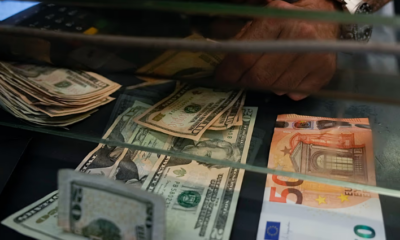
The world’s most popular cryptocurrency surged from $69,374 (€65,833.48) on Election Day, November 5, to an all-time high of $103,713 (€98,386.82) on Wednesday, according to CoinDesk. While it dipped slightly to $102,000 (€96,789.35) early Thursday, the milestone reflects newfound optimism among crypto investors.

The rise marks a stark contrast to Bitcoin’s slump below $17,000 (€16,131.21) just two years ago after the collapse of the FTX crypto exchange. However, experts caution that the highly volatile nature of cryptocurrency markets means the longevity of the $100,000 milestone remains uncertain.

Trump’s Crypto-Friendly Policies

Trump, who previously expressed skepticism about cryptocurrencies, has pivoted to a pro-crypto agenda. During his campaign, he pledged to make the U.S. the “crypto capital of the planet” and announced plans for a “strategic reserve” of Bitcoin. His administration also accepted crypto donations, signaling an embrace of digital currencies.

In a key move, Trump intends to nominate Paul Atkins, a known advocate for limited market regulation, as SEC chair. Atkins, a former SEC commissioner under George W. Bush, has been critical of overregulation in the crypto sector and previously joined the Token Alliance, a cryptocurrency advocacy group.

Under outgoing SEC chair Gary Gensler, the agency took a hardline stance against crypto, penalizing companies for violating securities laws. While Gensler’s tenure saw the approval of Bitcoin exchange-traded funds (ETFs), his approach drew criticism from industry leaders who described it as “hostile.”

See also  European Markets Tumble Amid Global Turmoil and Recession Fears

Risks and Challenges

Despite the optimism, experts urge caution, highlighting the volatility of Bitcoin and its susceptibility to broader market conditions. Past fluctuations saw Bitcoin soar during the tech boom of 2021 and crash amid Federal Reserve rate hikes and the FTX scandal.

“There’s no magic eight ball to predict what comes next,” said Adam Morgan McCarthy, a research analyst at Kaiko, advising investors to avoid overexposure to risk.

Environmental Concerns

Bitcoin mining, an energy-intensive process, continues to draw scrutiny for its environmental impact. A recent study by the United Nations found that Bitcoin mining emissions in 2020-2021 were equivalent to burning 84 billion pounds of coal. While the industry has increased its reliance on clean energy, environmentalists remain critical of its overall carbon footprint.

As the Trump administration gears up, the crypto industry is poised for a regulatory overhaul, with investors and advocates hoping for a new era of growth and legitimacy. However, risks remain, both for markets and the environment.

Business

Alphabet Plans Rare 100-Year Bond as Investor Demand Surges Amid AI Spending Push

Published

on

“Google’s parent company Alphabet is offering a rare 100-year bond in sterling markets after its original $20bn (€16.8bn) US dollar bond sale was massively oversubscribed. This makes it the first tech company to sell a century bond since Motorola in 1997.”

Alphabet is moving ahead with plans to issue a highly unusual 100-year bond in the sterling market, following overwhelming investor interest in its recent US dollar bond sale. The technology giant intends to raise about £1 billion (€1.15 billion) through the century bond, marking a notable return of ultra-long corporate debt in the technology sector.

Reports indicate the sterling offering has already attracted orders approaching ten times the amount Alphabet plans to raise. The move follows a major bond sale earlier this week in which Alphabet raised $20 billion (€16.8 billion) in US dollar-denominated debt. The original target of $15 billion (€12.6 billion) was increased after investor demand exceeded $100 billion (€84 billion).

The company is preparing to issue debt across several currencies as it seeks to broaden its funding sources. Alongside the sterling century bond, Alphabet is reportedly exploring a bond sale in Swiss francs. The planned offering would mark the first time a technology company has issued a 100-year bond in nearly three decades. Motorola last sold a century bond in 1997.

Alphabet’s US dollar debt package was divided into seven segments, with the longest maturity extending to 40 years and scheduled to mature in 2066. Pricing for the bonds is expected to be slightly tighter than initially projected, reflecting strong investor interest. The greatest demand was recorded for shorter-term bonds, with three-year securities priced at only 0.27 percent above US Treasury yields.

See also  Labour Shortages Persist Across Europe as Over 3 Million Jobs Remain Vacant

The bond sales are being managed by JPMorgan, Goldman Sachs and Bank of America, which are coordinating the company’s multi-currency fundraising effort.

Industry analysts say issuing debt in multiple currencies allows Alphabet to reach a broader pool of investors while managing borrowing costs. Sterling markets currently offer relatively lower interest rates compared with US dollar markets, which could help make the century bond more attractive and cost-efficient for the company.

Alphabet’s borrowing activity comes as technology companies increase spending on artificial intelligence infrastructure. The company recently announced plans to invest more than $185 billion (€155 billion) in capital expenditure tied largely to artificial intelligence development and expansion of cloud computing services.

To support this spending, Alphabet’s long-term debt has grown sharply, reaching $46.5 billion (€39 billion) in 2025. Despite this increase, the company maintains strong liquidity, holding more than $125 billion in cash reserves.

Other major technology firms have also raised large amounts of debt to finance AI investments. Oracle recently secured $25 billion (€21 billion) in a bond sale that attracted record investor demand. Financial analysts estimate technology hyperscalers could borrow around $400 billion (€335.7 billion) in 2026, more than double the total borrowed in 2025. The increase could push overall issuance of high-grade US corporate bonds to record levels this year.

Continue Reading

Business

Consortium Agrees to All-Cash Deal to Acquire Polish Parcel Company InPost

Published

on

A consortium of investors has reached an agreement to acquire all shares of Polish-founded parcel locker company InPost, betting on the growth of self-service delivery across Europe. The deal is structured as an all-cash public offer valued at €15.6 per share.

The consortium includes funds managed or advised by Advent International, FCWB LLC—a wholly owned subsidiary of FedEx Corporation—A&R Investments Ltd., and PPF Group, together with InPost itself. The agreement is conditional and recommended by the InPost board.

InPost is best known for its proprietary Paczkomat parcel machines, widely used across Poland. These white self-service lockers, often located in subway stations or local shops, allow customers to send and receive small and medium parcels independently, bypassing traditional courier methods.

“Together, we will strengthen our network and reach more consumers with enhanced fast and flexible delivery options as we continue our objective of redefining the European e-commerce sector,” said Rafał Brzoska, CEO and founder of InPost. Brzoska confirmed he will remain as chief executive, and the company’s headquarters, management team, and key innovation operations will continue to be based in Poland.

“Importantly, I remain fully committed to leading the InPost Group. Our headquarters, management team and key innovation capabilities will remain in Poland, which will continue to be the centre for implementing the group’s successful strategy,” Brzoska added.

InPost has been expanding its footprint internationally. In the UK, the company acquired a 95.5% stake in competitor Yodel last year. It also operates in Italy, France, Belgium, the Netherlands, Luxembourg, Spain, and Portugal, managing parcel deliveries for online vendors across multiple European markets.

See also  Pizza Prices Rise Across Europe as Inflation and Costs Bite Consumers

Following the completion of the transaction, FedEx will become a shareholder in InPost, joining the other investors to guide the company’s growth strategy. Prior to the deal, InPost was owned by PPF Group, A&R Investments—funds controlled by Brzoska—and Advent International, with just over half of the shares held by other investors.

Analysts say the acquisition reflects the rising demand for self-service parcel solutions, particularly in Europe’s growing e-commerce sector. The all-cash nature of the deal underscores confidence in InPost’s operational model and its ability to scale across multiple countries.

InPost has built a reputation for innovation in last-mile delivery, offering convenient alternatives to home delivery and enabling retailers to meet the increasing expectations of online shoppers. The company’s continued expansion and strong market position in Poland and abroad make it a strategic target for investors seeking to capitalize on the shift toward automated parcel services.

With Brzoska remaining at the helm and the company’s operational base secure in Poland, InPost looks set to maintain its leadership in self-service delivery while leveraging the backing of global investors to expand further across Europe.

Continue Reading

Business

Scandinavian Airlines Looks to AI and Consolidation for Growth Amid Industry Challenges

Published

on

The airline’s chief says artificial intelligence will help rebuild schedules during storms and improve efficiency in an industry that faces constant uncertainty. Scandinavian Airlines (SAS) is preparing for a new phase of growth while awaiting regulatory approval for its integration into the Air France-KLM group, according to President and CEO Anko van der Werff.

Speaking at the World Governments Summit in Dubai, van der Werff acknowledged the delay in the regulatory process. “We expect to get regulatory approval in the second half of the year,” he said. “I’m always a bit impatient… it’s a slow process.” He emphasized that many initiatives are effectively on hold, including joint ventures and partnerships that could unlock the benefits of a larger global network.

Despite industry consolidation, van der Werff is confident the SAS brand will remain strong. He sees the airline’s Scandinavian hubs, particularly Copenhagen, as a natural engine for growth amid capacity constraints elsewhere in the Air France-KLM network. “There will be real, real growth potential,” he said, predicting that travellers will “see more of SAS in the future than what you’re seeing today.”

The airline is also exploring the practical applications of artificial intelligence across operations. Van der Werff said SAS spent much of last year identifying “five big bets” for AI, with a focus on improving customer experience and operational efficiency. Handling disruptions during harsh Nordic winters is a key priority. “Occasionally we get hit by real snowstorms,” he said, describing days with “100 cancellations a day” and aircraft, crew, and passengers scattered across the network. AI, he noted, could rebuild schedules faster and more accurately than human teams alone.

See also  European Markets Tumble Amid Global Turmoil and Recession Fears

Van der Werff stressed that the aviation industry is moving beyond experimentation with AI toward tangible applications. While fully autonomous passenger aircraft remain a distant prospect, he highlighted smaller improvements such as optimising onboard supplies, reducing fuel use, and automating administrative tasks.

Disruption management, he said, is the most urgent area for AI implementation. “Tens of thousands, hundreds of thousands of passengers” may need rerouting during large-scale cancellations, and faster decision-making could reduce hotel stays, reposition aircraft and crews, and limit the ripple effects of delays. “How do you put that puzzle back together more quickly, more efficiently?” van der Werff asked.

Reflecting on the broader industry, he noted that uncertainty is constant, from health crises and financial shocks to geopolitical disruptions and fluctuating demand. “Something will always happen,” he said, citing events such as SARS, the financial crisis, and COVID-19.

Van der Werff called for faster decision-making in Europe to maintain competitiveness. “Europe needs to move faster,” he said, urging reduced bureaucracy and a clearer strategic vision to support innovation. Despite challenges, he remains optimistic about consolidation and technological advances, while highlighting the potential for Europe to embrace entrepreneurship and risk-taking once more.

Continue Reading

Trending