
Tech
Taiwan’s AI Stock Boom Fuels Borrowing Frenzy as Investors Chase Big Gains


Taiwan’s booming stock market has encouraged a growing number of investors to borrow heavily to buy shares, with some taking out bank loans or remortgaging their homes in hopes of profiting from the island’s AI-driven technology rally.
The Taiwan stock market surged 59 per cent during the first half of the year, driven largely by strong demand for artificial intelligence hardware produced by companies including Taiwan Semiconductor Manufacturing Co. The sharp rise has attracted investors who believe technology stocks still have room to climb.
Real-estate worker Lucas Chen, 34, borrowed NT$5 million, about €136,000, to increase his stock investments. Within six months, his technology holdings had risen by almost 70 per cent, increasing the value of his portfolio by roughly NT$20 million, or €544,000, by late June.
About half of Chen’s investments were in TSMC, which represented around 45 per cent of the Taiwan Stock Exchange at the end of 2025. He used his Tesla as collateral for two of three bank loans.
Chen, who has traded stocks for a decade, said he believed borrowing could be manageable if investors carefully calculated the risks.
However, the rapid expansion of debt-funded trading has also brought significant losses. Financial influencer Yeh Yu-shuo, whose Facebook investment group has hundreds of thousands of members, said some users had reported severe emotional distress after losing money.
One anonymous investor said he had put NT$10 million into the market, including NT$6 million borrowed through a mortgage, and had lost almost half of the amount. The investor described waking during the night in panic and said he had sought professional help.
The risks have grown as the technology rally became more volatile. Global markets reached record levels earlier this year as companies increased spending on AI data centres, hardware and software. The rally weakened in July as investors questioned whether the huge investments would generate sufficient returns and worried that technology stocks had become too expensive.
Taiwanese investors have increasingly turned to banks and brokers to finance their purchases. Margin trading, which allows investors to buy securities with borrowed money, rose nearly 20 per cent during the first half of the year compared with the previous six months, according to Taiwan Stock Exchange data.
Norman Yin, a money and banking professor at National Chengchi University, said younger investors had been buying stocks at an unusually rapid pace. He said banks were willing to lend as deposits remained high and property prices had been relatively stagnant.
Authorities have warned investors about the dangers of taking on excessive debt. Taiwan’s Financial Supervisory Commission said overall credit risk remained under control, while the stock exchange has published social media videos warning younger investors about the consequences of failing to repay loans.
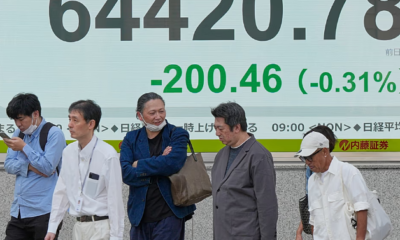
The market has also shown how quickly gains can disappear. Taiwan’s benchmark index fell about 16 per cent between its June 22 record and July 30 before recovering most of the losses.
Despite the volatility, many investors remain optimistic. Chen said the market represented a major opportunity for his generation, while Yeh said he remained confident as long as TSMC continued to perform strongly.











Cryptocurrency exchange Binance is investigating a security breach that resulted in an estimated $6.3 billion in stolen digital assets, in what could become the largest cryptocurrency theft on record. Early findings point to a compromised employee laptop and possible involvement by a North Korean hacking group.
The incident unfolded over less than four hours, with attackers gaining access to several of Binance’s online wallets and transferring funds to addresses under their control.
Binance, the world’s largest cryptocurrency exchange, said its initial investigation suggested that a compromised laptop belonging to a DevOps engineer may have provided an entry point. The attackers allegedly used access to a service container to submit unauthorised withdrawal transactions.
The company later stressed that the breach involved multiple factors and was more complex than initially understood. It said there was no evidence that wallet private keys had been exposed.
Binance temporarily suspended deposits and withdrawals while carrying out security checks. It also revoked authorisation for the affected addresses and began working with law enforcement agencies and blockchain intelligence companies to trace and recover the assets.
Billions in assets frozen
The scale of the breach became clearer on Friday as Binance issued a series of updates. The exchange initially reported that $2.54 billion had been frozen, before raising the figure to $3 billion.
Blockchain data infrastructure company Bitquery estimated that Binance’s withdrawal system had authorised transfers worth approximately $6.3 billion from 17 hot wallets between Thursday night and early Friday morning.
Stablecoin issuers Tether, Circle and Arbitrum, alongside several smaller companies, helped freeze affected assets to prevent further movement. Bitquery estimated that the attackers had exchanged around $729 million in stablecoins before the freezes took effect.
Despite the intervention, approximately $3.1 billion remained under the attackers’ control, primarily in Ether and Bitcoin, according to the company’s analysis. The stolen funds were distributed across nine blockchains, with Ethereum, Bitcoin and TRON among the networks most affected.
Binance said it would cover all losses using company funds and had reserved approximately $6.34 billion for the incident. It also said it had begun recovering affected assets for customers.
The exchange pledged to publish a detailed technical report once the investigation is complete and the findings have been verified. It also plans to release an updated proof of reserves after security measures have been completed.
North Korean group suspected
Blockchain intelligence and cybersecurity firm TRM Labs has attributed the attack to TraderTraitor, a hacking group linked to North Korea.
“Based on robust on- and off-chain intelligence, we make this judgment with high confidence,” TRM Labs said.
The group has previously been linked to major cryptocurrency thefts. The FBI identified TraderTraitor as responsible for the $1.5 billion Bybit exchange hack in February 2025.
Binance has not publicly confirmed the identity of the attackers. Its investigation remains ongoing, with law enforcement agencies and blockchain intelligence partners assisting efforts to trace and recover the remaining funds.
The incident has renewed concerns about the security of cryptocurrency exchanges, particularly the risks associated with online wallets and access to internal technology systems.

The European Centre for Digital Rights, known as Noyb, is filing five complaints against US-based artificial intelligence startup Scale AI over alleged violations of workers’ data protection rights on its Outlier platform.
The complaints, announced on Tuesday, October 27, concern the platform’s tracking of freelancers and the safeguards available to workers employed under its freelance contract model. Noyb said it was submitting two complaints in Austria and one each in France, the Netherlands and Italy.
Scale AI, headquartered in San Francisco, operates Outlier, a platform that recruits freelancers and subject-matter experts to help train, assess and improve artificial intelligence models. The service uses a platform-based employment model similar to those used by ride-hailing and food delivery companies.
According to Noyb, Outlier has more than 900,000 freelancers who evaluate and correct AI-generated responses. Its customers include Meta, OpenAI, Google and the US government, meaning workers contribute their expertise to systems developed and used by major technology companies.
The organisation alleges that Outlier collects extensive personal information and requires workers to undergo invasive biometric checks before they can earn money. It argues that the platform’s monitoring practices conflict with European data protection standards and workers’ expectations of privacy.
Noyb also claims that trackers operated by companies including TikTok, LinkedIn and Facebook are placed on workers’ devices while they use the platform. These trackers allegedly give the companies access to personal information, including IP addresses, contact details and data that could be used for targeted advertising and profiling.
“Such constant and extensive tracking while working really goes against all reasonable expectations. Why should LinkedIn or Facebook know which tasks you’re working on?” said Lisa Steinfeld Leiser, a data protection lawyer at Noyb.
The group said the alleged monitoring raised concerns about the handling of personal data in the workplace and the ability of freelancers to protect their information while carrying out assignments.
Noyb further alleges that workers must repeatedly complete biometric verification procedures administered by Persona, a separate company. The process reportedly requires workers to record videos of their faces and upload identification documents.
The complaints come as European authorities increase scrutiny of the artificial intelligence sector. The EU’s AI Office opened investigations into OpenAI and Anthropic earlier this month, reflecting broader concerns about the development and deployment of AI systems.
Regulatory approaches are also diverging internationally. In the United States, President Donald Trump signed an agreement with six major American AI companies allowing them to oversee aspects of their own development practices.
The dispute highlights a growing challenge for the industry: balancing the demand for large-scale human input to train AI systems with the privacy rights of the people providing that work. The allegations against Scale AI have yet to be established through the complaints process.
Japanese internet infrastructure company GMO Internet will compensate customers for financial losses linked to unauthorised trading following a cyberattack on its cloud service. The company will also pay ¥5,000 (€28) to every customer currently using the affected service, regardless of whether they suffered losses.
The attack targeted Onamae.com Desktop Cloud, a virtual private server service that allows customers to access remote desktop environments. GMO said customer information had been stolen and some users had reported transactions in their securities and foreign-exchange accounts that they had not authorised.
According to founder and chief executive Masatoshi Kumagai, the incident potentially affected 26,739 servers and involved unauthorised activity on trading accounts held with more than 70 securities and foreign-exchange firms in Japan and overseas.
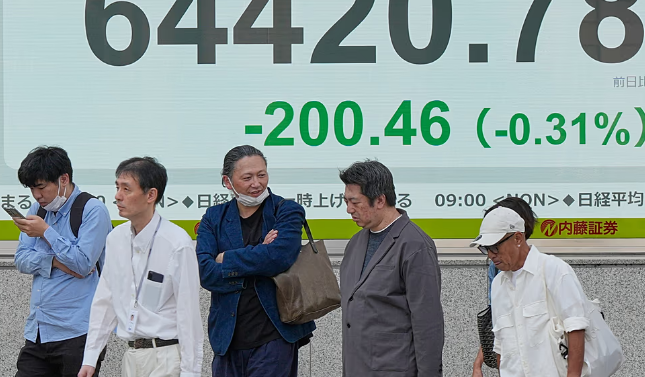
GMO shares fell almost 16% on Monday, reaching a four-month low. The company had a market value of approximately $2.6 billion at Friday’s close.
GMO began investigating the incident on 19 October after receiving an inquiry from a customer. The company confirmed the installation of malicious software in some customer server environments the following day. It then suspended new applications and access to the service’s control panel before beginning to shut down all servers on 21 October to limit further damage.
In a blog post published on Sunday, Kumagai apologised for the company’s handling of the incident. He acknowledged that security specialists had identified concerns before the attack but said the company’s response had been insufficient.
GMO also disclosed that it had received a ransom demand from a party believed to be responsible for the attack. In an update to his blog on Monday, Kumagai said the attackers had demanded $50 million in cryptocurrency and threatened to release company and customer information.
The company has refused to pay the ransom and is cooperating with police and other authorities.
Customers who wish to continue using a Windows desktop environment will be offered an alternative service operating on independent cloud infrastructure, free of charge for six months. GMO also plans to redesign its security architecture and investigate the breach with external experts.
Kumagai has called on the Japanese government to strengthen its active cyberdefence capabilities, arguing that private companies cannot tackle sophisticated cross-border attacks alone. GMO has asked authorities to consider applying the framework to the incident and offered to share evidence and technical information with investigators.
The breach comes amid wider concerns about digital security, following the disclosure of two critical vulnerabilities in PHP, a programming language widely used to build websites and applications. Security authorities warned that the flaws could allow malicious code to run on vulnerable servers, although GMO has not confirmed any connection between those vulnerabilities and the attack.
A separate Google Cloud outage in the United Kingdom last week disrupted online services, including those operated by financial technology company Revolut, highlighting the wider consequences of disruptions to digital infrastructure.

Ryanair First-Half Profit Falls 15% as Higher Fuel Costs and Lower Fares Hit Earnings

Fitch Cuts France’s Debt Outlook to Negative Amid Budget Deadlock and Weak Growth

Breast Cancer Screening Gaps Across Europe Leave Women Facing Unequal Access to Early Diagnosis

Uzbekistan Launches Apple Pay and Google Pay Following Financial Sector Reforms

Binance Investigates $6.3 Billion Crypto Theft as North Korean Hackers Suspected

AstraZeneca Third-Quarter Profit Jumps 23% as Drugmaker Plans $1.5 Billion in Annual Savings

Jet2 Charter Introduces All-Business-Class Boeing 737 for Premium Group Travel

Belgium Takes Tax Portal Offline After Cyberattack Disrupts Digital Services

UN General Assembly Renews Call to End US Embargo on Cuba as Support Falls to 30-Year Low

Pilot Fatigue Raises Safety Concerns as Survey Finds Widespread Microsleeps

Meta Acquires Tilda Swinton VR Doc ‘Impulse: Playing With Reality’

China’s Historic Olympic Victory Sparks National Pride Amid Controversy

Saudi Arabia’s Model for Sustainable Aviation Practices

Recent Developments in Small Business Taxes

Effective Drain Cleaning: A Key to a Healthy Plumbing System

Who was Ebrahim Raisi and his status in Iranian Politics?

Keely Hodgkinson Wins Britain’s First Athletics Gold at Paris Olympics in 800m

Carrectly: Revolutionizing Car Care in Chicago

Nobel Laureate Muhammad Yunus Proposed as Head of Bangladesh’s Interim Government Following Hasina’s Resignation

Chinese Hackers Infiltrate Major U.S. Telecom Firms in Possible National Security Breach

Sony WF-10XM4: Headphones Are Our Absolute Favorite

10 Places You Can’t Miss If It’s Your First Time in European

New Census Data Will Shake Up Alabama Politics

16 Top of Our Favorite Outdoor Clothing Brands

Fashionable Summer Accessories to Dress Up Your Travel Look

How Sleeping Less than 7 Hours a Night Can Lead to Weight Gain
-
 Entertainment2 years ago
Meta Acquires Tilda Swinton VR Doc ‘Impulse: Playing With Reality’
-
 Sports2 years ago
China’s Historic Olympic Victory Sparks National Pride Amid Controversy
-
 Business2 years ago
Saudi Arabia’s Model for Sustainable Aviation Practices
-
 Business2 years ago
Recent Developments in Small Business Taxes
-
 Home Improvement2 years ago
Effective Drain Cleaning: A Key to a Healthy Plumbing System
-
 Politics2 years ago
Who was Ebrahim Raisi and his status in Iranian Politics?
-
 Sports2 years ago
Keely Hodgkinson Wins Britain’s First Athletics Gold at Paris Olympics in 800m
-
 Business2 years ago
Carrectly: Revolutionizing Car Care in Chicago