
News
Thailand Holds Security Meeting After Coordinated Attacks in Southern Provinces


Thailand’s Prime Minister Anutin Charnvirakul held an urgent security meeting after a wave of coordinated attacks struck three southern provinces where a long-running Muslim insurgency remains active.
The meeting took place on Sunday before Anutin travelled to the northern province of Nan, which has been badly affected by flooding. Security officials briefed the prime minister on 51 incidents reported overnight in Narathiwat, Pattani and Yala.
The violence involved small explosions, arson and damage to property. Three civilians were injured and were recovering on Sunday, while there were no immediate reports of clashes between attackers and security forces.
One of the most prominent targets was a 7-Eleven convenience store in Pattani. Video shared on social media appeared to show armed men outside the store as customers and employees fled before the building was set on fire.
In Narathiwat, a bomb damaged railway tracks, forcing authorities to suspend both local and long-distance train services. Officials had not announced when services would resume, citing security concerns.
No organisation immediately claimed responsibility for the attacks, and authorities had not publicly identified a suspect.
However, security analysts generally associate major coordinated attacks in the region with the Barisan Revolusi Nasional Melayu Patani, commonly known as BRN. The group is the largest insurgent organisation operating in Thailand’s deep south and has been involved in intermittent peace negotiations with the government.
Narathiwat, Pattani and Yala are the only provinces in Thailand where Muslims form a majority of the population. The BRN has sought greater self-rule for the region, while many local Muslim residents have complained about discrimination and unequal treatment.
The insurgency has deep historical roots, but violence increased sharply in 2004 following a series of confrontations and a government crackdown. Thousands of people have since been killed.
According to Deep South Watch, a research organisation based at Prince of Songkla University in Pattani, 7,837 people have died in violence across the region during the past 22 years.
The latest attacks followed a serious incident in July, when about 10 attackers opened fire and threw pipe bombs at a security checkpoint in Narathiwat. Five paramilitary soldiers were killed and six civilians were wounded, including a 10-year-old boy.
Security analyst Don Pathan said the latest attacks could be intended to demonstrate the insurgents’ capabilities while peace discussions continue.
He said the attackers appeared less focused on causing large numbers of deaths and more interested in sending a message to the government about their ability to disrupt security and daily life across the southern provinces.




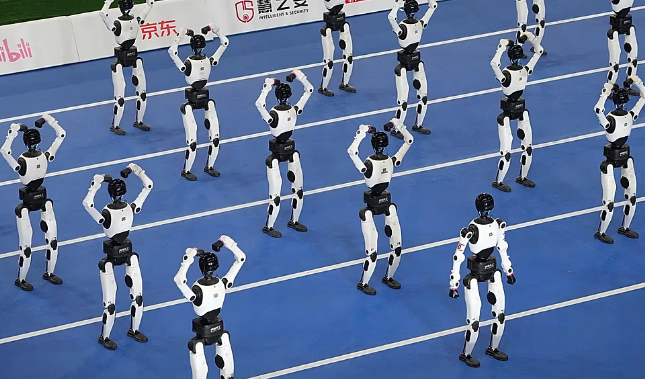
A Chinese humanoid robot has stunned spectators at the World Humanoid Robot Games in Beijing after completing the 100 metres in 9.39 seconds, faster than Usain Bolt’s long-standing human world record.
The robot, known as TienKung, was developed by the Beijing Centre for Humanoid Robotics and recorded the time during the competition on Saturday. Bolt set the men’s 100-metre world record of 9.58 seconds at the 2009 World Championships in Berlin.
Organisers described the robot’s performance as a major demonstration of the rapid progress being made in humanoid robotics, particularly in China.
“In one year alone the robots competing have become twice as fast,” the organisers said in a post on X. They noted that the winning time at last year’s event was 21.50 seconds.
The sharp improvement has drawn attention to the speed at which robotics companies are developing machines capable of performing tasks traditionally associated with humans.
The World Humanoid Robot Games are being held at Beijing’s National Speed Skating Oval, known as the “Ice Ribbon”. The second edition has attracted 666 teams and 2,056 robots from 16 countries.
Competitors are taking part in a wide range of events, including athletics, boxing, football, weightlifting and gymnastics.
Videos from the competition have spread across social media, with some clips showing robots struggling to remain upright or falling backwards after completing races. While the footage has attracted plenty of humour from viewers, organisers said the underlying technological progress should not be underestimated.
They said robots had been “slow, ponderous machines” at the inaugural games, with many struggling to finish sprint events. The latest performances, they argued, show how quickly the technology is developing.
China has placed humanoid robots among its strategic emerging industries, with companies and government officials increasingly focused on advancing artificial intelligence, robotics hardware and automated systems.
The rapid progress has also attracted significant interest from investors. Research from Morgan Stanley has estimated that the global humanoid robotics market could eventually reach $5 trillion by 2050.
The financial services group has also projected that more than one billion humanoid robots could be operating worldwide by that year.
China is expected to account for a substantial share of that growth. Morgan Stanley estimates that around 302.3 million humanoid robots could be in use in China by 2050.
The performance in Beijing adds to growing evidence of how quickly humanoid robots are improving, although their ability to match humans in everyday tasks remains a much larger challenge than setting a sprint time.
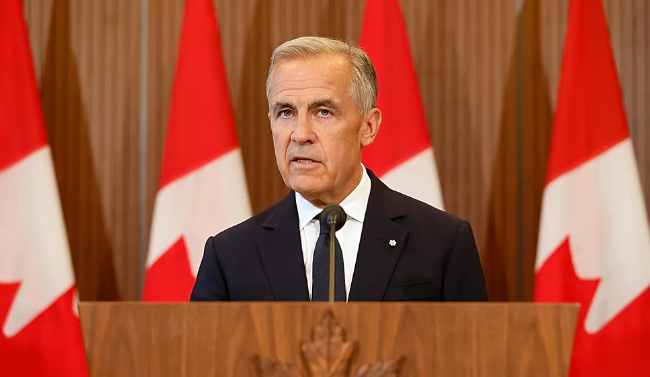
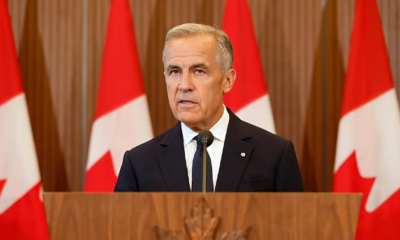
Canadian Prime Minister Mark Carney has accused the United States of imposing new tariffs designed to damage Canada and divide the two countries after trade negotiations collapsed.
“We cannot accept what they’ve offered, and we will not give what they’ve asked,” Carney said in a speech on Saturday, explaining Ottawa’s decision to reject a proposed agreement.
New US tariffs of 50 percent on about $20 billion worth of Canadian goods took effect on Saturday after negotiators failed to reach a deal. Both governments accused the other of making last-minute changes that undermined the negotiations.
Carney said the final US proposals were “unfair” and “uneconomic” and raised doubts about whether Washington could be relied upon to honour an agreement.
Canada has responded by promising to match the new US tariffs “dollar for dollar” in an effort to protect domestic companies and workers.
“Our response will be concentrated in sectors such as steel, dairy, appliances, agricultural equipment, pulp and paper, and electronics,” Carney said.
The latest measures add to existing US tariffs on major Canadian exports, including steel, aluminium, automobiles and lumber. Canadian officials have warned that the broader tariff regime is placing additional pressure on businesses and the country’s economy.
The Office of the United States Trade Representative described the collapse of the negotiations as a “missed opportunity” for Canada. It accused Ottawa of maintaining what it called prolonged retaliation against American products.
According to the US trade representative, Washington had offered Canada favourable treatment compared with other major exporters, but said new Canadian demands and changes to previous commitments disrupted the balance reached during negotiations.
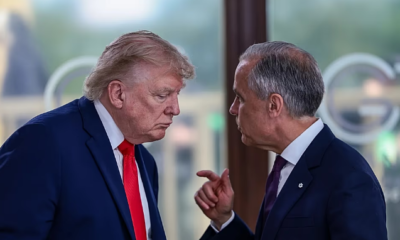
The dispute escalated despite earlier optimism from US President Donald Trump, who had postponed the introduction of the latest tariffs after suggesting that a trade agreement was close.
Trump has repeatedly criticised Canada’s trade policies and has also suggested that the country should become the 51st US state. In a post early Sunday, he argued that Canada wanted the benefits of being part of the United States without actually becoming a state.
Trump’s administration has pursued an aggressive tariff policy since returning to office in January 2025, arguing that higher import duties will support American manufacturing and create domestic jobs.
The policy has drawn criticism from businesses and economists, who warn that tariffs can increase costs for consumers, disrupt supply chains and make companies more cautious about investment.
The latest confrontation leaves the two neighbours facing a prolonged period of uncertainty, with businesses on both sides preparing for higher trade costs and possible further retaliatory measures.

Amnesty Accuses Indian Police of Excessive Force Against Medical Exam Protesters

Thailand Holds Security Meeting After Coordinated Attacks in Southern Provinces

Gen Z Turns to Retro Tech as Social Media Fatigue Fuels Digital Detox Trend

Chinese Humanoid Robot Runs 100 Metres Faster Than Usain Bolt’s World Record

Canada Vows Dollar-for-Dollar Response as US Tariffs Deepen Trade Dispute

India Launches Search for 22 Crew Members After Cargo Ship Sinks in Bay of Bengal

Canada to Match US Tariffs Dollar for Dollar as Trade Talks Collapse

New RNA Modification Could Make mRNA Medicines More Powerful, Scientists Say

TikTok Agrees to $400 Million Settlement Over Children’s Privacy Claims

German Rights Group Calls for Ban on Ray-Ban Meta AI Glasses

Meta Acquires Tilda Swinton VR Doc ‘Impulse: Playing With Reality’

China’s Historic Olympic Victory Sparks National Pride Amid Controversy

Saudi Arabia’s Model for Sustainable Aviation Practices

Recent Developments in Small Business Taxes

Effective Drain Cleaning: A Key to a Healthy Plumbing System

Who was Ebrahim Raisi and his status in Iranian Politics?

Keely Hodgkinson Wins Britain’s First Athletics Gold at Paris Olympics in 800m

Carrectly: Revolutionizing Car Care in Chicago

Nobel Laureate Muhammad Yunus Proposed as Head of Bangladesh’s Interim Government Following Hasina’s Resignation

Chinese Hackers Infiltrate Major U.S. Telecom Firms in Possible National Security Breach

Sony WF-10XM4: Headphones Are Our Absolute Favorite

10 Places You Can’t Miss If It’s Your First Time in European

New Census Data Will Shake Up Alabama Politics

16 Top of Our Favorite Outdoor Clothing Brands

Fashionable Summer Accessories to Dress Up Your Travel Look

How Sleeping Less than 7 Hours a Night Can Lead to Weight Gain
-
 Entertainment2 years ago
Meta Acquires Tilda Swinton VR Doc ‘Impulse: Playing With Reality’
-
 Sports2 years ago
China’s Historic Olympic Victory Sparks National Pride Amid Controversy
-
 Business2 years ago
Saudi Arabia’s Model for Sustainable Aviation Practices
-
 Business2 years ago
Recent Developments in Small Business Taxes
-
 Home Improvement2 years ago
Effective Drain Cleaning: A Key to a Healthy Plumbing System
-
 Politics2 years ago
Who was Ebrahim Raisi and his status in Iranian Politics?
-
 Sports2 years ago
Keely Hodgkinson Wins Britain’s First Athletics Gold at Paris Olympics in 800m
-
 Business2 years ago
Carrectly: Revolutionizing Car Care in Chicago
You must be logged in to post a comment Login