
Business
Europe Maintains Global Lead in Chocolate Production Despite Rising Costs



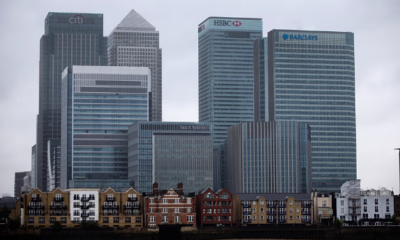

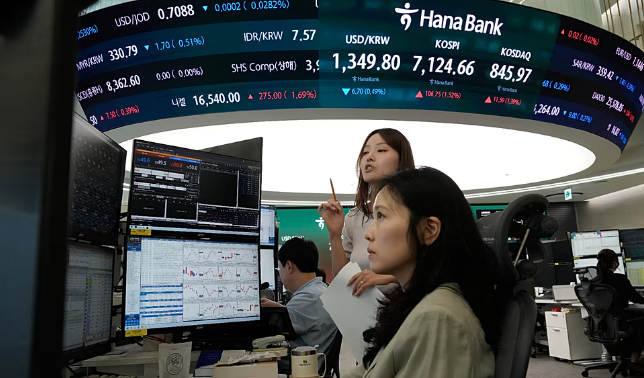
Oil prices rose on Monday while stocks and bonds came under pressure after US President Donald Trump rejected Iran’s latest proposal to reopen the Strait of Hormuz, reversing some of the optimism that had supported markets late last week.
Brent crude gained more than 3 percent in early European trading, moving above $107 a barrel as investors reassessed the risks to global energy supplies. US West Texas Intermediate crude also climbed nearly 2 percent to above $94 a barrel.
Iran presented a proposal at last week’s United Nations General Assembly calling for a seven-day halt in hostilities and the reopening of the Strait of Hormuz. The waterway is a major route for global energy shipments, and disruption there has raised concerns about supply shortages and higher prices.
Trump said he had rejected the proposal but indicated that negotiations could resume. He told Axios that Iran wanted an agreement but that its terms did not match what Washington was seeking. Axios reported that indirect talks between the two sides could begin as early as Monday.
Iran has said reopening the Strait of Hormuz would depend on several conditions, including the release of frozen assets, the removal of sanctions on its oil industry and an end to the US naval blockade.
Oil prices had fallen more than 2 percent on Friday after news of Iran’s proposal raised hopes of an easing in tensions. Monday’s rebound reflected renewed uncertainty over whether diplomatic efforts could produce a deal.
The market reaction extended beyond oil. European shares were mixed in early trading, with the Euro Stoxx 50 down about 0.5 percent and the Stoxx 600 up 0.25 percent. Spain’s IBEX 35 fell 0.45 percent, while the FTSE 100, CAC 40, FTSE MIB, DAX 30 and AEX were between 0.1 percent and 0.5 percent lower.
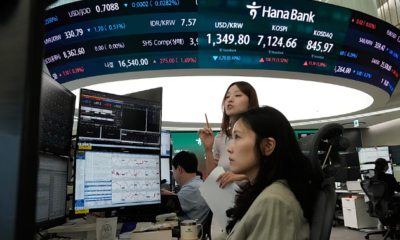
Asian markets also showed mixed moves. South Korea’s Kospi fell 2.3 percent after reopening from a long break, while Japan’s Nikkei 225 was little changed. Hong Kong’s Hang Seng gained 0.7 percent and Shanghai’s Composite Index dropped 1.8 percent.
US stock futures pointed to a weaker opening. S&P 500 E-Mini futures fell 0.5 percent, while Nasdaq 100 E-Mini futures were about 1 percent lower. On Friday, the S&P 500 gained 0.5 percent, the Dow rose 478 points, or 0.9 percent, and the Nasdaq added 0.5 percent.
Bond markets remained under pressure as inflation concerns increased. The US 10-year Treasury yield briefly exceeded 5.21 percent, near its highest level since 2007, compared with 3.97 percent when the conflict began. Japan’s 10-year yield stood at 3.095 percent.
The dollar rose to 157.69 yen from 157.19 yen, while the euro was little changed at $1.1388. Gold declined more than 2 percent to about $4,220 an ounce.
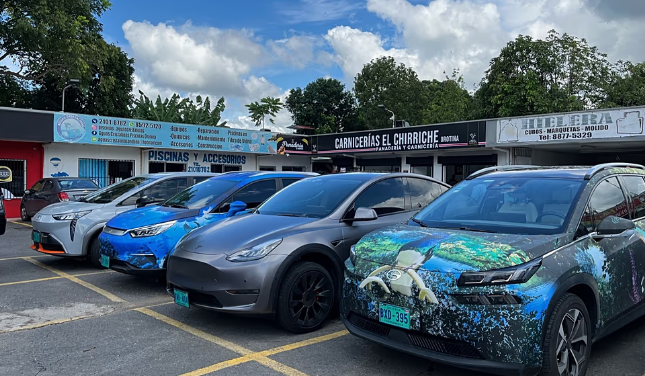
Chinese-owned car brands are gaining a growing share of Norway’s rapidly expanding electric vehicle market, even as more Norwegian drivers express concerns about buying vehicles from Chinese manufacturers.
Electric cars accounted for 97.8% of new car registrations in Norway during the first eight months of 2026, according to the Norwegian Road Federation. The country remains the world’s leading market for electric vehicle adoption and is far ahead of the European Union, where electric cars represented 21.7% of new registrations between January and August, according to the European Automobile Manufacturers’ Association.
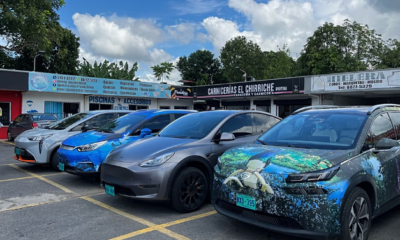
About one in four new electric vehicles registered in Norway this year came from Chinese brands or companies with Chinese ownership. Manufacturers such as BYD, NIO and Dongfeng, along with Chinese-owned brands including Volvo and Polestar, accounted for about 25% of new EV registrations during the first half of the year.
Their presence has expanded rapidly. Chinese brands were almost absent from Norway’s car market in 2019, but have since become one of the largest groups by ownership origin.
A survey conducted by the Norwegian Electric Vehicle Association between March 31 and May 3 found that 31% of nearly 15,000 EV owners questioned would avoid buying a Chinese brand for political reasons. That compared with 23% in the previous year’s survey.
“New cars are, in practice, computers on wheels,” association Secretary General Christina Bu said.
She said greater attention to data security and privacy was making consumers more conscious of where vehicles come from and how information collected by them is handled.
Norwegian security researchers previously found that a vehicle produced by Chinese manufacturer NIO was transmitting data to China. Separate testing of a Yutong bus found that the manufacturer had access to its control system, raising concerns about whether such vehicles could potentially be disabled remotely.
Despite these concerns, Chinese-owned manufacturers continue to attract buyers. Bu said consumers consider several factors when purchasing vehicles, including price, technology, data security and ethical concerns.
An earlier association report suggested Chinese-owned brands could overtake European manufacturers in Norway as soon as 2027 if current trends continue.
Chinese manufacturers are also expanding across the EU. Registrations among five groups featuring Chinese brands rose about 71% in August from a year earlier, while their combined share of the new-car market increased from 6.6% to 10.8%.
Leapmotor registrations rose 211%, Chery increased 201%, BYD climbed 129% and Geely Group grew 24%.
Meanwhile, political resistance to Tesla among Norwegian consumers has declined. The survey found that 24% would avoid Tesla for political reasons, down from 43% last year.
Bu attributed the change partly to reduced attention surrounding Tesla chief executive Elon Musk’s political activities. Tesla nevertheless remained Norway’s best-selling new-car brand, with a 17.5% registration share through September 24.
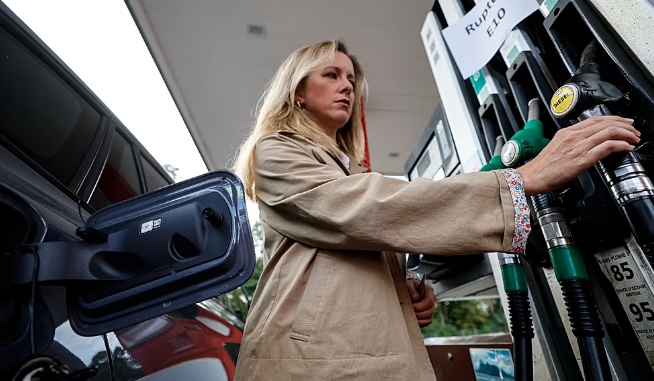
European governments are expanding fuel tax cuts, subsidies and energy measures as record petrol and diesel prices increase pressure on households and businesses across the region.
France, Germany and Spain are among the countries introducing or extending support as governments respond to disruptions linked to the wars in the Middle East and Ukraine. The European Union is also facing uncertainty over global diesel supplies amid possible US restrictions on exports.
The Organisation for Economic Co-operation and Development said seven of the 10 countries that have taken the largest number of measures to limit the economic impact of higher energy prices are EU members.
Europe was already facing energy challenges before the conflict involving Iran. Russia’s war in Ukraine disrupted supplies and contributed to sharp movements in European energy markets. The EU imports nearly all of the oil it consumes and about 85% of its natural gas, while imports account for 57% of the bloc’s overall energy needs, according to Eurostat.
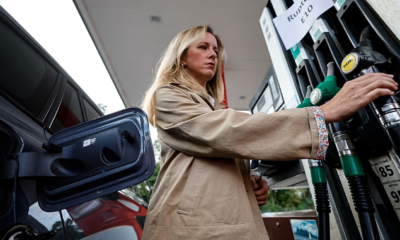
Drivers are now facing particularly high diesel costs. Campaign group Transport & Environment estimates that EU motorists are spending an additional €203 million a day on diesel.
EU leaders have given member states temporary flexibility to provide state aid to households and energy-intensive sectors, including agriculture, transport and fishing. Governments have also been given limited flexibility under EU spending rules for investments aimed at strengthening energy security and reducing dependence on imported oil and gas.
European Commission President Ursula von der Leyen said higher energy prices and borrowing costs were putting pressure on households and businesses. She called for greater investment in domestic clean energy, including renewable power, nuclear energy and biomethane.
France has announced a €450 million package expanding assistance for fuel users and energy-intensive businesses. The government said 5.5 million workers who drive more than 30 kilometres on a round trip to work, or more than 8,000 kilometres a year for professional purposes, will qualify for €100 fuel payments through the end of the year.
Fuel subsidies for farmers, fishers and construction companies have also been extended. Energy vouchers ranging from €48 to €277 will be distributed three months earlier than planned to help 5.8 million households meet winter energy costs.
French President Emmanuel Macron has also asked the European Commission to consider relaxing some fuel quality requirements to increase diesel and kerosene production. He has proposed raising the EU limit for conventional biodiesel in standard diesel from 7% to 10%.
Germany has agreed to revive fuel tax cuts that expired at the end of June. From October 1 until the end of December, petrol and diesel prices will be reduced by 17 cents per litre, at a cost of €2.5 billion. Berlin also plans discussions with the oil industry over a possible fuel price cap from January.
Spain has extended fuel tax reductions introduced in March as part of a €5 billion support package. The current reduction is 5 cents per litre, with an automatic increase to 20 cents if annual fuel-price inflation exceeds 15%. Subsidies for transport firms, farmers, livestock producers and fishers have also been extended.
EU countries have also been drawing on strategic oil reserves after International Energy Agency members agreed to release 400 million barrels from emergency stockpiles.
At the same time, Europe continues to increase renewable energy production and shift industries toward electricity as it seeks to reduce dependence on imported fossil fuels.

Birdwatching Offers New Approach to Stroke Recovery for People With Aphasia

AI Agents Take Centre Stage as Qatar Expands Training and Testing

Oil Rises as Markets React to Trump Rejection of Iran Truce Proposal

Chinese Car Brands Gain Ground in Norway Despite Rising Consumer Concerns

Study Finds Modest Exercise Can Provide Significant Relief From Pain

Finland and Sweden Scramble Jets as Europe Raises Alert Over Russian Threats

European Governments Expand Fuel Tax Cuts and Energy Support as Prices Surge

Malta and Cyprus Rank Among Europe’s Most Tax-Friendly Destinations for Relocating Workers

European Stocks Slip as Oil Prices and US Bond Yields Keep Investors Cautious

US Navy Confirms Eight Suicide Attempts During Extended Carrier Deployment

Meta Acquires Tilda Swinton VR Doc ‘Impulse: Playing With Reality’

China’s Historic Olympic Victory Sparks National Pride Amid Controversy

Saudi Arabia’s Model for Sustainable Aviation Practices

Recent Developments in Small Business Taxes

Effective Drain Cleaning: A Key to a Healthy Plumbing System

Who was Ebrahim Raisi and his status in Iranian Politics?

Keely Hodgkinson Wins Britain’s First Athletics Gold at Paris Olympics in 800m

Carrectly: Revolutionizing Car Care in Chicago

Nobel Laureate Muhammad Yunus Proposed as Head of Bangladesh’s Interim Government Following Hasina’s Resignation

Chinese Hackers Infiltrate Major U.S. Telecom Firms in Possible National Security Breach

Sony WF-10XM4: Headphones Are Our Absolute Favorite

10 Places You Can’t Miss If It’s Your First Time in European

New Census Data Will Shake Up Alabama Politics

16 Top of Our Favorite Outdoor Clothing Brands

Fashionable Summer Accessories to Dress Up Your Travel Look

How Sleeping Less than 7 Hours a Night Can Lead to Weight Gain
-
 Entertainment2 years ago
Meta Acquires Tilda Swinton VR Doc ‘Impulse: Playing With Reality’
-
 Sports2 years ago
China’s Historic Olympic Victory Sparks National Pride Amid Controversy
-
 Business2 years ago
Saudi Arabia’s Model for Sustainable Aviation Practices
-
 Business2 years ago
Recent Developments in Small Business Taxes
-
 Home Improvement2 years ago
Effective Drain Cleaning: A Key to a Healthy Plumbing System
-
 Politics2 years ago
Who was Ebrahim Raisi and his status in Iranian Politics?
-
 Sports2 years ago
Keely Hodgkinson Wins Britain’s First Athletics Gold at Paris Olympics in 800m
-
 Business2 years ago
Carrectly: Revolutionizing Car Care in Chicago