
Tech
Generative AI Adoption Varies Widely Across Europe, Survey Finds

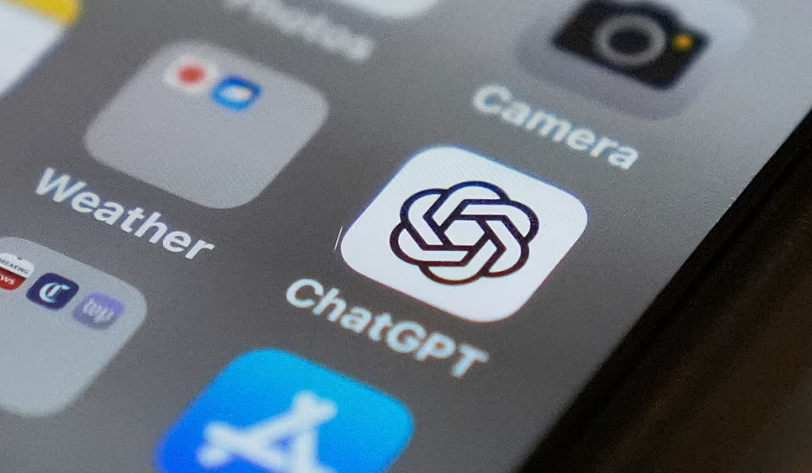
The use of generative artificial intelligence (Gen AI) tools such as ChatGPT, Gemini, and Grok has grown significantly across Europe, with millions of people now relying on the technology for personal, work, and educational purposes. These tools can generate new content, including text, images, code, and videos, based on user prompts and patterns learned from existing data.
According to Eurostat, about one-third of Europeans aged 16 to 74 used AI tools at least once in 2025. However, adoption rates vary widely across the continent, with usage ranging from 17 percent in Turkey to 56 percent in Norway. Within the European Union, Denmark leads with 48 percent of people reporting AI use, while Romania has the lowest rate at 18 percent.
Thirteen countries reported that at least two in five people had used Gen AI tools in the three months prior to the survey. These include Switzerland and Estonia (47 percent each), Malta (46 percent), Finland (46 percent), Ireland (45 percent), the Netherlands (45 percent), Cyprus (44 percent), Greece (44 percent), Luxembourg (43 percent), Belgium (42 percent), and Sweden (42 percent).
Conversely, eight countries saw usage fall below 25 percent, including Serbia (19 percent), Italy (20 percent), Bosnia and Herzegovina (20 percent), North Macedonia (22 percent), Bulgaria (23 percent), Poland (23 percent), Turkey (17 percent), and Romania (18 percent). Among major EU economies, Germany (32 percent) and Italy (20 percent) remain below the EU average, while Spain (38 percent) and France (37 percent) slightly exceed it.
Experts say the differences reflect the broader digital landscape and skill levels in each country. Colin van Noordt, a researcher at KU Leuven University in Belgium, told Euronews Next that nations with strong digital foundations, like Denmark and Switzerland, have higher adoption rates because their populations already possess digital skills, frequent internet use, and familiarity with technology.
“In countries with lower adoption, people often don’t know generative AI exists or are unsure how to use it,” van Noordt said. He added that understanding how AI can be applied in daily life or work, often referred to as “AI literacy,” is a major factor in adoption. Government policies may encourage use, but underlying digital culture and practical skills appear to have a greater impact, he said.
The survey also highlighted differences in how AI is used. Across the EU, personal use (25 percent) exceeds work-related use (15 percent) in every country, though the gap varies. In the Netherlands, personal and work use are nearly equal at 28 percent and 27 percent, respectively. In Greece, 41 percent use AI personally, compared with just 16 percent at work.
Use of AI in formal education is limited, with only 9 percent of Europeans reporting educational use. Sweden and Switzerland lead at 21 percent, while Hungary records just 1 percent. Analysts suggest that uncertainty over practical applications of AI continues to limit workplace and educational adoption.
The Eurostat data underscores a clear north–south and west–east divide in Gen AI adoption, with Nordic and digitally advanced countries leading the way and southern, central-eastern, and Balkan nations trailing.








Many young workers believe they have the skills needed to succeed in the workplace, but a growing gap between their confidence and employers’ expectations is raising concerns about whether recent graduates are adequately prepared for working life.
A report from the Chartered Management Institute found that only 6% of managers believe young recruits are ready for the workplace. That compares with 45% of Gen Z workers who say they already have the skills required to succeed.
Ann Francke, chief executive of the CMI, said too many young people leave education with ambition and potential but discover they have not been prepared for workplace realities.
She said government, educators and employers all have a role in improving workplace readiness, particularly as businesses seek to tackle youth unemployment and improve productivity.
The issue has also been raised by business leaders. Glenn Fogel, chief executive of Booking Holdings, said in 2024 that younger employees could need additional training and guidance to understand workplace structures and expectations.
A 2024 survey by Hult International Business School of 800 HR leaders found that 37% would prefer to use a robot or AI rather than hire a recent graduate for certain roles, while 45% would choose a freelancer. Around 30% said they would rather leave a position vacant than employ a recent graduate.
Resilience emerged as one of the biggest concerns. About 91% of managers said younger workers lacked resilience, with the gap affecting performance. Communication was identified by 98% of HR leaders as an important skill, while 93% highlighted curiosity and willingness to learn.
Collaboration was identified by 92% as a key missing ability, followed by creativity at 90% and critical thinking at 87%.
Only 12% of managers surveyed by the CMI said young people at their organisations were progressing as expected. Managers cited poor resilience, motivation, workplace behaviour and timekeeping among the reasons some employees struggle or fail probation.
Technology skills are another concern. About 97% of HR leaders said new employees should have a basic understanding of AI, IT and data analytics, but only 20% of recent graduates believed they possessed those skills.
The challenges facing Gen Z also extend beyond workplace preparation. Many entered the workforce after the pandemic into an environment marked by remote working, office return mandates, layoffs and economic uncertainty. Rising housing costs and concerns about retirement have also shaped attitudes toward employment.
Research from People’s Pension found that 12%, or around 2.2 million young adults in the UK, have stopped saving for retirement because they believe they may have to work throughout their lives.
Universities are also facing criticism. Around 90% of Hult’s surveyed HR leaders said colleges should offer career coaches or mentors, yet only 36% of students said they had received such support.
Martin Boehm, Hult’s global dean of undergraduate programmes, said traditional university courses had not kept pace with changing workplace demands.
He said education providers need to focus more on practical skills and continuous learning so graduates can adapt to a rapidly changing employment market.

TDK Corporation is set to introduce a sensor-equipped “Smart Javelin” at the World Athletics Ultimate Championship in Budapest, giving athletes and spectators a new look at the forces and movements behind elite-level throws.
The technology will be demonstrated during the competition, which runs from September 11 to 13 in the Hungarian capital. TDK, an official global supporter of World Athletics, will equip javelins with sensors capable of collecting detailed information about their movement during flight.
Traditional javelin results focus mainly on the distance achieved. TDK’s technology is designed to capture additional data that cannot be seen from the final result alone. Sensors will measure the release angle, rotation, speed, height and flight path of each throw.
Software will process the information in real time and turn it into visual displays at the venue. The company said the system could help athletes better understand their technique while also giving spectators a clearer picture of the mechanics involved in a world-class throw.
The project builds on TDK’s partnership with World Athletics, which began exploring sensor-based javelin technology ahead of the World Athletics Championships Tokyo 25. Since then, improvements to the sensor unit and software have enabled faster analysis and visualisation of the javelin’s movement.
TDK said the technology could eventually support training, performance analysis and the spectator experience by providing information that is normally unavailable during a competition.
The Smart Javelin demonstration is scheduled for Friday, September 11, from 9 a.m. to 1 p.m. CEST at the training and warm-up area of the Gyula Zsivótzky National Athletics Centre.
Several international athletes are expected to participate. They include Sri Lanka’s Rumesh Tharanga Pathirage, the world number one in the men’s javelin rankings for 2026, and Trinidad and Tobago’s Keshorn Walcott, the 2025 world champion and a former Olympic gold and bronze medallist.
Japan’s Haruka Kitaguchi, the 2024 Olympic champion and 2023 world champion, will join discussions about the technology but will not throw.
Hungarian athletes Máté Horváth, Fanni Kövér and Máté Járvás are also scheduled to take part.
The project forms part of TDK’s wider technology strategy and its “TDK Sensing Within” initiative, which focuses on expanding the use of sensors across different products and industries.
TDK has partnered with World Athletics since 1983, with the relationship increasingly extending into technology projects designed to generate new insights from sporting data.
The inaugural World Athletics Ultimate Championship will bring together world and Olympic champions, Wanda Diamond League winners and leading athletes from global rankings. The event in Budapest carries a $10 million prize fund and is scheduled to take place every two years.
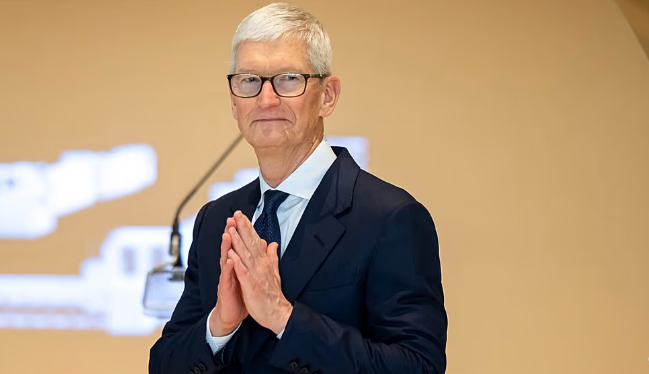
Apple has appointed John Ternus as its new chief executive, ending Tim Cook’s 15-year tenure at the top of the technology company and beginning a new chapter as Apple faces mounting competition in artificial intelligence.
Ternus formally took over from Cook on Tuesday, inheriting a company valued at about $4.6 trillion. When Cook became CEO in 2011, Apple was worth less than $350 billion. Under his leadership, the company expanded its product portfolio, grew its services business and became one of the world’s most valuable companies.
Cook will remain with Apple as executive chairman, allowing the company to retain his experience and relationships during the leadership transition.
The change comes at a crucial moment for Apple. Artificial intelligence is reshaping the technology industry, creating pressure on major companies to develop powerful AI systems and integrate them into consumer products.
Apple has faced criticism over the pace of its AI development. The company began promoting a new generation of AI features nearly two years ago, but several promised improvements were delayed as Apple worked to develop the technology.
The company has since announced further AI upgrades, including improvements to its Siri voice assistant. Apple has stressed privacy and practical uses as it seeks to narrow the gap with competitors that have moved more aggressively into generative AI.
Ternus, a hardware engineering specialist, will now have to address challenges that extend well beyond product design. His responsibilities will include strengthening Apple’s position in AI while managing supply chain risks and complex international relationships.
Relations with US President Donald Trump are expected to be another important issue. Trump publicly praised Cook on Tuesday, highlighting the relationship the former CEO developed with the administration.
Cook spent years managing the impact of US trade policies and tariffs on Apple, particularly measures affecting Asian countries where many components are produced and assembled.
His continued role as executive chairman is expected to help Apple maintain important contacts as the company deals with trade policy and other political pressures.
Ternus is not new to Apple’s most important products. During Cook’s tenure, he worked on major devices and technologies including the Apple Watch, AirPods and Apple Vision Pro.
His background in hardware has made him a central figure in Apple’s product development and positioned him as one of the company’s most prominent engineering leaders.
The new CEO will make his first major public appearance in the role next week when Apple unveils its latest iPhone at the company’s headquarters in Cupertino, California.
The launch will offer an early test of how Ternus presents himself to consumers and investors while taking responsibility for a company entering a period of significant technological and competitive change.

US Imposes Tariffs of Up to 100% on Drones as Washington Targets Chinese Supply Chains

Gen Z Workplace Readiness Gap Grows as Managers Question Young Workers’ Skills

TDK to Debut Smart Javelin With Real-Time Performance Tracking in Budapest

Irregular Sleep Patterns Linked to Higher Anxiety Risk Among Teenagers

John Ternus Takes Over as Apple CEO After 15-Year Tim Cook Era

Taiwan’s AI Stock Boom Fuels Borrowing Frenzy as Investors Chase Big Gains

Wegovy Weight-Loss Pill Hits German Pharmacies at Up to €280

Shein Shares Slide on Hong Kong Debut as Tariffs Hit Fast-Fashion Business

Eurozone Inflation Jumps to 3.3% as Energy Costs Surge

White House Details Major Venezuela Oil Deal as US Secures Stake in Reserves

Meta Acquires Tilda Swinton VR Doc ‘Impulse: Playing With Reality’

China’s Historic Olympic Victory Sparks National Pride Amid Controversy

Saudi Arabia’s Model for Sustainable Aviation Practices

Recent Developments in Small Business Taxes

Effective Drain Cleaning: A Key to a Healthy Plumbing System

Who was Ebrahim Raisi and his status in Iranian Politics?

Keely Hodgkinson Wins Britain’s First Athletics Gold at Paris Olympics in 800m

Carrectly: Revolutionizing Car Care in Chicago

Nobel Laureate Muhammad Yunus Proposed as Head of Bangladesh’s Interim Government Following Hasina’s Resignation

Chinese Hackers Infiltrate Major U.S. Telecom Firms in Possible National Security Breach

Sony WF-10XM4: Headphones Are Our Absolute Favorite

10 Places You Can’t Miss If It’s Your First Time in European

New Census Data Will Shake Up Alabama Politics

16 Top of Our Favorite Outdoor Clothing Brands

Fashionable Summer Accessories to Dress Up Your Travel Look

How Sleeping Less than 7 Hours a Night Can Lead to Weight Gain
-
 Entertainment2 years ago
Meta Acquires Tilda Swinton VR Doc ‘Impulse: Playing With Reality’
-
 Sports2 years ago
China’s Historic Olympic Victory Sparks National Pride Amid Controversy
-
 Business2 years ago
Saudi Arabia’s Model for Sustainable Aviation Practices
-
 Business2 years ago
Recent Developments in Small Business Taxes
-
 Home Improvement2 years ago
Effective Drain Cleaning: A Key to a Healthy Plumbing System
-
 Politics2 years ago
Who was Ebrahim Raisi and his status in Iranian Politics?
-
 Sports2 years ago
Keely Hodgkinson Wins Britain’s First Athletics Gold at Paris Olympics in 800m
-
 Business2 years ago
Carrectly: Revolutionizing Car Care in Chicago