
Business
Global Debate Intensifies Over Banks’ Power to Cut Off Customers

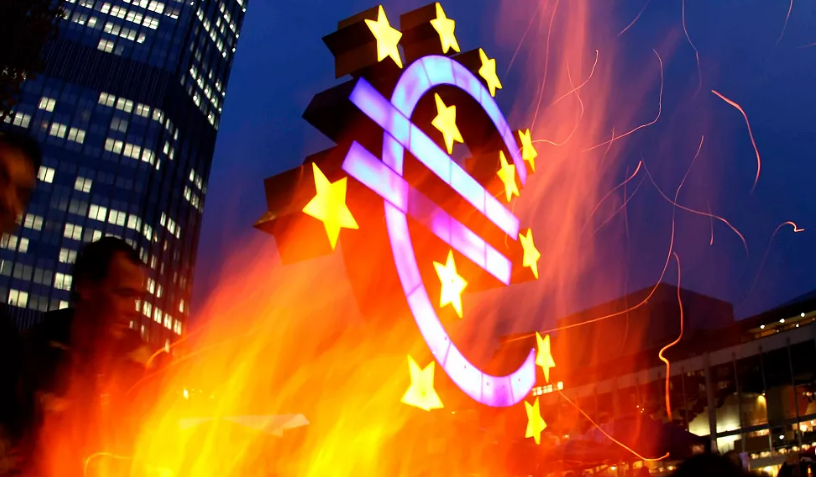
What began as a technical compliance issue in the financial sector has escalated into a heated political battle, as governments in the United States, the United Kingdom, and the European Union wrestle with the growing practice of “de-banking.”
De-banking, also known as “de-risking,” occurs when banks close customer accounts to reduce regulatory or reputational risks. For affected individuals and businesses, the experience can be sudden and disruptive: cards declined, standing orders halted, and savings rendered inaccessible with little explanation beyond a notice of termination.
United States: Trump Targets “Reputational Risk”
In the US, the issue has become highly politicized. Earlier this month, President Donald Trump signed an executive order preventing banks from denying services based on political or religious beliefs. The measure bans the use of “reputational risk” as grounds for account closures and requires regulators to review banking practices within 180 days.
Supporters say the order protects free expression, particularly for conservatives who argue they have been disproportionately targeted. Critics, however, warn it could force banks to maintain ties with clients who pose genuine financial crime or security risks.
The debate intensified following high-profile disputes between major lenders and conservative figures. Trump himself accused major banks of cutting ties with him after his first term. Meanwhile, the National Council for Religious Freedom (NCRF) alleged discrimination when its accounts were closed by JPMorgan Chase, though the bank cited incomplete compliance documentation.
United Kingdom: The Farage Affair
In Britain, the debate erupted after the closure of Brexit campaigner Nigel Farage’s account at Coutts, a high-end private bank. Internal documents revealed that political views were a factor in the decision, sparking widespread outrage.
Banks argued that Farage’s status as a “Politically Exposed Person” required heightened compliance checks, and reports suggested he no longer met Coutts’ financial thresholds. Nonetheless, the case prompted a government response.
In 2024, complaints to the Financial Ombudsman Service about account closures rose 44% to nearly 3,900. More than 140,000 business accounts were also shut in 2023. As a result, new rules now require banks to give 90 days’ notice before closures and to provide clearer reasons.
European Union: A Technical Approach
By contrast, EU institutions have framed de-risking as a technical matter tied to anti–money laundering and counter–terrorism financing requirements. The European Banking Federation has urged banks to apply proportional, risk-based decisions rather than sweeping bans on sectors or countries.
For now, Brussels’ approach remains focused on balancing compliance with financial inclusion, aiming to ensure legitimate businesses and individuals are not unfairly excluded from basic banking.
As the debate spreads across continents, the central question remains unresolved: how much power should banks have to choose, or refuse, their customers?








Europe is heading towards one of its most difficult winter gas seasons since the energy crisis of 2022, with wholesale prices rising sharply while gas storage levels remain well below their normal seasonal average.
The benchmark Dutch TTF front-month gas price was trading above €66 per megawatt-hour on Tuesday, after briefly exceeding €68. At the start of 2026, the price was around €29 per MWh.
The latest increase has been driven partly by concerns that disruption around the Strait of Hormuz could continue into the winter, limiting energy supplies and intensifying competition for liquefied natural gas.
EU gas storage was 62.99% full at the end of August 24, according to Gas Infrastructure Europe. That compares with a five-year average of about 79%.
Germany’s storage facilities were around 51% full, while the Netherlands had filled only 44.3% of available capacity.
Natasha Fielding, editorial manager for gas, LNG, coal and biomass at Argus Media, said European stocks were unusually low for this point of the year. She noted that the last period with similarly low levels was in 2021, before the previous major gas crisis.
European gas consumption is now around 15% to 20% below 2021 levels, according to Oxford Economics. The consultancy said this means the bloc can operate with less gas in storage, although it would need greater reliance on winter LNG imports.
That could create stronger competition with Asian buyers for available cargoes. The effective closure of the Strait of Hormuz has added to those concerns because the waterway normally handles a significant share of global LNG shipments.
Goldman Sachs analysts have warned that gas prices could rise above €100 per MWh in December if Middle Eastern energy exports recover only gradually through 2027.
A prolonged price increase would eventually reach households, although the impact would not be immediate. Existing contracts, hedging arrangements and fixed-price deals can delay the effect of wholesale market movements.
Oxford Economics estimates that it takes about six months on average for wholesale gas price changes to be fully reflected in consumer prices. The timing varies considerably between countries.
In the Netherlands, household prices can respond relatively quickly because of the structure of the retail market. In Germany and Austria, widespread 12-month or 24-month fixed contracts mean the full impact can take close to a year.
France, Italy and Spain could see consumer prices respond within several months.
Italy is considered particularly exposed to a gas price shock because of its high dependence on gas and relatively quick pass-through to consumers, although its storage levels are currently among Europe’s strongest.
Weather will remain a major factor. A colder-than-normal winter would increase heating demand and put additional pressure on already limited supplies, potentially pushing household energy costs higher across the continent.

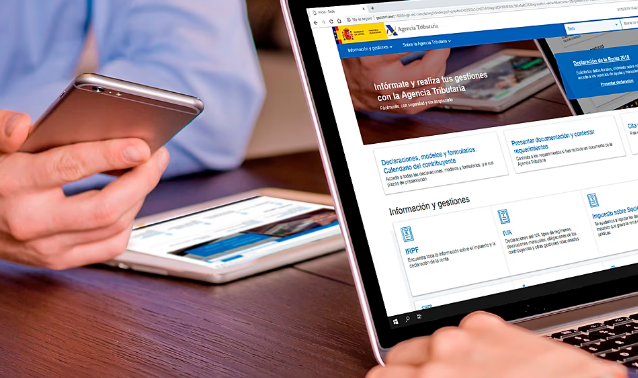
Spain’s Tax Freedom Day fell on August 20 this year, according to Fundación Civismo, meaning the average worker had theoretically earned enough income by that date to cover their annual tax and social security burden.
The Spanish liberal think tank estimates that the average worker spends 231 days of the year covering taxes and social contributions in 2026, two more days than last year. The figure has risen sharply since 2018, when Fundación Civismo calculated that Tax Freedom Day fell on June 27 after 177 days.
That represents a shift of 54 days over eight years.
Fundación Civismo attributed the change to several factors, including income tax brackets that have not kept pace with inflation, higher social security contributions, the restoration of some higher VAT rates and additional regional and municipal taxes.
The organization calculates the tax burden by considering the total cost of employing a typical worker. Its reference example involves an employee earning a gross annual salary of €32,446. Including employer contributions, the worker costs the company €42,390.70.
Of that amount, the employee is estimated to receive €24,724.91 in take-home pay. About €17,665.79, representing 41.7 percent of the total employment cost, goes toward income tax and employee and employer social security contributions.
The calculation means that workers receive approximately €58.30 for every €100 spent by an employer on their employment.
The foundation also argues that inflation can increase the effective tax burden even when workers experience little real wage growth. When tax brackets remain unchanged while salaries rise, employees can move into higher tax bands without experiencing a comparable improvement in purchasing power.
VAT adds another significant cost. Fundación Civismo estimates that the average worker pays around €2,213 a year in VAT, equivalent to almost 33 days of net income.
The study also counts local property tax, vehicle taxes, inheritance and gift taxes and other charges under what it calls “silent taxation”. These are estimated at about €4,110 a year, representing more than two months of the model worker’s net income.
Tax Freedom Day differs across Spain’s autonomous communities because of variations in regional income taxes, deductions and local charges. The Basque Country recorded the earliest date at August 14, followed by Madrid on August 15. Catalonia and Extremadura had the latest dates, both on August 26.
However, Tax Freedom Day is not an official government indicator. Critics argue that the calculation treats taxes purely as a cost without accounting for public services such as healthcare, education and pensions.
Spain’s official tax-to-GDP ratio stood at about 38 percent in 2025, according to Eurostat data cited in the report, compared with 35.2 percent in 2019.

Europe Faces Tough Winter as Low Gas Stocks and Rising Prices Raise Household Bill Risks

SpaceX Announces $100 Billion Louisiana Starbase to Expand Starship Launches

Iran and Oman Discuss Temporary Shipping Corridor Through Strait of Hormuz

US Expands Iran Sanctions, Putting Global Companies on Notice

Study Finds Eating Disorders Have Complex Genetic Links Beyond Body Weight

Spanish workers spend equivalent of 231 days paying taxes

Amnesty Accuses Indian Police of Excessive Force Against Medical Exam Protesters

Thailand Holds Security Meeting After Coordinated Attacks in Southern Provinces

Gen Z Turns to Retro Tech as Social Media Fatigue Fuels Digital Detox Trend

Chinese Humanoid Robot Runs 100 Metres Faster Than Usain Bolt’s World Record

Meta Acquires Tilda Swinton VR Doc ‘Impulse: Playing With Reality’

China’s Historic Olympic Victory Sparks National Pride Amid Controversy

Saudi Arabia’s Model for Sustainable Aviation Practices

Recent Developments in Small Business Taxes

Effective Drain Cleaning: A Key to a Healthy Plumbing System

Who was Ebrahim Raisi and his status in Iranian Politics?

Keely Hodgkinson Wins Britain’s First Athletics Gold at Paris Olympics in 800m

Carrectly: Revolutionizing Car Care in Chicago

Nobel Laureate Muhammad Yunus Proposed as Head of Bangladesh’s Interim Government Following Hasina’s Resignation

Chinese Hackers Infiltrate Major U.S. Telecom Firms in Possible National Security Breach

Sony WF-10XM4: Headphones Are Our Absolute Favorite

10 Places You Can’t Miss If It’s Your First Time in European

New Census Data Will Shake Up Alabama Politics

16 Top of Our Favorite Outdoor Clothing Brands

Fashionable Summer Accessories to Dress Up Your Travel Look

How Sleeping Less than 7 Hours a Night Can Lead to Weight Gain
-
 Entertainment2 years ago
Meta Acquires Tilda Swinton VR Doc ‘Impulse: Playing With Reality’
-
 Sports2 years ago
China’s Historic Olympic Victory Sparks National Pride Amid Controversy
-
 Business2 years ago
Saudi Arabia’s Model for Sustainable Aviation Practices
-
 Business2 years ago
Recent Developments in Small Business Taxes
-
 Home Improvement2 years ago
Effective Drain Cleaning: A Key to a Healthy Plumbing System
-
 Politics2 years ago
Who was Ebrahim Raisi and his status in Iranian Politics?
-
 Sports2 years ago
Keely Hodgkinson Wins Britain’s First Athletics Gold at Paris Olympics in 800m
-
 Business2 years ago
Carrectly: Revolutionizing Car Care in Chicago