
News
US House Approves Trump’s $9 Billion Cuts to Public Broadcasting and Foreign Aid






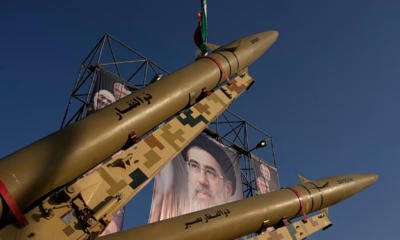


Tensions between the United States and Iran are rising as two US aircraft carriers operate in the Arabian Sea, military aviation activity increases and Tehran warns it is prepared for renewed hostilities.
Iran targeted at least 24 commercial vessels near the Strait of Hormuz over a two-week period, according to the Washington-based Institute for the Study of War (ISW). The United Kingdom Maritime Trade Operations (UKMTO), a Royal Navy organisation that monitors shipping safety, reported at least seven additional incidents between Monday and Wednesday.
The ISW said the incidents indicated that Iran retained the ability to threaten commercial shipping despite US strikes on its military infrastructure. Citing a US military official, the think tank said Iranian naval forces had adapted by using small boats and spotters to identify vessels after damage to their radar systems.
Iranian military leaders have issued increasingly forceful warnings. Major General Mostafa Izadi, deputy commander of the Islamic Revolutionary Guard Corps (IRGC), said on Thursday that Iran was advancing with strength and was ready to conduct its most powerful operations.
IRGC spokesman Hossein Mohibi said a new war would be irrational for Washington but acknowledged that the possibility of conflict remained. Army commander-in-chief Amir Hatami warned that any attack on Iranian infrastructure would prompt proportional strikes against Israeli and allied targets.
Mohsen Rezaei, secretary of Iran’s Supreme National Security Council, also warned that US targets, including data centres and artificial intelligence infrastructure, could be within range if fighting resumed.
Washington reinforces its military presence
The US Naval Institute confirmed on Tuesday that the aircraft carriers USS George Washington and USS George H.W. Bush were operating in the Arabian Sea. The Bush returned to the region after a port visit to Phuket, Thailand, while the George Washington had previously replaced the USS Abraham Lincoln.
The simultaneous presence of the carriers increases US naval strength in the region, although carrier deployments can reflect routine rotations and do not necessarily indicate an imminent attack.
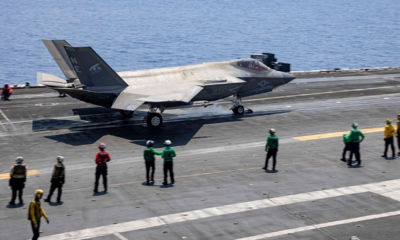
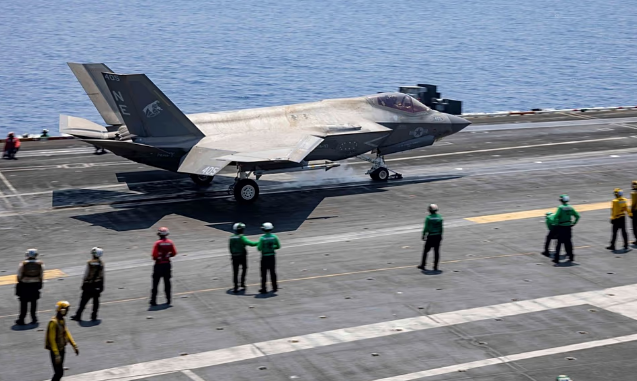
US Central Command (CENTCOM) has released images showing F-15E fighter jets receiving aerial refuelling, flight operations from the George Washington and an F-35B taking off from the amphibious assault ship USS Boxer.
CENTCOM said US forces had redirected 130 commercial vessels under the naval blockade of Iran as of October 5. The figure was provided by the US military and has not been independently verified.
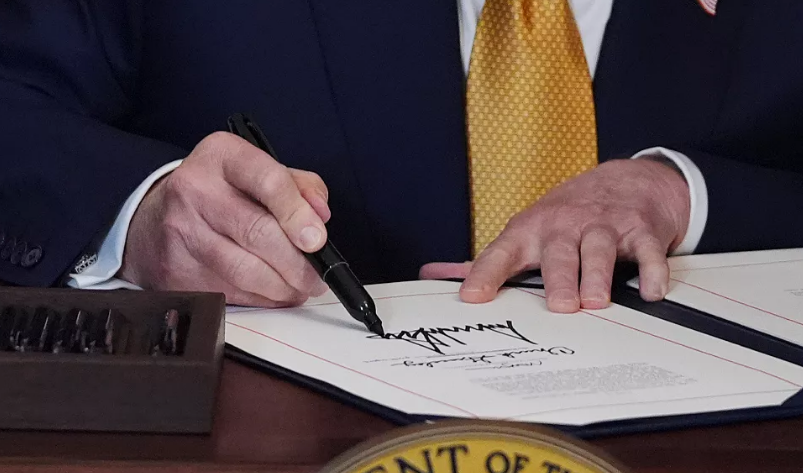
US President Donald Trump has not ruled out intensifying air strikes against Iran after the November 3 midterm elections. Asked about reports that his administration was considering the GBU-43/B Massive Ordnance Air Blast bomb, commonly known as the “mother of all bombs”, Trump said it was a very large conventional bomb, not a nuclear weapon.
Specialist flight-tracking account IntelSky reported that US Air Force tanker sorties over the region during the first 14 days of October were running about 50% above September’s daily rate. Transport aircraft activity had also increased, although the figures have not been independently verified and public tracking systems do not capture all military flights.
Reports earlier this month also indicated that around 9,000 additional US troops and sailors could be sent to the region. The USS Theodore Roosevelt had not yet reached the Arabian Sea as of Wednesday, according to the Naval Institute.
Meanwhile, Israel’s Channel 12 reported on Thursday that Western countries had detected unusual military movements inside Iran. The report said the developments did not necessarily require immediate military action. It also reported that Israeli Prime Minister Benjamin Netanyahu had discussed the situation with US Secretary of State Marco Rubio.
The military build-up and increasingly direct warnings from both sides have heightened concerns that the fragile situation could deteriorate into another round of large-scale fighting.
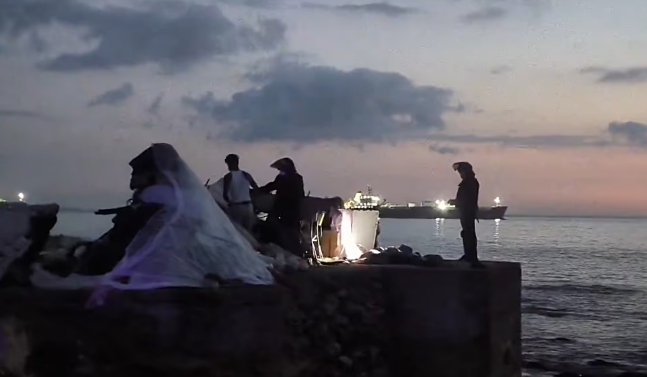
Spanish police have cleared Guano beach in Ceuta, where around 400 migrants had been living, ahead of a visit by King Felipe VI and Queen Letizia scheduled for October 13.
The operation began shortly after 8 a.m. on Sunday and involved the National Police, riot control units, immigration officials, the Civil Guard and local police. It was the final remaining migrant camp on the Spanish North African territory to be cleared following earlier operations at Tarajal and Trampolín beaches.
Migrants were gathered and transported by bus to the Temporary Centre for Foreigners (CATE), where authorities will begin registering their details. They are then expected to be accommodated in temporary reception facilities established by the government, including a camp at the port.
Some migrants left Guano beach before officers arrived, taking their belongings and heading towards nearby hills. Similar scenes occurred during earlier clearances, when some people avoided registration and returned to the beaches later, sometimes when food was distributed.
The latest operation follows a major wave of irregular migration from Morocco that brought more than 70,000 people to Ceuta at the end of July, according to the report.
Minors separated from adults
Police identified several minors during Sunday’s operation and gathered them separately from adult migrants. They are expected to be transferred to appropriate facilities for children.
Some young migrants carried signs asking authorities to place them in a centre for minors. Local media reported that several children had previously attempted to register with authorities but had subsequently left reception facilities or avoided the process.
The authorities began transferring migrants from Trampolín beach to temporary accommodation centres in Loma Margarita and El Embolsamiento on August 20. However, some later returned to the beach, repeating a pattern seen after a temporary reception facility at Ceuta’s port ran out of space.
Clean-up begins after eviction
After the camp was cleared, cleaning teams began removing tents, rubbish and other debris left behind by residents. The work is expected to continue throughout Sunday because of the amount of waste accumulated during the settlement’s long existence.
Environmental experts, working with the Ministry of the Environment, will assess the damage caused to the beach.
The camp had been associated with serious incidents, including two deaths, fights, thefts and other disturbances. Over time, an informal community also developed, with street markets and other activities taking place around the settlement.
The clearance comes two days before the royal couple’s visit to Ceuta. Felipe VI and Letizia are scheduled to attend a tribute to people who died at sea during the mass crossing at the Tarajal border.
After spending the night in Ceuta, the king and queen will travel to Melilla. The overnight stay will mark the first time a Spanish monarch has spent the night in Ceuta since King Alfonso XIII visited in 1904 and 1927.

Scientists have warned that a major rockslide could occur at Hochvogel, a mountain on the border between Germany and Austria, with between 250,000 and 400,000 cubic metres of rock potentially breaking away from its summit.
The warning follows a smaller collapse in June, when around 2,000 cubic metres of rock fell from the mountain in the Allgäu Alps. Researchers monitoring the site say movement along existing cracks has accelerated, raising concerns that a much larger section could become unstable.
Hochvogel stands 2,592 metres above sea level and forms part of the Allgäu High Alps. A major fissure in the summit has existed since the 19th century and has gradually widened. Records indicate that the crack was once approximately shoulder-width, but it now stretches several metres across.
Scientists from the Technical University of Munich (TUM) have monitored the mountain for 12 years. Since 2018, their work has included permanently installed sensors and measuring equipment, alongside drone surveys using laser scanners.
More than 30 sensors now collect data around the summit, recording movements with millimetre precision. During the spring, instruments detected movement of up to five millimetres per week. By comparison, the Alps generally shift by an average of around 1.8 millimetres a year.
Geology professor Michael Krautblatter, who leads the TUM research team, returned to the summit with colleagues in early October to inspect the terrain and monitoring equipment.
The main fissure was described by TUM in 2024 as being up to six metres wide, around 35 metres long and approximately 60 metres deep. Researchers are also concerned about a newer crack on the south-west ridge, known as “Fissure 6”, where the highest movement rates have been recorded.
The instruments transmit information several times an hour, allowing researchers to assess changes remotely and identify potential warning signs. Krautblatter told the German Alpine Club that similar early-warning systems are operating at only two other locations, Partnach Gorge and Höllental Gorge.
Scientists believe weather conditions could be contributing to the increasing instability. Johannes Leinauer, a member of the TUM team, told Deutschlandfunk that heavy rainfall, thunderstorms and melting snow had a clear influence on movement at Hochvogel.
He added that thunderstorms were becoming more frequent and intense because of climate change, potentially affecting the speed and frequency of rockfalls.
The mountain has long been closed to climbers approaching from the Austrian side, although the route from Germany remains open. Researchers hope continuous monitoring will help authorities identify dangerous conditions and restrict access before a collapse occurs.

Europe Develops 348-Satellite Network to Reduce Dependence on Starlink

US Military Builds Up Forces in Arabian Sea as Iran Warns of Possible War

OpenAI Donates $5 Million to Mathematics Foundation After Research Dispute

AI Speeds Up Ebola Response in Congo, but Experts Warn of Healthcare Risks

Asian Stocks Plunge as Technology Sell-Off Deepens on Inflation Concerns

Eurozone Faces Record Bond Sales in 2027 as Borrowing Costs Reach Two-Decade High

European Household Energy Costs Rise as Gas Prices Near Four-Year High

Oil and European Gas Prices Rise as Hormuz Attacks Heighten Supply Fears

ASML Reports Record €11.7 Billion Quarterly Sales as AI Chip Demand Outstrips Supply

Young Uzbek Engineers Showcase Medical, Communication and Industrial Innovations

Meta Acquires Tilda Swinton VR Doc ‘Impulse: Playing With Reality’

China’s Historic Olympic Victory Sparks National Pride Amid Controversy

Saudi Arabia’s Model for Sustainable Aviation Practices

Recent Developments in Small Business Taxes

Effective Drain Cleaning: A Key to a Healthy Plumbing System

Who was Ebrahim Raisi and his status in Iranian Politics?

Keely Hodgkinson Wins Britain’s First Athletics Gold at Paris Olympics in 800m

Carrectly: Revolutionizing Car Care in Chicago

Nobel Laureate Muhammad Yunus Proposed as Head of Bangladesh’s Interim Government Following Hasina’s Resignation

Chinese Hackers Infiltrate Major U.S. Telecom Firms in Possible National Security Breach

Sony WF-10XM4: Headphones Are Our Absolute Favorite

10 Places You Can’t Miss If It’s Your First Time in European

New Census Data Will Shake Up Alabama Politics

16 Top of Our Favorite Outdoor Clothing Brands

Fashionable Summer Accessories to Dress Up Your Travel Look

How Sleeping Less than 7 Hours a Night Can Lead to Weight Gain
-
 Entertainment2 years ago
Meta Acquires Tilda Swinton VR Doc ‘Impulse: Playing With Reality’
-
 Sports2 years ago
China’s Historic Olympic Victory Sparks National Pride Amid Controversy
-
 Business2 years ago
Saudi Arabia’s Model for Sustainable Aviation Practices
-
 Business2 years ago
Recent Developments in Small Business Taxes
-
 Home Improvement2 years ago
Effective Drain Cleaning: A Key to a Healthy Plumbing System
-
 Politics2 years ago
Who was Ebrahim Raisi and his status in Iranian Politics?
-
 Sports2 years ago
Keely Hodgkinson Wins Britain’s First Athletics Gold at Paris Olympics in 800m
-
 Business2 years ago
Carrectly: Revolutionizing Car Care in Chicago