Connect with us

News

Crimea Faces Deepening Fuel Crisis as Petrol Sales Suspended Amid Ukraine-Russia Energy War

Published

on

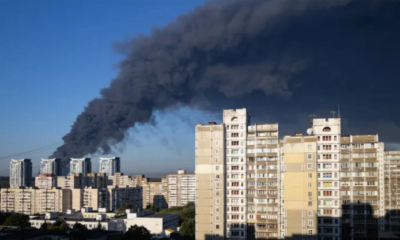
Russian-occupied Crimea is set to suspend petrol sales to the public from Sunday morning as a worsening fuel shortage grips the peninsula, authorities announced, marking a sharp escalation in supply disruptions linked to ongoing strikes on Russia’s energy infrastructure.

Sergey Aksyonov, the Moscow-backed head of Crimea, said in a Telegram post that from 9:00 a.m. local time fuel distribution would be halted for both cash and non-cash payments, including vouchers used by individuals and businesses. He added that fuel would be reserved exclusively for government agencies responsible for security and essential services, while urging residents to remain calm as shortages intensify.

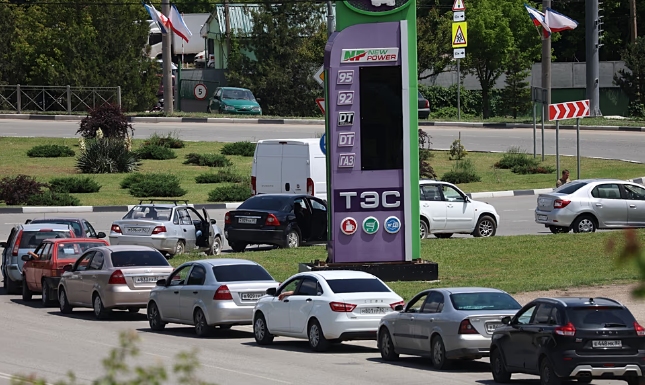
The announcement follows weeks of growing fuel scarcity across Crimea, where long queues have formed at petrol stations and supplies have become increasingly limited. Ukrainian strikes targeting Russian energy facilities have been cited as a key factor behind the disruption, with repeated attacks reported on refineries, storage depots, terminals, and transport routes supplying the peninsula.

Kyiv has expanded its campaign against Russian energy infrastructure in recent months, aiming to disrupt logistics chains feeding occupied territories. Ukrainian officials say oil depots and fuel transport systems linked to Crimea have been among the primary targets, including facilities connected to the Kerch area and routes passing through the Krasnodar region.

President Volodymyr Zelenskyy said Ukrainian forces recently struck infrastructure on both sides of the Crimean Bridge and targeted maritime logistics systems used in oil transport. The Ukrainian defence ministry has also described an ongoing effort to isolate Crimea through sustained drone and missile operations.

Mykhailo Fedorov, Ukraine’s defence minister, said in an interview with the YouTube channel Pressing that Kyiv’s strategy is gradually severing supply lines to the peninsula. He suggested that continued pressure could significantly limit Russia’s ability to sustain operations there, describing Crimea as increasingly isolated by disrupted logistics.

See also  Hezbollah Weighs US-Israeli Ceasefire Proposal Amid Escalating Conflict

On the same day, local authorities in Ukraine reported continued Russian strikes in the east of the country. In the Dnipropetrovsk region, at least one person was killed and nine others injured following multiple attacks across several districts, according to regional officials. Separate strikes in Poltava also damaged business facilities, further adding to the toll of cross-border hostilities.

As fuel shortages deepen in Crimea and attacks continue on both sides, the energy sector has become an increasingly central front in the wider conflict, shaping conditions on the ground far beyond the battlefield.

News

Police Launch Major Operation After Woman Taken Hostage in Berlin Supermarket

Published

on

A major police operation remained under way in southwest Berlin on Saturday morning after a woman was reportedly taken hostage by a knife-wielding man inside a supermarket, prompting a lengthy standoff with emergency services.

The incident began late Friday evening at a Rewe supermarket, where police said a man allegedly threatened a woman with a knife before holding her inside the store. Authorities were alerted at around 10 p.m., and specialist officers quickly surrounded the area.

By early Saturday, the situation was still unresolved. Police confirmed that negotiations with the hostage-taker were continuing as officers worked to bring the incident to a peaceful end.

“We are in contact with the hostage-taker,” a police spokesperson told the German news agency dpa, adding that every effort was being made to resolve the crisis without harm to the hostage.

The supermarket remains sealed off as heavily armed officers from a special operations unit maintain positions around the building. Numerous police vehicles, ambulances and fire service crews have been deployed to the scene, while surrounding streets have been restricted.

During the early hours of Saturday, officers positioned a ladder against the building in an effort to gain a clearer view of the situation inside the supermarket as negotiations continued.

Authorities have not disclosed the identity of either the suspect or the hostage, and it remains unclear whether the two knew each other before the incident.

Police confirmed that all supermarket employees who were inside the building when the hostage situation began managed to leave safely. They were evacuated without injury and are receiving support from emergency services.

Witness accounts have started to emerge, although officials have not verified their accuracy. One supermarket employee told German newspaper Bild that the suspect was standing at a checkout before the incident unfolded.

See also  UK and France Extend Channel Migration Pact with Increased Funding and Enforcement

According to the employee, the man allegedly refused to place his shopping on the conveyor belt before suddenly producing a knife. Police have not confirmed that version of events and have urged caution while the investigation continues.

The hostage incident has attracted a significant emergency response as authorities seek to avoid a violent outcome. Negotiators have remained in close communication with the suspect throughout the standoff, while specialist tactical teams stand ready if intervention becomes necessary.

Officials have asked members of the public to stay away from the area to allow emergency services to carry out their work safely.

The investigation into the circumstances surrounding the incident is expected to continue once the hostage situation has been resolved. Police have not released further details about the suspect’s motive or the condition of the woman being held inside the supermarket.

Continue Reading

News

EU Plans Tougher Public Procurement Rules to Limit Security Risks From Foreign Firms

Published

on

The European Commission is preparing new rules that would allow public authorities across the European Union to exclude foreign companies from public contracts if they are considered a threat to the bloc’s security or public safety.

According to a draft regulation expected to be presented in September, the proposal would give governments greater authority to block companies whose ownership structures, financing or legal obligations in non-EU countries could expose sensitive information or interfere with the delivery of public services.

The initiative comes as the European Union seeks to strengthen its economic security amid rising geopolitical tensions and growing concerns over dependence on foreign technology and critical raw materials. European officials have become increasingly cautious about risks linked to data transfers, cyber threats and supply chain disruptions involving major global powers.

Under the proposed regulation, public authorities would be required to consider security and public safety throughout the procurement process, from early planning and market consultations to contract awards and implementation. Authorities would have the power to assess whether a company’s ownership, control or financing creates the possibility of undue foreign influence.

The draft also highlights concerns about businesses that are subject to legislation in non-EU countries that could compel them to hand over sensitive information or interfere with contractual obligations. Such risks have gained prominence as both the United States and China have enacted laws allowing authorities to request access to data held by companies operating under their jurisdictions.

Another feature of the proposal would allow public buyers to give preference to European companies when awarding contracts. While the measure would not be mandatory, it reflects the European Union’s broader effort to strengthen domestic industries and reduce reliance on external suppliers in strategically important sectors.

See also  Pirate Bay Financier Carl Lundström Dies in Plane Crash in Slovenia

The move follows the European Commission’s push for a stronger “Made in Europe” industrial strategy announced earlier this year, targeting clean technologies, the automotive industry and energy-intensive manufacturing.

Several EU member states have already taken similar steps. France ended its contract with Microsoft for hosting sensitive national health data and later selected French technology company ChapsVision to process information for the country’s domestic intelligence service. Other European nations, including Germany, Italy, Denmark and France, have also restricted or blocked contracts involving Chinese telecommunications company Huawei over national security concerns.

The proposed regulation also focuses on protecting critical infrastructure, supply chains, essential public services and advanced technologies from potential disruption. European officials have become increasingly concerned about strategic dependencies after China restricted exports of rare earth minerals, which are essential for renewable energy technologies, electric vehicles and defense equipment. European industries have also faced challenges involving access to semiconductor components needed for automobile manufacturing.

If approved, the new rules would mark another step in the European Union’s effort to strengthen economic resilience, safeguard sensitive public contracts and reduce vulnerabilities linked to foreign suppliers in sectors considered vital to the bloc’s long-term security.

Continue Reading

News

European Parliament Set for Fresh Vote on Controversial ‘Chat Control’ Proposal

Published

on

The European Parliament is preparing for another vote this week on controversial legislation that would allow technology companies to continue scanning online communications for child sexual abuse material, with a procedural change expected to improve the proposal’s chances of approval.

The legislation, often referred to by critics as “chat control,” has sparked an ongoing debate between child protection advocates and privacy campaigners over the balance between online safety and the protection of encrypted communications.

The proposal follows the expiration on April 3 of a temporary legal framework that had allowed online platforms such as WhatsApp and Messenger to voluntarily detect, report and remove child sexual abuse material while operating under an exemption from the European Union’s e-privacy rules.

In March, members of the European Parliament rejected an earlier proposal from the European Commission to extend those temporary measures. The motion failed after receiving 311 votes against, 228 in favor and 92 abstentions.

Since then, the European People’s Party (EPP), the Parliament’s largest political group, has revived the proposal using a legislative procedure that is rarely employed in the EU lawmaking process.

According to officials familiar with the discussions, the EPP opposed the earlier version because amendments introduced by Socialist lawmaker Birgit Sippel and other left-leaning members narrowed the scope of communications scanning. The center-right group has instead backed extending the rules without modifications.

EPP leader Manfred Weber has been leading efforts to secure approval of the extension. Sources said the party requested Parliament President Roberta Metsola on June 17 to advance the proposal, and no political group formally objected to the move.

See also  Israel and U.S. Prepare for Potential Iranian Attack Amid Ceasefire Efforts

The following day, Metsola urged European Union leaders to move forward with the legislation during an EU summit. Last week, member states agreed to reinstate the temporary measures, allowing online service providers to continue detecting, reporting and removing child sexual abuse material until 2028.

The proposal now returns to the European Parliament, where the voting process differs from the previous attempt.

Under the ordinary legislative procedure being used, legislation is adopted unless an absolute majority of all Members of the European Parliament, at least 361 lawmakers, vote to reject or amend it. Supporters believe this procedural shift significantly improves the likelihood of approval.

Opponents argue the measure threatens digital privacy and encrypted communications. Greens lawmaker Ignazio Marino described the proposal as a form of mass surveillance, saying children are best protected through targeted law enforcement rather than widespread monitoring of private messages.

Another Green lawmaker, Markéta Gregorová, criticized the decision to hold a second vote, arguing the process departs from normal parliamentary practice. She said it raises concerns about democratic procedures and accused the EPP of using an unusual legislative route to advance its priorities.

The European Parliament is expected to decide on Tuesday whether to fast-track the proposal under an urgent procedure requested by the EPP. If approved, lawmakers will hold the decisive vote on Thursday.

The outcome is expected to shape the EU’s approach to online child protection while reigniting debate over privacy rights and the future of end-to-end encrypted communications.

Continue Reading

Trending