
News
China Leads Global Shift to Clean Energy with Rapid Solar and Wind Expansion

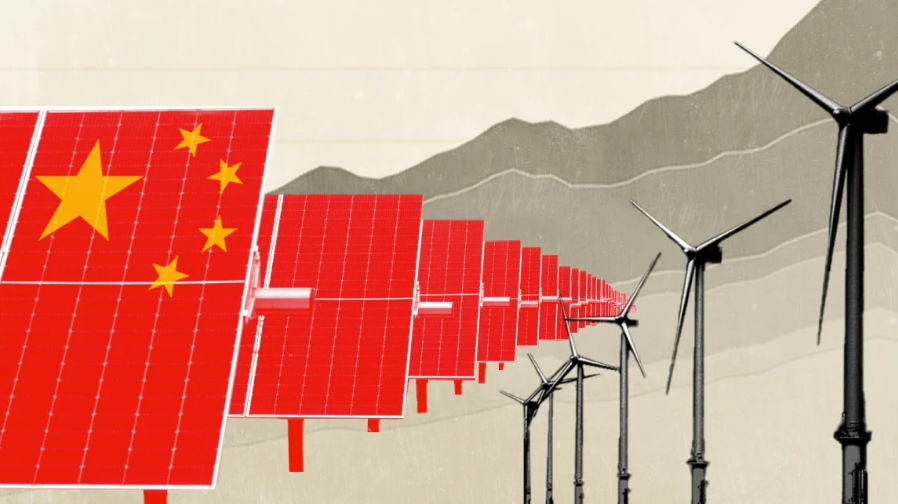
In the heart of China’s Kubuqi Desert, nearly 200,000 solar panels form the outline of a galloping horse, a cultural emblem of Inner Mongolia. Beyond its symbolic significance, the installation reflects China’s ambitious push toward renewable energy as the nation works to combat climate change and transform its energy landscape.
China is installing wind and solar energy projects at an unprecedented pace, accounting for two-thirds of the world’s utility-scale capacity under construction. With nearly 339 gigawatts of projects underway, the country is set to generate enough electricity to power over 250 million homes, according to the Global Energy Monitor. This is in addition to the 758 gigawatts of renewable capacity already operational.
A Global Climate Leader
As the world’s largest emitter of greenhouse gases, China has a pivotal role in global efforts to combat climate change. While emissions from the nation remain high—accounting for nearly a third of the global total—there are signs of a slowdown. Experts, including senior U.S. officials, believe China’s emissions could soon peak, potentially marking a turning point in the fight against climate change.
“China is now a global renewables powerhouse,” said Jonathan Pershing, former U.S. State Department climate diplomat. “The scale and speed of their wind and solar expansion are extraordinary and offer a model for other nations.”
China’s commitment to renewables has already exceeded targets. President Xi Jinping pledged to install 1,200 gigawatts of renewable capacity by 2030—a goal achieved six years early. By the early 2030s, the International Energy Agency predicts China will generate more solar power than the U.S. consumes.
Balancing Progress with Challenges
While renewable energy is rapidly displacing coal as the dominant power source in China, the country continues to build new coal plants even as it retires older ones. Wind and solar currently account for 37% of China’s electricity generation, reducing coal’s share by over 17% in the past two decades.
Experts like John Podesta, White House senior advisor on climate policy, emphasize the need for further coal plant retirements. “China has the capacity to phase out coal at a faster pace, which would have enormous implications for global emissions,” Podesta said.
Toward Emissions Reductions
China has committed to peaking carbon emissions before 2030, but U.S. officials are urging a steeper reduction—30% by 2035. Achieving this would save 4.7 gigatons of carbon pollution, equivalent to the U.S.’s total annual emissions.
While independent analysis suggests a recent 1% drop in China’s emissions, experts caution against drawing conclusions too early. However, shifts in China’s economy—marked by slowing demand for industrial materials and growing investment in solar and electric vehicle production—indicate a broader transformation.
Li Shuo of the Asia Society Policy Institute noted the significance of China’s progress: “If China’s emissions plateau, global emissions will likely follow, marking a milestone in combating climate change. It’s an insufficient first step but an important one.”



Britain and Norway have launched new joint naval patrols aimed at protecting undersea cables from Russia, with a combined fleet of at least 13 warships safeguarding critical infrastructure in the North Atlantic, officials said. The announcement follows discussions in December between UK Prime Minister Keir Starmer and Norwegian Prime Minister Jonas Gahr Støre on defense cooperation.
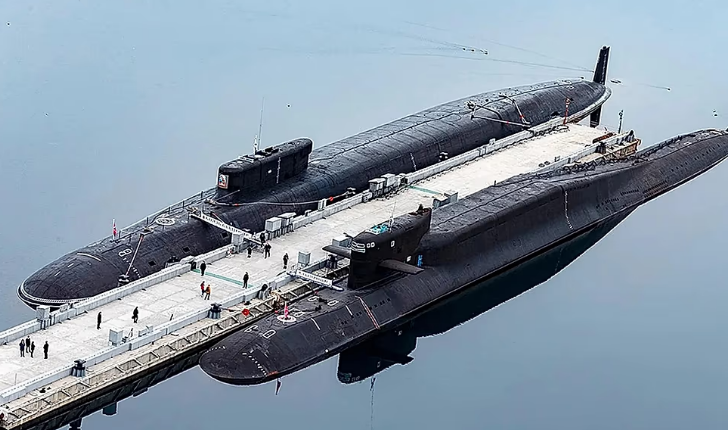
British Defence Secretary John Healey said on Thursday that the operation was designed to deter Russian submarines suspected of “malign activity” near undersea infrastructure north of the UK. A frigate, aircraft, and hundreds of personnel monitored a Russian attack submarine and two spy vessels during an operation lasting more than a month. Healey said the Russian ships eventually left the area.
His message to Moscow was clear: “We see your activity over our cables and our pipelines, and you should know that any attempt to damage them will not be tolerated and will have serious consequences.” Healey emphasized that while global attention is focused on conflicts in the Middle East, Russia remains the main threat to the UK and its allies.
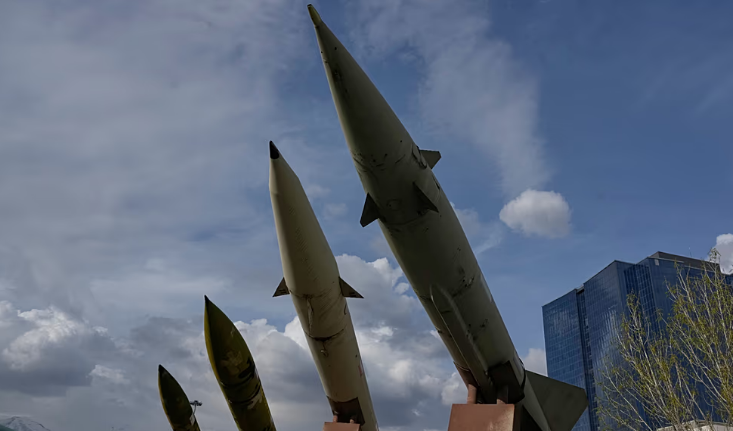
British officials have highlighted the overlap between Russia’s support for Iran and its ongoing war in Ukraine. Tehran has provided Moscow with Shahed drones, which are now also manufactured in Russia under the designation Geran. Healey said, “Putin would want us to be distracted by the Middle East. We will not take our eyes off Putin.”
The UK has also prepared to seize ships suspected of being part of Russia’s “shadow fleet,” a flotilla of old oil tankers of unclear ownership designed to bypass international sanctions imposed over Moscow’s 2022 invasion of Ukraine. Previously, the UK only assisted France and the US in monitoring such vessels. Healey said, “We are ready to take action” against these ships.
Norwegian Defence Minister Tore O. Sandvik, who signed the joint naval agreement with Healey, said the patrols allow both countries to “defend themselves together.” The deployment builds on a £10 billion (€11 billion) deal for Norway to purchase at least five British-made frigates, which, together with eight British ships, will operate along NATO’s northern flank.
Russian naval activity near UK waters has reportedly risen by 30 percent over the past two years. NATO officials have also warned that attacks on undersea cables are among the “most active threats” to Western infrastructure. Acting Assistant Secretary General for Innovation, Hybrid, and Cyber, James Appathurai, said recent incidents in the Baltic Sea and elsewhere reflect Russia’s long-term undersea program, which includes research ships, submarines, unmanned vehicles, divers, and explosives targeting communications and energy pipelines.
The new UK-Norway patrols signal a heightened focus on securing vital maritime infrastructure amid rising geopolitical tensions and increasing Russian naval operations in European waters.


Genetic Differences May Shape Effectiveness of Popular Weight-Loss Drugs, Study Finds

Seven-Day Meditation Retreat Linked to Measurable Changes in Brain and Body, Study Finds

Fuel Prices Surge Across Europe as Middle East Crisis Pushes Oil Above $100

Oil Prices Surge as Strait of Hormuz Closure Shakes Markets

Britain and Norway Step Up Naval Patrols to Protect Undersea Infrastructure from Russia

Meta Launches Muse Spark, Its First Major AI Model in Nine Months

Fresh Attacks Reported Across Gulf Despite US-Iran Ceasefire Announcement

Sweden Accuses Iran of Using Criminal Gangs to Target Dissidents as Teenagers Face Trial

US-Iran Ceasefire Eases Tensions as Europe Reacts; US Politics Spill Into Hungary Vote

ENI and Egypt Announce Major Gas Discovery Amid Rising Energy Costs

Meta Acquires Tilda Swinton VR Doc ‘Impulse: Playing With Reality’

Saudi Arabia’s Model for Sustainable Aviation Practices

Recent Developments in Small Business Taxes

Effective Drain Cleaning: A Key to a Healthy Plumbing System

Who was Ebrahim Raisi and his status in Iranian Politics?

China’s Historic Olympic Victory Sparks National Pride Amid Controversy

Carrectly: Revolutionizing Car Care in Chicago

Keely Hodgkinson Wins Britain’s First Athletics Gold at Paris Olympics in 800m

Saudi Arabia: Foreign Direct Investment Rises by 5.6% in Q1

Chinese Hackers Infiltrate Major U.S. Telecom Firms in Possible National Security Breach

Sony WF-10XM4: Headphones Are Our Absolute Favorite

10 Places You Can’t Miss If It’s Your First Time in European

New Census Data Will Shake Up Alabama Politics

16 Top of Our Favorite Outdoor Clothing Brands

Fashionable Summer Accessories to Dress Up Your Travel Look

How Sleeping Less than 7 Hours a Night Can Lead to Weight Gain
-
 Entertainment2 years ago
Meta Acquires Tilda Swinton VR Doc ‘Impulse: Playing With Reality’
-
 Business2 years ago
Saudi Arabia’s Model for Sustainable Aviation Practices
-
 Business2 years ago
Recent Developments in Small Business Taxes
-
 Home Improvement1 year ago
Effective Drain Cleaning: A Key to a Healthy Plumbing System
-
 Politics2 years ago
Who was Ebrahim Raisi and his status in Iranian Politics?
-
 Sports2 years ago
China’s Historic Olympic Victory Sparks National Pride Amid Controversy
-
 Business2 years ago
Carrectly: Revolutionizing Car Care in Chicago
-
 Sports2 years ago
Keely Hodgkinson Wins Britain’s First Athletics Gold at Paris Olympics in 800m