
Business
EV Boom Powers EU Auto Market Amid Broader Industry Challenges

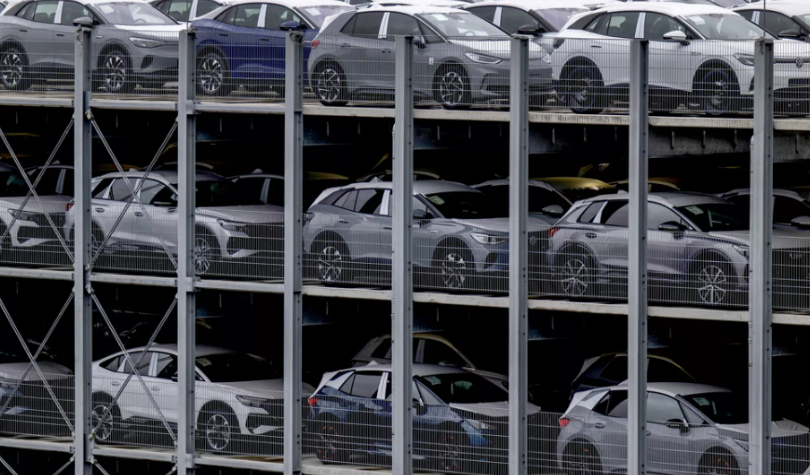
Electric vehicle (EV) sales in the European Union surged in the first quarter of 2025, helping offset broader weakness in the automotive sector amid ongoing global trade tensions and economic uncertainty, according to data released by the European Automobile Manufacturers’ Association (ACEA).
Between January and March, EV sales rose by 23.9% year-on-year, totaling 412,997 units across the EU. The battery electric vehicle (BEV) market share edged up slightly to 15.2%, compared to 15% at the start of the year.
Three of the bloc’s four largest auto markets—Germany, Belgium, and the Netherlands—led the electric surge. Germany posted a significant 38.9% jump in EV sales, while Belgium saw a 29.9% rise and the Netherlands recorded a 7.9% increase. France, however, bucked the trend with a 6.6% decline in EV sales.
Hybrid-electric vehicles (HEVs) also performed strongly, with sales increasing by 20.7% to reach 964,108 units in the first quarter. France led this segment with a 47.5% spike in registrations, while Spain, Italy, and Germany also reported double-digit growth. HEVs now represent 35.5% of the EU’s car market.
Plug-in hybrid electric vehicles (PHEVs) saw modest growth of 1.1%, buoyed primarily by rising demand in Germany and Spain.
Despite the green energy gains, the overall EU car market experienced a slight setback. New car registrations across the EU declined by 1.9% year-on-year in Q1, with March showing a marginal 0.2% dip. ACEA attributed the slowdown to ongoing global economic pressures and trade-related disruptions affecting supply chains and market confidence.
Traditional fuel segments continued their downward trajectory. Petrol car registrations dropped 20.6% compared to the same period in 2024, with France experiencing the steepest decline at 34.1%. Diesel vehicle registrations plummeted 27.1% across the EU.
Among automakers, Volkswagen Group recorded a 4.8% increase in EU registrations, buoyed by strong demand for its Cupra models. Renault Group also performed well, with a 9.5% rise in registrations. Meanwhile, BMW posted marginal growth of 0.4%, while Mercedes-Benz and Stellantis saw declines of 6.2% and 14%, respectively.
China’s SAIC Motor emerged as a major winner, posting a 52.3% jump in registrations—reflecting growing consumer interest in Chinese EV brands. In contrast, Tesla saw EU registrations plunge by 45% in the first quarter, marking a significant setback for the U.S. electric carmaker in the European market.
Despite the mixed results, the surge in EV and hybrid sales highlights a clear shift in consumer preferences and signals a pivotal moment for Europe’s car industry as it accelerates toward electrification.











Genetic Differences May Shape Effectiveness of Popular Weight-Loss Drugs, Study Finds

Seven-Day Meditation Retreat Linked to Measurable Changes in Brain and Body, Study Finds

Fuel Prices Surge Across Europe as Middle East Crisis Pushes Oil Above $100

Oil Prices Surge as Strait of Hormuz Closure Shakes Markets

Britain and Norway Step Up Naval Patrols to Protect Undersea Infrastructure from Russia

Meta Launches Muse Spark, Its First Major AI Model in Nine Months

Fresh Attacks Reported Across Gulf Despite US-Iran Ceasefire Announcement

Sweden Accuses Iran of Using Criminal Gangs to Target Dissidents as Teenagers Face Trial

US-Iran Ceasefire Eases Tensions as Europe Reacts; US Politics Spill Into Hungary Vote

ENI and Egypt Announce Major Gas Discovery Amid Rising Energy Costs

Meta Acquires Tilda Swinton VR Doc ‘Impulse: Playing With Reality’

Saudi Arabia’s Model for Sustainable Aviation Practices

Recent Developments in Small Business Taxes

Effective Drain Cleaning: A Key to a Healthy Plumbing System

Who was Ebrahim Raisi and his status in Iranian Politics?

China’s Historic Olympic Victory Sparks National Pride Amid Controversy

Carrectly: Revolutionizing Car Care in Chicago

Keely Hodgkinson Wins Britain’s First Athletics Gold at Paris Olympics in 800m

Saudi Arabia: Foreign Direct Investment Rises by 5.6% in Q1

Chinese Hackers Infiltrate Major U.S. Telecom Firms in Possible National Security Breach

Sony WF-10XM4: Headphones Are Our Absolute Favorite

10 Places You Can’t Miss If It’s Your First Time in European

New Census Data Will Shake Up Alabama Politics

16 Top of Our Favorite Outdoor Clothing Brands

Fashionable Summer Accessories to Dress Up Your Travel Look

How Sleeping Less than 7 Hours a Night Can Lead to Weight Gain
-
 Entertainment2 years ago
Meta Acquires Tilda Swinton VR Doc ‘Impulse: Playing With Reality’
-
 Business2 years ago
Saudi Arabia’s Model for Sustainable Aviation Practices
-
 Business2 years ago
Recent Developments in Small Business Taxes
-
 Home Improvement1 year ago
Effective Drain Cleaning: A Key to a Healthy Plumbing System
-
 Politics2 years ago
Who was Ebrahim Raisi and his status in Iranian Politics?
-
 Sports2 years ago
China’s Historic Olympic Victory Sparks National Pride Amid Controversy
-
 Business2 years ago
Carrectly: Revolutionizing Car Care in Chicago
-
 Sports2 years ago
Keely Hodgkinson Wins Britain’s First Athletics Gold at Paris Olympics in 800m