Connect with us

Business

EU Privacy Regulators Fine Meta €251 Million Over 2018 Facebook Data Breach

Published

on

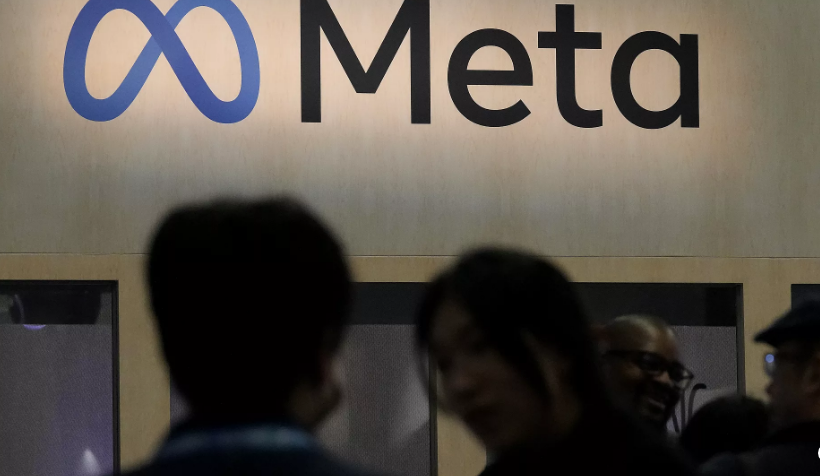
Meta, the parent company of Facebook, has been fined €251 million by European Union privacy regulators following an investigation into a 2018 data breach that exposed millions of user accounts. The penalties, announced Monday by Ireland’s Data Protection Commission (DPC), highlight multiple violations of the EU’s stringent General Data Protection Regulation (GDPR).

The breach, which occurred in 2018, allowed hackers to exploit vulnerabilities in Facebook’s “View As” feature to steal digital access tokens—keys that enable users to remain logged into their accounts. This flaw enabled attackers to gain unauthorized control over approximately 29 million accounts globally, including 3 million in Europe.

Investigation Findings

The DPC, serving as Meta’s primary EU privacy regulator due to the company’s regional headquarters in Dublin, concluded that Meta had committed several GDPR infringements. The regulatory body imposed the significant fine alongside issuing formal reprimands.

Facebook initially estimated the breach impacted 50 million accounts but later revised the figure to 29 million. The compromised data included access credentials, making the breach particularly severe in terms of user vulnerability.

Meta Responds

Meta expressed its intent to appeal the decision. In a statement, the company said, “This decision relates to an incident from 2018. We took immediate action to fix the problem as soon as it was identified.” The company also emphasized its transparency, noting that it “proactively informed people impacted” and promptly notified regulators and law enforcement, including the FBI.

Meta has since patched the bugs in the “View As” feature and discontinued the tool to prevent similar vulnerabilities.

The Attack Mechanism

The breach stemmed from three specific bugs in the “View As” feature, which allowed users to preview how their profiles appeared to others. Hackers leveraged these flaws to obtain access tokens from accounts appearing in search results. These tokens then granted attackers the ability to control the accounts, spreading the breach from one user’s network of friends to another.

See also  Eurozone Growth Stalls as Germany and Italy Contract, Spain Leads Gains

Broader Implications

The fine underscores the EU’s commitment to enforcing GDPR regulations, which aim to protect user data and hold companies accountable for lapses. The Irish DPC has been increasingly active in regulating tech giants, given Dublin’s role as a hub for several multinational tech firms.

This penalty is one of several recent actions taken against Meta over data privacy issues, reflecting growing scrutiny of the company’s practices. As the appeal process unfolds, the decision further highlights the mounting challenges faced by tech companies navigating Europe’s robust regulatory landscape.

Business

US Allows Nvidia to Sell H200 Chips to Approved Chinese Customers With 25% Surcharge

Published

on

The United States has granted Nvidia permission to sell its H200 semiconductor chips to selected customers in China, provided the company pays a 25% surcharge to the US government. President Donald Trump announced the decision on Monday, marking a shift in Washington’s export policy after months of lobbying from Nvidia chief executive Jensen Huang.

The approval, which will also extend to other American chipmakers such as Intel and AMD, follows earlier restrictions imposed over concerns that advanced US-made chips could strengthen China’s military and cyber capabilities. The agreement does not cover Nvidia’s more powerful Blackwell chips or the upcoming Rubin series, which remain prohibited for export.

Trump said in a post on Truth Social that he had personally informed Chinese President Xi Jinping of the decision and that the move would maintain strong national security protections. He described Xi’s response as “positive”.

The H200 chip is used in a wide range of high-performance computing applications, from medical technology to artificial intelligence systems. While not as powerful as the Blackwell line—considered the current benchmark in AI processing—the H200 remains significantly more advanced than chips produced by Chinese manufacturers.

Restrictions on China’s access to American semiconductors have been a central component of Washington’s technology policy. In April, the US barred sales of Nvidia’s H20 chip to China on national security grounds, even though the chip had been specifically designed to comply with existing export rules. That decision was later softened in July after Nvidia agreed to return 15% of its China revenue to the US government. AMD accepted a similar arrangement.

See also  European Automakers Struggle as CATL and Stellantis Announce €4.1 Billion EV Battery Plant in Spain

Critics of the export controls argue that limiting access to foreign technology pushes China to accelerate its domestic semiconductor development. Beijing has already discouraged state-linked firms from buying Nvidia products, warning that reliance on US hardware could leave companies vulnerable to abrupt policy changes.

Nvidia said in a statement that allowing the sale of H200 chips to vetted commercial customers “strikes a thoughtful balance that is great for America”, adding that the arrangement would support well-paid US jobs and strengthen domestic production.

Despite the added safeguards, several Democratic senators have opposed the approval. They warned that giving China access to more capable chips could assist its military and expand its ability to carry out cyberattacks on American infrastructure. Their concerns were amplified by a recent admission from Chinese AI firm DeepSeek, which said its biggest competitive obstacle was the lack of access to cutting-edge semiconductors designed in the United States.

The decision opens one of Nvidia’s most important markets at a time when demand for advanced chips continues to surge globally, setting another stage in the ongoing technological and geopolitical rivalry between Washington and Beijing.

Continue Reading

Business

Gold Looks to 2026 After a Record-Breaking Year Marked by Geopolitical Tension and Strong Central Bank Demand

Published

on

Gold enters 2026 after one of the strongest years in its modern history, rising more than 60% in 2025 and setting over 50 record highs. The surge placed the metal ahead of all major asset classes and delivered its best performance since 1979. Now, investors are assessing whether gold can extend its momentum over the next year or whether the market is nearing a turning point.

Analysts say the 2025 rally was the product of several overlapping global forces. Persistent geopolitical risks, trade uncertainty, a softening US dollar, and expectations of lower interest rates all helped drive demand. Central banks also played a decisive role by continuing to absorb large volumes of gold, keeping official-sector buying well above pre-pandemic levels.

Data from the World Gold Council (WGC) highlights how these factors contributed to the metal’s rise. Geopolitical tensions alone added roughly 12 percentage points to year-to-date performance, while a weaker dollar and modestly lower rates provided another 10 points. Economic expansion and investor positioning also offered meaningful support.

Looking ahead, the WGC expects many of the same pressures to influence the market in 2026. But it cautions that gold begins the year from a very different starting point. Prices have already factored in broad expectations of steady global growth, moderate rate cuts, and a stable dollar. With real interest rates no longer falling sharply and momentum cooling, the Council describes gold as fairly valued at current levels.

In its central outlook, the WGC projects gold trading in a narrow band next year, with returns likely ranging between a 5% decline and a 5% gain. The group notes that investor sentiment is balanced rather than defensive, reducing the likelihood of outsized moves unless economic conditions shift significantly.

See also  Apple to Invest $500 Billion in U.S., Create 20,000 Jobs

Three alternative scenarios could force a deviation from this baseline. In a mild economic slowdown marked by extra US rate cuts, gold could rise 5% to 15% as investors position more cautiously. A deeper recession could push gains even higher, with the WGC estimating a potential 15% to 30% jump driven by aggressive policy easing and renewed safe-haven flows. On the other hand, if pro-growth policies from the Trump administration lift yields and strengthen the dollar, gold could fall 5% to 20% as opportunity costs rise.

Despite the WGC’s measured tone, major Wall Street institutions remain bullish. J.P. Morgan Private Bank expects prices to climb to between $5,200 and $5,300 per ounce, while Goldman Sachs forecasts around $4,900. Deutsche Bank and Morgan Stanley also see room for appreciation, though both acknowledge possible volatility in the coming months.

Much of this optimism is tied to ongoing demand from central banks, especially in emerging markets, and the belief that many global investors remain underexposed to gold. Softening real yields and persistent geopolitical uncertainty are also seen as supportive.

At the same time, risks could hinder further gains. A stronger US economy, renewed inflation pressures, or reduced central bank buying could weigh on the market. Rising supply from recycled gold, particularly in India where the metal is widely used as collateral, may also place pressure on prices.

While a repeat of 2025’s dramatic rise appears unlikely, analysts agree that gold enters the new year from a position of strength. Its reputation as a hedge during unpredictable times remains firmly intact, keeping it central to many investors’ long-term strategies.

See also  Nvidia, AMD to Hand Over 15% of China AI Chip Revenues to US Government in Landmark Deal
Continue Reading

Business

Goldman Sachs Warns Europe Faces Economic Strain as China’s Export Push Intensifies

Published

on

China’s strengthening export momentum is emerging as a significant threat to Europe’s economic outlook, with Goldman Sachs cautioning that major EU economies could face notable GDP losses as Beijing doubles down on an export-led recovery strategy. The investment bank has cut its eurozone growth forecasts, warning that Europe is increasingly exposed to rising global trade competition at a time of limited policy flexibility.

Giovanni Pierdomenico, an economist at Goldman Sachs, said the euro area is “particularly exposed” to the impact of increased Chinese goods supply, which risks widening the region’s growing trade deficit with China and undermining its already weakened competitive position. The bank estimates that stronger Chinese export competition will reduce eurozone GDP by about 0.5% by the end of 2029.

Germany is projected to face the heaviest hit, with real GDP expected to be 0.9% lower over the next four years due to pressure from Chinese exports. Italy is forecast to see a 0.6% impact, while France and Spain are each expected to register declines of around 0.4%.

Goldman analysts point to a sharp shift in global market dynamics: in the past five years, eurozone exporters have lost as much as four percentage points of market share to Chinese firms across major global markets. The bank estimates that for every one-dollar increase in Chinese exports, European exports typically fall between twenty and thirty cents, illustrating the scale of substitution taking place. This trend, analysts say, is steadily eroding Europe’s competitive edge.

European policymakers have announced a series of measures aimed at strengthening strategic resilience, including the Critical Raw Materials Act and the AI Continent Action Plan. But Goldman Sachs remains doubtful that these initiatives will be enough to counter China’s export dominance. Analyst Filippo Taddei notes that the EU’s response is constrained by structural vulnerabilities — particularly its heavy reliance on China for key components and raw materials.

See also  Bitcoin Drops 8% Amid Market Selloff as Risk-Off Sentiment Rises

Goldman warns that while selective action against certain Chinese products is possible, broader restrictions could disrupt supply chains central to Europe’s industrial activity. At the same time, the bank highlights that many EU programmes intended to shore up competitiveness remain underfunded relative to their ambitions.

Defence is the only sector where Europe has committed substantial financial resources, with the Readiness 2030 programme backed by €150 billion in loans under the Security Action for Europe scheme. Even this effort, however, relies on Chinese supplies of rare earth elements essential for advanced military systems.

The bank concludes that without a more unified and assertive industrial strategy, Europe risks losing further ground in global markets it once dominated. Policymakers now face difficult decisions over how to reinforce Europe’s industrial base while managing its dependence on Chinese inputs — and how long the region can rely on fiscal support and consumer strength to cushion its economy against mounting external pressures.

Continue Reading

Trending