Business
China and Europe Drive Global EV Growth as U.S. Market Stalls Amid Policy Uncertainty
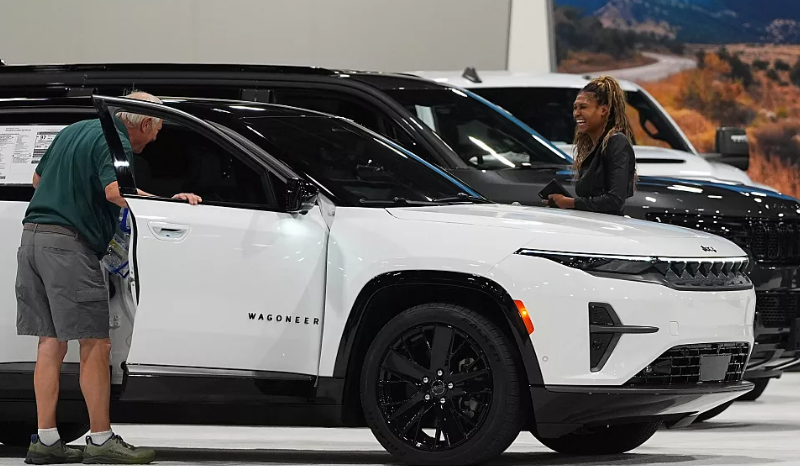
Global sales of electric and plug-in hybrid vehicles continued to surge in April, driven by strong performance in China and Europe, despite a slowdown in North America, according to new data released Wednesday by EV research firm Rho Motion.
Worldwide, electric vehicle (EV) sales reached 1.5 million units in April, a 29% increase compared to the same month in 2024. However, this figure marked a 12% decline from March, indicating a monthly dip in momentum. From January to April, EV sales totaled 5.6 million units — a 29% rise year-on-year.
Europe and China were the key drivers of growth. Sales in Europe jumped by 35% in April, with China close behind at 32%. Meanwhile, the rest of the world saw an even stronger April growth rate of 51%. In contrast, North American sales declined by 5.6% during the same period.
“Tariff negotiations are dominating headlines, but quietly, domestic manufacturers in China and the EU are growing market share,” said Charles Lester, Data Manager at Rho Motion. “The EU is the standout performer in 2025, as emissions targets have ignited a rapid industry transition to electric.”
From January to April, China posted a 35% increase in EV sales compared to the previous year. Europe followed with 25%, while North America saw more modest growth at just 5%.
Experts point to political developments as a key factor shaping the market’s trajectory. “EV adoption is accelerating — but politics, not technology, will decide who leads and who lags,” said Professor Christian Brand, a transport and energy expert at Oxford University.
In the U.S., uncertainty over the future of green tax incentives under President Trump’s administration is causing hesitation. Legislation under review would eliminate the current $7,500 federal tax credit for EV purchases by the end of 2026 and limit eligibility further. Tax breaks for commercial and second-hand EVs could also be scrapped.
Meanwhile, China is rolling out new consumer incentives to stimulate its slowing economy. Buyers trading in older vehicles for new EVs are now eligible for subsidies worth 20,000 yuan (€2,471), further boosting demand.
Trump’s 25% tariffs on imported vehicles and components have complicated matters for automakers with global supply chains. While recent executive orders offer some tariff relief, industry leaders remain concerned about profitability and dampened consumer sentiment.
Despite the policy divide, more than one in four cars sold globally this year is expected to be electric, according to the International Energy Agency.
“The shift to EVs is a gradual evolution, not a revolution,” said Brand. “It’s not just about switching engines — it’s about reshaping entire industries.”
Business
Ørsted Shares Rise After Court Clears Offshore Wind Project to Resume
Shares in Danish energy firm Ørsted rose about 5 percent on Tuesday after a federal court in Washington granted a preliminary injunction allowing construction on the $5 billion Revolution Wind offshore project to resume. The project had been paused under directives issued during the Trump administration.
The US District Court for the District of Columbia issued the order, temporarily halting a 22 December stop-work directive from the Bureau of Ocean Energy Management (BOEM), the Interior Department agency responsible for offshore energy development. The ruling enables Ørsted and its partners to restart construction while the legal dispute over the pause continues.
“The court’s action will allow the Revolution Wind Project to restart impacted activities immediately while the underlying lawsuit progresses,” Ørsted said in a statement. The company added that it would work with the US administration to seek an “expeditious and durable resolution” and that safety remains the top priority as construction resumes.
The lawsuit challenges both the December suspension and an earlier director’s order issued on 22 August, which the developers argued unlawfully disrupted project work. Although the court has not yet ruled on the merits of the case, the injunction removes a major regulatory obstacle, allowing the developers to continue work while litigation proceeds.
Revolution Wind is a 50/50 joint venture between Ørsted, the world’s largest offshore wind developer, and Skyborn Renewables, part of Global Infrastructure Partners. The project is intended to supply affordable and reliable power to the US Northeast, a region increasingly relying on offshore wind to meet climate goals and strengthen grid resilience.
The ruling marks a setback for President Donald Trump, who has repeatedly criticized wind power and pledged to reduce federal support for renewable energy, citing environmental, economic, and permitting concerns. Several previously approved offshore wind projects have faced suspensions or heightened regulatory scrutiny under the current administration.
Ørsted has faced challenges in the US market, including higher financing costs, supply chain pressures, and regulatory uncertainty, which have prompted the company to reassess parts of its North American portfolio. Despite these hurdles, Ørsted has consistently emphasized that offshore wind is essential to long-term decarbonization efforts and meeting growing electricity demand.
Analysts noted that the court decision could have wider implications for the offshore wind sector in the United States, setting a precedent for other projects navigating regulatory obstacles in a politically challenging environment. Investors have viewed Revolution Wind as a key test case for the future of offshore wind development under a more restrictive federal policy.
Construction on the project is expected to resume as soon as possible, signaling renewed momentum for offshore wind in the US and a potential boost to Ørsted’s North American ambitions.
Business
Alphabet Surpasses $4 Trillion Valuation Amid AI Optimism
Alphabet, Google’s parent company, has joined an elite group of tech giants to reach a $4 trillion market valuation, becoming the fourth firm to achieve the milestone after Nvidia, Microsoft, and Apple. The milestone reflects soaring investor confidence in artificial intelligence and other digital innovations.
The company’s stock has climbed roughly 75 percent over the past year, including a nearly 7 percent rise since January. Analysts said a key boost came from Apple’s announcement that it will integrate Google’s Gemini AI model into Siri, giving Alphabet a significant vote of confidence in the competitive AI landscape. The financial details of the deal were not disclosed.
Alphabet’s AI strategy has intensified following the success of OpenAI’s ChatGPT. The launch of the Gemini 3 model has received strong reviews, with tests showing 72 percent accuracy on standard benchmarks. The new model offers enhanced capabilities, including the integration of text and graphics in responses and improved coding functionality.
“Alphabet is consistently making smart innovations which should keep them relevant for years to come,” said Danni Hewson, head of financial analysis at AJ Bell. She noted that Google has managed to stay ahead in a sector where some disruptors of the last decade could become today’s disrupted firms.
Unlike emerging AI firms such as OpenAI and Anthropic, Alphabet’s established funding and infrastructure give it a clear advantage. The company has integrated an AI-powered “mode” into its search engine while competing with rivals like Microsoft, which added its Copilot tool to the Edge browser, and OpenAI, which has launched its own web browser.
Legal and regulatory developments have also supported Alphabet’s growth. The company concluded a high-profile US antitrust case in September, allowing it to retain control of its Chrome browser while agreeing to share search data with competitors. The resolution removed a key potential obstacle to further growth. Another trial regarding its ad tech business is ongoing.
Alphabet’s revenue performance across multiple units has contributed to its market cap. In its latest earnings report, Google Cloud revenues rose 34 percent to $15.2 billion, while YouTube advertising revenue grew 15 percent to $10.26 billion. Alphabet has also strengthened its cloud business by supplying AI chips to clients like Anthropic, enabling smaller firms to access high-performance hardware.
“Alphabet is very much a ‘sum of the parts’ story,” said Ben Barringer, head of technology research at Quilter Cheviot. “Search, YouTube, cloud computing, and Waymo all contribute significantly. Stabilising revenues across these units will be key to maintaining momentum.”
Despite the milestone, analysts caution that the stock carries a high valuation relative to earnings expectations. Investors will closely monitor the AI market and Alphabet’s ability to sustain growth across its diverse businesses.
Business
Trump Warns Cuba Over Venezuelan Oil After US Raid in Caracas
US President Donald Trump has issued a stern warning to Cuba, saying the flow of Venezuelan oil and financial support to the island will stop unless Havana “makes a deal.” The statement comes after US forces carried out a raid in Caracas on 3 January, capturing Venezuelan President Nicolás Maduro and his wife, Cilia Flores, on drug trafficking and other charges.
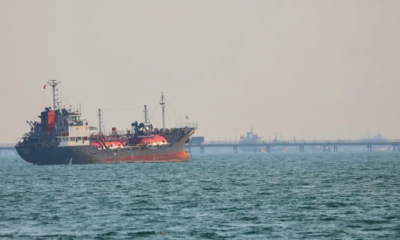
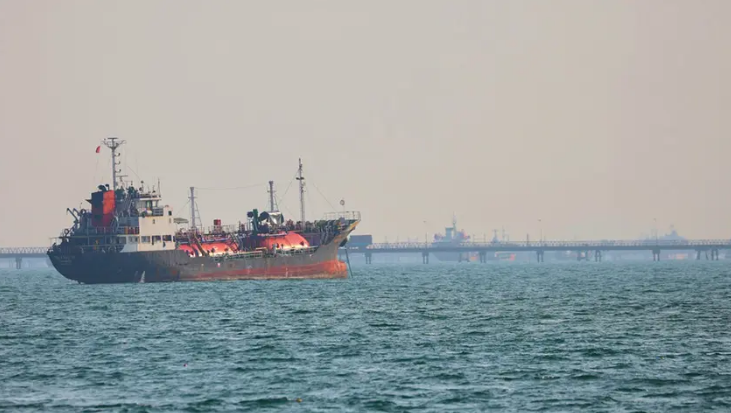
Venezuela, a long-standing ally of Cuba, has reportedly sent around 35,000 barrels of oil daily to the island. The Trump administration has seized multiple Venezuelan oil tankers in recent weeks for carrying sanctioned fuel, worsening Cuba’s ongoing fuel and electricity shortages. On Friday, US authorities seized a fifth vessel linked to Venezuelan oil.
Trump highlighted the raid in Caracas on social media, writing that Cuba had relied on Venezuelan oil and money in exchange for providing security services to past Venezuelan leaders, “BUT NOT ANYMORE!” He warned that there would be “ZERO” oil or financial support unless Cuba reaches an unspecified deal.
Cuba’s leadership responded firmly. Foreign Minister Bruno Rodriguez said the nation retained the right to import fuel “without interference or subordination to the unilateral coercive measures of the United States.” President Miguel Diaz-Canel added that no foreign power dictates Cuba’s actions. Rodriguez also noted that Cuba has never received monetary or material compensation for the security services it provided abroad.
The US raid in Caracas reportedly killed 32 Cuban nationals who were part of Maduro’s security detail. Trump said the operation demonstrated that Venezuela no longer needed protection from what he described as “thugs and extortionists,” asserting that the US military would now provide security.
While Trump has not outlined specific plans for Cuba, his administration has signaled ongoing pressure. Secretary of State Marco Rubio, a Cuban-American, suggested that Cuban leaders should be concerned about US actions. On social media, Trump shared a post suggesting Rubio could become president of Cuba, commenting: “Sounds good to me!”
Trump’s policy toward Latin America has intensified in recent months, with a focus on left-wing governments and combating drug trafficking. Following the Caracas raid, he mentioned a potential operation in Colombia and has criticized its president, Gustavo Petro, for allowing drug cartels to operate. He has also highlighted drug flows from Mexico, offering US military assistance despite Mexican authorities rejecting foreign troops on their soil.
US-Cuba relations have been tense since Fidel Castro’s 1959 revolution. While diplomatic ties improved during Barack Obama’s presidency, Trump reversed many of these measures, including reinstating Cuba’s designation as a state sponsor of terrorism, which had been lifted by President Joe Biden.
Diaz-Canel dismissed Trump’s remarks, accusing the US of trying to interfere in Cuba’s domestic affairs and defending the island’s political model.
The situation underscores rising tensions in the Caribbean following the US raid in Caracas, highlighting the complex dynamics between Washington, Havana, and allied governments in the region.
-
Entertainment1 year agoMeta Acquires Tilda Swinton VR Doc ‘Impulse: Playing With Reality’
-
Business2 years agoSaudi Arabia’s Model for Sustainable Aviation Practices
-
Business2 years agoRecent Developments in Small Business Taxes
-
Home Improvement1 year agoEffective Drain Cleaning: A Key to a Healthy Plumbing System
-
Politics2 years agoWho was Ebrahim Raisi and his status in Iranian Politics?
-
Business2 years agoCarrectly: Revolutionizing Car Care in Chicago
-
Sports1 year agoKeely Hodgkinson Wins Britain’s First Athletics Gold at Paris Olympics in 800m
-
Business2 years agoSaudi Arabia: Foreign Direct Investment Rises by 5.6% in Q1