
News
Two Iraqi Nationals Arrested in Germany on Suspicion of Past Islamic State Membership


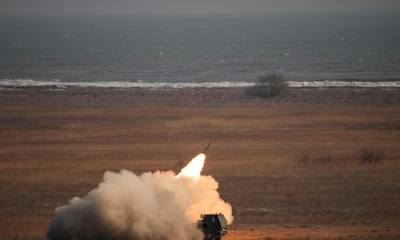






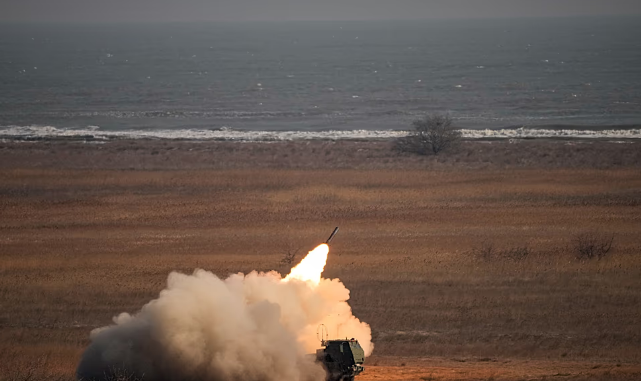
The US military is facing shortages of ammunition and advanced weapons following its war with Iran, according to a report by the Defence Department’s inspector general, highlighting the pressure placed on American weapons stockpiles and defence production.
The report, submitted to Congress, said the scale of weapons used during the conflict created “strategic inventory shortfalls” and revealed bottlenecks in the US defence industry’s ability to replenish critical supplies.
The conflict, known as “Operation Epic Fury”, began on February 28. Between the start of the war and June 30, the operation cost an estimated $33.4 billion (€29 billion), with about $22.3 billion spent on munitions.
Defence experts have estimated that rebuilding stocks of advanced missiles and defensive interceptors to levels seen before the conflict could take about three years.
The report also detailed significant losses of US military equipment during the fighting. Four F-15 fighter jets were destroyed and one F-35 aircraft was damaged. Seven KC-135 tanker aircraft were damaged or destroyed, including five that were hit by Iranian munitions while on the ground in Saudi Arabia.
Up to 30 MQ-9 Reaper drones were also destroyed, according to the report. Each drone costs about $30 million (€26 million), adding significantly to the military’s equipment losses.
Despite the findings, President Donald Trump has continued to dismiss concerns about US weapons availability. Trump said the country’s ammunition supplies were “virtually unlimited” and claimed American weapons production had reached record levels.
In a post on Truth Social on Monday, Trump said the United States was producing “more exquisite and elite weapons than at any time in our history”.
The Pentagon has also maintained that the US military has the weapons required to fight any conflict.
The inspector general’s report, however, pointed to wider challenges facing the US defence industry. The rapid consumption of advanced munitions during the war placed additional pressure on manufacturers already dealing with production constraints and lengthy timelines for some weapons systems.
The conflict also caused extensive damage to US military facilities across the region. Hundreds of buildings and other structures were damaged or destroyed at American bases in Kuwait, Bahrain, Qatar, the United Arab Emirates, Saudi Arabia, Iraq, Oman and Jordan.
The cost of repairing or rebuilding those facilities was not included in the $33.4 billion estimate for Operation Epic Fury.
US authorities have not yet determined whether all the damaged facilities will be rebuilt. They also have yet to establish who will ultimately pay for the repairs.
The report provides one of the clearest assessments so far of the financial and military costs of the Iran conflict, while raising questions about the ability of the United States to rapidly replace advanced weapons if it faces another major conflict.
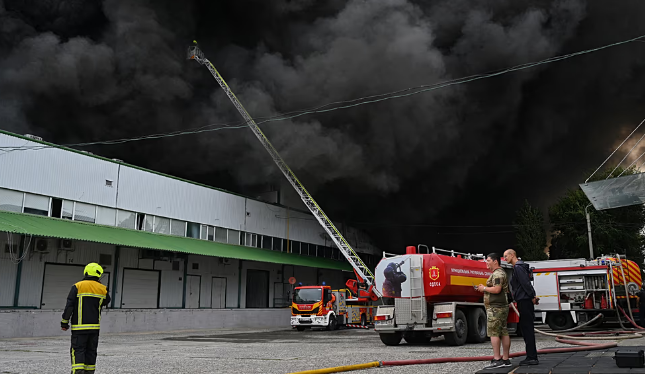
Ukrainian President Volodymyr Zelenskyy said on Saturday that he was willing to attend the G20 summit in Miami and meet Russian President Vladimir Putin on the sidelines, as the two countries continued attacks on each other’s territory and energy infrastructure.
Zelenskyy said direct talks were needed to achieve tangible results in efforts to end the war.
“We have to come. We have to meet, to speak and make decisions,” he said in an interview. “It’s not about words. What I will tell him or what he wants to tell me, it doesn’t matter. Results matter. That’s it.”
The Kremlin rejected the possibility of such a meeting. Kremlin spokesperson Dmitry Peskov described a Putin-Zelenskyy meeting at the G20 as “impossible” and said the Russian president would only meet Zelenskyy in Moscow.
Russian Foreign Minister Sergey Lavrov also said Russia would not halt what Moscow calls its “special military operation” during possible peace talks.
The comments came as Ukraine reported a large overnight Russian drone attack. Ukraine’s Armed Forces said Russia launched 453 drones of various types across the country, with 409 intercepted or neutralised. The military said 13 locations were hit.
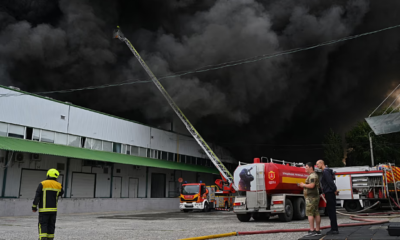
Several Russian drones struck the city of Stryi in the western Lviv region, which borders Poland. A multi-storey residential building, an outbuilding near a school and buildings close to a railway station were damaged, according to Ukrainian authorities.
In Izyum, in the Kharkiv region, a 26-year-old woman was killed after an explosive device detonated, according to Oleh Syniehub, head of the Kharkiv Regional Military Administration. Russian attacks also targeted Kharkiv city and 15 settlements in the region, injuring three people, including a 73-year-old woman.
At least five people were injured in Ukraine’s Volyn region after a Russian attack lasting more than four hours, regional Governor Roman Romaniuk said. More than 10 drones were reported in the region’s airspace. In Lutsk, an evacuated train was hit by debris and caught fire, although no injuries were reported.
Ukraine targets Russian oil facilities
Russia also reported casualties following Ukrainian drone attacks. Two people were killed and 12 injured after a strike caused a fire at an industrial facility in Nizhnekamsk in Russia’s Tatarstan region, according to Russian authorities. The figures could not be independently verified.
Ukraine’s Defence Intelligence said it also struck the Slavyansk-ECO oil refinery in Slavyansk-on-Kuban in Russia’s Krasnodar Krai, damaging a key oil-processing unit and the refinery’s tank farm.
Both sides have increasingly targeted energy infrastructure ahead of winter. Russia has concentrated many attacks on Ukraine’s electricity and energy facilities, while Ukraine has focused its strikes on Russia’s oil and gas infrastructure.
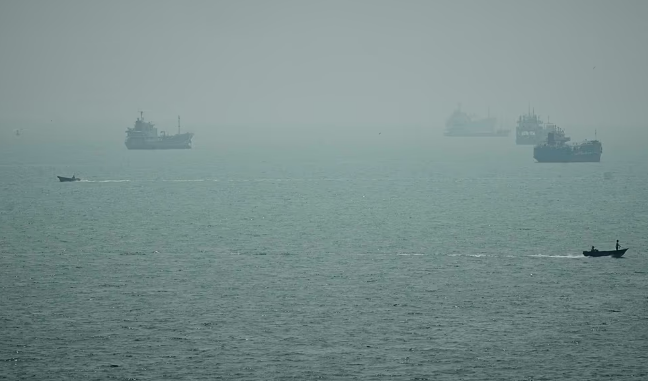
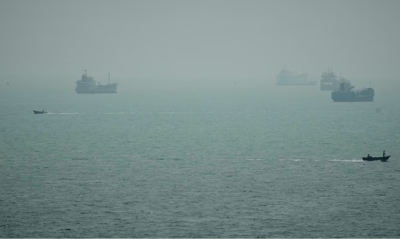
One person was killed and three others were injured after a merchant vessel was struck in the Strait of Hormuz on Sunday, Iranian authorities said, as tensions between Iran and the United States continue to focus on the strategic waterway.
The vessel was hit at about 5am local time, or 0130 GMT, off the coasts of Hengam and Qeshm islands, according to Amir Teymouri, governor of Qeshm city. The governor made the comments to Iranian state television.
“A merchant vessel was struck around 5:00 am (0130 GMT) this morning off the coasts of Hengam and Qeshm islands. One person was killed and three others were injured,” Teymouri said.
He did not identify what caused the strike or say who was responsible.
The United Kingdom Maritime Trade Operations (UKMTO), which monitors maritime activity and issues security alerts to vessels, said on Sunday that it had received a report of a vessel being struck by an “unknown projectile” while travelling through the Strait of Hormuz.
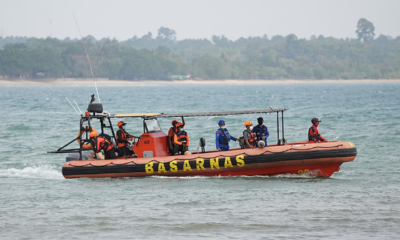
UKMTO later said a fire had broken out aboard the vessel and that local authorities were assisting with the evacuation of its crew. The agency advised ships operating in the area to exercise caution while investigations were underway.
“Vessels are advised to transit with caution and report any suspicious activity to UKMTO whilst authorities are investigating,” the agency said.
The incident adds to concerns about maritime safety in the Strait of Hormuz, one of the world’s most important routes for the transportation of oil and gas. The narrow waterway lies between Iran and Oman and connects the Persian Gulf with the Gulf of Oman and the wider Arabian Sea.
Qeshm, Iran’s largest island, is located near the Strait and has strategic importance because of its position close to major shipping routes.
The waterway has been at the centre of tensions between Washington and Tehran since late February. The confrontation has raised concerns among shipping companies, energy markets and governments about the safety of commercial vessels passing through the region.
Any disruption to traffic through the Strait of Hormuz could have wider consequences for global energy supplies because large volumes of crude oil and petroleum products move through the waterway each day.
Authorities had not immediately provided further details about the vessel involved, including its nationality, cargo or the extent of the damage. The cause of the strike and the identity of those responsible remained unclear as investigations continued.

Kennedy Center to Close for Repairs After Judge Blocks Trump Naming Plan

Weather Data Could Help Predict Cardiac Arrest Surges Days in Advance, Study Finds

Von der Leyen Says AI Should Support Doctors, Not Replace Them

US Military Faces Weapons Shortages After Iran War, Pentagon Report Says

Trump Dismisses AI Extinction Fears as Global Calls for Guardrails Grow

Microsoft Sets New AI Safety and Privacy Rules for US Schools

Brent Crude Climbs Above $108 as Hormuz Strike and Saudi Pipeline Shutdown Raise Supply Fears

Europe Records Busiest-Ever Summer for Air Travel Despite Middle East War

US Drug Pricing Policy Could Delay Medicine Launches in Europe, Study Finds

Xi Says China Will Lead BRICS Open-Source AI Initiative

Meta Acquires Tilda Swinton VR Doc ‘Impulse: Playing With Reality’

China’s Historic Olympic Victory Sparks National Pride Amid Controversy

Saudi Arabia’s Model for Sustainable Aviation Practices

Recent Developments in Small Business Taxes

Effective Drain Cleaning: A Key to a Healthy Plumbing System

Who was Ebrahim Raisi and his status in Iranian Politics?

Keely Hodgkinson Wins Britain’s First Athletics Gold at Paris Olympics in 800m

Carrectly: Revolutionizing Car Care in Chicago

Nobel Laureate Muhammad Yunus Proposed as Head of Bangladesh’s Interim Government Following Hasina’s Resignation

Chinese Hackers Infiltrate Major U.S. Telecom Firms in Possible National Security Breach

Sony WF-10XM4: Headphones Are Our Absolute Favorite

10 Places You Can’t Miss If It’s Your First Time in European

New Census Data Will Shake Up Alabama Politics

16 Top of Our Favorite Outdoor Clothing Brands

Fashionable Summer Accessories to Dress Up Your Travel Look

How Sleeping Less than 7 Hours a Night Can Lead to Weight Gain
-
 Entertainment2 years ago
Meta Acquires Tilda Swinton VR Doc ‘Impulse: Playing With Reality’
-
 Sports2 years ago
China’s Historic Olympic Victory Sparks National Pride Amid Controversy
-
 Business2 years ago
Saudi Arabia’s Model for Sustainable Aviation Practices
-
 Business2 years ago
Recent Developments in Small Business Taxes
-
 Home Improvement2 years ago
Effective Drain Cleaning: A Key to a Healthy Plumbing System
-
 Politics2 years ago
Who was Ebrahim Raisi and his status in Iranian Politics?
-
 Sports2 years ago
Keely Hodgkinson Wins Britain’s First Athletics Gold at Paris Olympics in 800m
-
 Business2 years ago
Carrectly: Revolutionizing Car Care in Chicago