
Business
Samsung, SK Hynix Shares Soar as OpenAI Taps Korean Memory Giants for $500bn AI Project


South Korea’s two leading chipmakers, Samsung Electronics and SK Hynix, are set to play a pivotal role in OpenAI’s massive $500 billion (€425 billion) “Stargate” supercomputer project, driving investor enthusiasm and fuelling expectations of a long-term surge in demand for high-bandwidth memory (HBM).
Shares in SK Hynix jumped around 10 per cent in Seoul trading on Thursday, while Samsung Electronics rose more than 3 per cent, after reports confirmed that the companies had secured a place in the supply chain for OpenAI’s ambitious global AI infrastructure build-out.
The Stargate project, one of the largest AI infrastructure initiatives ever attempted, aims to establish a worldwide network of supercomputers capable of supporting increasingly sophisticated artificial intelligence models. At the heart of this push lies high-bandwidth memory — a specialised chip critical for powering advanced AI processors such as those developed by Nvidia.
SK Hynix, the world’s second-largest DRAM maker, has emerged as the leader in HBM3 production, supplying Nvidia’s most advanced AI chips. Samsung, the global leader in both DRAM and NAND flash, is racing to expand its capabilities in the next-generation HBM4, positioning itself to compete for a bigger slice of the fast-growing AI memory market.
Industry analysts say OpenAI’s initiative could require hundreds of thousands of HBM units every month, a scale that would reshape the global semiconductor landscape. Demand of this magnitude would not only cement SK Hynix’s dominance in the HBM segment but also accelerate Samsung’s efforts to close the gap in cutting-edge designs.
“HBM is the backbone of modern AI computing,” said one Seoul-based semiconductor analyst. “The Stargate project locks in years of guaranteed demand, providing stability for memory makers at a time when the industry is seeking to move beyond the cyclical ups and downs of traditional DRAM.”
Beyond corporate gains, the development carries strategic implications for South Korea, which has long sought to evolve from being a global supplier of components to becoming a hub for advanced digital infrastructure. Hosting a project of this scale underscores Seoul’s alignment with Washington’s efforts to secure AI technology supply chains in friendly nations, while reducing reliance on China-sensitive markets.
OpenAI’s partnership with the Korean chip giants comes as the US seeks to strengthen ties with allies in critical sectors such as semiconductors, an industry central to both economic security and technological leadership.
With Samsung and SK Hynix together controlling more than half of the global memory market, their participation in Stargate not only solidifies their roles at the heart of the AI economy but also reinforces South Korea’s position as a cornerstone of the world’s technology ecosystem.
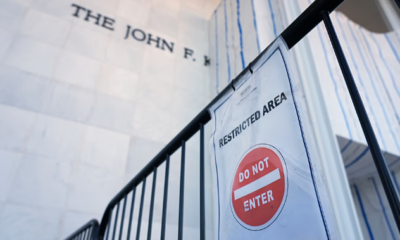





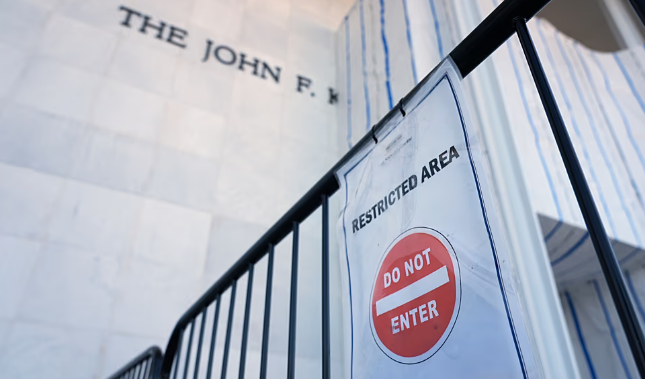
Most of Washington’s Kennedy Center will close for renovations after its board voted Tuesday to shut the landmark performing arts venue, hours after a federal judge blocked another attempt to add President Donald Trump’s name to the building.
The decision followed a ruling by US District Judge Christopher Cooper, who said the Kennedy Center board could not install a memorial to Trump or change the institution’s name without approval from Congress. The judge had previously ordered Trump’s name removed after it was added to the building’s facade.
“Simply put, Defendants cannot install memorials for President Trump or anyone or anything else at the Kennedy Center without Congress’s blessing,” Cooper wrote in his latest ruling.
Trump has said the renovation work, for which Congress has allocated $257 million, will not proceed unless the courts allow the board to move forward with plans to recognize him on the building. He said the Justice Department would appeal Cooper’s decision.
The board, which Trump chairs after replacing members with his appointees, voted to close the venue as it faces extensive repair needs and financial difficulties. Trump participated in the board’s virtual meeting, where the dispute over the institution’s future produced tense exchanges with Rep. Joyce Beatty, an Ohio Democrat and ex-officio board member who has opposed efforts to add Trump’s name.
The Kennedy Center has argued that the building requires major work. A partial ceiling collapse in a main hallway earlier this month added to concerns about the condition of the facility. Reuters reported that the closure could last as long as two years.
The dispute over the building’s name began after Trump’s return to the White House. The board first added his name to the facade, but Cooper ruled in May that the change was unlawful because Congress had established the Kennedy Center as a memorial to President John F. Kennedy. Workers removed Trump’s name in June, leaving scaffolding and a tarp covering part of the facade.
In August, the board voted to add an inscription describing the center as restored and renovated by Trump and proposed renaming the plaza outside the venue. It also considered another inscription if the Trump Kennedy Center Fund raised $100 million. Cooper’s latest ruling blocked those plans.
The court dispute has coincided with financial problems at the institution. Court filings have described declining ticket sales and contributions, while several artists and organisations have canceled performances or moved activities elsewhere. The board has argued that Trump’s involvement and fundraising are important to the center’s financial future.
The Kennedy Center, which opened in 1971, hosts major performing arts organisations and events including the annual Kennedy Center Honors. Its future now depends on the renovation process, the court appeal and decisions over how the institution will be financed and managed.
Business
Brent Crude Climbs Above $108 as Hormuz Strike and Saudi Pipeline Shutdown Raise Supply Fears
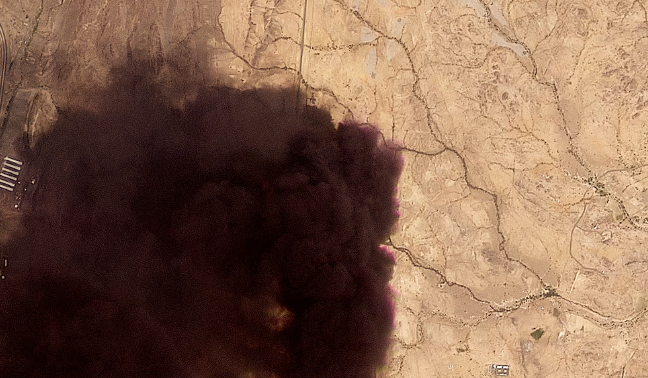
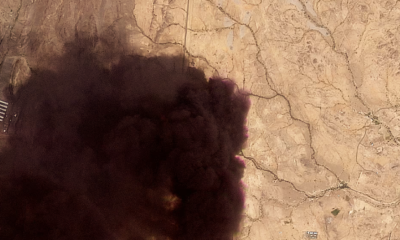
Brent crude prices climbed above $108 a barrel on Monday as growing disruption around the Strait of Hormuz raised fresh concerns about global oil supplies.
Brent crude for October and November deliveries rose by more than 3% during morning trading, extending gains from the previous week when prices moved back above the $100 mark. US West Texas Intermediate crude for October delivery also advanced, rising about 2.3% to around $102 a barrel.
The latest increase followed Saudi Arabia’s announcement that its East-West oil pipeline had been temporarily shut after drone attacks. The pipeline transports crude across Saudi Arabia to ports on the Red Sea, providing an alternative route that allows exports to bypass the Strait of Hormuz.
The closure comes as shipping through the strategic waterway faces growing risks. An unnamed merchant vessel was struck in the strait on Sunday, killing one crew member and injuring three others, according to Iranian authorities.
Shipping conditions have changed significantly since the conflict began. Vessels are required to obtain permission from Iran to pass through the waterway, while Tehran is also considering a system for charging transit service fees. Ships that do not comply have faced attacks, while US forces have carried out periodic strikes along Iran’s coastline.
Diplomatic efforts to address the situation have also suffered a setback. Oman postponed planned talks between Iran and Gulf states concerning the future of the waterway, which is one of the world’s most important routes for seaborne oil shipments.
The disruption is already affecting fuel markets beyond the Gulf. In the United States, the national average price of diesel surpassed $6 a gallon on Friday for the first time, rising from about $5.85 a week earlier and roughly 60% above the $3.71 recorded a year ago.
US petrol prices have also reached record levels, averaging about $4.22 a gallon after rising over the Labor Day weekend.
President Donald Trump has blamed Ukraine for part of the diesel supply pressure, saying Ukrainian President Volodymyr Zelenskyy should stop targeting Russian diesel infrastructure. Ukraine has attacked more than 20 Russian refinery targets this summer, while Russia responded by banning diesel exports.
According to Lipow Oil Associates, Russia’s export restrictions have removed about 800,000 barrels per day of diesel supply, while disruptions linked to the Strait of Hormuz have affected around 1.2 million barrels per day.
The broader impact on crude supplies is even greater. Oil flows through the Strait of Hormuz have fallen from about 20 million barrels per day before the war to roughly 7 million. The conflicts have also disrupted refineries representing about 5 million barrels per day of capacity, adding to pressure on global fuel markets.
Google is set to invest at least €13 billion in data centres and digital infrastructure in Finland over the next two years, marking the company’s largest single investment in Europe as it expands its capacity for artificial intelligence and other digital services.
The investment will support data centres and related infrastructure in the Finnish municipalities of Hamina, Kajaani, Muhos and Vaala. Google also plans to fund clean energy projects as well as initiatives focused on biodiversity, education, research and workforce development.
The company said the decision reflects Finland’s strong position in developing energy-efficient infrastructure for artificial intelligence. The new facilities will support a range of Google services, including its Gemini chatbot.
Construction is expected to take place during 2027 and 2028. Google estimates the investment could contribute around €3.6 billion annually to Finland’s gross domestic product and support more than 37,000 jobs. About 16,000 of those positions are expected to be linked directly to construction work.
Once construction is completed, Google expects its facilities and related economic activity to support around 7,000 jobs each year. These positions are expected to include technical and facility roles, equipment suppliers and workers in nearby shops, restaurants and other services.
Finnish Prime Minister Petteri Orpo welcomed the announcement, saying the investment demonstrated the country’s strengths and could generate benefits beyond the immediate spending.
“The value of the data economy extends far beyond direct investment into spurring innovation, research and development,” Orpo said. He added that closer cooperation with Google could produce long-term benefits for both sides.
Why Finland is attracting data centres
Finland’s climate and energy supply are major factors behind its appeal to technology companies. Data centres consume large amounts of electricity and produce substantial heat, making cooling a major operational cost.
The country’s cold climate can help reduce cooling requirements, while its energy system includes nuclear power, wind and hydropower. The combination of relatively stable electricity supplies and favourable conditions for cooling has encouraged a growing number of data centre projects across Finland.
Google has maintained a presence in the country since 2009, when it acquired a former paper mill in the coastal city of Hamina and converted the site into a data centre. The company has expanded the facility over the years.
The latest investment comes as Finland faces weak economic growth and record unemployment. For Orpo’s government, attracting major technology investments has become an important economic priority.
With the country’s data economy offering prospects for investment, employment and research, Google’s announcement is expected to strengthen Finland’s position as a major European hub for digital infrastructure and artificial intelligence.

Kennedy Center to Close for Repairs After Judge Blocks Trump Naming Plan

Weather Data Could Help Predict Cardiac Arrest Surges Days in Advance, Study Finds

Von der Leyen Says AI Should Support Doctors, Not Replace Them

US Military Faces Weapons Shortages After Iran War, Pentagon Report Says

Trump Dismisses AI Extinction Fears as Global Calls for Guardrails Grow

Microsoft Sets New AI Safety and Privacy Rules for US Schools

Brent Crude Climbs Above $108 as Hormuz Strike and Saudi Pipeline Shutdown Raise Supply Fears

Europe Records Busiest-Ever Summer for Air Travel Despite Middle East War

US Drug Pricing Policy Could Delay Medicine Launches in Europe, Study Finds

Xi Says China Will Lead BRICS Open-Source AI Initiative

Meta Acquires Tilda Swinton VR Doc ‘Impulse: Playing With Reality’

China’s Historic Olympic Victory Sparks National Pride Amid Controversy

Saudi Arabia’s Model for Sustainable Aviation Practices

Recent Developments in Small Business Taxes

Effective Drain Cleaning: A Key to a Healthy Plumbing System

Who was Ebrahim Raisi and his status in Iranian Politics?

Keely Hodgkinson Wins Britain’s First Athletics Gold at Paris Olympics in 800m

Carrectly: Revolutionizing Car Care in Chicago

Nobel Laureate Muhammad Yunus Proposed as Head of Bangladesh’s Interim Government Following Hasina’s Resignation

Chinese Hackers Infiltrate Major U.S. Telecom Firms in Possible National Security Breach

Sony WF-10XM4: Headphones Are Our Absolute Favorite

10 Places You Can’t Miss If It’s Your First Time in European

New Census Data Will Shake Up Alabama Politics

16 Top of Our Favorite Outdoor Clothing Brands

Fashionable Summer Accessories to Dress Up Your Travel Look

How Sleeping Less than 7 Hours a Night Can Lead to Weight Gain
-
 Entertainment2 years ago
Meta Acquires Tilda Swinton VR Doc ‘Impulse: Playing With Reality’
-
 Sports2 years ago
China’s Historic Olympic Victory Sparks National Pride Amid Controversy
-
 Business2 years ago
Saudi Arabia’s Model for Sustainable Aviation Practices
-
 Business2 years ago
Recent Developments in Small Business Taxes
-
 Home Improvement2 years ago
Effective Drain Cleaning: A Key to a Healthy Plumbing System
-
 Politics2 years ago
Who was Ebrahim Raisi and his status in Iranian Politics?
-
 Sports2 years ago
Keely Hodgkinson Wins Britain’s First Athletics Gold at Paris Olympics in 800m
-
 Business2 years ago
Carrectly: Revolutionizing Car Care in Chicago