
Tech
China Breaks Into Global Innovation Top 10, Overtaking Germany

China has entered the world’s top 10 most innovative economies for the first time, displacing Germany, according to the United Nations’ Global Innovation Index 2025 (GII), published Tuesday by the World Intellectual Property Organization (WIPO).
The report, which surveyed 139 economies based on 78 indicators, ranked Switzerland as the world’s most innovative country, a title it has held since 2011. Sweden secured second place, while the United States came third. Rounding out the top tier were South Korea, Singapore, the United Kingdom, Finland, the Netherlands, and Denmark. China took 10th place, pushing Germany down to 11th, a slip from its ninth-place finish last year.
The findings underline Europe’s continued strength in innovation, with six of the top 10 spots held by European nations. France ranked 13th, Ireland 18th, Italy 28th, Spain 29th, and Portugal 31st.
The GII report highlighted the rise of middle-income economies as major players in innovation. Alongside China, countries such as India, Turkey, and Vietnam continue to climb the rankings. It also identified Senegal, Tunisia, Uzbekistan, and Rwanda as “emerging dynamic overperformers,” signaling that innovation is spreading beyond traditional hubs.
Despite this progress, the report pointed to a slowdown in global innovation investment. It noted that research and development (R&D) growth has decelerated to its weakest pace since the 2008 financial crisis, while venture capital activity has yet to recover from the sharp decline in 2023.
Even so, China continues to consolidate its position as an innovation powerhouse. The report said the country is on track to become the world’s largest R&D spender and contributed roughly one-quarter of all international patent applications in 2024. In contrast, both Germany and the United States reported declines in international patent filings — a key measure of innovation.
“Even if innovation investment is in a lull, innovation itself is not,” the report said, underscoring advances in several high-impact sectors. It pointed to record-breaking efficiency gains in green supercomputers, a continued fall in battery prices accelerating the clean energy transition, and rapid growth in electric vehicles, robotics, and 5G networks, now available to half the global population.
The study also emphasized the transformative potential of artificial intelligence, noting its long-term impact remains uncertain but undeniable. Falling costs of genome sequencing are opening doors for personalized medicine and biological research, though pharmaceutical innovation faces challenges, with drug approvals down 19 percent last year.
Overall, WIPO concluded that technological progress remains resilient across most sectors, but adoption rates are slowing. “Every single metric fell short of its long-term growth trend,” the report warned, highlighting that while breakthroughs continue, momentum in turning those innovations into widespread applications is cooling.
The entry of China into the innovation elite marks a symbolic shift in global dynamics, reflecting the growing weight of emerging economies in shaping the technologies of the future.










Denmark is set to introduce legislation on Thursday that would prohibit the sharing of realistic deepfakes depicting people’s faces or voices without their consent, as governments around the world seek to address the growing risks posed by artificial intelligence.
The proposed amendment to Denmark’s copyright law would give people greater control over digital versions of their appearance and voice. The protections would apply to ordinary individuals as well as artists whose performances could be digitally copied or manipulated.
Deepfakes are digitally generated or altered images, videos and audio designed to make people appear to say or do things they did not. They have increasingly been used to spread false information, damage reputations and create humiliating or abusive material.
Denmark’s Culture Minister Zenia Stampe said the technology allows manipulated content to be produced and distributed on social media with little effort.
One of the government’s key aims is to ensure that major technology companies remove harmful manipulated material quickly, reducing the potential damage to people targeted by such content.
The legislation follows a broad political agreement reached in June 2025 under the previous Danish government. That agreement was aimed at protecting people from unauthorised digital imitations.
The proposed rules would not impose a blanket ban on digitally altered content. Exceptions would cover satire, parody, caricature and criticism of politicians, institutions and society.
Those protections would not apply where misinformation creates serious risks to other people’s rights, essential interests, lives or property.
The Danish government hopes the legislation will come into force at the beginning of 2027.
The move comes as countries and international institutions introduce new measures to address the misuse of synthetic media.
EU member states covered by the bloc’s directive on violence against women must implement the legislation by June 14, 2027. It requires countries to criminalise the creation of sexually explicit manipulated material and its subsequent public distribution without the consent of the person depicted when the material is likely to cause serious harm.
Denmark is not bound by that directive because it has an opt-out from EU justice and home affairs rules.
France already prohibits the distribution of AI-generated images or audio depicting another person without consent when the artificial nature of the material is not obvious or clearly disclosed. French law also prohibits the non-consensual sharing of sexual deepfakes regardless of whether they are labelled as manipulated.
In England and Wales, creating or requesting non-consensual intimate deepfakes became a criminal offence in February. Sharing such material can result in a prison sentence of up to two years.
Denmark’s proposed law would add to a growing set of national measures aimed at giving individuals greater protection as increasingly realistic digital impersonations become easier to create and distribute.

Artificial intelligence agents that can perform tasks on behalf of users were a major focus at the Google Cloud Summit in Doha, as Qatar expands its efforts to train workers and test new AI applications.
The technology is moving beyond generative AI, which produces text, images and answers in response to prompts. AI agents are designed to take additional steps independently to complete specific tasks, creating new opportunities for businesses while raising questions about oversight and the future of work.
Alex Rutter, managing director of Google Cloud’s artificial intelligence business across Europe, the Middle East and Africa, said generative AI is primarily used to create new content through large language models. Agentic AI, by contrast, can be used to carry out processes after receiving instructions.
Rutter cited invoice reconciliation as an example. An AI agent could check information on an invoice against payment and supplier records before a payment is approved. Such repetitive work involving multiple databases could be suitable for automation, he said.
Greater autonomy also increases the need for safeguards. Rutter said Google currently recommends keeping a person involved in reviewing the results produced by AI agents. Instead of checking every piece of data, employees could focus on exceptions identified by the systems.
The level of human oversight would depend on the nature of the task and the risks an organisation is prepared to accept. In fields such as medicine, Rutter said AI should assist clinicians rather than replace their decisions.
The Doha summit also marked three years since Google Cloud opened its cloud region in Qatar. The company announced a new national training programme with Qatar Digital Academy that is expected to provide more than 50,000 learning opportunities in the country by 2030.
The programme will target several groups, including workers, executives and software developers, as Qatar seeks to expand its pool of people with skills needed to use and manage AI technologies.
Ghassan Kosta, Google Cloud’s regional general manager for Qatar, Oman, Bahrain and Iraq, said the company was expanding its services to support the growing demands of agentic AI. He said data centre infrastructure would need to develop alongside advances in AI.
Qatar’s Ministry of Communications and Information Technology also announced an innovation lab developed with Google Cloud. The facility will allow AI projects to be tested before they are deployed more widely.
Amna Al-Kaabi, head of emerging technologies at the ministry, said the partnership was intended to connect technology experiments with practical needs in different sectors and help projects progress from early testing to real-world applications.
The increasing ability of AI systems to perform tasks is also prompting questions about employment. Rutter said it was difficult to predict the pace of change, but suggested that managing AI agents could become a responsibility for some workers.
He said future workplaces could include employees managing people, AI agents or both, although businesses are still determining which tasks can safely and effectively be assigned to autonomous systems.
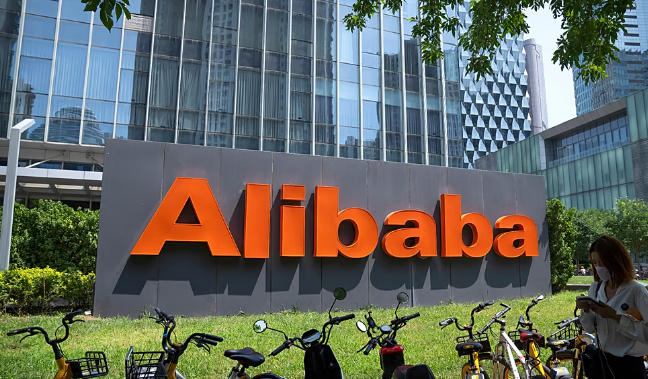
Alibaba is expanding its global cloud infrastructure with plans to establish new data centre regions in Europe, while also developing larger artificial intelligence models and a new AI chip aimed at strengthening its position in the fast-growing technology market.
The Chinese technology group announced on Wednesday that Alibaba Cloud will establish its first cloud regions in Finland, the Netherlands and Turkey. The company also plans to expand its data centre presence in Germany, France, the UAE, Malaysia and Hong Kong over the next 12 months.
Eddie Wu, CEO of Alibaba Group, said machine-based reasoning currently represents less than 3 per cent of total human thinking capacity but could eventually reach levels far beyond current capabilities.
“With this in mind, our target is that by 2032, the global data centre capacity operated by Alibaba Cloud will surpass 20GW, fueling the industry’s exponentially rising demand for AI,” Wu said.
The planned expansion is expected to increase Alibaba Cloud’s computing capacity as businesses and governments accelerate investment in AI systems that require greater processing power and data storage.
Alibaba is also expanding the capabilities of its Qwen family of AI models. Wu said on Tuesday that future versions could contain between five trillion and 10 trillion parameters, potentially making them several times larger than the biggest Chinese models currently available.
The Qwen models have become prominent in China’s AI sector and are among the most widely downloaded Chinese-developed AI models globally.
The company also introduced a new AI chip at its annual conference. Wu described the Zhenwu V900 as “the most powerful AI chip in China today”.
The chip is being developed as China faces continued restrictions on access to advanced semiconductors from the United States. The Zhenwu V900 is widely reported to offer roughly twice the performance of Nvidia’s H20 chip, which was designed for the Chinese market.
US export controls have restricted Chinese companies’ access to some advanced AI processors, encouraging Beijing and domestic technology firms to accelerate development of locally produced alternatives.
Alibaba’s announcement comes as China seeks to expand its domestic AI infrastructure while competing with technology companies in the United States and other major markets.
The company said the overseas data centre expansion would help provide additional computing resources for customers in several regions and support growing demand for cloud and AI services.
The announcement also comes ahead of an expected meeting between US President Donald Trump and Chinese President Xi Jinping in Washington this week. Trade, semiconductor restrictions and concerns over the national security implications of artificial intelligence are expected to be among the issues discussed.
Alibaba’s investment plans highlight the growing connection between cloud infrastructure, advanced chips and AI model development as technology companies compete to build increasingly powerful systems.

Plague Fears Return After Russian Death, but Europe Faces Very Low Risk

Samsung Profit Soars as AI Chip Demand Drives Record Results

Denmark Moves to Ban Sharing of Realistic Deepfakes Without Consent

Moonshot AI Targets 2027 Hong Kong IPO as DeepSeek Funding Race Intensifies

Saudi Aramco Chief Warns Global Oil Supply Cushion Is Running Thin

Trump Defers Diesel Taxes as US Fuel Prices Near Record Highs

Investors Face Limited Choices as Robotics Boom Stays Locked in Private Markets

Optogenetics Pioneers Win 2026 Nobel Prize in Medicine

Iran Says Hormuz Can Reopen Within Seven Days as Oil Exports Come Under Pressure

Uruguay Tops Global Retirement Ranking as Europe Dominates Top 10

Meta Acquires Tilda Swinton VR Doc ‘Impulse: Playing With Reality’

China’s Historic Olympic Victory Sparks National Pride Amid Controversy

Saudi Arabia’s Model for Sustainable Aviation Practices

Recent Developments in Small Business Taxes

Effective Drain Cleaning: A Key to a Healthy Plumbing System

Who was Ebrahim Raisi and his status in Iranian Politics?

Keely Hodgkinson Wins Britain’s First Athletics Gold at Paris Olympics in 800m

Carrectly: Revolutionizing Car Care in Chicago

Nobel Laureate Muhammad Yunus Proposed as Head of Bangladesh’s Interim Government Following Hasina’s Resignation

Chinese Hackers Infiltrate Major U.S. Telecom Firms in Possible National Security Breach

Sony WF-10XM4: Headphones Are Our Absolute Favorite

10 Places You Can’t Miss If It’s Your First Time in European

New Census Data Will Shake Up Alabama Politics

16 Top of Our Favorite Outdoor Clothing Brands

Fashionable Summer Accessories to Dress Up Your Travel Look

How Sleeping Less than 7 Hours a Night Can Lead to Weight Gain
-
 Entertainment2 years ago
Meta Acquires Tilda Swinton VR Doc ‘Impulse: Playing With Reality’
-
 Sports2 years ago
China’s Historic Olympic Victory Sparks National Pride Amid Controversy
-
 Business2 years ago
Saudi Arabia’s Model for Sustainable Aviation Practices
-
 Business2 years ago
Recent Developments in Small Business Taxes
-
 Home Improvement2 years ago
Effective Drain Cleaning: A Key to a Healthy Plumbing System
-
 Politics2 years ago
Who was Ebrahim Raisi and his status in Iranian Politics?
-
 Sports2 years ago
Keely Hodgkinson Wins Britain’s First Athletics Gold at Paris Olympics in 800m
-
 Business2 years ago
Carrectly: Revolutionizing Car Care in Chicago