
Business
Eurozone Growth Forecasts Slashed Amid Trump’s Tariff Shock

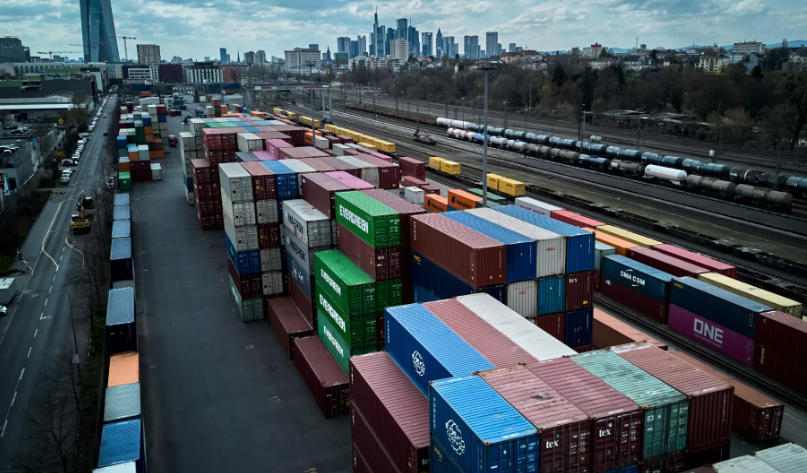
Economists have sharply downgraded eurozone growth projections following former U.S. President Donald Trump’s imposition of 20% tariffs on European exports. The sweeping trade barriers have heightened concerns over a global economic slowdown, prompting expectations of accelerated rate cuts by the European Central Bank (ECB), with April now seen as a likely starting point.
Tariffs Trigger Economic Concerns
Trump’s latest trade move has sparked widespread concerns among economists, who warn that the tariffs will hit European consumption and investment while shifting inflation fears to the background. The tariff shock is expected to weigh heavily on trade, business confidence, and foreign investments, increasing the likelihood of stagnation within the eurozone economy.
ABN Amro economists, led by Bill Diviney, anticipate a significant slump in European economic activity. “The EU has been hit with a 20% tariff. We expect this to drive a sharp fall in exports to the U.S. over the coming months, and we are significantly downgrading our 2025 growth forecast as a result,” Diviney stated. The bank now expects near-zero quarterly growth in the short term, with a likely contraction by the third quarter of 2025. However, a recovery is projected toward the year’s end, gaining momentum in 2026.
Bank Forecasts and Inflation Outlook
Bank of America estimates that the U.S. tariffs could reduce global GDP growth by 50 basis points, with the U.S. potentially losing up to 1.5 percentage points, while China and the eurozone face contractions of around one percentage point and 40–60 basis points, respectively.
“For the eurozone, if tariffs remain in place, we anticipate a 40–60 basis point decline in growth over the next few quarters, with the EU likely implementing some form of retaliatory measures,” economist Ruben Segura Cayuela said. However, the inflationary impact of EU retaliation is expected to be minimal, with a 10% tariff hike on U.S. imports raising inflation by only five basis points.
Goldman Sachs analysts, led by Sven Jari Stehn, also revised their projections, warning of increased downside risks. “Our baseline forecast of 0.8% eurozone growth in 2025 already accounted for a total trade-related GDP hit of 0.7%, but the magnitude of Trump’s tariffs raises the likelihood of a technical recession.” The bank now expects the ECB to cut its deposit rate to 1.75% by July, with an April cut deemed “very likely.”
ECB Rate Cuts on the Horizon
The consensus among major financial institutions is that the ECB will respond to the tariff-induced slowdown with aggressive monetary easing. ING’s global head of macroeconomics, Carsten Brzeski, likened the tariffs to a “tsunami,” warning of a prolonged downturn.
“This U.S. tariff move will hurt. Beyond trade, the real concern is its effect on confidence—European consumers and businesses are likely to hold back on spending and investment, keeping eurozone growth at a crawl,” Brzeski said. ING has accordingly lowered its eurozone GDP forecast for 2025 to 0.6% from 0.7% and for 2026 to 1.0% from 1.4%.
With economic headwinds mounting, analysts widely expect the ECB to begin rate cuts in April, potentially ushering in a series of reductions throughout the year to cushion the impact of weakened trade and investment. As uncertainty over global trade tensions intensifies, the eurozone’s economic trajectory remains precarious.





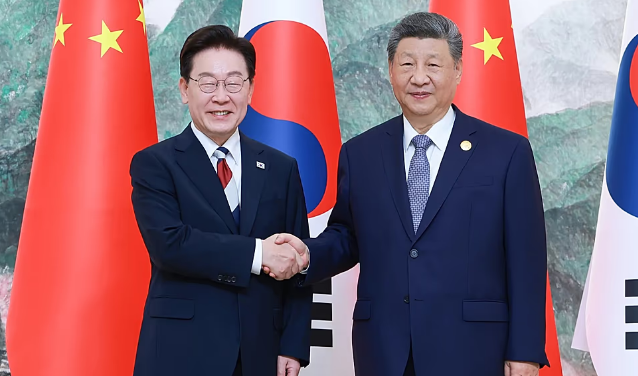
South Korea and China have reached a broad agreement to expand their free trade deal, potentially opening new opportunities for entertainment companies, tourism operators and financial services businesses. However, uncertainty remains over whether the agreement will lead to a full return of South Korean films, television programmes and K-pop concerts in China.
The announcement followed talks between South Korean President Lee Jae Myung and Chinese President Xi Jinping on the sidelines of the Asia-Pacific Economic Cooperation summit in Shenzhen last week.
China’s commerce ministry said negotiations had largely been completed, although technical details, translations and legal reviews must still be finalised before the expanded agreement can be formally signed.
Under the proposed arrangements, China has agreed to treat South Korean film and video game companies on the same basis as businesses from other countries. Beijing has also committed to avoiding discrimination against Korean films and online games during approval procedures, according to South Korea’s trade ministry.
The agreement would also broaden joint production arrangements to cover television dramas, animation, entertainment programmes and documentaries, in addition to films. Productions officially recognised under these arrangements would be classified as Chinese content, allowing them to avoid restrictions and quotas imposed on foreign productions.
However, films would still need to undergo China’s content approval process before being shown in cinemas, a South Korean official told The Korea Herald.
K-pop concerts remain uncertain
South Korean entertainment businesses have faced difficulties accessing the Chinese market since 2016, when Seoul decided to deploy a US-made missile defence system. Beijing never formally confirmed the restrictions, but they have affected Korean films, television programmes and live performances.
The latest agreement does not guarantee the return of K-pop concerts in China. A senior South Korean presidential official said the deal did not oblige either government to approve concerts, although it would create additional opportunities to discuss the issue with Beijing, The Korea Herald reported.
Industry representatives have also urged caution, saying the impact would depend on how the commitments are implemented.
“We will have to see whether practical measures that affect the content industry follow,” an official at a South Korean drama production company told Yonhap News Agency.
Tourism and financial services included
The agreement also covers tourism and other commercial activities. South Korean travel agencies operating in 23 designated Chinese areas, including Beijing and Shanghai, would be permitted to organise overseas trips for Chinese citizens and foreign residents.
South Korean retailers would be allowed to operate chains with 30 or more stores without establishing joint ventures with Chinese companies. Financial services firms would also automatically receive any additional market access China grants to foreign businesses under future trade agreements.
In return, South Korea has agreed to improve market access for Chinese companies in legal, retail and audiovisual services. Both countries have also committed to avoiding requirements that force foreign investors to transfer technology as a condition of investment.
China’s commerce ministry described the agreement as a joint effort to oppose protectionism and promote international trade.
The original free trade agreement between the two countries came into force in December 2015. Negotiations to expand its services and investment provisions began in March 2018 and continued through 17 formal rounds, gaining momentum following recent meetings between Lee and Xi.

House prices in European cities are significantly higher than in rural areas, but the difference varies considerably between countries, reflecting disparities in employment opportunities, investment and housing supply.
Urban homes cost an average of 31% more than the national average across 16 European countries, according to Euronews Business calculations based on the OECD’s Regions and Cities at a Glance 2026 report. By comparison, properties in commuting zones are 11% cheaper than the national average, while homes outside cities and their surrounding commuting areas cost 30% less.
The OECD attributes much of the difference to the concentration of jobs, investment and innovation in capital regions and major cities. As economic opportunities become concentrated in these locations, demand for housing rises, pushing property prices higher.
Denmark records the largest urban-rural price difference among the countries examined. Homes in its urban centres cost 64% above the national average, while properties outside cities and commuting zones are 51% below it. This means urban homes are approximately 3.4 times more expensive per square metre than those in less populated areas.
Hungary has the second-largest gap, with urban property prices 57% above the national average and rural prices 45% below it. Finland follows, with city homes costing 55% more than the national average and properties outside urban areas 44% less.
Sweden, Ireland and Portugal also report substantial differences, with urban prices respectively 46%, 43% and 38% above their national averages.
Gabriel M. Ahlfeldt, a professor at Humboldt University in Berlin, said the Nordic countries’ differences reflected strong housing demand in a limited number of urban employment centres, compared with weaker demand in sparsely populated regions.
In Hungary, speculative investment has also contributed to rising prices. József Hegedüs, a senior housing policy researcher at Budapest’s Metropolitan Research Institute, said speculative demand accounted for a significant part of the property boom in Budapest.
The Netherlands and the UK have the smallest urban-rural price differences in the comparison. Dutch city prices are just 1% above the national average, while properties outside cities are 9% cheaper. In the UK, urban prices are 4% above the national average, against 9% below it outside cities.
However, smaller price differences do not necessarily indicate affordable housing. Ahlfeldt said cities benefit from access to employment, universities, public services and cultural facilities, while restrictions on construction can limit supply and push prices higher.
Germany also illustrates the substantial differences between metropolitan areas within a single country. According to the OECD, purchasing a home in Munich requires the equivalent of about 17 additional years of disposable income compared with buying one in Chemnitz.
Young people, first-time buyers and renters are among those most affected by rising housing costs, particularly those without family wealth to help finance a purchase. Lower-paid workers in major cities also face difficult choices between housing expenses, living space and commuting distances.
The figures highlight how housing affordability across Europe depends not only on national property prices but also on regional incomes, employment opportunities and the availability of homes.
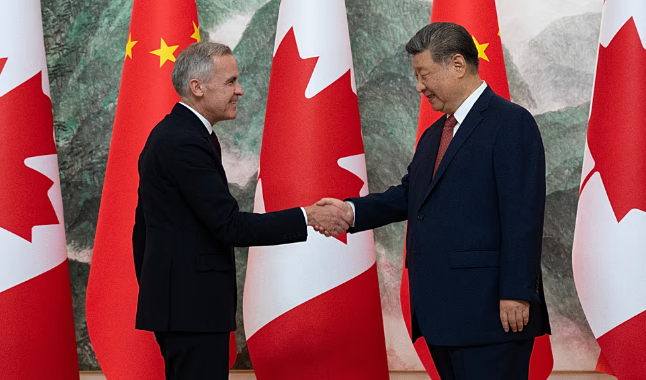
Canada and China have agreed to reduce trade barriers on several goods, offering relief to Canadian pork and seafood exporters while extending exemptions for Chinese steel and aluminium products. The agreement comes as Ottawa seeks to diversify its trading relationships amid pressure from US tariffs.
The measures were announced after Canadian Prime Minister Mark Carney met Chinese President Xi Jinping in Shenzhen on Tuesday, ahead of the Asia-Pacific Economic Cooperation summit.
China will suspend additional tariffs of 25% on most frozen pork cuts and selected seafood products from January 1, 2027, until December 31, 2028, according to the Canadian prime minister’s office.
The affected exports were worth approximately C$400 million (€254 million) in 2024, before the additional duties were introduced. Eligible seafood products include certain frozen cold-water shrimp and prawns, molluscs, sea cucumbers and Greenland halibut.
In return, Canada will maintain existing tariff exemptions for selected Chinese steel and aluminium products until the end of 2028. Ottawa will also introduce full or partial exemptions for 32 additional product categories where domestic supplies are insufficient or unavailable.
The latest agreement builds on trade measures announced earlier this month, when China extended tariff relief on Canadian canola meal, peas, lobster and crab through 2028. Canada also confirmed an extension of existing exemptions covering Chinese metals.
Ottawa seeks to diversify trade
Carney has been working to expand Canada’s overseas trade as tariffs imposed by US President Donald Trump affect industries that rely heavily on access to the American market.
Foreign Minister Anita Anand said on Wednesday that Canada was taking a gradual approach to restoring economic relations with China while reducing its dependence on a single trading partner.
Speaking in Shenzhen, Carney said Canadian exports to China had increased by more than a third this year. However, he stressed that negotiations with Washington remained a priority.
“The United States fundamentally changed its trade objectives, and we are focused on getting the right deal for Canadians,” he told reporters.
The prime minister said earlier this week that Canada could consider working with Chinese carmakers if discussions with the United States failed to protect the closely connected North American automotive industry. He maintained that securing an agreement with Washington remained his preferred option.
Previous steps towards closer trade ties
Canada and China began easing trade restrictions following an agreement reached during Carney’s visit to Beijing in January.
Under that arrangement, Ottawa agreed to initially allow up to 49,000 Chinese electric vehicles into Canada each year at a reduced tariff rate of 6.1%. Beijing, in return, agreed to lower duties on Canadian agricultural products, including canola.
Carney has also announced plans for a Canadian trade mission to China in 2027 and a joint initiative to help smaller Canadian businesses reach Chinese consumers through online shopping platforms.
The latest measures reflect efforts by both countries to restore commercial ties, while Canada continues to negotiate with its largest trading partner, the United States.

CrowdStrike to Acquire Zscaler in Record $43.9 Billion Cybersecurity Deal

South Korea and China Near Deal to Ease Restrictions on Entertainment Industry

Costa Concordia Captain Francesco Schettino Released From Prison on Probation

Chronic Loneliness Linked to 38% Higher Dementia Risk, Study Finds

Denmark Has Europe’s Widest Urban-Rural House Price Gap, OECD Data Shows

Trump Administration Fires US National Cyber Director Sean Cairncross

JPMorgan Chase, Visa and Mastercard Customer Data Exposed in Third-Party Cyberattack

Canada and China Agree to Ease Tariffs on Pork, Seafood and Metals

Germany Ranks Last in Business Start-up Bureaucracy Study, Requiring Nearly 4,000 Hours

UK Inflation Rises to 3.6% in October as Record Diesel Prices Push Up Costs

China’s Historic Olympic Victory Sparks National Pride Amid Controversy

Meta Acquires Tilda Swinton VR Doc ‘Impulse: Playing With Reality’

Saudi Arabia’s Model for Sustainable Aviation Practices

Recent Developments in Small Business Taxes

Effective Drain Cleaning: A Key to a Healthy Plumbing System

Who was Ebrahim Raisi and his status in Iranian Politics?

Keely Hodgkinson Wins Britain’s First Athletics Gold at Paris Olympics in 800m

Carrectly: Revolutionizing Car Care in Chicago

Nobel Laureate Muhammad Yunus Proposed as Head of Bangladesh’s Interim Government Following Hasina’s Resignation

Chinese Hackers Infiltrate Major U.S. Telecom Firms in Possible National Security Breach

Sony WF-10XM4: Headphones Are Our Absolute Favorite

10 Places You Can’t Miss If It’s Your First Time in European

New Census Data Will Shake Up Alabama Politics

16 Top of Our Favorite Outdoor Clothing Brands

Fashionable Summer Accessories to Dress Up Your Travel Look

How Sleeping Less than 7 Hours a Night Can Lead to Weight Gain
-
 Sports2 years ago
China’s Historic Olympic Victory Sparks National Pride Amid Controversy
-
 Entertainment2 years ago
Meta Acquires Tilda Swinton VR Doc ‘Impulse: Playing With Reality’
-
 Business2 years ago
Saudi Arabia’s Model for Sustainable Aviation Practices
-
 Business2 years ago
Recent Developments in Small Business Taxes
-
 Home Improvement2 years ago
Effective Drain Cleaning: A Key to a Healthy Plumbing System
-
 Politics2 years ago
Who was Ebrahim Raisi and his status in Iranian Politics?
-
 Sports2 years ago
Keely Hodgkinson Wins Britain’s First Athletics Gold at Paris Olympics in 800m
-
 Business2 years ago
Carrectly: Revolutionizing Car Care in Chicago