
Business
Anthropic Targets Up to $64 Billion in IPO at Valuation of $1.4 Trillion

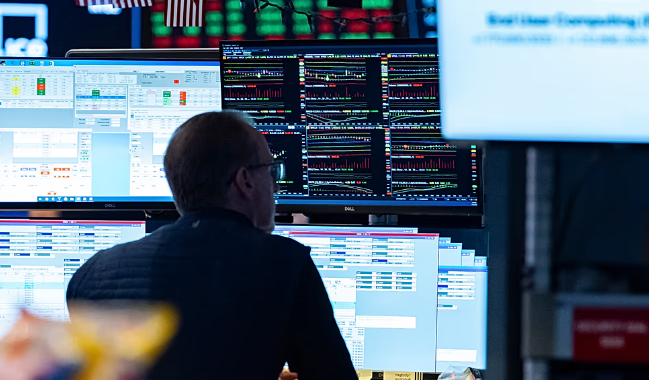
Artificial intelligence company Anthropic plans to raise as much as $64 billion (€57.1 billion) through its upcoming initial public offering, in a stock market debut that could value the maker of Claude AI models at up to $1.4 trillion (€1.25 trillion).
In a filing with the US Securities and Exchange Commission on Tuesday, the company said it intends to offer 825 million shares at a price range of $70 to $78 each. Its shares will trade under the ticker symbol ANT.
Seven technology companies, including Google, Nvidia, AMD and Microsoft, have also agreed to purchase $26 billion (€23.2 billion) in non-voting shares at the IPO price through a separate private placement. The companies are either investors in Anthropic or major providers of its computing infrastructure.
The offering is smaller than earlier expectations that Anthropic could raise up to $100 billion (€89.2 billion), potentially making it the largest IPO on record. Even at the top of its proposed price range, the sale would fall below the $86 billion (€76.7 billion) raised by Elon Musk’s SpaceX in June at a valuation of $1.77 trillion (€1.58 trillion).
Anthropic has been preparing to list during the week of November 16, with reports indicating that trading could begin on November 19.
The IPO is being closely watched by investors as a test of confidence in the artificial intelligence industry and the enormous spending required to build its computing infrastructure.
Art Hogan, chief market strategist at B. Riley Wealth Management, told AFP that the listing reflected continuing concerns about the cost of AI development and how companies would finance their expansion. He said investors had shown strong interest in major private technology companies, including SpaceX and Anthropic, with OpenAI potentially following next year.
Revenue growth and financial risks
Anthropic’s revenue reached $17 billion (€15.2 billion) in the third quarter, compared with $1.4 billion (€1.25 billion) a year earlier. Its annualised revenue run rate stood at approximately $81 billion (€72.3 billion) on October 31, up $10 billion (€8.9 billion) from the end of September.
The company has also committed hundreds of billions of dollars to securing computing capacity. Its filing warned that these financial obligations could remain substantial even if demand for its AI services falls below expectations.
The document devotes considerable attention to potential risks from advanced artificial intelligence, including the possibility of catastrophic or existential harm if the technology is not developed and deployed responsibly.
Anthropic also warned that its public positions on AI safety and regulation could expose it to political opposition or regulatory action.
The company has faced tensions with the Trump administration after refusing to remove restrictions on military uses of its technology. The Pentagon subsequently designated Anthropic a national security risk.
Under the governance arrangements outlined in the filing, the seven co-founders, led by chief executive Dario Amodei and president Daniela Amodei, will retain just over half of shareholder voting rights after the listing. This structure will allow the founders to maintain control even as outside investors acquire shares.





European and Asian stock markets rose on Tuesday as technology shares recovered from recent losses and investors grew more hopeful about an end to the Iran war. Falling oil prices also supported sentiment ahead of the latest US inflation figures.
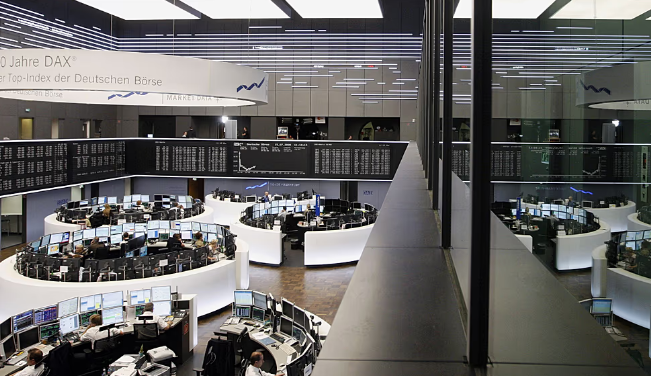
London’s FTSE 100 gained 0.73 per cent shortly after opening, while France’s CAC 40 advanced 1.20 per cent and Germany’s DAX rose 1.14 per cent. US stock futures also edged higher following a broad rally on Wall Street on Monday.
Technology companies led gains across Asian markets, reversing some of the losses recorded after Democratic victories in last week’s US midterm elections raised concerns about tighter regulation of the technology sector.
South Korea’s Kospi surged 4.5 per cent, supported by strong performances from chipmakers SK Hynix and Samsung Electronics. Japan’s Nikkei 225 climbed 2.9 per cent, while Taiwan’s Taiex gained 2.5 per cent. Markets in Hong Kong and Shanghai also advanced.
Taiwan Semiconductor Manufacturing Company (TSMC), a major supplier of chips used in AI systems, reported a 59.7 per cent increase in October revenue from a year earlier, reinforcing expectations of continued demand for advanced semiconductors.
Shares in SoftBank Group, a major OpenAI investor, jumped 13.9 per cent ahead of its earnings announcement after falling to a one-year low on Monday.
Despite the recovery, investors remain concerned about whether the enormous sums being spent on AI infrastructure will generate sufficient returns. Companies such as Amazon, Microsoft and Apple recorded gains in New York, but market attention is increasingly shifting towards the profitability of data centre investments.
Russ Mould, investment director at AJ Bell, said markets had moved quickly from signs of panic to renewed optimism. However, Stephen Innes of SPI Asset Management cautioned that the latest gains did not necessarily indicate a full recovery in investor confidence.
Innes said suppliers receiving large technology investment orders had outperformed the companies financing the projects, suggesting investors were becoming more selective about the AI sector.
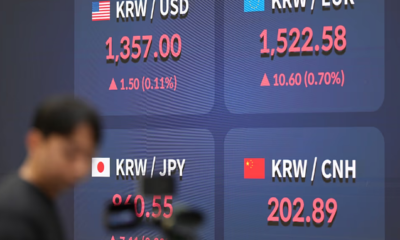
In currency markets, the US dollar traded at 157.91 Japanese yen, while the euro slipped to $1.1249.
Oil declines as Iran peace prospects improve
Oil prices extended their losses as traders assessed the possibility of an end to the conflict involving Iran. Brent crude fell more than 2.5 per cent to around $90 a barrel, while US West Texas Intermediate traded near $84.70.
The declines followed Monday’s fall of almost 6 per cent in Brent. Both benchmarks have lost around 20 per cent this month amid expectations that diplomatic efforts could ease supply disruptions.
US President Donald Trump said there was positive momentum towards ending the war after meeting Qatar’s prime minister at the White House. He described further military strikes as unlikely, although he did not rule them out.
Mould said investors increasingly believed Trump would seek a way to end the conflict following the midterm election results. A reduction in tensions could ease energy costs for households and businesses.
China’s trade figures also attracted attention, with exports rising 35.2 per cent in October and imports increasing 41.6 per cent. Its trade surplus for the first 10 months of 2026 had already exceeded $1 trillion.
German semiconductor manufacturer Infineon expects demand for chips used in artificial intelligence infrastructure to drive stronger sales growth this year, despite increasing opposition to the expansion of data centres over their environmental and economic costs.
The company forecast sales growth of 20 per cent in its current financial year, following a 12 per cent increase in revenue during the year that ended in September.
Infineon supplies power semiconductors that help manage and distribute electricity from the grid to data centres. Although it does not manufacture AI processors such as those produced by Nvidia, its components are essential to the operation of large computing facilities.
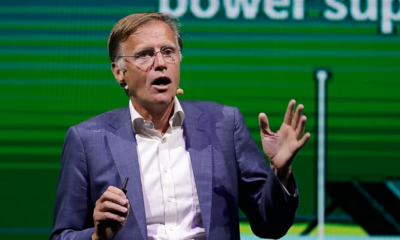
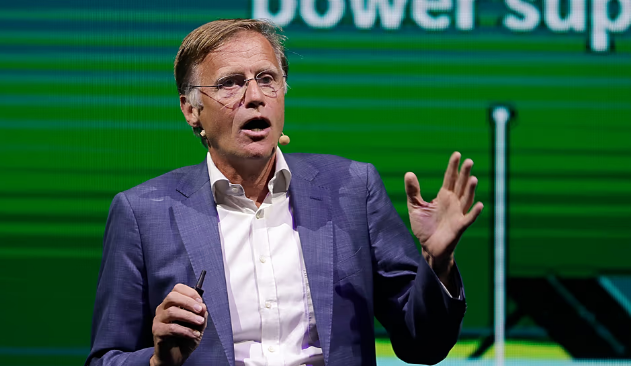
Chief executive Jochen Hanebeck said the rapid expansion of AI infrastructure remained a major source of demand for the company’s products.
“AI delivers real value, and its importance will only grow,” Hanebeck said, describing the technology as a key driver of Infineon’s growth and profitability.
Speaking during an earnings call on Tuesday, he acknowledged growing debate over the construction of AI data centres, particularly in the United States, where concerns have increased about electricity consumption, water use and the impact on nearby communities.
Opposition has gained attention following the US midterm elections, with several Democratic election winners promising to challenge or restrict data centre projects in their areas.
Hanebeck said the debate was currently more concentrated in the United States but expected similar concerns to emerge elsewhere as construction activity expands.
He noted that communities living close to large facilities had legitimate concerns, although sparsely populated regions in different parts of the world could provide alternative locations.
The Infineon chief executive suggested that major technology companies, including US-based hyperscalers, could increasingly build facilities outside the United States to meet demand while addressing local resistance.
He said a wider geographical distribution of data centre projects would be a positive development for the industry.
The comments reflect the growing importance of power management technology as technology companies invest heavily in computing capacity to support AI services. Large data centres require substantial electricity supplies, along with specialised equipment to convert, regulate and distribute power efficiently.
Infineon’s latest forecast suggests that the company expects these infrastructure investments to continue despite mounting questions about their long-term costs and sustainability.
The expansion of AI services has created opportunities for semiconductor suppliers beyond manufacturers of advanced processors. Companies producing power chips, cooling systems and other supporting components are also benefiting from increased investment in computing infrastructure.
For Infineon, the outlook depends partly on whether technology companies maintain their spending plans and how quickly new data centre projects move forward across different markets.
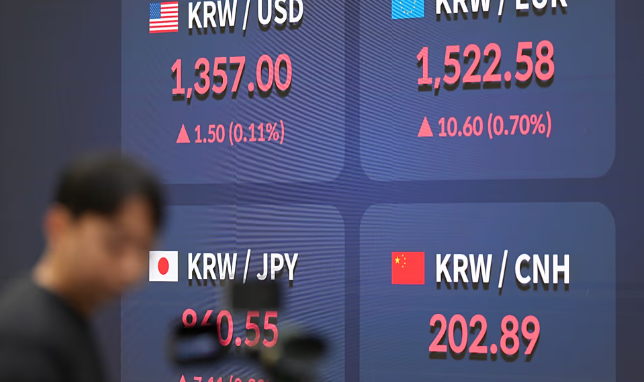
European shares opened sharply lower on Friday as a heavy sell-off in US technology stocks spread across global markets, with investors concerned that political opposition to artificial intelligence data centres could slow the industry’s expansion.
The S&P 500 companies lost a record $2.9 trillion in market value on Thursday. In early European trading, the Stoxx Europe 600 fell 1.2%, Germany’s DAX dropped 1.6%, while France’s CAC 40 and London’s FTSE 100 each declined 1.4%.
The MSCI AC Asia Index fell more than 4% as investors sold AI-related and semiconductor shares. However, US futures pointed to a possible pause, with Nasdaq-100 futures rising 1.5% at around 10:15 CET.
Markets were assessing whether sweeping Democratic victories in this week’s US midterm elections could result in tighter restrictions on data centre construction. Opposition to the projects has grown across political lines, with several successful candidates pledging to slow or stop new developments.
Market intelligence firm Cleanview estimates that about 40% of planned US data centre capacity is located in states where governors or governors-elect have pledged or already introduced pauses on new projects. Senator Bernie Sanders and Representative Alexandria Ocasio-Cortez also proposed a federal moratorium earlier this year.
The uncertainty has raised questions about whether technology companies will earn sufficient returns on the hundreds of billions of dollars invested in AI infrastructure. Higher borrowing costs could also make construction more expensive, potentially reducing demand for chips and electricity.
Chipmakers lead global market declines
The Philadelphia Semiconductor Index plunged 12.2% on Thursday, marking its largest one-day fall since 2020. The index was down around 16% for the week through the close.
The Nasdaq Composite lost 5.5%, the S&P 500 fell 4.4% and the Dow Jones Industrial Average declined 3.4%. All three recorded their steepest daily percentage losses since US President Donald Trump announced sweeping tariffs in April 2025.
Stuart Clark, a portfolio manager at Quilter, said the declines highlighted the dependence of major US stock indices on a relatively small number of large technology and semiconductor companies.
The sell-off also reduced the fortunes of prominent technology executives. Nvidia chief executive Jensen Huang’s net worth fell by $15.1 billion, while Elon Musk’s dropped by $79.7 billion, according to the Bloomberg Billionaires Index.
Asian chipmakers also suffered heavy losses. Japan’s Nikkei 225 closed 6% lower, while South Korea’s Kospi fell 6% after an earlier decline of as much as 8.8% triggered a 20-minute trading halt. SK Hynix shares dropped 10.4% and Samsung Electronics lost 6.4%.
Taiwan’s Taiex finished 4.5% lower, with TSMC shares down 4.7%. Hong Kong’s Hang Seng was about 1.1% lower at the midday break, while Shanghai’s Composite declined 1.1%.
Neil Wilson of Saxo Markets described the sell-off as potentially excessive but said investors would first want to see markets stabilise.
Elsewhere, Bloomberg reported that Dutch bank ING was seeking to sell a portfolio of data centre loans worth about $500 million. Brent crude traded just below $99 a barrel, while government bonds gained as investors sought safer assets. The US 10-year Treasury yield fell six basis points to 4.84%, and the euro slipped 0.3% against the dollar to $1.1188.

Anthropic Targets Up to $64 Billion in IPO at Valuation of $1.4 Trillion

Web Summit Cancels Second Day in Lisbon as Storm Charles Disrupts Portugal

Cyberattacks on Critical Infrastructure Expose Human Errors as a Major Security Risk

Global Markets Rally as AI Stocks Recover and Oil Prices Fall on Iran Peace Hopes

Infineon Forecasts 20% Sales Growth as AI Data Centre Demand Boosts Chip Business

Fear, Hearing Loss and Mobility Problems Among Overlooked Risks of Falls in Older Adults

UK Considers Adding eBay and Vinted to Social Media Ban for Under-16s

Physicist’s Research Suggests Travelling Back in Time May Be Impossible

Egypt Announces Mediterranean Gas Discovery Estimated at 200 Billion Cubic Feet

Spain Rescues 854 Migrants off El Hierro as Canary Islands Face Pressure on Reception Centres

Meta Acquires Tilda Swinton VR Doc ‘Impulse: Playing With Reality’

China’s Historic Olympic Victory Sparks National Pride Amid Controversy

Saudi Arabia’s Model for Sustainable Aviation Practices

Recent Developments in Small Business Taxes

Effective Drain Cleaning: A Key to a Healthy Plumbing System

Who was Ebrahim Raisi and his status in Iranian Politics?

Keely Hodgkinson Wins Britain’s First Athletics Gold at Paris Olympics in 800m

Carrectly: Revolutionizing Car Care in Chicago

Nobel Laureate Muhammad Yunus Proposed as Head of Bangladesh’s Interim Government Following Hasina’s Resignation

Chinese Hackers Infiltrate Major U.S. Telecom Firms in Possible National Security Breach

Sony WF-10XM4: Headphones Are Our Absolute Favorite

10 Places You Can’t Miss If It’s Your First Time in European

New Census Data Will Shake Up Alabama Politics

16 Top of Our Favorite Outdoor Clothing Brands

Fashionable Summer Accessories to Dress Up Your Travel Look

How Sleeping Less than 7 Hours a Night Can Lead to Weight Gain
-
 Entertainment2 years ago
Meta Acquires Tilda Swinton VR Doc ‘Impulse: Playing With Reality’
-
 Sports2 years ago
China’s Historic Olympic Victory Sparks National Pride Amid Controversy
-
 Business2 years ago
Saudi Arabia’s Model for Sustainable Aviation Practices
-
 Business2 years ago
Recent Developments in Small Business Taxes
-
 Home Improvement2 years ago
Effective Drain Cleaning: A Key to a Healthy Plumbing System
-
 Politics2 years ago
Who was Ebrahim Raisi and his status in Iranian Politics?
-
 Sports2 years ago
Keely Hodgkinson Wins Britain’s First Athletics Gold at Paris Olympics in 800m
-
 Business2 years ago
Carrectly: Revolutionizing Car Care in Chicago
You must be logged in to post a comment Login