
Technology
Wave Energy Gains Momentum in Europe Amid Clean Energy Push

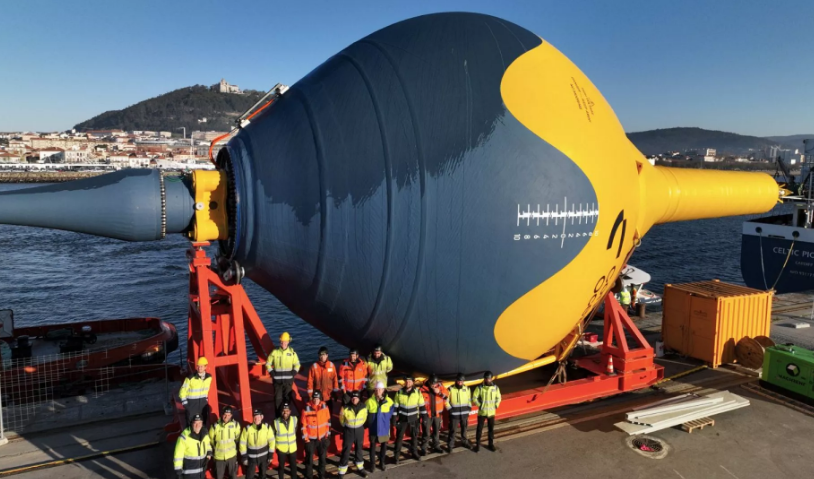
European countries with strong Atlantic swells, including Spain, France, and Ireland, are emerging as key players in harnessing wave energy, one of the world’s largest untapped renewable resources.
According to the International Energy Agency (IEA), ocean power generation needs to grow by 33% annually to help achieve global net-zero targets by 2050. The Intergovernmental Panel on Climate Change (IPCC) estimates wave energy could generate up to 29,500 terawatt-hours (TWh) per year—nearly ten times Europe’s annual electricity consumption.
“Wave and tidal energy have the potential to be significant, reliable, and sustainable power sources,” said José Miguel Rodrigues, a senior research scientist at SINTEF, one of Europe’s largest research institutes. Unlike wind and solar, tidal energy is governed by predictable gravitational cycles, providing a steady electricity supply that helps balance the grid.
A breakthrough in wave energy technology comes from Swedish company CorPower Ocean. Inspired by the pumping mechanism of the human heart, cardiologist Dr. Stig Lundbäck co-founded the company in 2009. Their ‘CorPack’ wave energy converter—a lightweight buoy—converts the up-and-down motion of waves into rotational energy, which is then transformed into electricity. According to CorPower Ocean, the device produces five times more electricity per tonne of equipment compared to previous technologies.
“CorPower has steadily progressed through development stages, securing investment and research grants, particularly from the EU,” Rodrigues noted. The company’s first full-scale wave energy converter is currently deployed off Portugal’s northern coast near Aguçadora, where it is supplying power to the national grid.
Other innovators are also making strides in the sector. Italian energy company ENI has developed the Inertial Sea Wave Energy Converter, while China’s Nanku floating generator and Finland’s AW-Energy’s WaveRoller, featuring large underwater panels, are further advancing the technology.
Despite its potential, wave and tidal energy still face challenges in achieving commercial viability at scale. “The key challenge is competitiveness,” Rodrigues explained. “Wave energy must demonstrate both consistent performance and the ability to withstand extreme ocean forces. Many prototypes have failed or underperformed, while offshore wind and solar have proven reliability and cost-effectiveness.”
European nations like Portugal, Spain, France, Ireland, and the UK have the most favorable conditions for large-scale wave energy projects due to their exposure to Atlantic swells. Norway, with its extensive coastline and remote island communities, also presents a strong market where wave energy could reduce grid costs and enhance energy independence.
Ultimately, the success of wave energy hinges on not just technological advancements but also economic viability, social acceptance, and supportive government policies. With continued innovation and investment, wave energy could soon play a vital role in Europe’s transition to a cleaner, more sustainable energy future.











Businesses across the US are under pressure to run leaner operations while protecting service quality. That challenge is not only about labor or fuel. It is also about visibility. When equipment goes missing, sits unused, or takes too long to locate, the cost shows up in wasted time, delayed jobs, and lower productivity. Recent BLS producer price data for transportation and warehousing points to the wider cost pressure facing businesses that depend on movement, storage, and operational coordination.
That helps explain why more companies are investing in tools that make everyday operations easier to track and manage. In that context, an asset tracking system is becoming part of a broader push for tighter oversight, better accountability, and fewer avoidable losses. The shift is not really about adopting technology for its own sake. It is about reducing friction in ordinary business activity.
The Cost Of Poor Asset Visibility
For many businesses, the real problem is not always outright loss. It is uncertain. If equipment, trailers, containers, or field assets cannot be located quickly, work slows down. Teams spend time searching, schedules slip, and underused resources stay hidden in the system. In sectors that rely on mobile assets, that kind of inefficiency can quietly build into a serious cost issue.
That is why visibility has become more of a business priority. McKinsey’s recent operations insights for 2025 point to the same broader trend: companies are putting more emphasis on productivity, better information, and faster operational decisions. In simple terms, businesses want fewer blind spots and fewer wasted hours.
Asset Tracking And Telematics Are Starting To Work Together
This is increasingly where asset tracking and telematics intersect. Asset tracking has location, movement and utilization details. Telematics give businesses another means of tracking their vehicles, routes and seeing information about their assets and fleets.
Together, they help businesses solve for loss, plan closer to the margin, and respond more quickly when something changes. That is important for today’s fleet managers, contractors, service teams, and business owners who increasingly think of vehicles and assets as a common denominator. Problems that were once viewed as discrete operational challenges are now addressed within the context of a broader need for visibility.
Better Oversight Is Also An Efficiency Issue
There is also a wider efficiency case. The Department of Energy has published detailed guidance on improving efficiency and reducing loss in fleet and asset management. It highlights how better operating patterns, and less time idling, can reduce waste and improve results. It’s important to recognize that the Department of Energy’s document deals with fleet efficiency, but it raises an important overarching point: businesses that know where their things are, how they are being used, and where there is waste will save money.
That is important because if we extend the logic further, greater visibility will generate savings. But savings is not the only goal, because visibility can also improve planning, reduce downtime, and hold teams more accountable, without additional overhead.
A Broader Shift Toward Smarter Operations
Asset visibility is becoming part of that larger strategy. Businesses that improve oversight across equipment, vehicles, and day-to-day operations are better positioned to reduce waste and make smarter decisions. In a tighter operating climate, that kind of control is becoming harder to ignore.
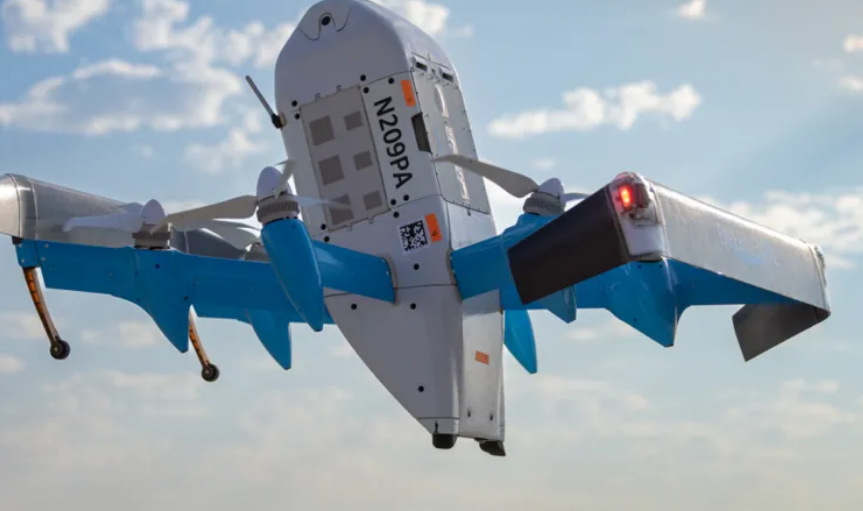
Amazon has started test flights for its UK drone delivery service, marking a key step ahead of the planned launch later this year. The company confirmed that a limited number of drones have taken off from its base in Darlington’s Symmetry Park, although deliveries to customers have not yet begun.
Darlington was chosen last January as Amazon’s UK test centre, and the company plans to use the location to trial airborne deliveries for eligible residents. When the service goes live, packages weighing less than five pounds (2.3 kilograms) will be delivered within two hours, the firm said.
Amazon’s latest drone, the MK30, will be used in the trials. The company highlighted the technology onboard, which allows drones to detect and avoid obstacles such as clotheslines, trampolines, and other hazards that may not appear on satellite maps. Cameras continuously monitor the surrounding airspace and can direct the drone to take evasive action if other aircraft enter its flight path.
“The perception technology relies on sophisticated machine learning models trained to recognise various objects, including people, animals, physical barriers, and other airborne vehicles,” Amazon said.
Safety remains a central focus for the company. David Carbon, vice president of Amazon Prime Air, said the drones are designed to operate quietly and efficiently while prioritising the safety of people, pets, and property. He added that the company is working closely with Darlington Council and the UK Civil Aviation Authority during the testing phase.
“This marks an exciting next step in bringing drone delivery to the UK,” Carbon said. “We look forward to demonstrating how this innovative technology can serve the people of Darlington while maintaining the highest safety standards.”
Amazon’s drone delivery initiative is part of its wider Prime Air programme, which has been in development for several years. The service aims to offer faster delivery times for lightweight packages, using autonomous aircraft that can navigate urban and suburban environments.
The launch in the UK follows successful trials in the United States, where Amazon has been testing similar technology to improve delivery speed and efficiency. As regulations for commercial drone flights evolve, the company is aiming to integrate these autonomous devices into its logistics network while ensuring public safety.
Residents in Darlington may be among the first in the UK to receive packages by air, as Amazon moves closer to making drone deliveries a reality. The company has emphasised that testing will continue carefully, with human oversight and advanced safety systems in place to ensure smooth operations.
Innovation
Open-Source Recycling Movement Gains Ground as Precious Plastic Community Recycles 1,400 Tonnes in One Year



Genetic Differences May Shape Effectiveness of Popular Weight-Loss Drugs, Study Finds

Seven-Day Meditation Retreat Linked to Measurable Changes in Brain and Body, Study Finds

Fuel Prices Surge Across Europe as Middle East Crisis Pushes Oil Above $100

Oil Prices Surge as Strait of Hormuz Closure Shakes Markets

Britain and Norway Step Up Naval Patrols to Protect Undersea Infrastructure from Russia

Meta Launches Muse Spark, Its First Major AI Model in Nine Months

Fresh Attacks Reported Across Gulf Despite US-Iran Ceasefire Announcement

Sweden Accuses Iran of Using Criminal Gangs to Target Dissidents as Teenagers Face Trial

US-Iran Ceasefire Eases Tensions as Europe Reacts; US Politics Spill Into Hungary Vote

ENI and Egypt Announce Major Gas Discovery Amid Rising Energy Costs

Meta Acquires Tilda Swinton VR Doc ‘Impulse: Playing With Reality’

Saudi Arabia’s Model for Sustainable Aviation Practices

Recent Developments in Small Business Taxes

Effective Drain Cleaning: A Key to a Healthy Plumbing System

Who was Ebrahim Raisi and his status in Iranian Politics?

China’s Historic Olympic Victory Sparks National Pride Amid Controversy

Carrectly: Revolutionizing Car Care in Chicago

Keely Hodgkinson Wins Britain’s First Athletics Gold at Paris Olympics in 800m

Saudi Arabia: Foreign Direct Investment Rises by 5.6% in Q1

Chinese Hackers Infiltrate Major U.S. Telecom Firms in Possible National Security Breach

Sony WF-10XM4: Headphones Are Our Absolute Favorite

10 Places You Can’t Miss If It’s Your First Time in European

New Census Data Will Shake Up Alabama Politics

16 Top of Our Favorite Outdoor Clothing Brands

Fashionable Summer Accessories to Dress Up Your Travel Look

How Sleeping Less than 7 Hours a Night Can Lead to Weight Gain
-
 Entertainment2 years ago
Meta Acquires Tilda Swinton VR Doc ‘Impulse: Playing With Reality’
-
 Business2 years ago
Saudi Arabia’s Model for Sustainable Aviation Practices
-
 Business2 years ago
Recent Developments in Small Business Taxes
-
 Home Improvement1 year ago
Effective Drain Cleaning: A Key to a Healthy Plumbing System
-
 Politics2 years ago
Who was Ebrahim Raisi and his status in Iranian Politics?
-
 Sports2 years ago
China’s Historic Olympic Victory Sparks National Pride Amid Controversy
-
 Business2 years ago
Carrectly: Revolutionizing Car Care in Chicago
-
 Sports2 years ago
Keely Hodgkinson Wins Britain’s First Athletics Gold at Paris Olympics in 800m