
Tech
Uzbekistan Unveils Major Incentives to Attract €85 Million in AI and Data Infrastructure Investment


Uzbekistan has announced a package of incentives to attract over €85 million in foreign investment for artificial intelligence (AI) and data infrastructure projects, with most developments planned for the country’s northwestern region of Karakalpakstan. The initiative, introduced through a presidential decree, is part of a broader strategy to build a fully integrated AI ecosystem by 2030.
The programme offers investors significant tax breaks, access to low-cost electricity, and support for renewable energy adoption. Companies will be required to commit their own capital while implementing energy-efficient solutions, including battery storage and low-water or water-free cooling systems. These measures aim to ensure sustainable operations while mitigating environmental pressures in a region long affected by the Aral Sea crisis.
Karakalpakstan, an autonomous region, has experienced severe environmental challenges following the shrinkage of the Aral Sea, including increased salinity, dust storms, and the exposure of the former seabed. Officials see high-tech and AI projects as a way to boost economic resilience, create jobs, and attract investment while revitalizing the local economy.
Kamola Sobirova, Advisor to the Minister of Digital Technologies, highlighted the region’s advantages for data centres, including abundant electricity, relatively cool temperatures averaging 12–14°C, and land availability suitable for large-scale infrastructure. The area also offers logistical benefits as a western gateway to Kazakhstan and access to the Trans-Caspian corridor, facilitating the export of AI computing power, cloud storage, and big data services.
The initiative is designed to integrate new projects into the broader technology ecosystem rather than creating isolated industrial sites. Project proposals will be assessed based on export potential, employment and training opportunities for local specialists, reliance on renewable energy, and operational stability. Authorities will also consider innovative solutions such as reusing residual heat from data centres for greenhouse agriculture or community development.
The AI and data infrastructure programme forms part of Uzbekistan’s national strategy to become a regional hub for digital technologies. According to government reports, the country has risen 17 places in the AI Readiness Index 2024, now ranking 70th out of 188 countries. By 2030, Uzbekistan aims to attract over €860 million in foreign investment, develop more than ten AI laboratories in partnership with academic institutions, and launch over 100 AI-based projects.
The strategy includes expanding technology clusters linking universities, start-ups, and industry, while integrating renewable energy to reduce emissions. The government projects IT service exports could reach €4.3 billion by 2030, positioning Uzbekistan as a competitive player in the global technology market.
Officials hope the incentives will not only accelerate the country’s AI ambitions but also drive socio-economic growth in Karakalpakstan, creating skilled jobs, supporting local industries, and strengthening Uzbekistan’s digital infrastructure for the coming decade.




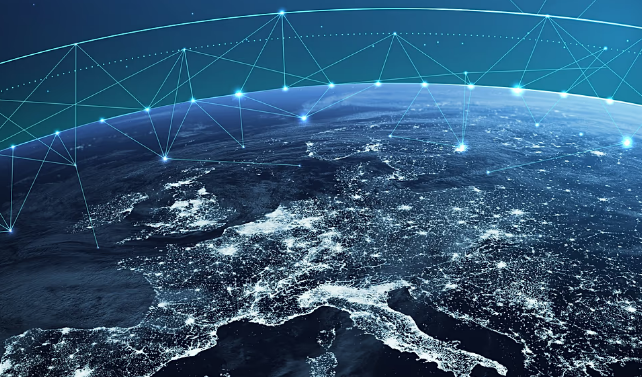
Europe is accelerating plans to establish its own satellite communications network as restrictions affecting Starlink services in Ukraine highlight the risks of relying on privately operated systems for military operations.
The Ukrainian army reported restrictions to Starlink on Wednesday, saying connections dropped when receivers travelled at speeds exceeding 160 kilometres per hour, including during drone operations. Although the service was partially restored, a speed limit remained in place. It was unclear who ordered the restrictions.
SpaceX chief executive Elon Musk denied that his company had ordered the shutdown, saying on social media platform X that Starshield was under the direct control of the US government.
Starlink provides satellite internet services to consumers and businesses, while Starshield is designed for government and military customers. The distinction has renewed concerns about how much control governments and armed forces have over the communications systems they depend on.
Polish Foreign Minister Radosław Sikorski criticised Musk publicly, warning that European customers were closely monitoring the company’s decisions. Poland has financed a significant share of the Starlink terminals used by Ukraine.
The European Union has been developing its own alternative, known as IRIS², short for Infrastructure for Resilience, Interconnectivity and Security by Satellite. The network is intended to provide secure communications for governments, businesses and citizens, while improving coverage in areas of Europe and Africa where connectivity remains limited.
Under the project, the network will comprise 348 satellites, including 330 in low Earth orbit and 18 in medium Earth orbit. A further 66 satellites are planned to strengthen defence, security and emergency services. The European Commission estimates that the additional capacity will increase secure communications capacity for public-sector users by 60% within the EU and 54% worldwide.
The first satellites are scheduled to launch in 2029, with initial services expected to become available gradually from 2029 or 2030. The network is also expected to use quantum communication technology through the European quantum communication infrastructure, EuroQCI.
Germany will play a significant role in the programme through Bremen-based satellite manufacturer Orbitale Hochtechnologie Bremen (OHB). On August 31, OHB signed a contract worth almost €1 billion with satellite operator SES to supply 18 medium-orbit satellites.
Each satellite will weigh around 2.6 tonnes at launch. OHB chief executive Marco Fuchs has described the project as an important step towards greater European independence in space communications.
Belgian company Aerospacelab, founded in 2018 and based in Charleroi, is building 264 low-orbit satellites under a contract valued at €2.4 billion, according to the company. Production is expected to take place at a new factory designed to manufacture up to 500 satellites annually from 2027. Airbus is building at least 66 additional satellites for military communications, completing the allocation of the low-orbit segment.
Germany is also planning a separate satellite network for its armed forces, known as SATCOMBw 4. The project is intended to operate under national control and eventually include hundreds of low-orbit satellites. An initial constellation of up to 40 satellites is planned to become operational in 2029, with full operations targeted for 2030. The estimated cost is between €8 billion and €10 billion.
Defence Minister Boris Pistorius announced in September 2025 that Germany would invest €35 billion in military space projects by 2030. A joint venture between OHB and Rheinmetall is bidding for the SATCOMBw 4 contract, but no award has been announced.
Meeting the timetable for Europe’s satellite programmes remains uncertain. Experts have identified rocket-launch capacity as a major obstacle, with Europe relying on Ariane 6, which has a limited launch schedule. The European Commission has identified securing launch services as a key next step for IRIS².
The projects are intended to give Europe greater control over secure communications, reducing its dependence on foreign providers at a time when satellite connectivity has become increasingly important to military operations and national security.
OpenAI is donating $5 million to the Simons Foundation to help mathematicians examine and build on results generated by artificial intelligence, days after criticism from a mathematics organisation over the company’s claims about solving a longstanding mathematical problem.
The donation follows an announcement by OpenAI in September that an unreleased AI model had produced a major result involving the Navier-Stokes equations, which describe the motion of fluids and are based on principles of classical physics. The equations have challenged mathematicians for almost a century.
The Association for Human Mathematics (AHM) criticised OpenAI’s work, arguing that the company had disregarded established scientific research practices. The organisation said mathematicians had not requested the work and accused the company of showing a “total disregard for the norms of scientific research”.
According to TechCrunch, two human mathematicians said they had been working towards a similar result and questioned whether OpenAI’s research had drawn on their work. OpenAI has denied seeing their research.
One of the mathematicians, Levent Alpöge, works at rival AI company Anthropic and was pursuing the research in a private capacity.
On October 6, OpenAI said its model had produced more than 700 manuscripts and nearly 400 additional mathematical results. The company said the work aimed to address some of the most difficult questions in mathematics and computer science.
The controversy has raised questions about how AI-generated mathematical research should be evaluated, particularly when its findings overlap with work being conducted by human researchers.
OpenAI announced the donation on Thursday in a post on social media platform X, saying the funding would support a new Simons Foundation initiative designed to help researchers assess AI-generated results and use them to advance mathematical understanding.
“We want to support the mathematics community in turning progress in AI into deeper human understanding and new discoveries,” OpenAI said.
The company said the money would fund workshops, conferences and special programmes. It also pledged to provide access to its AI models and computing resources for researchers supported by the Simons Foundation.
The initiative will bring together $15 million in combined funding and resources from the Simons Foundation, OpenAI and Anthropic.
The Simons Foundation focuses on supporting scientific research, including mathematics. The new programme is intended to help researchers scrutinise AI-generated findings, understand their significance and develop further work based on them.
OpenAI’s contribution comes as the use of AI systems in scientific research expands, prompting debate over research transparency, attribution and the role of human experts in validating machine-generated discoveries. The dispute over the Navier-Stokes equations has brought those questions into focus within the mathematics community.
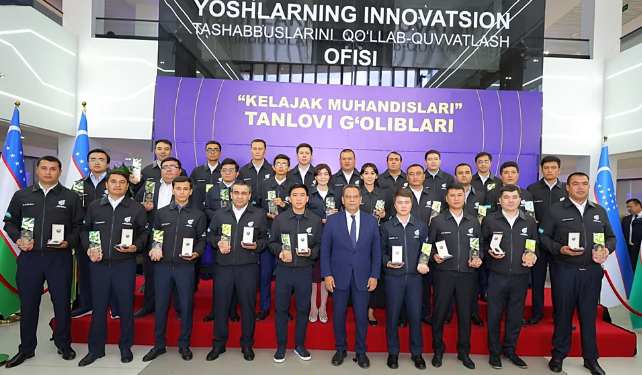
Young engineers in Uzbekistan have presented inventions ranging from a glove that converts sign language gestures into speech to a rapid health-screening device and industrial technology designed to reduce energy consumption.
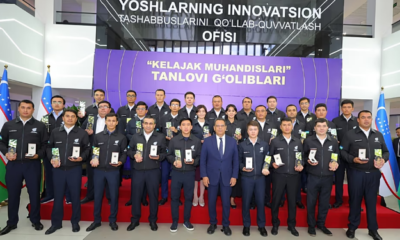
The projects were among the winners of Kelajak muhandislari (Engineers of the Future), a national competition organised by Uzbekistan’s Ministry of Higher Education, Science and Innovation. The event received 1,925 applications, with 90 finalists selected. The winners were honoured in Tashkent on September 29.
The inventions are at different stages of development, with some still being tested as prototypes and others reportedly already in use at clinics and industrial facilities.
One of the winners, engineering student Abduqodir Latifjonov, took second place in the student Best Idea category with ImoVox, a sensor-equipped glove designed to help sign language users communicate with people who do not understand their gestures.
Latifjonov said the idea came from seeing the communication difficulties faced by people who use sign language. The prototype, adapted to Uzbek sign language, tracks hand and finger movements in three dimensions. Sensors record gestures and match them with assigned meanings before converting them into speech. Artificial intelligence helps combine individual signs into more natural sentences.
Another project focuses on health screening. Asadbek Urunov, a master’s student at Turin Polytechnic University in Tashkent, won third place in the student Best Project category for Body Tester, a device his team describes as a “robot doctor”.
The machine measures height, weight, pulse, blood oxygen levels, body temperature and blood pressure in about 90 seconds. It stores the results digitally and provides preliminary recommendations.
Urunov said the measurements could take 20 to 25 minutes when carried out separately using conventional equipment. He stressed that the device was intended for initial assessments rather than definitive medical decisions. According to him, it is already being used in around 30 organisations, including clinics and public institutions.
Industrial efficiency was the focus of another winning invention. Bekzod Gafforov, a student at the Graduate School of Business and Entrepreneurship, developed a redesigned lining for industrial ball mills used to grind ore. Working with specialists from Navoi State University of Mining and Technologies, he combined wear-resistant steel and cast iron to improve performance.
Gafforov said the lining was already in use at facilities operated by Navoi Mining and Metallurgical Company. He reported that its service life had increased by 1.5 to two times, grinding efficiency had improved by 30% to 35%, and energy consumption had fallen by 5% to 10%.
Other winning projects included BARLOS, a hybrid unmanned ground vehicle developed by Dilmurod Rustamov of Turin Polytechnic University in Tashkent. The platform can run on electricity or petrol and has a modular design for different tasks. Rustamov said his team had produced nine vehicles and had been tasked with manufacturing 100 units in 2027.
Biloliddin Ismoilov, a second-year student at Tashkent University of Information Technologies, won first prize in the student Best Project category for Shunqor-8, a drone interceptor that he said had undergone eight rounds of field testing.
Davron Polojanov, who placed third in the student Best Invention category, developed the Hand Control Mouse K10G. The device allows users to control computers and other electronics through movements in the air along three dimensions, potentially allowing teachers to navigate presentations while moving around classrooms.
The projects highlight efforts by young Uzbek engineers to develop practical technologies for communication, healthcare, manufacturing and computing.

Europe Develops 348-Satellite Network to Reduce Dependence on Starlink

US Military Builds Up Forces in Arabian Sea as Iran Warns of Possible War

OpenAI Donates $5 Million to Mathematics Foundation After Research Dispute

AI Speeds Up Ebola Response in Congo, but Experts Warn of Healthcare Risks

Asian Stocks Plunge as Technology Sell-Off Deepens on Inflation Concerns

Eurozone Faces Record Bond Sales in 2027 as Borrowing Costs Reach Two-Decade High

European Household Energy Costs Rise as Gas Prices Near Four-Year High

Oil and European Gas Prices Rise as Hormuz Attacks Heighten Supply Fears

ASML Reports Record €11.7 Billion Quarterly Sales as AI Chip Demand Outstrips Supply

Young Uzbek Engineers Showcase Medical, Communication and Industrial Innovations

Meta Acquires Tilda Swinton VR Doc ‘Impulse: Playing With Reality’

China’s Historic Olympic Victory Sparks National Pride Amid Controversy

Saudi Arabia’s Model for Sustainable Aviation Practices

Recent Developments in Small Business Taxes

Effective Drain Cleaning: A Key to a Healthy Plumbing System

Who was Ebrahim Raisi and his status in Iranian Politics?

Keely Hodgkinson Wins Britain’s First Athletics Gold at Paris Olympics in 800m

Carrectly: Revolutionizing Car Care in Chicago

Nobel Laureate Muhammad Yunus Proposed as Head of Bangladesh’s Interim Government Following Hasina’s Resignation

Chinese Hackers Infiltrate Major U.S. Telecom Firms in Possible National Security Breach

Sony WF-10XM4: Headphones Are Our Absolute Favorite

10 Places You Can’t Miss If It’s Your First Time in European

New Census Data Will Shake Up Alabama Politics

16 Top of Our Favorite Outdoor Clothing Brands

Fashionable Summer Accessories to Dress Up Your Travel Look

How Sleeping Less than 7 Hours a Night Can Lead to Weight Gain
-
 Entertainment2 years ago
Meta Acquires Tilda Swinton VR Doc ‘Impulse: Playing With Reality’
-
 Sports2 years ago
China’s Historic Olympic Victory Sparks National Pride Amid Controversy
-
 Business2 years ago
Saudi Arabia’s Model for Sustainable Aviation Practices
-
 Business2 years ago
Recent Developments in Small Business Taxes
-
 Home Improvement2 years ago
Effective Drain Cleaning: A Key to a Healthy Plumbing System
-
 Politics2 years ago
Who was Ebrahim Raisi and his status in Iranian Politics?
-
 Sports2 years ago
Keely Hodgkinson Wins Britain’s First Athletics Gold at Paris Olympics in 800m
-
 Business2 years ago
Carrectly: Revolutionizing Car Care in Chicago