
Business
Oil Prices Rise as Investors Await Key US Inflation Data

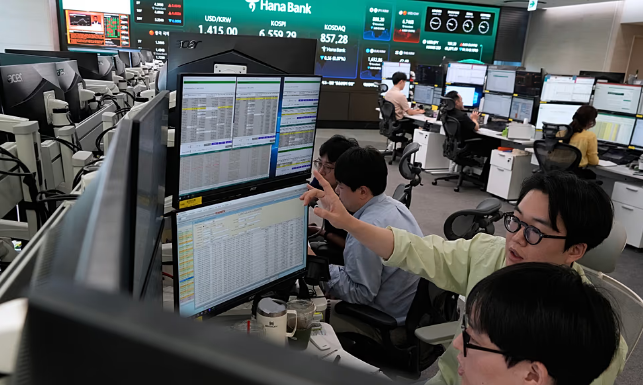
Oil prices rose on Wednesday while global stock markets delivered mixed results as investors focused on a closely watched US inflation report and developments surrounding stalled efforts to end the conflict involving Iran.
Brent crude, the international benchmark, climbed 0.9 per cent to $89.67 a barrel in early trading. US West Texas Intermediate crude also gained 0.9 per cent to $83.98. Gold increased 0.8 per cent to $4,400.44 an ounce, while silver advanced 1 per cent to $65.30.
Energy markets remain sensitive to developments in the Middle East. Iran rejected remarks by US President Donald Trump suggesting Washington could seek compensation if Tehran demands compensation as part of negotiations to end the conflict.
The United States and Israel launched attacks against Iran in late February, leading to the closure of the Strait of Hormuz and disrupting the movement of oil through a critical global shipping route. Brent crude prices have experienced significant volatility, moving between $72 and $102 a barrel over the past month.
Concerns over regional security also increased after Iran-backed Houthi rebels attacked a vessel in the Bab el-Mandeb strait near Yemen. The incident raised fears that further violence could threaten shipping through another important route connecting the Red Sea with the Gulf of Aden.
Rising energy costs are adding to inflation concerns in the United States. The average price of regular petrol reached $4.01 a gallon, according to AAA, compared with less than $3.14 a year earlier.
Investors are now awaiting the US government’s July inflation report. Economists expect annual inflation to have eased to 3.4 per cent from 3.5 per cent in June.
A softer inflation reading could reduce pressure on the Federal Reserve to raise interest rates. Higher rates can help contain price increases, but they can also increase borrowing costs for households and businesses and weigh on stock valuations.
Wall Street retreated further from its record levels on Tuesday. The S&P 500 declined 0.3 per cent for its second consecutive modest loss after reaching an all-time high on Friday. The Dow Jones Industrial Average fell 184 points, or 0.3 per cent, while the Nasdaq Composite dropped 0.6 per cent.
US Treasury yields have climbed since the conflict with Iran began, reflecting concerns about higher oil prices and inflation. Rising yields have also pushed long-term mortgage rates to their highest level in a year.
Asian markets were mostly higher on Wednesday. Tokyo’s Nikkei 225 gained 0.6 per cent to 67,334.94.
South Korea’s Kospi jumped more than 4 per cent to 6,597.90 as investors bought technology stocks. Samsung Electronics rose 7.7 per cent, while SK Hynix gained 7.1 per cent.
Taiwan’s Taiex advanced 0.8 per cent, while Shanghai’s Composite index added 0.3 per cent. Hong Kong’s Hang Seng fell 1.2 per cent and Australia’s S&P/ASX 200 declined 0.6 per cent.
In currency trading, the dollar strengthened to 159.41 yen from 159.30 yen, while the euro slipped to $1.1535 from $1.1544.








Credit rating agency Fitch has revised France’s sovereign debt outlook from stable to negative while maintaining its rating at A+, citing weaker economic growth, rising borrowing costs and concerns over the country’s ability to reduce its public deficit.
The decision increases pressure on the French government to secure approval for its 2027 budget by the end of the year, as political divisions and an approaching presidential election complicate efforts to restore public finances.
Fitch’s announcement on Friday followed figures from the national statistics institute Insee showing that France’s gross domestic product contracted by 0.1% in the third quarter of 2026. The economy had stagnated in the second quarter after shrinking by 0.2% in the first three months of the year.
The agency pointed to persistent political fragmentation and a difficult social climate, including mass protests, as factors weakening confidence in the government’s ability to deliver lasting fiscal improvements.
Economy and Finance Minister Roland Lescure said he took note of Fitch’s decision, describing the adoption of a responsible budget before the end of the year as an absolute necessity.
The government aims to reduce the budget deficit to 5% of gross domestic product, while maintaining a path towards fiscal consolidation. Lescure said a clear budget was needed to give businesses and investors greater certainty in an uncertain international environment.
Earlier on Friday, he described the French economy as being at a standstill and warned that the country could face serious difficulties if the proposed recovery budget was not adopted. He repeated that the deficit needed to be brought down to 5% or less.
However, securing parliamentary approval remains uncertain because President Emmanuel Macron’s government lacks a majority in the National Assembly. The approaching 2027 presidential election is also adding to political tensions.
Fitch expects the budget to be adopted despite the parliamentary deadlock, pointing to constitutional procedures available to the government. The agency said political debates ahead of the election had done little to strengthen its confidence in France’s ability to achieve a lasting reduction in the deficit and stabilise public debt.
One option available to the government is Article 49.3 of the French Constitution, which allows legislation to pass without a parliamentary vote unless lawmakers approve a motion of no confidence.
The government could also consider adopting the budget through ordinances, although this procedure has never been used to pass a national budget since the Fifth Republic was established in 1958.
Jérôme Mathis, an economics professor at Paris-Dauphine University, told Euronews that using ordinances could reduce uncertainty in the short term. However, he warned that such a move would not necessarily restore France’s long-term fiscal credibility.
The negative outlook signals increased concern over France’s financial position, although its A+ rating remains unchanged. The government’s ability to pass the 2027 budget and demonstrate credible deficit-reduction measures will be central to restoring confidence.
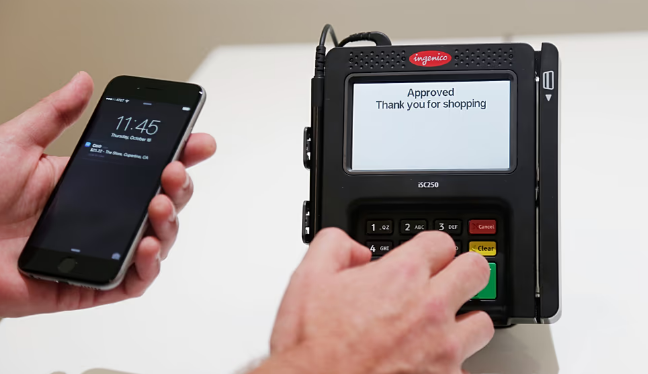
Uzbekistan has introduced Apple Pay and Google Pay, opening access to two major international digital payment platforms as the country moves to modernise its financial services sector.
The rollout follows regulatory changes to personal data laws and discussions between Uzbek officials and technology companies. The Central Bank of Uzbekistan has also confirmed that work is underway to extend the services to cards issued through domestic payment networks Uzcard and HUMO, although no launch date has been announced.
Saida Mirziyoyeva, head of the Presidential Administration, announced the availability of the services for locally issued cards on October 27. She had met Google Vice President Karan Bhatia in New York a month earlier to discuss technological cooperation and the conditions needed for international payment providers to operate in the country.
Banks included in the rollout
Before the launch, customers in Uzbekistan could use domestic mobile and contactless payment services, including HUMO Pay and UZCARD PAY, as well as QR code systems.
The introduction of Apple Pay and Google Pay gives eligible cardholders access to international platforms for mobile payments.
Apple Pay initially supports Visa and Mastercard cards issued by eight local banks and financial institutions: Uzum Bank, Orient Finans Bank, the National Bank of Uzbekistan, Kapitalbank, Hamkorbank, Ipak Yuli Bank, TBC Bank and Octobank. Uzum Bank and Hamkorbank currently support Visa cards only.
Google Pay is available for eligible cards from nine banks: AVO Bank, Octobank, Uzum Bank, TBC Bank, Aloqabank, Kapitalbank, Ipak Yuli Bank, the National Bank of Uzbekistan and Orient Finans Bank.
Customers have been advised to contact their banks to confirm which cards can be added to the services.
The Central Bank told Euronews that both platforms protect customers’ card information during transactions. Cashback offers and other benefits will depend on the conditions set by individual banks.
Changes to data protection rules
The launch follows amendments to Uzbekistan’s personal data legislation in March 2026, which eased restrictions on the processing and storage of certain types of personal information outside the country.
During her September meeting with Google’s Bhatia, Mirziyoyeva linked the regulatory changes to the arrival of international payment systems, saying they were creating wider opportunities for their use in Uzbekistan.
The discussions also covered cooperation in artificial intelligence, cybersecurity training and support for the country’s technology industry.
The development forms part of Uzbekistan’s broader efforts to strengthen its financial technology sector. In September, the Central Bank approved a National Fintech Strategy covering the 2026-2030 period.
The strategy aims to attract investment, expand cross-border payments, introduce Open Banking and improve connections between financial systems.
The planned inclusion of Uzcard and HUMO would extend access to the international payment platforms beyond customers using Visa and Mastercard, bringing more locally issued cards into the expanding digital payments market.
Business
AstraZeneca Third-Quarter Profit Jumps 23% as Drugmaker Plans $1.5 Billion in Annual Savings

AstraZeneca reported a 23 per cent increase in third-quarter net profit, supported by strong sales of its cancer medicines, as the British pharmaceutical company announced plans to save $1.5 billion annuAstraZeneca Third-Quarter Profit Jumps 23% as Drugmaker Plans $1.5 Billion in Annual Savings
ally and reinvest the funds in developing new treatments.
The company said on Friday that profit after tax reached $3.12 billion for the July to September period, compared with the same quarter a year earlier. The increase marked a stronger performance than the previous quarter, when net profit rose just over 2 per cent.
Revenue increased 7 per cent to $16.2 billion, while core earnings per share rose 17 per cent to $2.79. The earnings figure excludes certain items, including restructuring costs and the amortisation of acquired medicines.
Oncology remained AstraZeneca’s largest business, accounting for 48 per cent of total revenue. Sales in the division increased 17 per cent to $7.8 billion, supported by demand for lung cancer treatment Tagrisso and immunotherapy Imfinzi.
The company’s new cost-saving programme, named Reshaping for Sustainable Growth, is expected to generate $1.5 billion in annual savings. AstraZeneca said the funds would mainly support its research and development pipeline, which includes more than 180 projects.
The restructuring is expected to involve one-off charges of up to $2 billion and is scheduled to be largely completed by the end of 2029. The company did not announce any job cuts, although the changes could affect its workforce as resources are redirected across the business.
Chief Executive Pascal Soriot said AstraZeneca remained on course to achieve its long-term growth ambitions, pointing to late-stage drug candidates and the expansion of new technologies.
Pressure from generic medicines and China
The company’s growth came despite declining sales of some established medicines. Revenue from Farxiga, used to treat diabetes, heart and kidney disease, fell 25 per cent to $1.6 billion after generic alternatives entered the US market. Blood thinner Brilinta has also faced competition following the loss of patent protection.
AstraZeneca is also dealing with China’s volume-based procurement system, under which state purchasing programmes secure large orders from pharmaceutical companies in exchange for lower prices.
The drugmaker maintained its 2026 financial outlook, forecasting revenue growth in the mid-to-high single digits and an increase in core earnings per share in the low double digits, excluding currency movements.
It also reaffirmed its ambition to generate $80 billion in annual revenue by 2030, compared with nearly $59 billion in 2025. The company expects the US market to account for half of that target.
AstraZeneca has expanded its focus on the US, adding a direct share listing in New York in February, while also pledging to invest $15 billion in China by 2030.
The company said it had recorded 12 positive late-stage clinical trial results so far this year. Its development programme also includes a weight-loss treatment intended to compete with products such as Novo Nordisk’s Wegovy and Eli Lilly’s Mounjaro.
AstraZeneca shares rose more than 4.5 per cent in early trading on Friday following the results.

Fitch Cuts France’s Debt Outlook to Negative Amid Budget Deadlock and Weak Growth

Breast Cancer Screening Gaps Across Europe Leave Women Facing Unequal Access to Early Diagnosis

Uzbekistan Launches Apple Pay and Google Pay Following Financial Sector Reforms

Binance Investigates $6.3 Billion Crypto Theft as North Korean Hackers Suspected

AstraZeneca Third-Quarter Profit Jumps 23% as Drugmaker Plans $1.5 Billion in Annual Savings

Jet2 Charter Introduces All-Business-Class Boeing 737 for Premium Group Travel

Belgium Takes Tax Portal Offline After Cyberattack Disrupts Digital Services

UN General Assembly Renews Call to End US Embargo on Cuba as Support Falls to 30-Year Low

Pilot Fatigue Raises Safety Concerns as Survey Finds Widespread Microsleeps

South Korea Fines Google and Apple €42.7 Million Over App Store Payment Rules

Meta Acquires Tilda Swinton VR Doc ‘Impulse: Playing With Reality’

China’s Historic Olympic Victory Sparks National Pride Amid Controversy

Saudi Arabia’s Model for Sustainable Aviation Practices

Recent Developments in Small Business Taxes

Effective Drain Cleaning: A Key to a Healthy Plumbing System

Who was Ebrahim Raisi and his status in Iranian Politics?

Keely Hodgkinson Wins Britain’s First Athletics Gold at Paris Olympics in 800m

Carrectly: Revolutionizing Car Care in Chicago

Nobel Laureate Muhammad Yunus Proposed as Head of Bangladesh’s Interim Government Following Hasina’s Resignation

Chinese Hackers Infiltrate Major U.S. Telecom Firms in Possible National Security Breach

Sony WF-10XM4: Headphones Are Our Absolute Favorite

10 Places You Can’t Miss If It’s Your First Time in European

New Census Data Will Shake Up Alabama Politics

16 Top of Our Favorite Outdoor Clothing Brands

Fashionable Summer Accessories to Dress Up Your Travel Look

How Sleeping Less than 7 Hours a Night Can Lead to Weight Gain
-
 Entertainment2 years ago
Meta Acquires Tilda Swinton VR Doc ‘Impulse: Playing With Reality’
-
 Sports2 years ago
China’s Historic Olympic Victory Sparks National Pride Amid Controversy
-
 Business2 years ago
Saudi Arabia’s Model for Sustainable Aviation Practices
-
 Business2 years ago
Recent Developments in Small Business Taxes
-
 Home Improvement2 years ago
Effective Drain Cleaning: A Key to a Healthy Plumbing System
-
 Politics2 years ago
Who was Ebrahim Raisi and his status in Iranian Politics?
-
 Sports2 years ago
Keely Hodgkinson Wins Britain’s First Athletics Gold at Paris Olympics in 800m
-
 Business2 years ago
Carrectly: Revolutionizing Car Care in Chicago