Connect with us

News

French Police Arrest 20 Over Kidnapping Attempts Targeting Crypto Executives

Published

on

French authorities have arrested around 20 individuals in connection with a wave of kidnappings and attempted abductions targeting cryptocurrency industry figures and their families, according to French media reports.

The arrests were carried out over two days, with a dozen suspects detained on Monday in the town of Couëron, near Nantes, and at least six more taken into custody on Tuesday. The crackdown follows a shocking attempted kidnapping in Paris earlier this month that brought the issue into sharp focus.

On May 13, attackers targeted the pregnant daughter of Pierre Noizat, a prominent figure in France’s crypto sector. She was walking with her partner and child when the assailants tried to force her into a vehicle in broad daylight. The failed abduction, captured on surveillance cameras, sent shockwaves through the country and prompted swift action from authorities.

French Interior Minister Bruno Retailleau responded to the escalating threat by convening an emergency meeting with leaders from the cryptocurrency industry in mid-May. During the session, he pledged stronger protection measures, including the provision of direct emergency contact channels for those at risk.

“These serial kidnappings will be combated with specific tools, both immediate and short-term, to prevent, deter, and hinder in order to protect the industry,” Retailleau said following the meeting. “The entire state apparatus is fully mobilised to track down the perpetrators and instigators of this violence and put them out of action.”

While details on the suspects remain limited, investigators believe the network behind the attempted kidnappings may have been operating in an organized manner, potentially targeting crypto leaders due to the high-value assets they often control.

See also  Myanmar Struck by Aftershocks as Earthquake Death Toll Rises

The arrests signal a determined effort by French authorities to crack down on criminal activity linked to the booming digital finance sector. As the crypto industry continues to grow, concerns have also risen over the risks its leaders face — particularly in relation to physical security and extortion.

Police continue to investigate whether the incidents were coordinated or part of a broader trend of financially motivated attacks. Officials have not ruled out further arrests as inquiries progress.

The French government’s heightened focus on protecting cryptocurrency professionals comes amid growing recognition of the sector’s economic significance — and its vulnerability to criminal exploitation.

News

Record Turnout Reported as Hungary’s Parliamentary Election Draws Millions to the Polls

Published

on

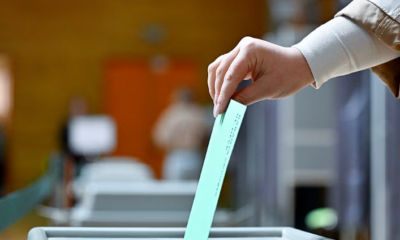
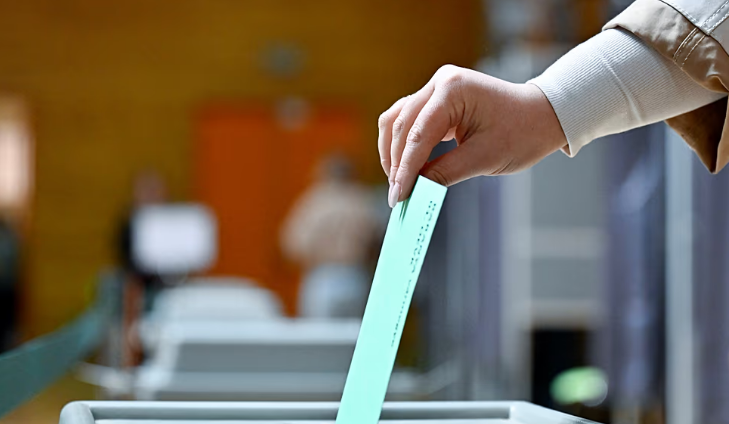
Polling stations opened at 6 a.m. across Hungary on Sunday, with voting set to continue until 7 p.m. local time in an election already marked by unusually high participation levels. Authorities estimate that around 7.5 million citizens are eligible to cast ballots in the parliamentary vote, which is being closely watched across Europe.

Early turnout figures indicate a historic level of voter engagement. Within one hour of polls opening, 3.46% of eligible voters had already cast their ballots, nearly double the figure recorded at the same time in the previous election. By 9 a.m., turnout had reached 16.9%, compared with 10.3% four years earlier. By 11 a.m., officials reported that 37.98% of eligible voters had already participated, a morning level of turnout never previously recorded in Hungary.

Election officials and political observers say the early surge suggests the country may be heading toward one of its highest participation rates in decades. Many analysts believe concerns over political tensions and electoral integrity have contributed to the strong turnout.

Prime Minister Viktor Orbán, leader of the governing Fidesz party, cast his vote in Budapest earlier in the day. Speaking afterward, he welcomed the high participation, describing it as a sign of democratic strength. “The more people there are, the better,” he said.

Opposition leader Péter Magyar, head of the Tisza Party, also voted in Budapest during the morning hours. He said a smooth and transparent election process could favor his party, which has emerged as the main challenger to the long-ruling government. Magyar expressed confidence that high turnout, if accompanied by orderly voting conditions, would benefit his movement.

See also  Iranian Missile Hits Key Israeli Scientific Facility Amid Escalating Tensions

The election has been accompanied by widespread public concern about potential irregularities. Some voters and civil groups have voiced fears of electoral fraud, which analysts say may have contributed to the record level of early participation. In response, several civic organizations have mobilized monitoring efforts across the country.

One such group, the DE! Action Community, said it has deployed more than a thousand volunteers to observe polling activity in public spaces. The group stated that its monitors have been assigned to different regions to watch for alleged irregular practices such as voter transport issues and bribery. It also said mobile patrols are tracking transportation routes used during the election process.

Officials confirmed that international attention is also present at the polls. According to the National Election Office, around 900 foreign observers have registered to monitor the parliamentary vote, reflecting heightened scrutiny of the electoral process.

As voting continues into the evening, attention remains focused on whether turnout levels will sustain their early record pace and how the final results will shape Hungary’s political landscape.

Continue Reading

News

Hungary Votes in High-Stakes Election as Orbán Faces Strongest Challenge in Years

Published

on

Hungary opened polling stations on Sunday in what is widely regarded as the most consequential election in decades, with veteran Prime Minister Viktor Orbán facing a serious challenge from opposition leader Péter Magyar after a campaign marked by political tension, allegations of foreign influence and deep national division.

Voting began at 6 a.m. across the country as millions of citizens headed to the polls in a contest many analysts describe as a referendum on Orbán’s 16-year rule. The prime minister, who has governed with a parliamentary supermajority since 2010, is confronting his most unified and competitive opposition to date.

Magyar, a former government insider who broke away in 2024 following a political scandal linked to a presidential pardon case, has rapidly emerged as Orbán’s primary challenger. His newly formed Tisza Party secured around 30% of the vote in last year’s European Parliament elections and has since expanded its support base, particularly in smaller towns and rural regions.

Political analysts say the election marks a break from previous contests in which opposition parties were fragmented. With Magyar consolidating anti-government support, surveys suggest a much tighter race than in previous cycles. Some polling data even projects a potential parliamentary majority shift, although figures from Orbán’s governing camp dispute these estimates and argue their support base is undercounted.

Orbán remains one of Europe’s most influential and polarising leaders. Rising to prominence after the end of communism in 1989, he returned to power in 2010 and has since reshaped Hungary’s constitutional and media framework. On the European stage, he has frequently clashed with EU institutions over migration policy, judicial reforms and Hungary’s close relationship with Russia.

See also  European Parliament Votes Could Decide Fate of EU-Mercosur Trade Deal

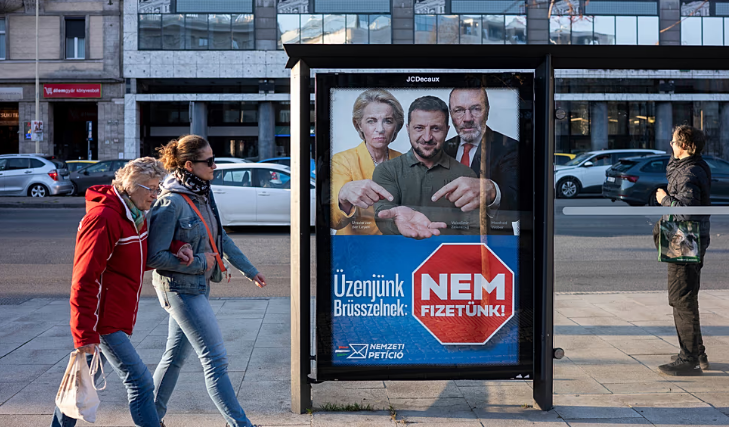
The campaign has also been shaped by foreign policy divisions. Orbán has taken a hardline stance against Ukraine’s EU accession and has maintained ties with Russian President Vladimir Putin, positioning his platform around what he calls “national sovereignty” and “patriotic politics.”

Magyar, by contrast, has pledged to restore closer ties with the European Union and NATO, aligning his movement with the European People’s Party. His supporters include several senior European political figures, though no formal foreign endorsements have been made.

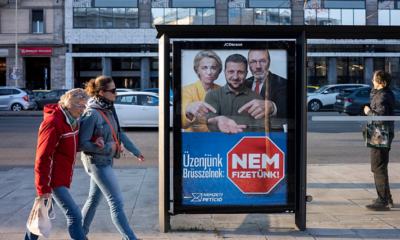
The election has drawn attention across Europe, the United States and Russia, with observers viewing the outcome as significant for both EU unity and broader geopolitical alignment. Allegations of intimidation, leaked recordings and claims of attempted foreign interference have further intensified the campaign atmosphere.

Polling stations are set to close at 7 p.m., with Hungary’s mixed electoral system allocating 199 parliamentary seats through both constituency and party-list votes. Early results are expected later in the evening, with official outcomes due around midnight.

Continue Reading

News

Britain and Norway Step Up Naval Patrols to Protect Undersea Infrastructure from Russia

Published

on

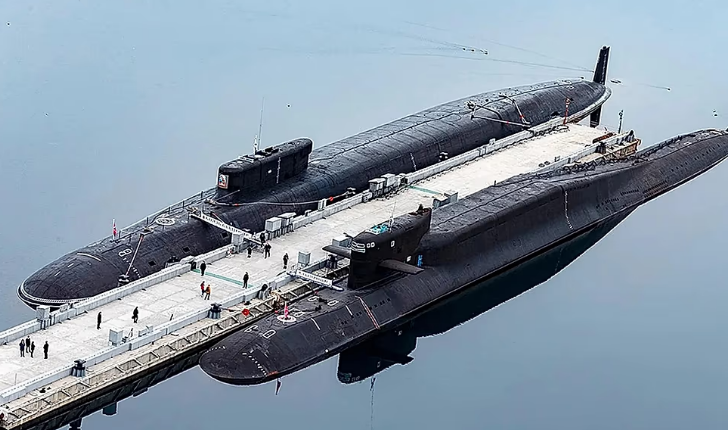
Britain and Norway have launched new joint naval patrols aimed at protecting undersea cables from Russia, with a combined fleet of at least 13 warships safeguarding critical infrastructure in the North Atlantic, officials said. The announcement follows discussions in December between UK Prime Minister Keir Starmer and Norwegian Prime Minister Jonas Gahr Støre on defense cooperation.

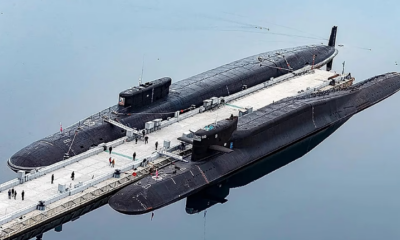
British Defence Secretary John Healey said on Thursday that the operation was designed to deter Russian submarines suspected of “malign activity” near undersea infrastructure north of the UK. A frigate, aircraft, and hundreds of personnel monitored a Russian attack submarine and two spy vessels during an operation lasting more than a month. Healey said the Russian ships eventually left the area.

His message to Moscow was clear: “We see your activity over our cables and our pipelines, and you should know that any attempt to damage them will not be tolerated and will have serious consequences.” Healey emphasized that while global attention is focused on conflicts in the Middle East, Russia remains the main threat to the UK and its allies.

British officials have highlighted the overlap between Russia’s support for Iran and its ongoing war in Ukraine. Tehran has provided Moscow with Shahed drones, which are now also manufactured in Russia under the designation Geran. Healey said, “Putin would want us to be distracted by the Middle East. We will not take our eyes off Putin.”

The UK has also prepared to seize ships suspected of being part of Russia’s “shadow fleet,” a flotilla of old oil tankers of unclear ownership designed to bypass international sanctions imposed over Moscow’s 2022 invasion of Ukraine. Previously, the UK only assisted France and the US in monitoring such vessels. Healey said, “We are ready to take action” against these ships.

See also  Twin Bomb Threats Force Emergency Actions on Indian Airlines Across the Globe

Norwegian Defence Minister Tore O. Sandvik, who signed the joint naval agreement with Healey, said the patrols allow both countries to “defend themselves together.” The deployment builds on a £10 billion (€11 billion) deal for Norway to purchase at least five British-made frigates, which, together with eight British ships, will operate along NATO’s northern flank.

Russian naval activity near UK waters has reportedly risen by 30 percent over the past two years. NATO officials have also warned that attacks on undersea cables are among the “most active threats” to Western infrastructure. Acting Assistant Secretary General for Innovation, Hybrid, and Cyber, James Appathurai, said recent incidents in the Baltic Sea and elsewhere reflect Russia’s long-term undersea program, which includes research ships, submarines, unmanned vehicles, divers, and explosives targeting communications and energy pipelines.

The new UK-Norway patrols signal a heightened focus on securing vital maritime infrastructure amid rising geopolitical tensions and increasing Russian naval operations in European waters.

Continue Reading

Trending