
Business
EU Agrees to Expand Financial Markets Watchdog Powers to Boost Cross-Border Investment

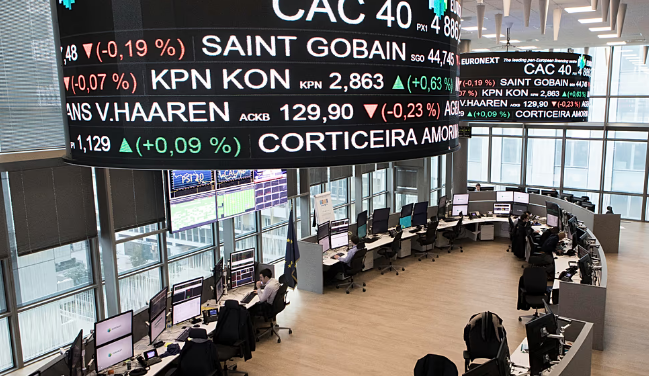
European Union countries agreed on Friday to strengthen the powers of the bloc’s financial markets watchdog, aiming to make cross-border investment easier, improve access to funding for businesses and create more opportunities for savers.
The agreement was reached by finance ministers meeting in Luxembourg as part of the Market Integration and Supervision Package (MISP). The reforms would expand the responsibilities of the European Securities and Markets Authority (ESMA), giving it direct oversight of major financial market operators that currently fall under national supervision.
Although many financial rules have been harmonised across the EU, differences in how countries implement, supervise and enforce them have contributed to fragmentation in the bloc’s financial markets.
The Irish presidency said the package was designed to help savings and investments move more freely across national borders. The changes are intended to make it easier for companies to raise money while giving households greater opportunities to earn returns on their savings.
Under the proposed framework, ESMA would directly supervise major trading venues, clearing houses and organisations responsible for securities settlement. Certain providers of crypto-asset services would also come under its direct oversight.
The package would establish a full-time, independent executive board within ESMA, strengthening the authority’s ability to oversee financial markets across the EU.
Market operators would also be able to opt into a new framework allowing them to operate across the bloc. The reforms seek to improve consistency in national supervision and update rules covering trading, the completion of financial transactions, investment management and the use of blockchain technology.
However, questions remain over the extent of ESMA’s authority over some German financial market operations. Deutsche Börse, which operates the Frankfurt stock exchange, could retain some trading venues outside the watchdog’s direct supervision.
Euronews previously reported that Germany had secured an exemption for domestically focused trading venues operated by Deutsche Börse, leaving an important part of the system under regional German supervision. The announcement on Friday did not provide further details about the arrangement.
Dutch Finance Minister Eelco Heinen welcomed the agreement, describing it as a significant step towards deeper financial integration across Europe.
“Major step forward today in advancing the Capital Markets Union. We made more progress in 10 months than in 10 years,” Heinen said.
The agreement marks an important milestone in the EU’s Savings and Investments Union (SIU), an initiative intended to channel more European household savings into investments that support economic growth.
Supporters of a more integrated capital market argue that reducing barriers between member states could lower financing costs, improve access to capital for businesses and broaden the range of investment opportunities available to households.
The reforms are also intended to reduce differences in market supervision, making it easier for financial firms to operate across borders and helping the EU develop a more competitive investment environment.
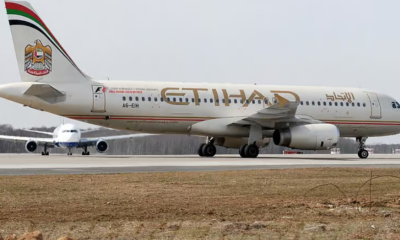
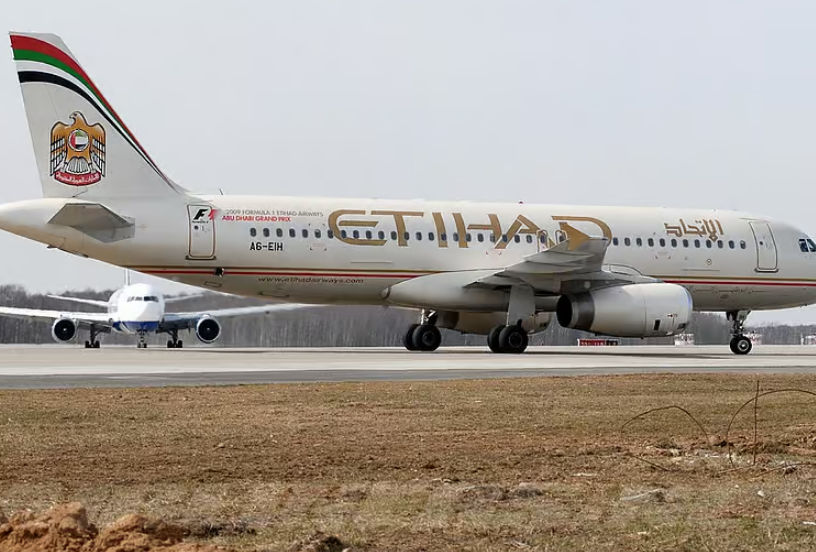
Etihad Airways and flydubai have cancelled flights to Saudi Arabia following attacks on King Khalid International Airport in Riyadh, as airlines across the region adjust their schedules amid continuing operational disruptions.
Etihad cancelled eight flights between Abu Dhabi and Riyadh scheduled for October 9 and 10, citing disruptions at the Saudi capital’s main airport.
Six services were cancelled on Friday, affecting three return trips between Zayed International Airport in Abu Dhabi and Riyadh. Two additional flights, covering one return trip, were cancelled for Saturday.
The Abu Dhabi-based airline said the situation remained dynamic and warned that further schedule changes were possible as it continued monitoring developments.
Flydubai also suspended services to Riyadh and Yanbu through October 10, while flights to Abha were cancelled through October 11.
“We are monitoring the situation closely and remain in close coordination with the relevant authorities,” a flydubai spokesperson said.
The airline said customers would be informed of any further changes through its official communication channels.
The cancellations follow several days of disruption at King Khalid International Airport after attacks on October 8 killed three Saudi nationals and injured several other people, according to the General Authority of Civil Aviation.
The authority said the first attack targeted airport facilities, while the second targeted an aircraft belonging to Saudia, Saudi Arabia’s national carrier. Several citizens and residents of different nationalities were also injured.
Saudia confirmed that one of its employees had died in an incident at the airport. The airline paid tribute to Captain Hamoud Ali Alkalthami following his death.
The incidents have prompted airlines to reassess their operations as authorities respond to the security situation. The latest cancellations affect passengers travelling between the UAE and several Saudi destinations, including the capital.
What affected passengers should do
Etihad has urged customers to check their flight status through its official website, etihad.com, and confirm their booking details before travelling to the airport.
The airline apologised for the disruption and said its teams were working to assist affected passengers with alternative travel arrangements.
Customers can contact Etihad through the help section of its website, which provides local telephone numbers, live chat and social media support.
“The safety and comfort of our guests and crew is our number one priority,” the airline said.
Flydubai has advised affected passengers to visit its website to review available refund and rebooking options. Customers who purchased tickets through travel agents should contact those agents directly to discuss their arrangements.
The airline also apologised for the inconvenience and thanked passengers for their understanding.
Travellers scheduled to fly to Saudi Arabia over the coming days have been advised to check directly with their airline for the latest updates before leaving for the airport, as further changes remain possible.
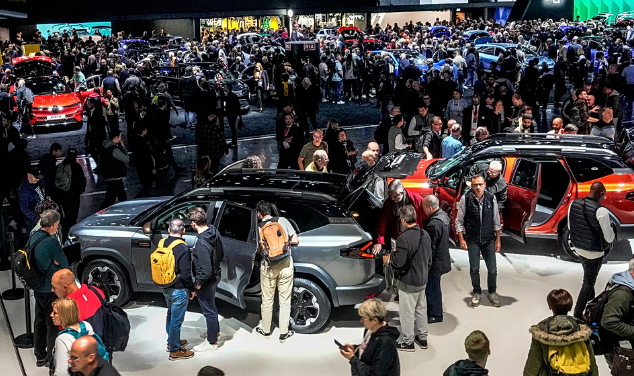
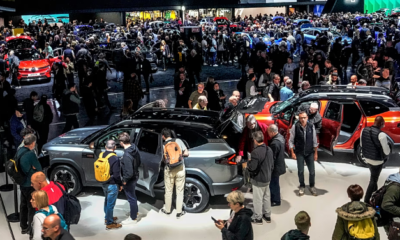
European car manufacturers are preparing to face growing competition from Chinese brands as the 91st Paris Motor Show opens in October, against a backdrop of weak consumer confidence, high energy prices and geopolitical tensions.
The event, first held in Paris in 1898, will run from October 12 to 18, 2026, at Paris Expo Porte de Versailles. Around 100 new models are expected to be showcased, with approximately 20 Chinese automotive brands preparing to present their vehicles to European buyers.
The exhibition comes as the European car market undergoes a significant shift towards electrification. According to the European Automobile Manufacturers’ Association (ACEA), fully electric vehicles accounted for 21.7 per cent of new car registrations in the European Union during the first eight months of 2026, compared with 15.8 per cent in the same period last year.
France has been among the fastest-growing markets for electric vehicles, recording a 74.2 per cent annual increase in fully electric car registrations.
Despite this progress, European manufacturers face mounting pressure from Chinese competitors, whose rapid advances in vehicle technology, production and pricing have strengthened their position in international markets.
“The outlook is extremely worrying for traditional European carmakers,” said Tim Urquhart, principal automotive analyst at Mobility Global.
He said the Chinese automotive industry had made extraordinary progress over the past decade, with its development accelerating particularly rapidly during the last five years.
The shift towards electric vehicles is also changing consumer preferences across Europe. Hybrid electric vehicles remained the most popular powertrain category in the EU through August, accounting for 36.6 per cent of new registrations. Plug-in hybrids represented another 10 per cent.
By contrast, petrol and diesel vehicles together accounted for 29 per cent of the market, down from 37.5 per cent a year earlier.
Higher fuel prices, government incentives and a wider selection of more affordable electric models have contributed to the change.
However, European carmakers are attempting to manage the transition amid challenging economic conditions. Elevated oil prices linked to the conflict involving Iran are increasing costs, while weaker consumer confidence and stricter emissions requirements add to the industry’s difficulties.
Manufacturers are also facing declining opportunities in China, which had previously generated substantial growth for European brands, particularly German companies such as Volkswagen, BMW and Mercedes-Benz.
“There was a time when the Chinese market was something of a cash cow for European carmakers. That’s no longer the case,” Urquhart said.
Trade tensions between the European Union and China are adding another layer of uncertainty. Disputes over state support, tariffs and the growing number of Chinese-made vehicles entering Europe have complicated relations between the two markets.
Urquhart said geopolitical tensions, high oil prices and economic pressures were weighing on confidence across Europe.
In response, European manufacturers are seeking to attract buyers through a combination of new technology and designs inspired by their heritage. Retro-styled vehicles are expected to feature prominently at the Paris show, with new models from Renault, Citroën, Peugeot, Opel, Lancia and Fiat.
The event’s press day takes place on October 12, with the exhibition opening to the public from October 13 to 18. For European manufacturers, the show provides an opportunity to demonstrate their latest products as competition in the region’s automotive market intensifies.
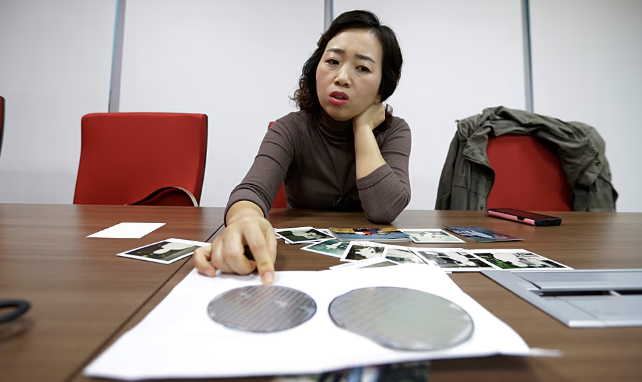
Samsung Electronics forecast a near ninefold increase in third-quarter operating profit on Thursday, putting the South Korean technology giant on track for its strongest quarterly performance as demand for chips used in artificial intelligence systems continues to surge.
Samsung estimated operating profit at 107.4 trillion won ($80.2 billion) for the three months ended September, compared with 12.17 trillion won a year earlier. The estimate represents a 782.5 percent increase from the same period in 2025.
The figure would also mark an increase from the 89.49 trillion won recorded in the previous quarter and exceed analysts’ expectations of 106.1 trillion won, according to LSEG data.
If confirmed when Samsung releases its full results on October 29, the operating profit would be the largest quarterly figure ever reported by a technology company. It would surpass the $63.7 billion operating income posted by US chip designer Nvidia in its latest quarter.
Samsung would also become the first South Korean company to report quarterly operating profit above 100 trillion won.
The company estimated third-quarter sales at 195 trillion won ($145.6 billion), an increase of 127 percent from a year earlier. That would give Samsung an operating margin of about 55 percent.
The strong performance reflects the rapid expansion of spending on artificial intelligence infrastructure. Samsung is one of the world’s largest memory chip producers and has benefited from strong demand for high-bandwidth memory, or HBM, which is used alongside AI processors in data centres.
Limited supplies of memory chips have also pushed up prices for DRAM and NAND products, supporting earnings across the sector.
Samsung did not provide a breakdown of results by business division in its preliminary announcement. Investors will receive more detail when the company publishes its full earnings report later this month.
Samsung shares nevertheless fell 2.42 percent to 262,000 won in Seoul on Thursday, while South Korea’s benchmark KOSPI index declined 2.62 percent. Investors have taken profits after a powerful rally and are questioning how long elevated memory chip demand can continue.
Despite Thursday’s decline, Samsung’s stock has almost quadrupled since September last year.
Taiwan Semiconductor Manufacturing Company, the world’s largest contract chipmaker, also reported strong revenue growth. TSMC said September sales rose 54.6 percent year on year to NT$511.86 billion, or about $16 billion.
Based on its monthly figures, third-quarter revenue reached a record NT$1.49 trillion, or about $46.8 billion, up 51 percent from a year earlier and 17.6 percent from the previous quarter.
The result exceeded the top end of TSMC’s own quarterly revenue guidance. Revenue for the first nine months rose 41.1 percent to NT$3.9 trillion.
Taiwan’s exports also reached a record $87.2 billion in September, rising 60.9 percent year on year as demand for AI hardware increased.
TSMC will publish its full third-quarter results on October 15, while Samsung will report on October 29. Nvidia is expected to report in November, providing another indication of the strength and durability of the global AI chip boom.

Etihad Airways and flydubai Cancel Saudi Flights After Riyadh Airport Attacks

EU Agrees to Expand Financial Markets Watchdog Powers to Boost Cross-Border Investment

Paris Motor Show Opens Amid Rising Chinese Competition and Pressure on European Carmakers

Plague Fears Return After Russian Death, but Europe Faces Very Low Risk

Samsung Profit Soars as AI Chip Demand Drives Record Results

Denmark Moves to Ban Sharing of Realistic Deepfakes Without Consent

Moonshot AI Targets 2027 Hong Kong IPO as DeepSeek Funding Race Intensifies

Saudi Aramco Chief Warns Global Oil Supply Cushion Is Running Thin

Trump Defers Diesel Taxes as US Fuel Prices Near Record Highs

Investors Face Limited Choices as Robotics Boom Stays Locked in Private Markets

Meta Acquires Tilda Swinton VR Doc ‘Impulse: Playing With Reality’

China’s Historic Olympic Victory Sparks National Pride Amid Controversy

Saudi Arabia’s Model for Sustainable Aviation Practices

Recent Developments in Small Business Taxes

Effective Drain Cleaning: A Key to a Healthy Plumbing System

Who was Ebrahim Raisi and his status in Iranian Politics?

Keely Hodgkinson Wins Britain’s First Athletics Gold at Paris Olympics in 800m

Carrectly: Revolutionizing Car Care in Chicago

Nobel Laureate Muhammad Yunus Proposed as Head of Bangladesh’s Interim Government Following Hasina’s Resignation

Chinese Hackers Infiltrate Major U.S. Telecom Firms in Possible National Security Breach

Sony WF-10XM4: Headphones Are Our Absolute Favorite

10 Places You Can’t Miss If It’s Your First Time in European

New Census Data Will Shake Up Alabama Politics

16 Top of Our Favorite Outdoor Clothing Brands

Fashionable Summer Accessories to Dress Up Your Travel Look

How Sleeping Less than 7 Hours a Night Can Lead to Weight Gain
-
 Entertainment2 years ago
Meta Acquires Tilda Swinton VR Doc ‘Impulse: Playing With Reality’
-
 Sports2 years ago
China’s Historic Olympic Victory Sparks National Pride Amid Controversy
-
 Business2 years ago
Saudi Arabia’s Model for Sustainable Aviation Practices
-
 Business2 years ago
Recent Developments in Small Business Taxes
-
 Home Improvement2 years ago
Effective Drain Cleaning: A Key to a Healthy Plumbing System
-
 Politics2 years ago
Who was Ebrahim Raisi and his status in Iranian Politics?
-
 Sports2 years ago
Keely Hodgkinson Wins Britain’s First Athletics Gold at Paris Olympics in 800m
-
 Business2 years ago
Carrectly: Revolutionizing Car Care in Chicago
You must be logged in to post a comment Login