
Tech
AI Agents Take Centre Stage as Qatar Expands Training and Testing


Artificial intelligence agents that can perform tasks on behalf of users were a major focus at the Google Cloud Summit in Doha, as Qatar expands its efforts to train workers and test new AI applications.
The technology is moving beyond generative AI, which produces text, images and answers in response to prompts. AI agents are designed to take additional steps independently to complete specific tasks, creating new opportunities for businesses while raising questions about oversight and the future of work.
Alex Rutter, managing director of Google Cloud’s artificial intelligence business across Europe, the Middle East and Africa, said generative AI is primarily used to create new content through large language models. Agentic AI, by contrast, can be used to carry out processes after receiving instructions.
Rutter cited invoice reconciliation as an example. An AI agent could check information on an invoice against payment and supplier records before a payment is approved. Such repetitive work involving multiple databases could be suitable for automation, he said.
Greater autonomy also increases the need for safeguards. Rutter said Google currently recommends keeping a person involved in reviewing the results produced by AI agents. Instead of checking every piece of data, employees could focus on exceptions identified by the systems.
The level of human oversight would depend on the nature of the task and the risks an organisation is prepared to accept. In fields such as medicine, Rutter said AI should assist clinicians rather than replace their decisions.
The Doha summit also marked three years since Google Cloud opened its cloud region in Qatar. The company announced a new national training programme with Qatar Digital Academy that is expected to provide more than 50,000 learning opportunities in the country by 2030.
The programme will target several groups, including workers, executives and software developers, as Qatar seeks to expand its pool of people with skills needed to use and manage AI technologies.
Ghassan Kosta, Google Cloud’s regional general manager for Qatar, Oman, Bahrain and Iraq, said the company was expanding its services to support the growing demands of agentic AI. He said data centre infrastructure would need to develop alongside advances in AI.
Qatar’s Ministry of Communications and Information Technology also announced an innovation lab developed with Google Cloud. The facility will allow AI projects to be tested before they are deployed more widely.
Amna Al-Kaabi, head of emerging technologies at the ministry, said the partnership was intended to connect technology experiments with practical needs in different sectors and help projects progress from early testing to real-world applications.
The increasing ability of AI systems to perform tasks is also prompting questions about employment. Rutter said it was difficult to predict the pace of change, but suggested that managing AI agents could become a responsibility for some workers.
He said future workplaces could include employees managing people, AI agents or both, although businesses are still determining which tasks can safely and effectively be assigned to autonomous systems.









The Trump administration has removed Sean Cairncross from his position as the US national cyber director, with Defence Department Chief Information Officer Kirsten Davies expected to take over the role on an interim basis.
A source close to the White House confirmed Cairncross’s dismissal to the AFP news agency on Thursday. The move comes amid a series of technology disruptions affecting several key sectors across the United States, including travel, communications and banking.
Davies, who currently serves as the Pentagon’s chief information officer, will temporarily assume responsibility for the national cyber director’s office, according to the source.
US Secretary of State Marco Rubio welcomed her appointment in a social media post, expressing support for efforts to improve the country’s cybersecurity.
“Congratulations to the new National Cyber Director Kirsten Davies, look forward to working together to strengthen America’s cybersecurity,” Rubio wrote.
Davies has held a senior position at the Department of Defence, where she has served as the principal adviser to Defence Secretary Pete Hegseth on information management, information technology, cybersecurity and information assurance.
Her appointment comes at a time of heightened concern over the security and reliability of US digital infrastructure. Recent outages have disrupted services in the travel, telecommunications and banking industries. An internal system used by the National Security Agency has also experienced technical problems in recent weeks.
The national cyber director plays a central role in shaping the federal government’s approach to cybersecurity. The office advises the president on national cyber policy and strategy, covering information security, data protection and measures to deter malicious cyber activity.
The director is also responsible for coordinating cybersecurity policies and initiatives across federal government departments and agencies. The position was established in 2021 to strengthen coordination and provide the White House with dedicated advice on cyber threats.
In March, the Trump administration published a seven-page document outlining its national cybersecurity strategy. The policy pledged to take faster and more proactive action against cyber threats while strengthening the country’s digital defences.
The strategy outlined plans to simplify cybersecurity regulations, modernise federal information systems, improve the protection of critical infrastructure and maintain US leadership in artificial intelligence.
It also committed the administration to acting swiftly and proactively to disable cyber threats, reflecting growing concerns about attacks targeting government networks, businesses and essential services.
Cairncross’s departure marks a leadership change at a time when cybersecurity has become an increasingly important issue for the US government, particularly as disruptions and digital threats continue to expose vulnerabilities in critical systems.

Customer names, email addresses, phone numbers and, in some cases, JPMorgan Chase account identification details were exposed in a ransomware attack targeting a third-party service provider used by major financial companies.
The hacking group behind the incident, identified as n0n, reportedly gave the companies 48 hours to pay a ransom before publishing stolen customer information on the dark web. JPMorgan Chase, Visa and Mastercard confirmed on Thursday that the breach had occurred, but said customers’ financial and payment card details had not been compromised.
JPMorgan Chase said the attackers targeted external companies providing services to the bank rather than its own systems.
“We have learned that third parties who provide services to the firm were the target of a cyber-attack,” the US bank said in a statement posted on social media platform X.
The bank said its investigation indicated that the attackers had accessed marketing information held by the suppliers, which could include some customer names and email addresses.
JPMorgan Chase stressed that its services were not affected and that the incident was unrelated to technical problems experienced by customers earlier in the week.
The disclosure came after several major organisations, including JPMorgan Chase, United Airlines and the US National Security Agency, experienced computer system outages over the previous week. No link between those disruptions and the data breach was reported.
Cybersecurity firm SOCRadar told AFP that the hacking group n0n had claimed responsibility for the attack on the bank’s subcontractor. The group also published documents that it said supported its claims.
According to SOCRadar, the hackers launched a 48-hour ransom countdown before releasing the stolen marketing files. However, the cybersecurity company said it had not independently verified the authenticity of the group’s claims.
The firm said n0n emerged in September and was believed to originate from Russia. The group claims to have targeted nearly 200 companies worldwide.
Visa said it was aware of the allegations and confirmed that the incident involved a supplier based in the Asia-Pacific region.
“Visa’s systems were not involved and were not impacted. No payments data such as card numbers were affected,” the company said.
Mastercard also confirmed that some customer information had been exposed, although it described the incident as limited in scope.
The company said the breach involved non-payment information belonging to a subset of cardholders enrolled in a specific benefits programme. It added that its teams were working with the service provider to assist affected customers where necessary.
The incident highlights the risks financial institutions face through external suppliers, as customer information can be exposed even when a company’s own systems and payment networks remain secure.
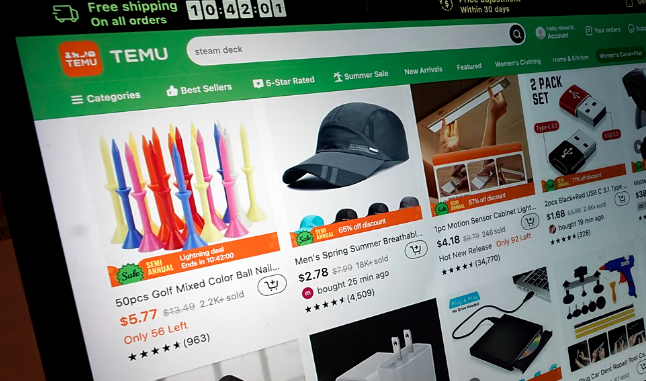
The European Commission has accused Chinese online marketplace Temu of failing to adequately prevent illegal and unsafe products from being sold through its platform, warning that the company could face a fine of up to 6% of its annual global turnover.
The preliminary findings identify weaknesses in product safety checks, content moderation and the system used to penalise sellers who repeatedly breach marketplace rules.
The investigation follows a €200 million fine imposed on Temu by the Commission in May 2026 over the sale of illegal goods, including dangerous baby toys and faulty chargers. Regulators said at the time that the company had failed to carry out adequate assessments of risks associated with products offered to European consumers.
Temu was subsequently required to prepare an action plan addressing breaches of the EU’s Digital Services Act (DSA). The Commission approved the plan in October, but investigators say significant problems remain.
Weak product safety checks
The Commission found that Temu does not consistently require sellers to provide safety test reports. Even when documentation is submitted, the company does not always verify it.
Investigators also raised concerns about the handling of high-risk products, particularly electronics and cosmetics. Safety checks in these categories were not given sufficient priority, while findings from random inspections were not consistently followed up.
Content moderation concerns
The investigation also identified shortcomings in Temu’s content moderation system, which regulators said had failed to prevent illegal goods from appearing on the marketplace.
According to the preliminary findings, the system focuses largely on information supplied with product listings rather than assessing whether the goods themselves meet safety requirements.
The Commission also questioned the platform’s approach to comparing products, saying it did not adequately prioritise safety when consumers searched for alternatives to previously identified non-compliant items.
The number of human moderators had also failed to keep pace with the growing range of products listed on the platform, investigators said.
Seller sanctions under scrutiny
The Commission described Temu’s system for penalising sellers as fragmented and ineffective. One concern was that restrictions were applied to individual online stores rather than the traders operating them.
This could allow sellers whose stores had been suspended to continue trading through other accounts. Investigators also found that Temu was too slow to act against businesses repeatedly violating its rules.
Temu rejected the preliminary findings, saying it invests heavily in compliance systems and specialist staff. The company argued that its existing controls effectively reduce the risk of illegal products appearing on the platform.
It said it would examine the Commission’s assessment, respond to the concerns and continue discussions with regulators. Temu also expressed confidence that an agreement could be reached.
The company can now review the findings and submit its defence before the Commission reaches a final decision. If regulators conclude that Temu has failed to meet its obligations under the Digital Services Act, it could face a penalty of up to 6% of its annual global turnover.

Costa Concordia Captain Francesco Schettino Released From Prison on Probation

Chronic Loneliness Linked to 38% Higher Dementia Risk, Study Finds

Denmark Has Europe’s Widest Urban-Rural House Price Gap, OECD Data Shows

Trump Administration Fires US National Cyber Director Sean Cairncross

JPMorgan Chase, Visa and Mastercard Customer Data Exposed in Third-Party Cyberattack

Canada and China Agree to Ease Tariffs on Pork, Seafood and Metals

Germany Ranks Last in Business Start-up Bureaucracy Study, Requiring Nearly 4,000 Hours

UK Inflation Rises to 3.6% in October as Record Diesel Prices Push Up Costs

EU Accuses Temu of Failing to Prevent Illegal Products, Risking Heavy Fine

Measles Cases Decline Across Europe in 2026, but Outbreaks Persist in Several Countries

China’s Historic Olympic Victory Sparks National Pride Amid Controversy

Meta Acquires Tilda Swinton VR Doc ‘Impulse: Playing With Reality’

Saudi Arabia’s Model for Sustainable Aviation Practices

Recent Developments in Small Business Taxes

Effective Drain Cleaning: A Key to a Healthy Plumbing System

Who was Ebrahim Raisi and his status in Iranian Politics?

Keely Hodgkinson Wins Britain’s First Athletics Gold at Paris Olympics in 800m

Carrectly: Revolutionizing Car Care in Chicago

Nobel Laureate Muhammad Yunus Proposed as Head of Bangladesh’s Interim Government Following Hasina’s Resignation

Chinese Hackers Infiltrate Major U.S. Telecom Firms in Possible National Security Breach

Sony WF-10XM4: Headphones Are Our Absolute Favorite

10 Places You Can’t Miss If It’s Your First Time in European

New Census Data Will Shake Up Alabama Politics

16 Top of Our Favorite Outdoor Clothing Brands

Fashionable Summer Accessories to Dress Up Your Travel Look

How Sleeping Less than 7 Hours a Night Can Lead to Weight Gain
-
 Sports2 years ago
China’s Historic Olympic Victory Sparks National Pride Amid Controversy
-
 Entertainment2 years ago
Meta Acquires Tilda Swinton VR Doc ‘Impulse: Playing With Reality’
-
 Business2 years ago
Saudi Arabia’s Model for Sustainable Aviation Practices
-
 Business2 years ago
Recent Developments in Small Business Taxes
-
 Home Improvement2 years ago
Effective Drain Cleaning: A Key to a Healthy Plumbing System
-
 Politics2 years ago
Who was Ebrahim Raisi and his status in Iranian Politics?
-
 Sports2 years ago
Keely Hodgkinson Wins Britain’s First Athletics Gold at Paris Olympics in 800m
-
 Business2 years ago
Carrectly: Revolutionizing Car Care in Chicago