
Business
Oil Prices Rise as US-Iran Tensions Return and Rate Hike Bets Grow

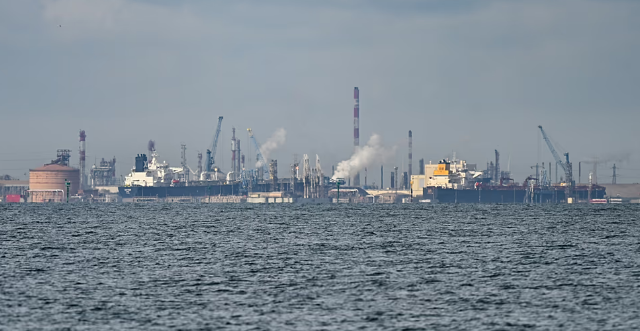


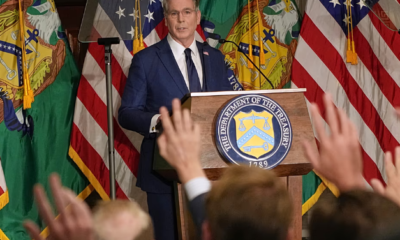



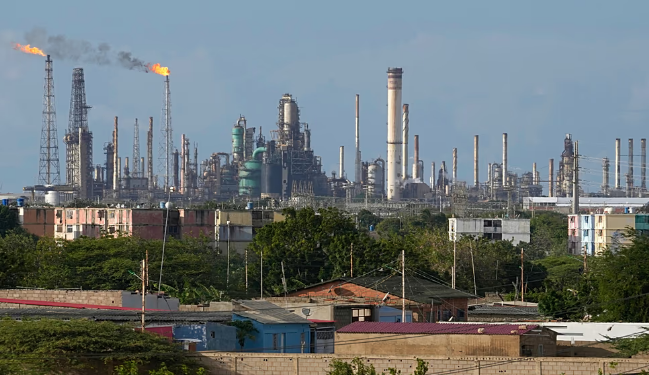
US President Donald Trump has described a newly announced agreement involving Venezuela’s vast oil reserves as “the biggest oil deal in world history”, but the White House has released few details about the arrangement.
Trump said the deal would give the United States a significant stake in Venezuela’s oil resources and advance his administration’s goal of expanding access to the country’s huge reserves. The agreement was announced Friday night after US forces captured former Venezuelan President Nicolás Maduro in January and brought him to New York to face federal drug trafficking charges.
Venezuela’s interim leader, Delcy Rodríguez, presented the agreement as an important step towards rebuilding the country’s struggling energy industry. In a televised address Sunday, she said Venezuela would retain control of its natural resources and aimed to turn the country into a major global energy producer.
No full text of the agreement has been released, leaving major questions about its structure, financing and implementation.
According to Rodríguez, the agreement covers 17 oil fields with proven potential of 65 billion barrels. She said the project could attract about $100 billion in investment and generate more than $209 billion in tax revenue for Venezuela.
A US official, speaking anonymously, said the arrangement gives the United States an effective 55% share of the new private company’s output. That figure reportedly combines an ownership stake with rights to purchase oil at cost.
The official said oil purchased by the United States would be directed towards the US Strategic Petroleum Reserve and military requirements. If the figures are confirmed, the company would rank among the world’s largest holders of proven oil reserves.
The agreement has already triggered criticism inside Venezuela. Some opponents argue that granting US interests access to the country’s oil resources violates a long-standing principle that Venezuela’s natural wealth should remain under national control.
Ricardo Hausmann, a former Venezuelan planning minister and Harvard University professor, called the arrangement a “shameful deal” and questioned Rodríguez’s authority to approve it.
Rodríguez rejected those concerns, insisting that Venezuela would maintain ownership and sovereignty over its resources. She said the government wanted to attract major international companies, including Chevron, Repsol and Shell, to expand investment.
The agreement has also divided US lawmakers. Republican supporters described it as a historic economic opportunity, while Democratic senators accused Trump of pursuing Venezuelan oil as a central objective of his policy.
Questions remain over the identity of the private operator, the division of ownership and who will finance the large investments needed to develop Venezuela’s oil fields.
Industry support is also uncertain. Chevron, the only US oil company currently producing oil in Venezuela, declined to comment, while Exxon Mobil also declined to discuss the agreement.
Analysts have warned that damaged infrastructure, political uncertainty and logistical difficulties could make the proposed investment difficult to deliver, despite Venezuela’s enormous oil reserves.

The cost of buying a home in major European cities varies sharply, with Zurich emerging as the continent’s most expensive city for city-centre apartments and Istanbul ranking as the cheapest.
Housing affordability remains a major concern across Europe as buyers face high prices in capitals, large urban areas and popular tourist destinations. The latest figures from Deutsche Bank Research Institute’s “Mapping the World’s Prices 2026” report compare the cost of buying an apartment in the city centre across 69 cities worldwide, including 28 European locations.
Switzerland occupies the top two positions in Europe. An apartment in central Zurich costs an average of €22,910 per square metre, while Geneva stands at €19,439. An 80-square-metre apartment would therefore cost about €1.83 million in Zurich and €1.56 million in Geneva.
London ranks third at €17,241 per square metre. An 80-square-metre property in the British capital would cost approximately €1.38 million, or about £1.18 million.
Paris follows at €12,771 per square metre, making London about 35% more expensive. Vienna completes the top five at €12,483.
Among Europe’s five largest economies, only the capitals of the UK and France appear in the top 10. Munich is Germany’s most expensive city in the ranking at €11,435 per square metre.
Luxembourg follows at €11,011, while Copenhagen, Stockholm and Oslo record prices of €10,191, €10,037 and €9,785 respectively. Three Nordic cities are therefore among Europe’s 10 most expensive locations.
Elsewhere, Milan costs €9,378 per square metre and Amsterdam €9,273. Helsinki ranks 13th at €8,431, while Prague is priced at €8,352.
Madrid and Berlin are slightly cheaper at €7,831 and €7,613 respectively. Rome follows at €7,328, while Dublin and Frankfurt stand at €7,185 and €7,162.
Prices fall further in Lisbon and Barcelona, where the cost per square metre is €6,636 and €6,485.
At the other end of the European ranking, Istanbul is the cheapest at €2,646 per square metre. Athens follows at €3,442, while Brussels records €4,380. Birmingham costs €4,671, with Budapest, Warsaw and Edinburgh at €5,243, €5,443 and €5,708.
The average price across the 28 European cities is €9,090 per square metre, meaning an 80-square-metre apartment would cost about €727,000.
Globally, Hong Kong tops the ranking at €23,790 per square metre, followed by Zurich and Seoul. Cairo is the cheapest at €784, followed by Johannesburg at €913.
The figures combine data from Numbeo and Deutsche Bank and use European Central Bank average exchange rates for the first half of 2026.
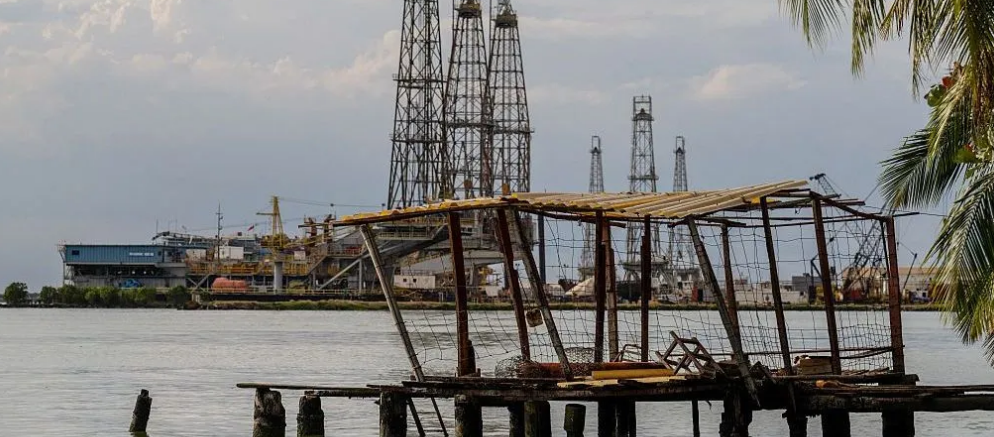
US President Donald Trump has announced an agreement with Venezuela that would give the United States a major role in developing more than 65 billion barrels of the country’s proven oil reserves.
Trump described the agreement as a historic transaction that would increase US oil supplies and potentially reduce petrol prices for American consumers. He provided few details about the structure or legal terms of the arrangement.
Venezuela’s interim President Delcy Rodriguez also confirmed the agreement, describing it as an important step toward reviving the country’s struggling economy.
According to Rodriguez, the deal covers 17 strategic oil fields with proven potential of 65 billion barrels. She said the projects could attract more than $100 billion in investment and generate over $209 billion in tax revenue for the Venezuelan state.
“These investments will contribute not only to the recovery and modernization of our industry, but also to our country’s economic growth,” Rodriguez said.
US Secretary of State Marco Rubio called the agreement a major victory for both countries. He said it could bring almost $100 billion in private investment to Venezuela, create thousands of high-paying jobs and support the reconstruction of the country’s economy.
Trump said Rubio and Defence Secretary Pete Hegseth reached the agreement with Venezuelan authorities through a partnership involving private businesses. He did not identify the companies involved or explain the precise commitments made by Washington and Caracas.
A US official told CBS News, the BBC’s media partner, that the US government would retain a 55% stake in a joint venture with an experienced private operator in Venezuela. According to the official, Rodriguez granted the venture a 100-year concession to operate the oil fields.
The arrangement has raised questions because the official agreement has not been publicly released and its constitutional and legal status in Venezuela remains unclear.
Venezuela has the world’s largest proven oil reserves, estimated at about 303 billion barrels, but production has fallen sharply since reaching its peak in the late 1990s. Years of economic instability, underinvestment and deteriorating infrastructure have weakened the country’s oil industry.
Trump has previously urged US energy companies to invest at least $100 billion to restore Venezuelan production. He has also repeatedly said Washington should benefit from Venezuela’s oil resources.
The announcement follows the US capture of former Venezuelan President Nicolás Maduro and his wife, Cilia Flores, in a US special forces operation authorised by Trump on January 3.
After the operation, Trump said his administration would oversee Venezuela until what he described as a safe and orderly political transition. He also said the United States would control the sale of Venezuelan oil for an indefinite period.
The latest agreement could therefore represent a major expansion of US involvement in Venezuela’s energy industry.
Trump has argued that Venezuela previously seized American oil assets and equipment, causing substantial financial losses to US companies. His administration has presented greater US participation in Venezuela’s oil sector as a way to increase energy supplies, attract investment and support reconstruction.
However, the absence of a published agreement leaves important questions unanswered about ownership, governance, taxation and the legal authority behind the proposed arrangement.

Google Maps Renames Lake Ontario ‘Lake America’ for US Users Amid Canada Trade Tensions

Trump Hails Major Venezuela Oil Deal as Questions Grow Over Terms

Oil Prices Rise as US-Iran Tensions Return and Rate Hike Bets Grow

Zurich Leads Europe as City-Centre Home Prices Soar Above €22,000 per Square Metre

When Smartphone Use Becomes a Problem: The Rise of Digital Disorders

New Flood Warnings Issued in Nepal as Death Toll Reaches 750

Trump Announces US-Venezuela Deal Covering 65 Billion Barrels of Oil Reserves

Nepal Flood Death Toll Reaches 633 as Nearly 3,000 Remain Missing

Spain Seeks EU Help as Tensions Rise Over Migrants in Ceuta

Twitter Name Returns as New Platform Takes Aim at Elon Musk’s X

Meta Acquires Tilda Swinton VR Doc ‘Impulse: Playing With Reality’

China’s Historic Olympic Victory Sparks National Pride Amid Controversy

Saudi Arabia’s Model for Sustainable Aviation Practices

Recent Developments in Small Business Taxes

Effective Drain Cleaning: A Key to a Healthy Plumbing System

Who was Ebrahim Raisi and his status in Iranian Politics?

Keely Hodgkinson Wins Britain’s First Athletics Gold at Paris Olympics in 800m

Carrectly: Revolutionizing Car Care in Chicago

Nobel Laureate Muhammad Yunus Proposed as Head of Bangladesh’s Interim Government Following Hasina’s Resignation

Chinese Hackers Infiltrate Major U.S. Telecom Firms in Possible National Security Breach

Sony WF-10XM4: Headphones Are Our Absolute Favorite

10 Places You Can’t Miss If It’s Your First Time in European

New Census Data Will Shake Up Alabama Politics

16 Top of Our Favorite Outdoor Clothing Brands

Fashionable Summer Accessories to Dress Up Your Travel Look

How Sleeping Less than 7 Hours a Night Can Lead to Weight Gain
-
 Entertainment2 years ago
Meta Acquires Tilda Swinton VR Doc ‘Impulse: Playing With Reality’
-
 Sports2 years ago
China’s Historic Olympic Victory Sparks National Pride Amid Controversy
-
 Business2 years ago
Saudi Arabia’s Model for Sustainable Aviation Practices
-
 Business2 years ago
Recent Developments in Small Business Taxes
-
 Home Improvement2 years ago
Effective Drain Cleaning: A Key to a Healthy Plumbing System
-
 Politics2 years ago
Who was Ebrahim Raisi and his status in Iranian Politics?
-
 Sports2 years ago
Keely Hodgkinson Wins Britain’s First Athletics Gold at Paris Olympics in 800m
-
 Business2 years ago
Carrectly: Revolutionizing Car Care in Chicago
You must be logged in to post a comment Login