
Business
Trump Announces US-Venezuela Deal Covering 65 Billion Barrels of Oil Reserves

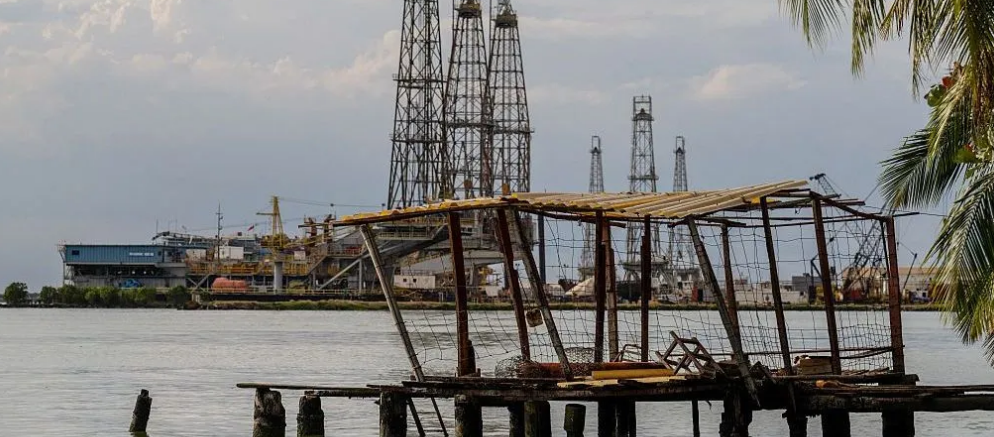
US President Donald Trump has announced an agreement with Venezuela that would give the United States a major role in developing more than 65 billion barrels of the country’s proven oil reserves.
Trump described the agreement as a historic transaction that would increase US oil supplies and potentially reduce petrol prices for American consumers. He provided few details about the structure or legal terms of the arrangement.
Venezuela’s interim President Delcy Rodriguez also confirmed the agreement, describing it as an important step toward reviving the country’s struggling economy.
According to Rodriguez, the deal covers 17 strategic oil fields with proven potential of 65 billion barrels. She said the projects could attract more than $100 billion in investment and generate over $209 billion in tax revenue for the Venezuelan state.
“These investments will contribute not only to the recovery and modernization of our industry, but also to our country’s economic growth,” Rodriguez said.
US Secretary of State Marco Rubio called the agreement a major victory for both countries. He said it could bring almost $100 billion in private investment to Venezuela, create thousands of high-paying jobs and support the reconstruction of the country’s economy.
Trump said Rubio and Defence Secretary Pete Hegseth reached the agreement with Venezuelan authorities through a partnership involving private businesses. He did not identify the companies involved or explain the precise commitments made by Washington and Caracas.
A US official told CBS News, the BBC’s media partner, that the US government would retain a 55% stake in a joint venture with an experienced private operator in Venezuela. According to the official, Rodriguez granted the venture a 100-year concession to operate the oil fields.
The arrangement has raised questions because the official agreement has not been publicly released and its constitutional and legal status in Venezuela remains unclear.
Venezuela has the world’s largest proven oil reserves, estimated at about 303 billion barrels, but production has fallen sharply since reaching its peak in the late 1990s. Years of economic instability, underinvestment and deteriorating infrastructure have weakened the country’s oil industry.
Trump has previously urged US energy companies to invest at least $100 billion to restore Venezuelan production. He has also repeatedly said Washington should benefit from Venezuela’s oil resources.
The announcement follows the US capture of former Venezuelan President Nicolás Maduro and his wife, Cilia Flores, in a US special forces operation authorised by Trump on January 3.
After the operation, Trump said his administration would oversee Venezuela until what he described as a safe and orderly political transition. He also said the United States would control the sale of Venezuelan oil for an indefinite period.
The latest agreement could therefore represent a major expansion of US involvement in Venezuela’s energy industry.
Trump has argued that Venezuela previously seized American oil assets and equipment, causing substantial financial losses to US companies. His administration has presented greater US participation in Venezuela’s oil sector as a way to increase energy supplies, attract investment and support reconstruction.
However, the absence of a published agreement leaves important questions unanswered about ownership, governance, taxation and the legal authority behind the proposed arrangement.













Europe is heading towards one of its most difficult winter gas seasons since the energy crisis of 2022, with wholesale prices rising sharply while gas storage levels remain well below their normal seasonal average.
The benchmark Dutch TTF front-month gas price was trading above €66 per megawatt-hour on Tuesday, after briefly exceeding €68. At the start of 2026, the price was around €29 per MWh.
The latest increase has been driven partly by concerns that disruption around the Strait of Hormuz could continue into the winter, limiting energy supplies and intensifying competition for liquefied natural gas.
EU gas storage was 62.99% full at the end of August 24, according to Gas Infrastructure Europe. That compares with a five-year average of about 79%.
Germany’s storage facilities were around 51% full, while the Netherlands had filled only 44.3% of available capacity.
Natasha Fielding, editorial manager for gas, LNG, coal and biomass at Argus Media, said European stocks were unusually low for this point of the year. She noted that the last period with similarly low levels was in 2021, before the previous major gas crisis.
European gas consumption is now around 15% to 20% below 2021 levels, according to Oxford Economics. The consultancy said this means the bloc can operate with less gas in storage, although it would need greater reliance on winter LNG imports.
That could create stronger competition with Asian buyers for available cargoes. The effective closure of the Strait of Hormuz has added to those concerns because the waterway normally handles a significant share of global LNG shipments.
Goldman Sachs analysts have warned that gas prices could rise above €100 per MWh in December if Middle Eastern energy exports recover only gradually through 2027.
A prolonged price increase would eventually reach households, although the impact would not be immediate. Existing contracts, hedging arrangements and fixed-price deals can delay the effect of wholesale market movements.
Oxford Economics estimates that it takes about six months on average for wholesale gas price changes to be fully reflected in consumer prices. The timing varies considerably between countries.
In the Netherlands, household prices can respond relatively quickly because of the structure of the retail market. In Germany and Austria, widespread 12-month or 24-month fixed contracts mean the full impact can take close to a year.
France, Italy and Spain could see consumer prices respond within several months.
Italy is considered particularly exposed to a gas price shock because of its high dependence on gas and relatively quick pass-through to consumers, although its storage levels are currently among Europe’s strongest.
Weather will remain a major factor. A colder-than-normal winter would increase heating demand and put additional pressure on already limited supplies, potentially pushing household energy costs higher across the continent.


Spain’s Tax Freedom Day fell on August 20 this year, according to Fundación Civismo, meaning the average worker had theoretically earned enough income by that date to cover their annual tax and social security burden.
The Spanish liberal think tank estimates that the average worker spends 231 days of the year covering taxes and social contributions in 2026, two more days than last year. The figure has risen sharply since 2018, when Fundación Civismo calculated that Tax Freedom Day fell on June 27 after 177 days.
That represents a shift of 54 days over eight years.
Fundación Civismo attributed the change to several factors, including income tax brackets that have not kept pace with inflation, higher social security contributions, the restoration of some higher VAT rates and additional regional and municipal taxes.
The organization calculates the tax burden by considering the total cost of employing a typical worker. Its reference example involves an employee earning a gross annual salary of €32,446. Including employer contributions, the worker costs the company €42,390.70.
Of that amount, the employee is estimated to receive €24,724.91 in take-home pay. About €17,665.79, representing 41.7 percent of the total employment cost, goes toward income tax and employee and employer social security contributions.
The calculation means that workers receive approximately €58.30 for every €100 spent by an employer on their employment.
The foundation also argues that inflation can increase the effective tax burden even when workers experience little real wage growth. When tax brackets remain unchanged while salaries rise, employees can move into higher tax bands without experiencing a comparable improvement in purchasing power.
VAT adds another significant cost. Fundación Civismo estimates that the average worker pays around €2,213 a year in VAT, equivalent to almost 33 days of net income.
The study also counts local property tax, vehicle taxes, inheritance and gift taxes and other charges under what it calls “silent taxation”. These are estimated at about €4,110 a year, representing more than two months of the model worker’s net income.
Tax Freedom Day differs across Spain’s autonomous communities because of variations in regional income taxes, deductions and local charges. The Basque Country recorded the earliest date at August 14, followed by Madrid on August 15. Catalonia and Extremadura had the latest dates, both on August 26.
However, Tax Freedom Day is not an official government indicator. Critics argue that the calculation treats taxes purely as a cost without accounting for public services such as healthcare, education and pensions.
Spain’s official tax-to-GDP ratio stood at about 38 percent in 2025, according to Eurostat data cited in the report, compared with 35.2 percent in 2019.

Trump Announces US-Venezuela Deal Covering 65 Billion Barrels of Oil Reserves

Nepal Flood Death Toll Reaches 633 as Nearly 3,000 Remain Missing

Spain Seeks EU Help as Tensions Rise Over Migrants in Ceuta

Twitter Name Returns as New Platform Takes Aim at Elon Musk’s X

Congo Begins Ebola Vaccination Campaign as Deadliest Outbreak Escalates

89-Year-Old Man Dies From West Nile Virus in Andalusia as Cases Reach 54

Children of Centenarians May Face Lower Health Risks and Live Longer, Study Finds

Democrats Face Internal Battle Over Party Direction Ahead of US Midterms

Two Killed After Car Deliberately Hits Pedestrians in Caen

West Nile Virus Cases Surge in Greece as Death Toll Reaches 19

Meta Acquires Tilda Swinton VR Doc ‘Impulse: Playing With Reality’

China’s Historic Olympic Victory Sparks National Pride Amid Controversy

Saudi Arabia’s Model for Sustainable Aviation Practices

Recent Developments in Small Business Taxes

Effective Drain Cleaning: A Key to a Healthy Plumbing System

Who was Ebrahim Raisi and his status in Iranian Politics?

Keely Hodgkinson Wins Britain’s First Athletics Gold at Paris Olympics in 800m

Carrectly: Revolutionizing Car Care in Chicago

Nobel Laureate Muhammad Yunus Proposed as Head of Bangladesh’s Interim Government Following Hasina’s Resignation

Chinese Hackers Infiltrate Major U.S. Telecom Firms in Possible National Security Breach

Sony WF-10XM4: Headphones Are Our Absolute Favorite

10 Places You Can’t Miss If It’s Your First Time in European

New Census Data Will Shake Up Alabama Politics

16 Top of Our Favorite Outdoor Clothing Brands

Fashionable Summer Accessories to Dress Up Your Travel Look

How Sleeping Less than 7 Hours a Night Can Lead to Weight Gain
-
 Entertainment2 years ago
Meta Acquires Tilda Swinton VR Doc ‘Impulse: Playing With Reality’
-
 Sports2 years ago
China’s Historic Olympic Victory Sparks National Pride Amid Controversy
-
 Business2 years ago
Saudi Arabia’s Model for Sustainable Aviation Practices
-
 Business2 years ago
Recent Developments in Small Business Taxes
-
 Home Improvement2 years ago
Effective Drain Cleaning: A Key to a Healthy Plumbing System
-
 Politics2 years ago
Who was Ebrahim Raisi and his status in Iranian Politics?
-
 Sports2 years ago
Keely Hodgkinson Wins Britain’s First Athletics Gold at Paris Olympics in 800m
-
 Business2 years ago
Carrectly: Revolutionizing Car Care in Chicago
You must be logged in to post a comment Login