
Business
Oil Prices Surge as Trump Rejects Iran Proposal, Global Markets Mixed


Global oil prices climbed sharply on Monday while European stock markets slipped and Asian shares pushed to fresh highs after US President Donald Trump rejected Tehran’s latest response to a proposal aimed at ending the war in Iran.
Energy markets reacted quickly to growing uncertainty surrounding the conflict and the continued disruption in the Strait of Hormuz, a vital shipping route for global oil supplies. Investors fear prolonged instability in the region could tighten energy markets further and place additional pressure on the global economy.
Brent crude futures rose more than 4% in early trading, reaching around $104.75 per barrel, while US West Texas Intermediate crude climbed to nearly $98.90 a barrel. The gains followed Friday’s close, when Brent traded near $100 and WTI hovered around $95.
The jump came after Trump described Iran’s response to the latest US proposal as “totally unacceptable,” signaling that negotiations to end the conflict remain far from resolved. Details of the proposal have not been publicly disclosed, but the rejection added to concerns that the blockade of the Strait of Hormuz could continue.
The ongoing disruption in the waterway has already rattled oil markets over recent weeks. The narrow strait handles a major share of the world’s crude exports, and fears over supply interruptions have triggered sharp swings in prices since fighting escalated.
European stock markets opened cautiously as investors weighed the potential economic impact of higher energy costs. The broader Stoxx 600 index traded flat, while the Euro Stoxx 50 slipped more than 0.5%.
National indexes across the region showed mixed performances. Britain’s FTSE 100, Germany’s DAX and Italy’s FTSE MIB moved within a narrow range, while France’s CAC 40 fell more than 1%, reflecting increased investor caution.
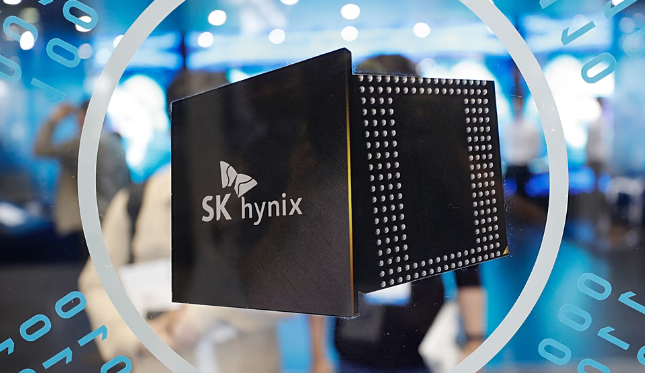
In Asia, however, markets largely brushed aside concerns from the Middle East. Japan’s Nikkei 225 briefly touched another record intraday high before ending lower by around 2%. South Korea’s Kospi surged 4.1% to a fresh all-time intraday high, driven by gains in major technology companies including Samsung Electronics and chipmaker SK Hynix.
Technology stocks and investor enthusiasm surrounding artificial intelligence have continued to support Asian markets despite geopolitical tensions. Over the past month, the Nikkei has gained more than 10%, while the Kospi has risen more than 30%.
US futures were slightly lower ahead of Wall Street’s opening bell, with major indexes trading modestly in the red.
Attention is also turning to Trump’s expected visit to China later this week for talks with Chinese President Xi Jinping. The meeting is expected to cover trade issues alongside discussions on the conflict in Iran and broader global economic concerns.
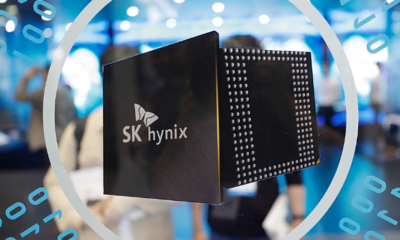







South Korea’s economy grew faster than expected in the third quarter, supported by strong semiconductor demand and increased investment in production equipment, although economists warned that the country’s dependence on the chip industry leaves it exposed to a potential slowdown in global artificial intelligence spending.
Gross domestic product rose by 1.0% between July and September compared with the previous quarter, according to preliminary figures released by the Bank of Korea on Tuesday. The expansion was more than three times the central bank’s August forecast of 0.3%.
Exports increased by 2.3% during the quarter, driven by semiconductors, machinery and electrical equipment, the Bank of Korea said. Investment in facilities climbed by 4.1%, largely reflecting spending on machinery used in semiconductor manufacturing.
The figures support the central bank’s assessment that strong demand for chips is sustaining export performance and business investment, according to Kwon Hyo-sung of Bloomberg Economics.
South Korea’s semiconductor exports reached $148 billion (€127 billion) in the third quarter, marking a 218.7% increase from the same period a year earlier, government figures showed. Rising chip demand has provided a significant boost to the country’s trade performance and broader economic activity.
On an annual basis, South Korea’s economy expanded by 3.4% in the third quarter, compared with 3.7% growth in the previous three months.
Real gross domestic income, a measure of the purchasing power generated by economic activity, increased by 18.8% year-on-year. The rise was the strongest in nearly 49 years and was supported by higher semiconductor prices.
The latest figures follow a strong start to the year. South Korea’s economy expanded by 1.7% quarter-on-quarter in the first three months of the year, its fastest growth in more than five years, as demand for semiconductors strengthened.
However, economists warned that the recovery remains concentrated in one major industry, creating risks if demand weakens.
“The risk is that growth stays heavily concentrated in the semiconductor sector, leaving South Korea exposed to a slowdown in global AI spending,” said John Bromhead, a senior economist at Moody’s Analytics.
The warning reflects concerns that the current wave of investment in AI infrastructure may not continue at the same pace. A reduction in spending by technology companies could weaken demand for advanced chips, affecting South Korea’s exports, manufacturing investment and economic growth.
The semiconductor boom has also helped strengthen the country’s external finances. South Korea recorded a current account surplus of $116.6 billion (€100 billion) in the second quarter, reaching a record high.
While robust chip exports have supported growth and income, the latest data highlights the challenge facing policymakers as they seek to sustain economic momentum while limiting exposure to shifts in the global technology market.
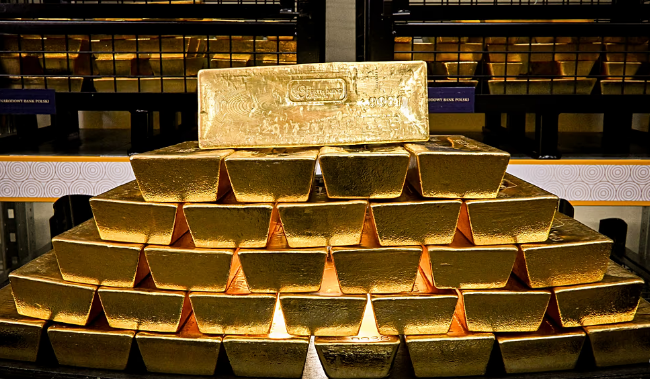
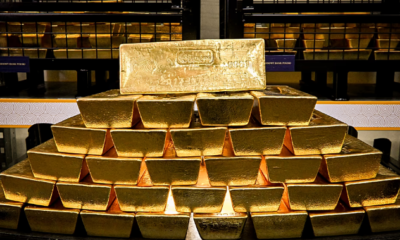
Russia and Kazakhstan are reducing their gold holdings while Poland continues to expand its reserves, highlighting differing strategies among central banks as gold prices remain elevated. Analysts say the sales are unlikely to trigger a major decline in global prices, although they raise questions about whether other countries could follow the same path.
Russia has been selling gold throughout 2026. In September, its reserves fell by approximately 6.2 tonnes, taking the total reduction since January to around 62 tonnes. A comparable pace of selling has rarely been seen in Russia’s modern history. In 1998, the country sold 118 tonnes of gold over three months.
Adam Stroniawski, managing director of Polish precious metals dealer Mennica Skarbowa, told Euronews that Russia’s sales were linked to a budget shortfall caused by the war in Ukraine and increased defence spending.
He said Russia was selling gold outside the London bullion market, with transactions taking place through Hong Kong and China’s central bank emerging as the main buyer. Hong Kong trade data showed that about 100 tonnes of Russian gold arrived between January and July, nearly three times the volume recorded during the same period last year.
Stroniawski expects the transactions to have a limited effect on international prices. He also said Russia could eventually return to buying gold and rebuilding its reserves, as it did after its 1998 sell-off.
Kazakhstan has also announced plans to reduce its gold holdings. The country was among the world’s largest gold buyers during the first eight months of 2026, but intends to bring gold’s share of its total reserves down from around 78% to 75% by the end of the year.
Stroniawski said the move could be temporary, reflecting budget pressures or an opportunity to realise profits after years of buying. The planned reduction is relatively modest and sales are expected to be spread over time, limiting the likely effect on global markets.
Poland, meanwhile, is not expected to follow the same course. The National Bank of Poland has steadily increased its gold holdings and is approaching its target of 700 tonnes. Stroniawski said the country’s substantial reserves support its credit standing and help stabilise its currency. Poland currently ranks 10th globally in gold reserves, he added, and reaching the target would not necessarily mark the end of purchases.
Gold’s performance has been mixed in 2026 following substantial gains in previous years. According to the World Gold Council, prices rose 25.5% in 2024 and 67.4% in 2025 in US dollar terms, before declining 4.4% during the first nine months of 2026.
Stroniawski believes temporary price corrections do not necessarily undermine gold’s longer-term outlook. Central-bank purchases and demand from investors seeking a safe-haven asset could continue to support prices.
He cautioned, however, that investors should not expect guaranteed short-term returns. Gold, he said, is more likely to deliver reliable gains over an extended period.
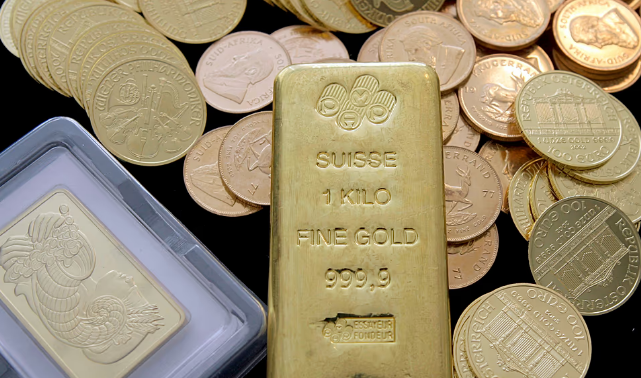
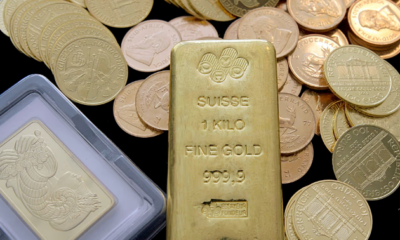
San Francisco-based fusion energy startup Marathon Fusion says it has converted mercury into stable gold at a rate 10 times higher than a record previously reported by CERN, reviving questions about whether laboratory-produced gold could eventually affect the precious metal’s market.
The company announced on Wednesday that it had achieved the transmutation last month. However, the claim has not been independently verified, and details about the quantity produced, production costs and the process’s commercial viability remain unclear.
Founded in 2023 by Kyle Schiller and Adam Rutkowski, a former SpaceX engineer, Marathon Fusion develops fuel systems for future fusion power plants. These facilities aim to generate electricity by fusing atomic nuclei, a process that also powers the sun.
The company lists the US Department of Energy as a partner on its website and received a 2023 award from the department’s Advanced Research Projects Agency-Energy. Its backers include Breakthrough Energy, founded by Bill Gates, and mining group Anglo American, which owns diamond company De Beers.
Marathon said its process uses neutrons generated by fusion reactions to bombard mercury. This produces an unstable isotope that subsequently decays into gold.
The company said it had exceeded a record reported by CERN, the Geneva-based organisation operating the world’s largest particle physics laboratory. In 2025, CERN reported that its Large Hadron Collider had produced approximately 29 picograms of gold during operations between 2015 and 2018. The gold nuclei existed for only a fraction of a second before being destroyed in collisions with accelerator equipment.
Marathon also claims to have broken a 40-year-old Soviet record using its plasma centrifuge, a machine designed to separate isotopes used in fusion fuel. It is developing a reactor in San Francisco intended to achieve record power density.
The announcement has drawn attention because of the impact laboratory-grown diamonds have had on the natural diamond industry. Lab-grown diamonds are chemically identical to mined stones but can be produced at substantially lower prices. Industry analyst Paul Zimnisky said wholesale prices for laboratory-grown diamonds fell by 90% to 95% from their 2015 levels.
De Beers introduced its Lightbox laboratory-grown diamond brand in 2018 but discontinued it in 2025 to concentrate on natural diamonds. Anglo American is now in talks to sell its 85% stake in De Beers for about $1 billion, according to Bloomberg.
Gold presents a different challenge. Unlike diamonds, it is also widely held by central banks as a reserve asset. The World Gold Council reported that mines produced 3,672 tonnes in 2025, while approximately 222,600 tonnes have been mined throughout history.
Marathon estimated in a 2025 study that a fusion plant could potentially produce about five tonnes of gold annually per gigawatt of electricity. One hundred plants operating at that level could add around 500 tonnes to annual supply, equivalent to roughly 14% of 2025 mine production.
However, commercial fusion power plants are not yet generating electricity for sale, and widespread deployment remains years away. Marathon has also said the resulting gold could contain radioactive isotopes and might require storage for up to 18 years before being sold.
No public plans have been announced to commercialise the process. While the claim remains unverified, the prospect of producing gold through nuclear reactions has raised questions about how future technological advances could affect the precious metal market.

South Korea’s Economy Grows 1% as Semiconductor Boom Drives Exports and Investment

Noyb Files Five Complaints Against Scale AI Over Worker Tracking and Biometric Checks

One in Three Young US Adults Uses AI for Drug Information, Study Finds

GMO Internet to Compensate Customers After Cyberattack Triggers Unauthorised Trading

EU Accepts Temu’s Action Plan After €200 Million Fine Over Illegal Products

Musk Says SpaceX Restricted Ukraine’s Starlink Service Over Military Drone Use

Bulgaria Heads to Presidential Poll Amid Black Sea Security Concerns and Economic Pressures

Russia and Kazakhstan Sell Gold Reserves as Poland Continues Buying

Thousands Protest Cost of Living and Meloni Government Across Italy

French Parents Underestimate Children’s AI Use, YouGov Survey Finds

Meta Acquires Tilda Swinton VR Doc ‘Impulse: Playing With Reality’

China’s Historic Olympic Victory Sparks National Pride Amid Controversy

Saudi Arabia’s Model for Sustainable Aviation Practices

Recent Developments in Small Business Taxes

Effective Drain Cleaning: A Key to a Healthy Plumbing System

Who was Ebrahim Raisi and his status in Iranian Politics?

Keely Hodgkinson Wins Britain’s First Athletics Gold at Paris Olympics in 800m

Carrectly: Revolutionizing Car Care in Chicago

Nobel Laureate Muhammad Yunus Proposed as Head of Bangladesh’s Interim Government Following Hasina’s Resignation

Chinese Hackers Infiltrate Major U.S. Telecom Firms in Possible National Security Breach

Sony WF-10XM4: Headphones Are Our Absolute Favorite

10 Places You Can’t Miss If It’s Your First Time in European

New Census Data Will Shake Up Alabama Politics

16 Top of Our Favorite Outdoor Clothing Brands

Fashionable Summer Accessories to Dress Up Your Travel Look

How Sleeping Less than 7 Hours a Night Can Lead to Weight Gain
-
 Entertainment2 years ago
Meta Acquires Tilda Swinton VR Doc ‘Impulse: Playing With Reality’
-
 Sports2 years ago
China’s Historic Olympic Victory Sparks National Pride Amid Controversy
-
 Business2 years ago
Saudi Arabia’s Model for Sustainable Aviation Practices
-
 Business2 years ago
Recent Developments in Small Business Taxes
-
 Home Improvement2 years ago
Effective Drain Cleaning: A Key to a Healthy Plumbing System
-
 Politics2 years ago
Who was Ebrahim Raisi and his status in Iranian Politics?
-
 Sports2 years ago
Keely Hodgkinson Wins Britain’s First Athletics Gold at Paris Olympics in 800m
-
 Business2 years ago
Carrectly: Revolutionizing Car Care in Chicago