
Business
China and ASEAN Sign Expanded Free Trade Pact Covering Over 2 Billion People

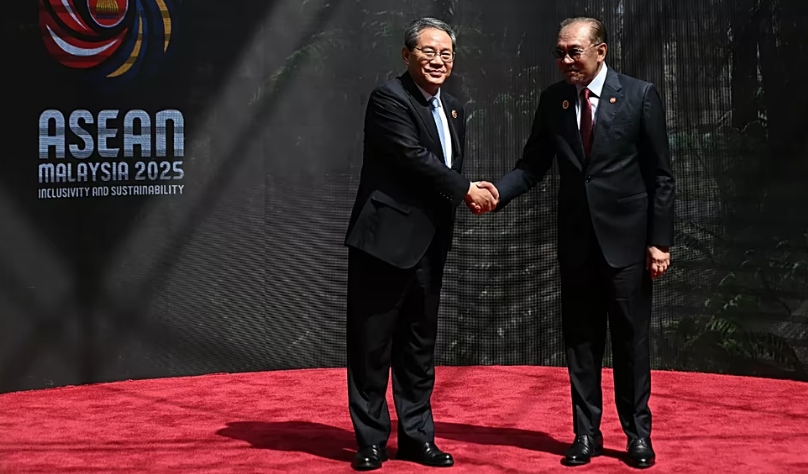
China and the Association of Southeast Asian Nations (ASEAN) signed an expanded free trade agreement on Tuesday, deepening economic ties across a region that accounts for more than 2 billion consumers. The upgraded deal, known as the ASEAN-China Free Trade Area 3.0, aims to strengthen trade, investment, and cooperation in new sectors such as digital trade, sustainability, and green development.
The signing ceremony, held on the final day of the ASEAN summit in Kuala Lumpur, was presided over by Chinese Premier Li Qiang and Malaysian Prime Minister Anwar Ibrahim, who is serving as ASEAN chair this year. The new pact builds on earlier agreements signed in 2002 and implemented in 2010, which have helped boost two-way trade between China and ASEAN from $235.5 billion in 2010 to nearly $1 trillion in 2024.
Premier Li called the agreement a “milestone in regional integration,” positioning it as a counterpoint to protectionist trends led by the United States. Without naming Washington directly, Li urged regional nations to resist “economic coercion and bullying,” adding, “Pursuing confrontation instead of solidarity brings no benefit. Unity is strength.”
Officials said the upgraded pact would make trade benefits more inclusive and easier to access for small and medium-sized enterprises (SMEs), which represent the majority of businesses in ASEAN. It also includes provisions to streamline customs procedures, reduce regulatory barriers, and enhance market access for goods and services.
“The ASEAN–China partnership has evolved into a two-way relationship,” Malaysia’s trade minister said earlier in the summit. “China has long been ASEAN’s largest trading partner, but ASEAN is now equally important to China.”
The free trade area, which includes Brunei, Cambodia, East Timor, Indonesia, Laos, Malaysia, Myanmar, the Philippines, Singapore, Thailand, and Vietnam, covers a market of more than 2 billion people. Analysts say it will enhance regional resilience at a time when global supply chains face disruptions and geopolitical tensions.
Premier Li emphasized that ASEAN and China are “good neighbours and good brothers,” linked by geography and shared interests. He warned that “unilateralism and protectionism have seriously impacted the global trade order” and urged countries in the region to “safeguard our legitimate rights and interests” through cooperation.
The timing of the agreement comes amid escalating trade tensions between China and the United States. Analysts say the deal strengthens China’s economic footprint in Southeast Asia and offers regional nations an alternative to reliance on Western markets.
Southeast Asian political analyst Bridget Welsh noted that the upgraded pact “underscores a global shift, where non-US countries are reinforcing trade ties among themselves for mutual prosperity.”
Meanwhile, US President Donald Trump and Chinese leader Xi Jinping are expected to meet in Seoul on Thursday to discuss progress on a potential US-China trade agreement, signaling a parallel front in the ongoing global trade realignment.







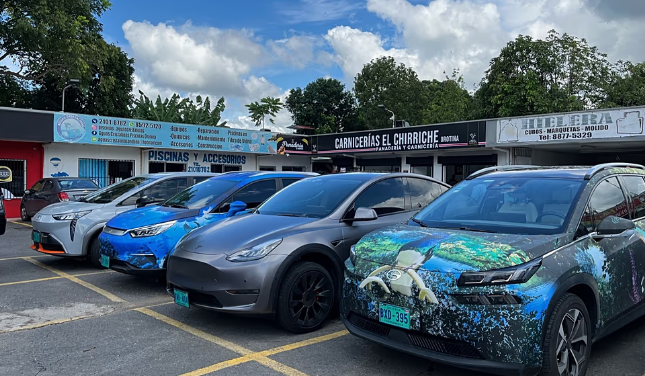
Chinese-owned car brands are gaining a growing share of Norway’s rapidly expanding electric vehicle market, even as more Norwegian drivers express concerns about buying vehicles from Chinese manufacturers.
Electric cars accounted for 97.8% of new car registrations in Norway during the first eight months of 2026, according to the Norwegian Road Federation. The country remains the world’s leading market for electric vehicle adoption and is far ahead of the European Union, where electric cars represented 21.7% of new registrations between January and August, according to the European Automobile Manufacturers’ Association.
About one in four new electric vehicles registered in Norway this year came from Chinese brands or companies with Chinese ownership. Manufacturers such as BYD, NIO and Dongfeng, along with Chinese-owned brands including Volvo and Polestar, accounted for about 25% of new EV registrations during the first half of the year.
Their presence has expanded rapidly. Chinese brands were almost absent from Norway’s car market in 2019, but have since become one of the largest groups by ownership origin.
A survey conducted by the Norwegian Electric Vehicle Association between March 31 and May 3 found that 31% of nearly 15,000 EV owners questioned would avoid buying a Chinese brand for political reasons. That compared with 23% in the previous year’s survey.
“New cars are, in practice, computers on wheels,” association Secretary General Christina Bu said.
She said greater attention to data security and privacy was making consumers more conscious of where vehicles come from and how information collected by them is handled.
Norwegian security researchers previously found that a vehicle produced by Chinese manufacturer NIO was transmitting data to China. Separate testing of a Yutong bus found that the manufacturer had access to its control system, raising concerns about whether such vehicles could potentially be disabled remotely.
Despite these concerns, Chinese-owned manufacturers continue to attract buyers. Bu said consumers consider several factors when purchasing vehicles, including price, technology, data security and ethical concerns.
An earlier association report suggested Chinese-owned brands could overtake European manufacturers in Norway as soon as 2027 if current trends continue.
Chinese manufacturers are also expanding across the EU. Registrations among five groups featuring Chinese brands rose about 71% in August from a year earlier, while their combined share of the new-car market increased from 6.6% to 10.8%.
Leapmotor registrations rose 211%, Chery increased 201%, BYD climbed 129% and Geely Group grew 24%.
Meanwhile, political resistance to Tesla among Norwegian consumers has declined. The survey found that 24% would avoid Tesla for political reasons, down from 43% last year.
Bu attributed the change partly to reduced attention surrounding Tesla chief executive Elon Musk’s political activities. Tesla nevertheless remained Norway’s best-selling new-car brand, with a 17.5% registration share through September 24.
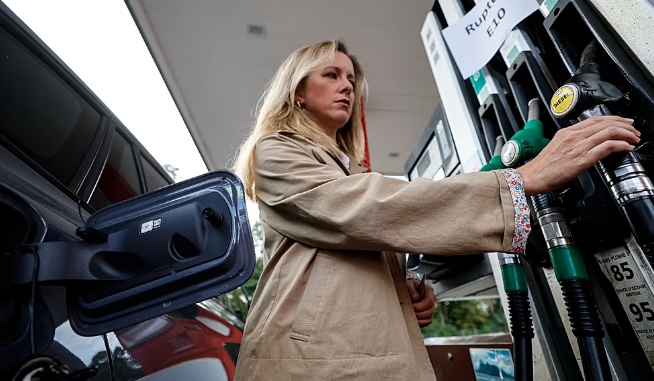
European governments are expanding fuel tax cuts, subsidies and energy measures as record petrol and diesel prices increase pressure on households and businesses across the region.
France, Germany and Spain are among the countries introducing or extending support as governments respond to disruptions linked to the wars in the Middle East and Ukraine. The European Union is also facing uncertainty over global diesel supplies amid possible US restrictions on exports.
The Organisation for Economic Co-operation and Development said seven of the 10 countries that have taken the largest number of measures to limit the economic impact of higher energy prices are EU members.
Europe was already facing energy challenges before the conflict involving Iran. Russia’s war in Ukraine disrupted supplies and contributed to sharp movements in European energy markets. The EU imports nearly all of the oil it consumes and about 85% of its natural gas, while imports account for 57% of the bloc’s overall energy needs, according to Eurostat.
Drivers are now facing particularly high diesel costs. Campaign group Transport & Environment estimates that EU motorists are spending an additional €203 million a day on diesel.
EU leaders have given member states temporary flexibility to provide state aid to households and energy-intensive sectors, including agriculture, transport and fishing. Governments have also been given limited flexibility under EU spending rules for investments aimed at strengthening energy security and reducing dependence on imported oil and gas.
European Commission President Ursula von der Leyen said higher energy prices and borrowing costs were putting pressure on households and businesses. She called for greater investment in domestic clean energy, including renewable power, nuclear energy and biomethane.
France has announced a €450 million package expanding assistance for fuel users and energy-intensive businesses. The government said 5.5 million workers who drive more than 30 kilometres on a round trip to work, or more than 8,000 kilometres a year for professional purposes, will qualify for €100 fuel payments through the end of the year.
Fuel subsidies for farmers, fishers and construction companies have also been extended. Energy vouchers ranging from €48 to €277 will be distributed three months earlier than planned to help 5.8 million households meet winter energy costs.
French President Emmanuel Macron has also asked the European Commission to consider relaxing some fuel quality requirements to increase diesel and kerosene production. He has proposed raising the EU limit for conventional biodiesel in standard diesel from 7% to 10%.
Germany has agreed to revive fuel tax cuts that expired at the end of June. From October 1 until the end of December, petrol and diesel prices will be reduced by 17 cents per litre, at a cost of €2.5 billion. Berlin also plans discussions with the oil industry over a possible fuel price cap from January.
Spain has extended fuel tax reductions introduced in March as part of a €5 billion support package. The current reduction is 5 cents per litre, with an automatic increase to 20 cents if annual fuel-price inflation exceeds 15%. Subsidies for transport firms, farmers, livestock producers and fishers have also been extended.
EU countries have also been drawing on strategic oil reserves after International Energy Agency members agreed to release 400 million barrels from emergency stockpiles.
At the same time, Europe continues to increase renewable energy production and shift industries toward electricity as it seeks to reduce dependence on imported fossil fuels.

Malta and Cyprus have secured places among the world’s 10 highest-ranked tax jurisdictions for people considering moving abroad, while Germany has been placed last in a new global comparison.
The ranking by Global Citizen Solutions (GCS) assesses 48 jurisdictions using 11 indicators grouped into tax burden, tax structure and investment migration. The investment migration category considers options available to people seeking residence or citizenship.
A higher score indicates more favourable conditions for internationally mobile individuals. Tax optimisation refers to the legal arrangement of finances to reduce tax liabilities.
Malta and Cyprus each scored 82 out of 100 for tax burden and 63 for tax structure. Malta received a score of 83 for investment migration, compared with 78 for Cyprus. Malta ranked sixth globally, while Cyprus came 10th.
GCS said the two countries achieved their positions through preferential tax regimes rather than low headline income tax rates. Their systems can provide favourable treatment for certain types of foreign income earned by people relocating to the countries.
Monaco, with a score of 68.6, Georgia at 68.3 and Bulgaria at 62.8, completed the top five European jurisdictions. After those countries, European scores fell below 60, with most placing outside the global top 20.
Germany ranked 48th and scored only 17 for tax structure. GCS identified the taxation of residents’ worldwide income, inheritance tax and exit tax as factors contributing to its position.
Denmark scored 30.4, Spain 36.9, France 37.7 and Norway 38.4. The United Kingdom was the next-lowest European jurisdiction, with a score of 50.9.
Italy recorded the highest score among Europe’s five largest economies at 56.9, placing ninth in Europe and 26th globally. Switzerland scored 58.2, followed by the Netherlands at 51.2. Turkey scored 56.9, Hungary 54.9, Sweden 54.1 and Ireland 53.1.
The separate tax burden measure covers personal income tax, capital gains tax on listed securities, wealth tax and inheritance tax. Monaco led Europe with 93, followed by Bulgaria at 92 and Andorra at 89. Malta and Cyprus both scored 82.
Tax structure focuses on foreign income and taxation affecting people who leave a country. Malta and Cyprus shared the highest European score of 63, while Germany recorded 17.
The report said tax rates and tax structures can operate independently, meaning a country with relatively low taxes may still have less favourable rules for foreign income or people relocating overseas.
Globally, the UAE ranked first with 82.7, followed by Antigua and Barbuda at 82.2, Paraguay at 77.2, Hong Kong at 76.9 and the Bahamas at 76.2.
The report also compared tax scores with quality-of-life rankings. Sweden, Germany, Denmark and Norway ranked highly for quality of life but much lower for tax optimisation.
Seven jurisdictions stood out for combining relatively favourable tax conditions with strong quality-of-life rankings: Malta, Cyprus, Portugal, Switzerland, Uruguay, Costa Rica and Mauritius.
The findings suggest that people considering relocation may assess tax structures alongside public services and wider living conditions, rather than focusing solely on headline tax rates.

Chinese Car Brands Gain Ground in Norway Despite Rising Consumer Concerns

Study Finds Modest Exercise Can Provide Significant Relief From Pain

Finland and Sweden Scramble Jets as Europe Raises Alert Over Russian Threats

European Governments Expand Fuel Tax Cuts and Energy Support as Prices Surge

Malta and Cyprus Rank Among Europe’s Most Tax-Friendly Destinations for Relocating Workers

European Stocks Slip as Oil Prices and US Bond Yields Keep Investors Cautious

US Navy Confirms Eight Suicide Attempts During Extended Carrier Deployment

UK Banks Complete First Interbank Transfers Using Tokenised Deposits

Europe Faces Higher Jet Fuel Costs Despite Supply Improving

More Europeans Take Up Sport, but Major Gaps Remain Across Countries

Meta Acquires Tilda Swinton VR Doc ‘Impulse: Playing With Reality’

China’s Historic Olympic Victory Sparks National Pride Amid Controversy

Saudi Arabia’s Model for Sustainable Aviation Practices

Recent Developments in Small Business Taxes

Effective Drain Cleaning: A Key to a Healthy Plumbing System

Who was Ebrahim Raisi and his status in Iranian Politics?

Keely Hodgkinson Wins Britain’s First Athletics Gold at Paris Olympics in 800m

Carrectly: Revolutionizing Car Care in Chicago

Nobel Laureate Muhammad Yunus Proposed as Head of Bangladesh’s Interim Government Following Hasina’s Resignation

Chinese Hackers Infiltrate Major U.S. Telecom Firms in Possible National Security Breach

Sony WF-10XM4: Headphones Are Our Absolute Favorite

10 Places You Can’t Miss If It’s Your First Time in European

New Census Data Will Shake Up Alabama Politics

16 Top of Our Favorite Outdoor Clothing Brands

Fashionable Summer Accessories to Dress Up Your Travel Look

How Sleeping Less than 7 Hours a Night Can Lead to Weight Gain
-
 Entertainment2 years ago
Meta Acquires Tilda Swinton VR Doc ‘Impulse: Playing With Reality’
-
 Sports2 years ago
China’s Historic Olympic Victory Sparks National Pride Amid Controversy
-
 Business2 years ago
Saudi Arabia’s Model for Sustainable Aviation Practices
-
 Business2 years ago
Recent Developments in Small Business Taxes
-
 Home Improvement2 years ago
Effective Drain Cleaning: A Key to a Healthy Plumbing System
-
 Politics2 years ago
Who was Ebrahim Raisi and his status in Iranian Politics?
-
 Sports2 years ago
Keely Hodgkinson Wins Britain’s First Athletics Gold at Paris Olympics in 800m
-
 Business2 years ago
Carrectly: Revolutionizing Car Care in Chicago