Connect with us

News

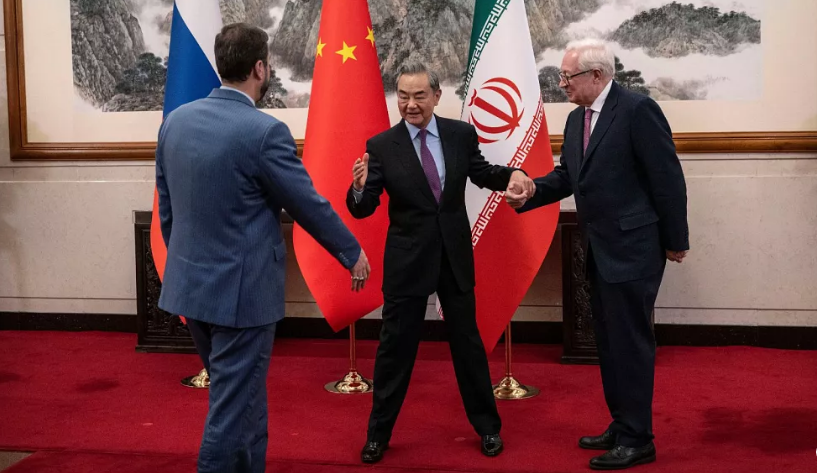
Iran Left Isolated as BRICS Allies Withhold Support During Conflict with Israel and U.S.

Published

on

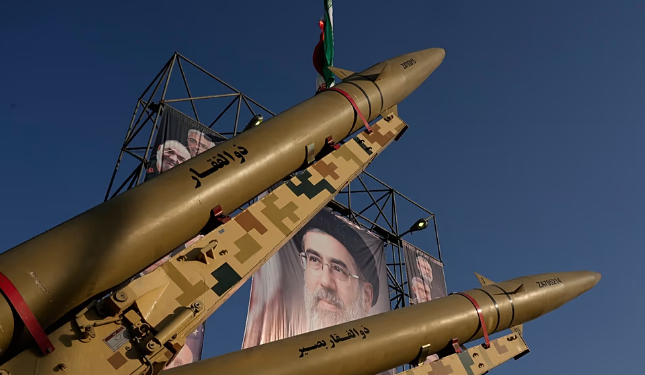
Despite providing military and economic support to its allies in recent years, Iran found itself isolated during its own time of crisis, as key BRICS members failed to offer tangible assistance amid Israeli and U.S. strikes on Iranian targets.

While Iran has supplied Russia with drones and missiles for use in Ukraine, and sold discounted oil to China, both Moscow and Beijing stopped short of aiding Tehran when its nuclear facilities came under attack. Instead, they issued statements of condemnation but offered no military or financial support.

The developments have raised questions about the strength of the informal alliance among Iran, Russia, China, and North Korea. Though often grouped together in opposition to the U.S. and its allies, analysts say the bloc lacks meaningful coordination or a unified strategic doctrine.

“These countries don’t have the same institutional structures or values that bind U.S.-led alliances,” said Alexander Gabuev, director of the Carnegie Russia Eurasia Center. “They are pacifist toward each other’s wars and prioritize national interests.”

Among the group, only Russia and North Korea have a formal mutual defense agreement. Pyongyang has even deployed troops to support Russia’s invasion of Ukraine. In contrast, Iran received little more than words during its confrontation with Israel.

China’s stance, in particular, underscores its desire to maintain neutrality in Middle East conflicts. President Xi Jinping condemned U.S. military actions and called for calm, but refrained from backing Iran. Beijing’s priority appears to be protecting its oil ties with regional powers like Saudi Arabia and the UAE — Iran’s longtime rivals.

See also  Israel and U.S. Prepare for Potential Iranian Attack Amid Ceasefire Efforts

This approach mirrors China’s broader diplomatic strategy. In March 2023, it brokered a détente between Iran and Saudi Arabia, positioning itself as a neutral actor in regional affairs. Analysts believe China is carefully watching the evolving balance of power in the Middle East, especially following Iran’s weakened posture and the collapse of its ally, Syrian President Bashar al-Assad.

Russia, too, appears reluctant to jeopardize its relationships with other Middle Eastern countries, including Israel and Arab states. “Putin will sacrifice Iran if it serves his interests,” said Cold War historian Sergey Radchenko. “And Tehran knows it.”

While the shared anti-American stance remains a common thread, the lack of unified military support has exposed the limitations of the so-called BRICS axis. “This is still an alliance, even if it lacks a mutual defense pact,” said Yun Sun, a researcher at the Stimson Center. “But cooperation is strategic, not sacrificial.”

Observers agree that Iran’s theocratic leadership complicates deeper alliances. Both China and Russia, with secular governments, view Islamic fundamentalism with caution. Chinese leaders, in particular, remain wary of Iran’s unpredictability and dependence.

As Tehran reassesses its foreign policy, the recent conflict may serve as a sobering reminder of the limits of its alliances — and the realities of a world increasingly shaped by transactional geopolitics rather than ideological loyalty.

News

EU Must End ‘Naivety’ on Trade and Confront China’s Industrial Strategy, Says French Minister

Published

on

France’s Minister for Foreign Trade, Nicolas Forissier, has called on the European Union to abandon what he described as “naivety” in its approach to global trade, urging a tougher stance on countries accused of distorting markets through industrial policy and trade practices.

Speaking in an interview with Euronews’ 12 Minutes With programme, Forissier said Europe must respond more firmly to what he described as the weaponisation of trade dependencies, warning that China in particular could damage its own long-term interests by undermining European industry.

“The Chinese have to understand that they won’t win anything if they destroy the European industry and then the European market, which is an essential market for them,” he said. “We must no longer be naive.”

His comments come as the European Commission prepares to hold an “orientation debate” next week on how to respond to a surge of low-cost Chinese imports. The discussion is expected to shape possible new trade defence measures, with further talks likely when EU leaders meet in Brussels in mid-June.

Forissier said the shift in thinking was not limited to China alone but applied to any country using commercial leverage to gain strategic advantage. “It is not only China,” he said. “It is all the countries that weaponise trade.”

Among the proposals under consideration is a requirement for EU companies to diversify supply chains, sourcing components from at least three different suppliers in order to reduce dependency on any single foreign market. Asked whether he supported such a measure, Forissier replied: “Yes, we have to.”

See also  Europe’s Housing Crisis Worsens, Young Spaniards Struggle to Enter Market

Other options include targeted tariffs on sensitive industries such as chemicals, alongside stronger use of anti-dumping and anti-subsidy tools to counter imports priced below domestic market levels. These measures are designed to address concerns over overcapacity in China’s industrial sector and its impact on European manufacturers.

The debate is taking place against a backdrop of widening trade imbalances. EU goods imports from China exceeded exports by €359.3 billion in 2025, marking an increase of nearly 20% compared with the previous year.

China has already warned it could retaliate if the bloc imposes new restrictions, raising concerns about potential escalation in trade tensions between two of the world’s largest economies.

France has repeatedly pushed for a more assertive European trade policy, arguing that state subsidies, export controls on raw materials and industrial overproduction in major economies are distorting global markets.

Forissier stressed that Europe must maintain open dialogue with Beijing while defending its own industrial base. “We try to respect the Chinese,” he said. “The Chinese have to respect us, and this is the message European institutions have to send.”

Continue Reading

News

US Says Iran Talks ‘Borderline’ as Pakistan Pushes Diplomacy Amid War Tensions

Published

on

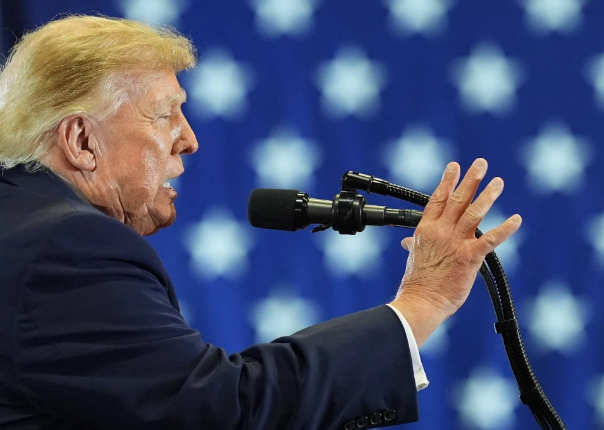
US President Donald Trump has said ongoing negotiations over the conflict involving Iran are teetering on the “borderline” between reaching a diplomatic agreement and a return to renewed military strikes, as tensions continue to rise across the region.

The remarks came as Pakistan’s army chief Field Marshal Asim Munir arrived in Tehran for fresh talks aimed at de-escalating the US-Israeli conflict with Iran. His visit follows a series of high-level diplomatic engagements involving Pakistani officials and Iranian leadership in recent days.

Munir was received in Tehran by Iranian Interior Minister Eskandar Momeni, alongside Pakistan’s Interior Minister Mohsin Naqvi, who has also travelled to the Iranian capital multiple times this week for meetings with senior officials.

Despite the renewed diplomatic activity, Iran has downplayed expectations of a breakthrough. Foreign ministry spokesman Esmaeil Baqaei said the visit did not signal any decisive shift in negotiations, describing the differences between the parties as “deep and extensive,” according to Iran’s ISNA news agency.

Speaking at a NATO foreign ministers’ meeting in Sweden, US Secretary of State Marco Rubio said there had been limited progress in the discussions but cautioned against optimism.

“There’s a little bit of movement and that’s good,” Rubio said, adding that he did not want to exaggerate developments. He also warned that Washington retains “other options” if diplomacy fails, echoing Trump’s earlier comments that military action remains on the table if Iran does not agree to terms.

Trump has previously stated that he paused consideration of a strike due to what he described as “serious negotiations” taking place, but has repeatedly warned that the fragile ceasefire reached in mid-April could collapse.

See also  Chile’s President Makes Historic Visit to South Pole

Iran’s Foreign Minister Abbas Araghchi said Tehran remained committed to talks despite what he called repeated breaches of diplomacy by Washington. He said Iran was participating “with a responsible approach and with all seriousness” in an effort to secure what he described as a fair outcome, according to Iranian state media.

A key point of contention remains the Strait of Hormuz, a strategic maritime route through which a significant share of global oil and gas supplies pass. Iranian actions in the waterway and US responses have heightened fears of wider economic disruption.

Iran has effectively restricted access through the strait, while US Central Command has reportedly blocked Iranian ports and redirected commercial vessels since mid-April. The European Union has since expanded its sanctions framework targeting those involved, calling the blockade contrary to international law.

Rubio said allied nations were also discussing contingency plans in case negotiations fail, warning that the situation may require a “plan B” if diplomatic efforts collapse.

Continue Reading

News

US Green Card Rule Change Forces Most Applicants to Apply From Abroad

Published

on

A sweeping policy change in the United States has upended a long-standing immigration process, requiring most foreign nationals seeking green cards to leave the country and complete their applications from abroad.

Under the new directive issued Friday by US Citizenship and Immigration Services (USCIS), individuals in the United States on temporary visas — including work, student and tourist permits — will generally no longer be able to adjust their status to permanent residency while remaining in the country. Instead, they must return to their home countries and apply through US consulates, except in limited “extraordinary circumstances.”

USCIS spokesperson Zach Kahler said the policy was intended to realign the immigration system with its original framework.

“From now on, an alien who is in the U.S. temporarily and wants a Green Card must return to their home country to apply, except in extraordinary circumstances,” Kahler said. He added that the change would reduce incentives for people to remain in the US after visa denials.

The decision marks a significant departure from decades of practice, under which many migrants have been allowed to apply for permanent residency from within the United States. That pathway has been commonly used by spouses of US citizens, workers, students, and individuals with family ties in the country.

The process of obtaining a green card often takes months or even years, raising concerns that applicants may now be forced to leave jobs, homes and families while waiting for approval abroad.

Immigration attorneys and advocacy groups said they were still assessing the scope of the policy and how it would be enforced. Many also warned that practical barriers could make compliance difficult, particularly for applicants from countries where travel is restricted or where US consular services are limited or unavailable.

See also  Elon Musk Endorses Donald Trump, Calls 2024 Election Critical for "Preserving Democracy"

Shev Dalal-Dheini of the American Immigration Lawyers Association said the move appeared to disrupt established procedures. “USCIS is trying to upend decades of processing of adjustment of status,” she said, noting widespread uncertainty over who would be affected.

Jessie De Haven of the California Immigration Project said the policy could discourage eligible applicants from proceeding altogether. “It’s really hard to tell how this is going to be applied,” she said. “I do think it might have a chilling effect on people applying.”

The announcement forms part of a broader immigration crackdown under the Trump administration, which has sought to tighten legal pathways while increasing enforcement measures against irregular migration.

Officials have framed the change as an effort to close loopholes and strengthen oversight of the immigration system. Critics, however, argue it could lead to prolonged separations for families and create new obstacles for lawful immigrants seeking permanent residency in the United States.

Continue Reading

Trending