
Health
Semaglutide Shows Promise in Treating Serious Liver Condition, New Study Finds

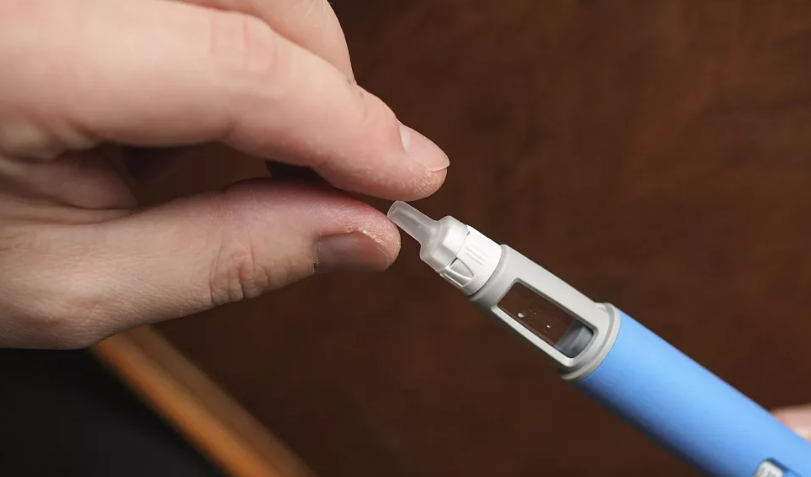
A widely used ingredient in popular weight-loss drugs has shown promising results in treating a progressive liver condition for which no medications are currently approved in the European Union, according to a major new study published in the New England Journal of Medicine.
The clinical trial, funded by Danish pharmaceutical giant Novo Nordisk, found that semaglutide – the active compound in the blockbuster drugs Ozempic and Wegovy – significantly improved outcomes for patients suffering from metabolic dysfunction-associated steatohepatitis (MASH). The disease, which causes fat accumulation, inflammation, and scarring in the liver, is associated with obesity, type 2 diabetes, and high blood pressure and can progress to cirrhosis if left untreated.
The 72-week trial involved 800 participants with MASH and moderate to advanced liver fibrosis. Patients who received weekly injections of semaglutide showed notable improvements, with 33 percent experiencing reductions in both liver inflammation and scarring, compared to just 16 percent in the placebo group. Separately, 63 percent saw a decrease in liver inflammation, and 37 percent showed improved scarring. The placebo group showed improvements of 34 percent and 22 percent, respectively.
Participants taking semaglutide also lost an average of 10.5 percent of their body weight, reinforcing the drug’s potential dual benefit in treating both liver disease and obesity-related complications.
Professor Debbie Shawcross, a liver specialist at King’s College London and vice secretary general of the European Association for the Study of the Liver, called the findings “hugely exciting,” but cautioned that semaglutide alone may not be responsible for all the improvements. Participants across both treatment arms received lifestyle counseling and support in managing related health conditions, suggesting that behavior changes also played a significant role.
“This is important as any therapy that is licensed for MASH with moderate to severe fibrosis must be used in conjunction with lifestyle interventions,” Shawcross noted.
While semaglutide showed promise, some patients reported gastrointestinal side effects, including nausea, vomiting, and diarrhea. Around 2.6 percent of those on the drug withdrew from the study due to adverse effects.
Novo Nordisk, which announced the trial’s topline results in late 2024, has stated it plans to seek regulatory approval for semaglutide as a MASH treatment in both the EU and US by mid-2025. If approved, it would become the first such therapy available in Europe.
The move comes as the EU is also reviewing other experimental treatments for MASH, including resmetirom, which was approved in the US last year after showing positive results in reducing liver scarring.
While Shawcross said it is “too early to call” semaglutide a game-changer, she emphasized its potential if used alongside comprehensive lifestyle programs. However, she warned that many patients taking weight-loss drugs do not make lasting changes, raising concerns about the long-term impact once the medication is stopped.










More Europeans are exercising regularly than they were four years ago, but participation continues to vary sharply depending on where people live, their age, education and financial circumstances, according to a new European Commission survey.
The latest Eurobarometer survey on sport and physical activity found that 39% of respondents said they never exercise or play sport, down from 45% in 2022. Nearly half of the 26,508 people surveyed said they exercise or play sport every day or several times a week.
The results also showed wide differences between countries. Finland recorded the highest share of people exercising daily, at 21%, followed by Denmark at 20%. In both countries, another 59% of respondents said they exercise several times a week.
At the other end of the scale, 68% of respondents in Portugal said they never exercise or play sport. Greece and Romania followed, with 66% in each country reporting that they never take part in sport or exercise.
Time was the most commonly cited barrier among people who wanted to exercise more, with 37% identifying it as an obstacle. A lack of motivation or interest was mentioned by 26%, while 15% pointed to health problems or injury. Cost was cited by 12%.
Education and household finances were also closely linked to participation. Some 59% of people who continued their education until at least the age of 20 said they exercise or play sport several times a week. That compared with 23% among those who left education at 15 or younger.
Financial circumstances showed a similar divide. People who said they had the greatest difficulty paying their bills were twice as likely to report never exercising as those who rarely or never faced financial difficulties, at 54% compared with 26%.
“More Europeans are getting active, but the opportunity to take part still depends too much on income, age and education,” said Roxana Mînzatu, Executive Vice-President for Social Rights and Skills, Quality Jobs and Preparedness.
The survey also highlighted a significant age gap. Nearly three-quarters of people aged 15 to 24 exercise or play sport at least several times a week, compared with 25% of those aged 75 and over. Health problems or injury were the main barrier for older respondents, while younger and middle-aged people were more likely to cite a lack of time.
Physical activity linked to everyday life also increased. Active commuting rose from 24% in 2022 to 37%, while 72% of respondents said they now walk for at least 10 minutes at a time.
The survey found, however, that some Europeans do not consider their neighbourhoods suitable for walking or cycling, potentially restricting opportunities for active travel.
Mînzatu said affordable sport and safe places to exercise should be available close to where people live, including for children from families unable to afford club fees, older people and those with disabilities.
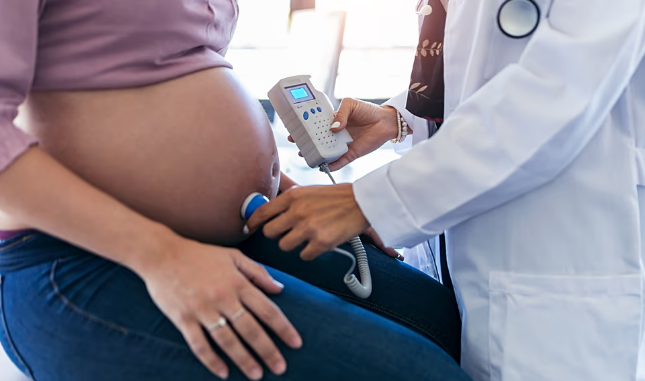
Children born with certain infections acquired during pregnancy face substantially higher risks of autism and intellectual disability later in life, according to a study of more than 3.7 million people in Sweden.
Researchers found that children with congenital infections were about three times more likely to be diagnosed with autism and more than seven times more likely to receive a diagnosis of intellectual disability than those without such infections.
The findings suggest that infections transmitted from a pregnant woman to her foetus may have lasting effects on brain development, although the study identifies an association rather than proving that the infections directly cause autism or intellectual disability.
The research focused on TORCH infections, a group that includes syphilis, rubella, toxoplasmosis, cytomegalovirus and herpesvirus. These infections can cross the placenta and affect the developing foetus, potentially increasing the risk of miscarriage, stillbirth and other pregnancy complications.
“Although these congenital infections are rare, some of them can be prevented, which makes them important from a public health perspective,” said Reneé Gardner of the Department of Global Public Health at Karolinska Institutet, who contributed to the study.
The researchers examined people born in Sweden between 1987 and 2021 and followed them for up to 30 years. Among the 3.7 million participants, 975 had been diagnosed with a congenital TORCH infection.
Although congenital infections accounted for only a small proportion of autism cases across the population, the risk among affected children was considerably higher. The researchers estimated that about one in five children born with a TORCH infection could later develop autism.
The study also found elevated risks of intellectual disability across different levels of severity. The risk of severe to profound intellectual disability was as much as 30 times higher among children with a congenital infection than among those without one.
The researchers found evidence of an impact on educational outcomes even among people who were not diagnosed with autism or intellectual disability. A total of 420 participants with a TORCH infection showed poor school performance without receiving either diagnosis.
Congenital cytomegalovirus, or CMV, is the most common of these infections globally and affects roughly one in 150 newborns. Its burden is substantially greater in low- and middle-income countries.
The researchers said the findings highlight the importance of prevention, particularly in regions where these infections are more common. They pointed to vaccination programmes and other preventive measures as important tools for reducing congenital infections.
They also called for improved identification of affected newborns. Current screening systems, including those used in Sweden, may miss asymptomatic infections because universal screening for TORCH infections is not routinely carried out.
The authors said stronger screening and prevention strategies could help identify children at risk earlier and improve long-term support and care.

Artificial intelligence chatbots may make faster and more confident decisions than human doctors when determining which patient should receive a life-saving kidney transplant, but a new study found that the systems often rely on fewer factors and show less sensitivity to the ethical complexity of such choices.
Researchers from Penn State University in the United States compared decisions made by large language models (LLMs) with choices made by people in earlier studies on kidney allocation. The researchers presented AI models with hypothetical cases based on existing datasets in which human participants had previously chosen between two patients competing for a single available kidney.
The patients were described using characteristics including age, health and drinking habits. Both were considered eligible for the transplant, requiring the decision maker to determine which patient should receive the available organ.
The researchers tested the AI systems in several ways. Some scenarios focused on individual characteristics, while others combined several traits to examine how the models handled competing considerations. In some tests, participants and AI systems were also given the option of flipping a coin, allowing researchers to assess indecision as part of moral decision-making.
Human participants generally placed greater importance on age, often favouring younger patients over older patients. Many of the AI models, however, placed greater weight on lower alcohol consumption.
Hadi Hosseini, the study’s lead researcher at Penn State University, said the findings showed that AI chatbots can diverge from human values when weighing characteristics of patients.
The researchers found that human decisions tended to consider several factors together and were more sensitive to context. LLMs, by contrast, frequently focused on a single characteristic when making their choices.
Another difference involved uncertainty. Human participants were more likely to recognise that organ allocation can involve competing ethical considerations and that there may not be one objectively correct answer. AI models generally showed little hesitation and committed to one choice.
John Dickerson, chief executive officer of Mozilla.ai and a collaborator on the study, said humans recognise ambiguity when allocating scarce resources and use debate to shape how such decisions are made.
The findings come as AI systems are increasingly being used in healthcare for clinical workflows, diagnosis, treatment planning and decisions involving limited medical resources.
The researchers said kidney allocation presents a particularly important test because decisions over deceased-donor and living-donor organs involve medical, ethical and moral considerations.
Hosseini said the ethical stakes are high because decisions involving organ allocation can directly affect patients’ lives. He stressed that the study was not intended to encourage replacing professional medical judgment with AI.
Instead, the researchers said understanding how AI systems behave in high-stakes situations is becoming increasingly important as individuals, organisations and businesses use AI to make decisions or provide recommendations.

Finland and Sweden Scramble Jets as Europe Raises Alert Over Russian Threats

European Governments Expand Fuel Tax Cuts and Energy Support as Prices Surge

Malta and Cyprus Rank Among Europe’s Most Tax-Friendly Destinations for Relocating Workers

European Stocks Slip as Oil Prices and US Bond Yields Keep Investors Cautious

US Navy Confirms Eight Suicide Attempts During Extended Carrier Deployment

UK Banks Complete First Interbank Transfers Using Tokenised Deposits

Europe Faces Higher Jet Fuel Costs Despite Supply Improving

More Europeans Take Up Sport, but Major Gaps Remain Across Countries

Alibaba Expands European Data Centres and Unveils New AI Chip

Congenital Infections Linked to Higher Risks of Autism and Intellectual Disability

Meta Acquires Tilda Swinton VR Doc ‘Impulse: Playing With Reality’

China’s Historic Olympic Victory Sparks National Pride Amid Controversy

Saudi Arabia’s Model for Sustainable Aviation Practices

Recent Developments in Small Business Taxes

Effective Drain Cleaning: A Key to a Healthy Plumbing System

Who was Ebrahim Raisi and his status in Iranian Politics?

Keely Hodgkinson Wins Britain’s First Athletics Gold at Paris Olympics in 800m

Carrectly: Revolutionizing Car Care in Chicago

Nobel Laureate Muhammad Yunus Proposed as Head of Bangladesh’s Interim Government Following Hasina’s Resignation

Chinese Hackers Infiltrate Major U.S. Telecom Firms in Possible National Security Breach

Sony WF-10XM4: Headphones Are Our Absolute Favorite

10 Places You Can’t Miss If It’s Your First Time in European

New Census Data Will Shake Up Alabama Politics

16 Top of Our Favorite Outdoor Clothing Brands

Fashionable Summer Accessories to Dress Up Your Travel Look

How Sleeping Less than 7 Hours a Night Can Lead to Weight Gain
-
 Entertainment2 years ago
Meta Acquires Tilda Swinton VR Doc ‘Impulse: Playing With Reality’
-
 Sports2 years ago
China’s Historic Olympic Victory Sparks National Pride Amid Controversy
-
 Business2 years ago
Saudi Arabia’s Model for Sustainable Aviation Practices
-
 Business2 years ago
Recent Developments in Small Business Taxes
-
 Home Improvement2 years ago
Effective Drain Cleaning: A Key to a Healthy Plumbing System
-
 Politics2 years ago
Who was Ebrahim Raisi and his status in Iranian Politics?
-
 Sports2 years ago
Keely Hodgkinson Wins Britain’s First Athletics Gold at Paris Olympics in 800m
-
 Business2 years ago
Carrectly: Revolutionizing Car Care in Chicago