
News
Russia Launches Largest Aerial Assault of War on Ukraine, Killing 12 Amid Prisoner Swap





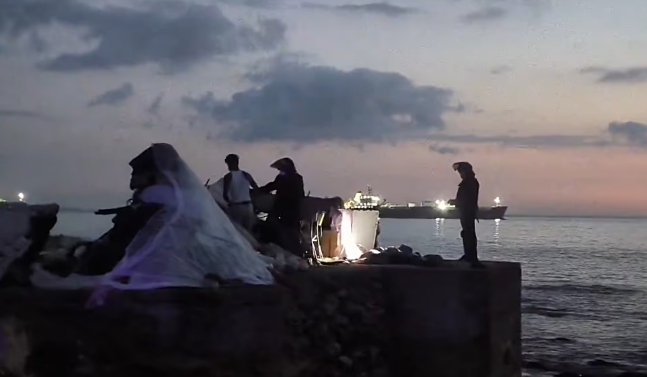
Spanish police have cleared Guano beach in Ceuta, where around 400 migrants had been living, ahead of a visit by King Felipe VI and Queen Letizia scheduled for October 13.
The operation began shortly after 8 a.m. on Sunday and involved the National Police, riot control units, immigration officials, the Civil Guard and local police. It was the final remaining migrant camp on the Spanish North African territory to be cleared following earlier operations at Tarajal and Trampolín beaches.
Migrants were gathered and transported by bus to the Temporary Centre for Foreigners (CATE), where authorities will begin registering their details. They are then expected to be accommodated in temporary reception facilities established by the government, including a camp at the port.
Some migrants left Guano beach before officers arrived, taking their belongings and heading towards nearby hills. Similar scenes occurred during earlier clearances, when some people avoided registration and returned to the beaches later, sometimes when food was distributed.
The latest operation follows a major wave of irregular migration from Morocco that brought more than 70,000 people to Ceuta at the end of July, according to the report.
Minors separated from adults
Police identified several minors during Sunday’s operation and gathered them separately from adult migrants. They are expected to be transferred to appropriate facilities for children.
Some young migrants carried signs asking authorities to place them in a centre for minors. Local media reported that several children had previously attempted to register with authorities but had subsequently left reception facilities or avoided the process.
The authorities began transferring migrants from Trampolín beach to temporary accommodation centres in Loma Margarita and El Embolsamiento on August 20. However, some later returned to the beach, repeating a pattern seen after a temporary reception facility at Ceuta’s port ran out of space.
Clean-up begins after eviction
After the camp was cleared, cleaning teams began removing tents, rubbish and other debris left behind by residents. The work is expected to continue throughout Sunday because of the amount of waste accumulated during the settlement’s long existence.
Environmental experts, working with the Ministry of the Environment, will assess the damage caused to the beach.
The camp had been associated with serious incidents, including two deaths, fights, thefts and other disturbances. Over time, an informal community also developed, with street markets and other activities taking place around the settlement.
The clearance comes two days before the royal couple’s visit to Ceuta. Felipe VI and Letizia are scheduled to attend a tribute to people who died at sea during the mass crossing at the Tarajal border.
After spending the night in Ceuta, the king and queen will travel to Melilla. The overnight stay will mark the first time a Spanish monarch has spent the night in Ceuta since King Alfonso XIII visited in 1904 and 1927.

Scientists have warned that a major rockslide could occur at Hochvogel, a mountain on the border between Germany and Austria, with between 250,000 and 400,000 cubic metres of rock potentially breaking away from its summit.
The warning follows a smaller collapse in June, when around 2,000 cubic metres of rock fell from the mountain in the Allgäu Alps. Researchers monitoring the site say movement along existing cracks has accelerated, raising concerns that a much larger section could become unstable.
Hochvogel stands 2,592 metres above sea level and forms part of the Allgäu High Alps. A major fissure in the summit has existed since the 19th century and has gradually widened. Records indicate that the crack was once approximately shoulder-width, but it now stretches several metres across.
Scientists from the Technical University of Munich (TUM) have monitored the mountain for 12 years. Since 2018, their work has included permanently installed sensors and measuring equipment, alongside drone surveys using laser scanners.
More than 30 sensors now collect data around the summit, recording movements with millimetre precision. During the spring, instruments detected movement of up to five millimetres per week. By comparison, the Alps generally shift by an average of around 1.8 millimetres a year.
Geology professor Michael Krautblatter, who leads the TUM research team, returned to the summit with colleagues in early October to inspect the terrain and monitoring equipment.
The main fissure was described by TUM in 2024 as being up to six metres wide, around 35 metres long and approximately 60 metres deep. Researchers are also concerned about a newer crack on the south-west ridge, known as “Fissure 6”, where the highest movement rates have been recorded.
The instruments transmit information several times an hour, allowing researchers to assess changes remotely and identify potential warning signs. Krautblatter told the German Alpine Club that similar early-warning systems are operating at only two other locations, Partnach Gorge and Höllental Gorge.
Scientists believe weather conditions could be contributing to the increasing instability. Johannes Leinauer, a member of the TUM team, told Deutschlandfunk that heavy rainfall, thunderstorms and melting snow had a clear influence on movement at Hochvogel.
He added that thunderstorms were becoming more frequent and intense because of climate change, potentially affecting the speed and frequency of rockfalls.
The mountain has long been closed to climbers approaching from the Austrian side, although the route from Germany remains open. Researchers hope continuous monitoring will help authorities identify dangerous conditions and restrict access before a collapse occurs.
Russia’s intensified attacks on Ukraine are raising doubts about the European Union’s financial support strategy, as Kyiv faces mounting economic damage, growing military needs and a significant funding shortfall for 2027.
European diplomats acknowledge that the war is likely to continue longer than previously expected, putting pressure on the bloc to reconsider how it will finance Ukraine’s defence and public services in the coming years.
“This war will last longer than we thought,” one European diplomat said, warning that Ukraine’s needs would continue to grow without a clear agreement on how additional assistance would be funded.
Another diplomat said the EU needed to demonstrate that its position remained unchanged, maintaining support for Ukraine while increasing pressure on Moscow.
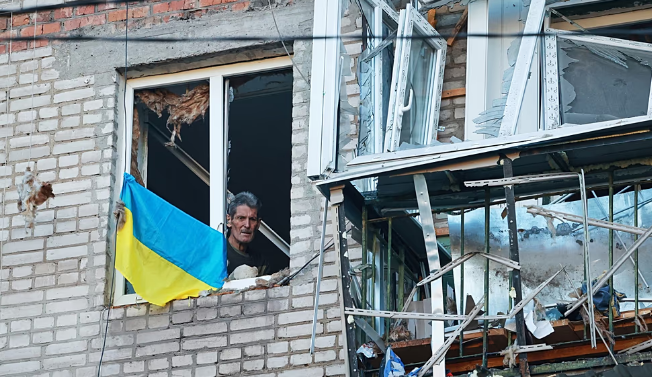
Russian attacks have struck infrastructure, including railways, bridges, power stations, warehouses, medical facilities, schools and data centres. Recent strikes have killed civilians, including more than 30 people in Kramatorsk after a glide bomb attack set two public buses on fire, according to reports cited by Euronews.
Kyiv also suffered a major power disruption, raising concerns about the impact of further attacks as winter approaches. Ukrainian President Volodymyr Zelenskyy condemned the bombardment, describing it as terror against civilians, while European Commission President Ursula von der Leyen said the attacks amounted to war crimes.
The escalation is also damaging Ukraine’s economy. Repeated airstrikes have disrupted businesses, forced closures, increased costs and reduced profits. Russia’s blockade in the Black Sea has added to the pressure by restricting Ukrainian farmers’ ability to export grain, cutting off an important source of national income.
The worsening situation has placed the EU’s €90 billion support loan under scrutiny. Agreed last year, the package was intended to cover about two-thirds of Ukraine’s financial needs in 2026 and 2027, based on expectations that the war could end this year.
Ukraine’s Finance Minister Sergii Marchenko has warned that preparing the 2027 budget will be particularly difficult. Kyiv estimates it needs international assistance to address a funding gap of $78 billion, equivalent to about €70 billion.
The European Commission has not endorsed that full estimate, but Economy Commissioner Valdis Dombrovskis acknowledged on Friday that Ukraine faced a substantial shortfall. Brussels plans to provide €45 billion next year under the existing loan and has promised faster payments, subject to domestic reforms.
EU leaders have yet to formally reopen discussions on additional assistance, as member states negotiate the bloc’s next long-term budget. However, diplomats expect the issue to return to the agenda amid rising borrowing costs, sluggish economic growth and opposition from far-right parties.
The absence of US aid, previously a major source of military support, has further complicated the outlook.
Some EU countries have renewed calls to use frozen Russian assets to finance Ukraine, arguing that the existing loan will not be sufficient. Belgium, which holds much of the immobilised assets, has resisted the proposal, while France and Italy remain cautious.
Issuing more joint EU debt is also politically difficult because of rising borrowing costs. Increasing national contributions could place a disproportionate burden on Germany, the Netherlands and Nordic countries.
Brussels is therefore urging allies, including the United Kingdom, Canada and Japan, to increase their support while officials examine alternative funding options.
Dombrovskis said the EU remained committed to ensuring Ukraine received the financial assistance it needed for as long as the war continued.

France Considers Exit Tax on Crypto Gains and €10,000 Fine for Undeclared Wallets

Portuguese Teenagers Report Lower Drug and Alcohol Use, but High-Risk Behaviour Persists

Lancet Study Warns AI Misuse and Nuclear War Could Threaten Humanity by 2100

Spanish Police Clear Ceuta’s Last Migrant Camp Ahead of Royal Visit

Macron to Push ‘Made in Europe’ Agenda at Final Paris Motor Show Visit

Scientists Warn of Possible Major Rockslide at Germany-Austria Border Mountain

EU May Need to Cut Gas Consumption by 7% This Winter as Reserves Hit Record Low

Russian Escalation Raises Questions Over EU’s €90 Billion Ukraine Support Plan

Teacher Salaries Across Europe: Germany Leads as Major Pay Gaps Persist

Etihad Airways and flydubai Cancel Saudi Flights After Riyadh Airport Attacks

Meta Acquires Tilda Swinton VR Doc ‘Impulse: Playing With Reality’

China’s Historic Olympic Victory Sparks National Pride Amid Controversy

Saudi Arabia’s Model for Sustainable Aviation Practices

Recent Developments in Small Business Taxes

Effective Drain Cleaning: A Key to a Healthy Plumbing System

Who was Ebrahim Raisi and his status in Iranian Politics?

Keely Hodgkinson Wins Britain’s First Athletics Gold at Paris Olympics in 800m

Carrectly: Revolutionizing Car Care in Chicago

Nobel Laureate Muhammad Yunus Proposed as Head of Bangladesh’s Interim Government Following Hasina’s Resignation

Chinese Hackers Infiltrate Major U.S. Telecom Firms in Possible National Security Breach

Sony WF-10XM4: Headphones Are Our Absolute Favorite

10 Places You Can’t Miss If It’s Your First Time in European

New Census Data Will Shake Up Alabama Politics

16 Top of Our Favorite Outdoor Clothing Brands

Fashionable Summer Accessories to Dress Up Your Travel Look

How Sleeping Less than 7 Hours a Night Can Lead to Weight Gain
-
 Entertainment2 years ago
Meta Acquires Tilda Swinton VR Doc ‘Impulse: Playing With Reality’
-
 Sports2 years ago
China’s Historic Olympic Victory Sparks National Pride Amid Controversy
-
 Business2 years ago
Saudi Arabia’s Model for Sustainable Aviation Practices
-
 Business2 years ago
Recent Developments in Small Business Taxes
-
 Home Improvement2 years ago
Effective Drain Cleaning: A Key to a Healthy Plumbing System
-
 Politics2 years ago
Who was Ebrahim Raisi and his status in Iranian Politics?
-
 Sports2 years ago
Keely Hodgkinson Wins Britain’s First Athletics Gold at Paris Olympics in 800m
-
 Business2 years ago
Carrectly: Revolutionizing Car Care in Chicago