Connect with us

News

EU Bans Chinese Firms from Large Medical Device Contracts Amid Escalating Trade Dispute

Published

on

The European Union has formally barred Chinese companies from bidding on public contracts for medical devices exceeding €5 million, marking a significant escalation in its trade dispute with Beijing. The move, confirmed by the European Commission on Wednesday, is the first enforcement action under the bloc’s International Procurement Instrument (IPI) and aims to address what Brussels calls “discriminatory” restrictions against European suppliers in China.

The ban applies to all government tenders across the EU single market involving medical equipment valued above the €5 million threshold. Additionally, any successful bids must ensure that less than 50% of their components originate from China. Exceptions will be granted only when no alternative suppliers are available.

“This is about restoring fairness,” said EU Trade Commissioner Maroš Šefčovič. “We want to ensure that European companies have the same access to China’s market as Chinese firms enjoy in ours. The goal is a level playing field, not confrontation.”

The Commission’s decision follows a detailed investigation into China’s procurement laws, which found substantial evidence that EU-made medical devices are systematically excluded from Chinese public tenders. The report cited opaque regulatory approvals, discriminatory certification practices, vague national security clauses, and unsustainable pricing requirements that effectively bar European participation.

According to the Commission, more than 87% of procurement contracts for medical devices in China involved practices that disadvantaged European firms. These findings, the EU argues, justify the reciprocal measures now being implemented.

The move comes at a particularly sensitive moment in EU-China relations, as both sides attempt a cautious reset following years of growing economic friction. A high-level EU-China summit is scheduled to take place in Beijing in July, where trade will likely top the agenda.

See also  Britain and Norway Step Up Naval Patrols to Protect Undersea Infrastructure from Russia

The medical devices ban is part of a broader tit-for-tat dynamic shaping the relationship. Earlier this month, the EU imposed tariffs of up to 45% on Chinese electric vehicle imports, citing concerns over state subsidies. In response, Beijing extended its anti-dumping investigation into European pork products by six months, threatening a sector crucial to countries like Spain and Denmark.

While the Commission insists its actions are compliant with World Trade Organization (WTO) rules, the move underscores the growing push in Brussels for “strategic autonomy” and a more assertive trade stance, especially in sectors deemed critical to public health and economic resilience.

China is one of the EU’s largest trading partners in medical devices, accounting for 11% of exports in 2022. However, EU firms have struggled for years to penetrate China’s public procurement market, long criticised for its “Buy China” policy.

With tensions mounting ahead of next month’s summit, Wednesday’s announcement is expected to further strain relations while setting a precedent for the EU’s future trade enforcement strategy.

News

Trump Weighs Troop Cuts in Spain and Italy Amid Growing Rift Over Iran War

Published

on

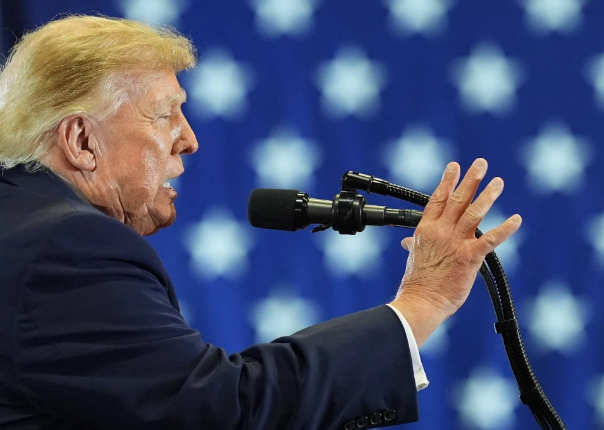
President Donald Trump said on Friday that he is considering reducing the US military presence in Spain and Italy, widening a dispute with key NATO allies over their opposition to the ongoing war with Iran.

Speaking to reporters in the Oval Office, Trump suggested both countries had failed to adequately support Washington’s military campaign in the Middle East.

“Yeah, probably, I probably will. Why shouldn’t I?” Trump said when asked whether he would withdraw troops from the two countries. He added that Italy “has not been of any help” and described Spain as “absolutely horrible.”

The comments came just one day after Trump floated a similar proposal regarding Germany, following criticism from German Chancellor Friedrich Merz over the administration’s handling of the Iran conflict.

Trump has repeatedly argued that the US-led campaign against Iran serves the security interests of the entire Western alliance. He has expressed frustration that several NATO members have not provided stronger military or political backing, particularly in efforts to counter Iran and reopen the Strait of Hormuz.

According to the latest Pentagon figures, the United States has about 36,000 troops stationed in Germany, roughly 12,600 in Italy and nearly 3,800 in Spain. While Trump did not specify the scale of any potential reductions, reports in US media suggest the cuts under consideration could be substantial.

Tensions with Italy have grown in recent weeks after Prime Minister Giorgia Meloni publicly questioned the war. Trump, once a close ally of the Italian leader, accused her of lacking the courage to fully support the campaign.

See also  Three Dead After Medical Helicopter Crashes Into Sea in Southwestern Japan

Relations with Spain have been strained for longer. Disagreements initially emerged over Madrid’s stance on the war in Gaza and later expanded to include defence spending and NATO commitments. Spain has resisted Trump’s push for alliance members to raise defence spending to 5 per cent of gross domestic product.

Prime Minister Pedro Sánchez has said Spain will only increase military spending when it aligns with national interests. That position has drawn repeated criticism from Washington.

The Trump administration has previously threatened trade measures against Spain and has even raised the possibility of suspending the country from NATO. Reports last week indicated that such discussions have resurfaced amid Spain’s refusal to support the Iran campaign.

The diplomatic tensions come as the war enters its third month, with no clear end in sight. The conflict has disrupted global energy markets, especially after the closure of the Strait of Hormuz. Brent crude settled at around $114 a barrel on Friday, sharply higher than the roughly $70 level seen before the conflict began.

Trump’s latest remarks are likely to deepen divisions within NATO at a time when alliance unity is already under strain.

Continue Reading

News

Trump Threatens Troop Reduction in Germany Amid Dispute With Chancellor Merz

Published

on

US President Donald Trump has suggested that the United States could reduce its military presence in Germany, escalating tensions with German Chancellor Friedrich Merz over the handling of the conflict involving Iran.

In a social media post on Wednesday, Trump said Washington was reviewing the possibility of withdrawing some American troops from Germany, with a decision expected soon. The announcement comes amid a growing public disagreement between the two leaders over US strategy in the Middle East.

“The United States is studying and reviewing the possible reduction of troops in Germany,” Trump wrote, signalling that the longstanding American military footprint in Europe’s largest economy could once again be under scrutiny.

Germany hosts some of the most important US military facilities outside the United States, including Ramstein Air Base, the headquarters of US European Command and US Africa Command, and Landstuhl Regional Medical Center, the largest American military hospital abroad.

Trump’s latest warning follows comments by Merz earlier this week, in which the German leader said Washington was being “humiliated” by Iran and questioned the effectiveness of the US approach to the conflict. Merz has repeatedly called for a clearer strategy and a diplomatic resolution to the crisis.

Despite the sharp exchange, Merz said on Wednesday that his personal relationship with Trump remained strong. He added, however, that he had harboured concerns from the outset about the military campaign against Iran.

The two leaders met at the White House in March, shortly after the United States and Israel launched strikes on Iranian targets. At the time, Merz said Germany was prepared to work closely with Washington on future regional strategy, while also warning that a prolonged conflict could inflict serious damage on the global economy.

See also  Hezbollah Weighs US-Israeli Ceasefire Proposal Amid Escalating Conflict

That concern has intensified as the closure of the Strait of Hormuz continues to disrupt global energy markets. The vital waterway, through which about one-fifth of the world’s oil supply normally passes, has remained effectively shut since fighting began in late February.

“We are suffering considerably in Germany and in Europe from the consequences of the closure of the Strait of Hormuz,” Merz said, urging all sides to seek a resolution.

Trump, however, has shown increasing frustration with Germany’s stance. In a post on Tuesday, he criticised Merz’s remarks on Iran and accused the chancellor of misunderstanding the threat posed by Tehran’s nuclear ambitions.

This is not the first time Trump has threatened to reduce US troop levels in Germany. During his first term, he announced plans to withdraw nearly 10,000 troops, citing Berlin’s defence spending. That proposal was later halted by the Biden administration.

Any renewed reduction would likely raise fresh questions about US commitment to NATO and European security at a time of heightened global instability.

Continue Reading

News

Unverified Videos Show Armed Women in Iran as State Projects Wartime Unity

Published

on

Videos circulating on social media appear to show armed Iranian women taking part in military-style parades in several cities, in what state-linked outlets have described as a “jihad of women” in support of Iran’s wartime mobilisation.

The footage, which has not been independently verified, reportedly shows women carrying assault rifles, riding in armoured vehicles and marching alongside members of the Islamic Revolutionary Guard Corps (IRGC). The scenes are said to have been filmed in Tehran, Mashhad, Qom, Rasht, Bushehr and Qazvin.

In the videos, women can be seen travelling in organised convoys through city streets while pro-government chants ring out. Some clips have been aired on Iranian state television, while media outlets affiliated with the IRGC have presented the displays as evidence of broad public support for the Islamic Republic amid its conflict with the United States and Israel.

The imagery marks a notable shift in Iran’s wartime propaganda. Since the 1979 Islamic Revolution, women have frequently been portrayed in official narratives as supporters of the state, often as mothers, caregivers or volunteers in auxiliary roles. During the Iran-Iraq war in the 1980s, such symbolism was widely used to bolster morale. Public displays of women bearing arms in urban military parades, however, are far less common.

Questions have emerged about the authenticity of some of the footage. Analysts and social media users have pointed to visual irregularities, suggesting that certain clips may have been digitally altered or generated using artificial intelligence. No conclusive evidence has been presented, and Iranian authorities have not commented on claims that any of the videos may be fabricated.

See also  Trump to Host Historic UFC Fight on White House Lawn as Part of U.S. Semiquincentennial Celebrations

One detail that has drawn particular attention is the appearance of some women without the full hijab required under Iranian law. That has prompted further scrutiny, given the government’s strict enforcement of dress regulations over many years.

The videos have surfaced at a time of intense pressure on Iran’s leadership. The country is grappling with the fallout from a prolonged conflict with the United States and Israel, while also facing deep domestic unrest.

Large-scale protests erupted late last year after the collapse of the Iranian rial, spreading to cities across the country. The demonstrations were met with a severe crackdown in January. Casualty estimates vary widely, with official figures placing the death toll in the low thousands, while human rights groups and independent observers believe the number may be significantly higher.

Iran has maintained tight restrictions on internet access since the crackdown, making independent verification of events inside the country increasingly difficult.

Against that backdrop, the emergence of these videos appears aimed at projecting an image of national unity, resilience and public support as the government confronts both external conflict and internal dissent.

Continue Reading

Trending