
News
Iran Says Hormuz Can Reopen Within Seven Days as Oil Exports Come Under Pressure

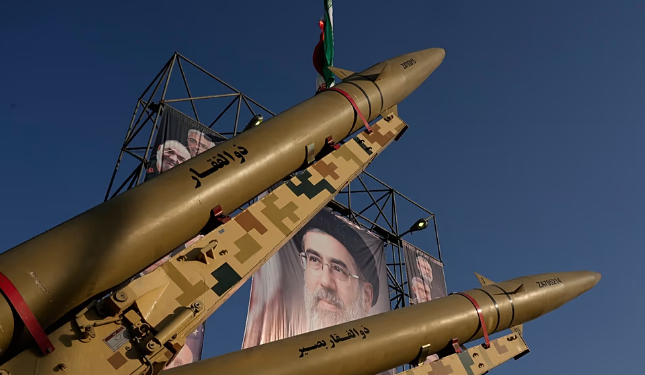
Iran’s military said it retained full control of the Strait of Hormuz on Monday, while Foreign Minister Abbas Araghchi said the strategic waterway could be fully reopened within seven days if Tehran’s conditions were met and hostile measures against the country were lifted.
The statements came as Iran faced growing economic pressure, with the rial falling to record lows, Oil Minister Mohsen Paknejad resigning and the United States claiming that Tehran had not loaded any crude onto tankers during September.
Brigadier General Aziz Jafari, commander of Iran’s Khatam al-Anbiya Joint Air Defence Headquarters, said all movements through the Strait remained under the control of the Iranian armed forces despite changes in US tactics.
“All movements (in Hormuz) are under the control of the armed forces of the Islamic Republic,” Jafari said.
US Treasury Secretary Scott Bessent said on Thursday that Iran had not loaded crude oil onto tankers during September, arguing that the Trump administration was targeting Tehran’s main source of revenue.
Iranian President Masoud Pezeshkian acknowledged in August that restrictions were disrupting oil exports, saying the country had previously been able to sell oil but was now unable to do so at the same level.
Paknejad’s resignation was officially attributed to family and personal matters. However, his departure came amid speculation about the impact of reduced oil exports on government finances. Before his resignation was announced, Paknejad said in a video carried by Iranian media that revenue from oil already sold would be collected and that the process would continue.
The acting oil minister has pledged to maximise production and maintain exports through new strategies.
Despite pressure on Iranian exports, oil shipments from other parts of the region remained high. Ship-tracking company Kpler estimated crude exports from the region excluding Iran at between 19.5 million and 22.5 million barrels per day during the final week of September, compared with a pre-war regional average of about 18 million barrels per day.
Iran’s currency has also come under severe pressure. The euro rose above 300,000 tomans on the informal market, while the US dollar reached 270,000 tomans, more than double its level of about 135,000 tomans at the beginning of the year. One toman is equal to 10 rials.
The UK Maritime Trade Operations agency reported at least one attack each day in the Strait of Hormuz or the Gulf of Aden since October 2.
Araghchi told foreign ambassadors in Tehran that the conflict could not be resolved militarily and called for negotiations based on fairness. He warned that any renewed military confrontation would trigger a stronger Iranian response.
Parliament Speaker Mohammad Bagher Ghalibaf said Tehran had received US proposals through intermediaries but rejected what he described as one-sided demands.
He said the Strait would remain closed until Iran’s seven conditions, based on the Islamabad memorandum, were met.











France and Britain are discussing the possible termination of their “one in, one out” migration agreement, a French interior ministry source said on Wednesday, raising questions over a key arrangement aimed at reducing small-boat crossings across the English Channel.
“We are discussing the terms of withdrawal from the agreement with the British,” the source said, without providing a reason for France’s decision to seek an end to the arrangement. Neither France’s interior ministry nor Britain’s Home Office immediately provided further details.
The agreement came into force in August 2025 as a pilot scheme designed to deter people from making dangerous journeys across the Channel in small boats. Under the arrangement, Britain could return eligible people who had arrived by small boat to France. In return, France would transfer an equivalent number of eligible people to Britain through a legal route, subject to identity, security and eligibility checks.
The arrangement was extended in 2026 through an exchange of letters between the two governments.
The scheme established time limits for returns. Britain was expected to return an eligible person within 14 days of their arrival, while transfers into Britain were subject to the necessary checks and documentation. Unaccompanied minors and people considered to present certain security risks were excluded from the French return arrangements.
Official British figures show that 1,087 people had been returned to France under the agreement by June 30, 2026, while 1,117 people had been transferred from France to Britain.
The arrangement has formed part of wider cooperation between the two countries on Channel migration. In April, Britain and France also announced measures to increase patrols, intelligence sharing and other operations intended to disrupt people-smuggling networks and reduce crossings.
The possible withdrawal comes as both governments continue to face pressure over migration across the Channel. Thousands of people have attempted the crossing in small boats, prompting increased cooperation between French and British authorities.
A French interior ministry source did not explain whether the discussions reflected concerns over the operation of the agreement, its results or wider migration policy.
The British government has not confirmed whether it is seeking changes to the arrangement or whether negotiations are focused on a possible replacement.
Any decision to end the agreement would affect one of the mechanisms created by the two governments to manage small-boat arrivals and provide an alternative legal route for some people with connections to Britain.
For now, discussions between the two governments are continuing, with the terms and timing of any possible withdrawal yet to be announced.

Investors Face Limited Choices as Robotics Boom Stays Locked in Private Markets

Optogenetics Pioneers Win 2026 Nobel Prize in Medicine

Iran Says Hormuz Can Reopen Within Seven Days as Oil Exports Come Under Pressure

Uruguay Tops Global Retirement Ranking as Europe Dominates Top 10

SpaceX crew reaches International Space Station in record US transit

Guirassy scores as Guinea edge Kenya in AFCON 2027 qualifier

Trump, Vance begin midterm campaign push as Republicans confront economic concerns

Binance Faces EU Regulatory Scrutiny Over Continued Service to Customers

Migraine Affects 1.3 Billion People Worldwide as Portugal Faces Diagnosis Gap

Air France-KLM and Lufthansa Submit Final Bids for TAP Stake

Meta Acquires Tilda Swinton VR Doc ‘Impulse: Playing With Reality’

China’s Historic Olympic Victory Sparks National Pride Amid Controversy

Saudi Arabia’s Model for Sustainable Aviation Practices

Recent Developments in Small Business Taxes

Effective Drain Cleaning: A Key to a Healthy Plumbing System

Who was Ebrahim Raisi and his status in Iranian Politics?

Keely Hodgkinson Wins Britain’s First Athletics Gold at Paris Olympics in 800m

Carrectly: Revolutionizing Car Care in Chicago

Nobel Laureate Muhammad Yunus Proposed as Head of Bangladesh’s Interim Government Following Hasina’s Resignation

Chinese Hackers Infiltrate Major U.S. Telecom Firms in Possible National Security Breach

Sony WF-10XM4: Headphones Are Our Absolute Favorite

10 Places You Can’t Miss If It’s Your First Time in European

New Census Data Will Shake Up Alabama Politics

16 Top of Our Favorite Outdoor Clothing Brands

Fashionable Summer Accessories to Dress Up Your Travel Look

How Sleeping Less than 7 Hours a Night Can Lead to Weight Gain
-
 Entertainment2 years ago
Meta Acquires Tilda Swinton VR Doc ‘Impulse: Playing With Reality’
-
 Sports2 years ago
China’s Historic Olympic Victory Sparks National Pride Amid Controversy
-
 Business2 years ago
Saudi Arabia’s Model for Sustainable Aviation Practices
-
 Business2 years ago
Recent Developments in Small Business Taxes
-
 Home Improvement2 years ago
Effective Drain Cleaning: A Key to a Healthy Plumbing System
-
 Politics2 years ago
Who was Ebrahim Raisi and his status in Iranian Politics?
-
 Sports2 years ago
Keely Hodgkinson Wins Britain’s First Athletics Gold at Paris Olympics in 800m
-
 Business2 years ago
Carrectly: Revolutionizing Car Care in Chicago
You must be logged in to post a comment Login