
Business
Italy Inflation Hits Three-Year High as Energy and Food Prices Rise

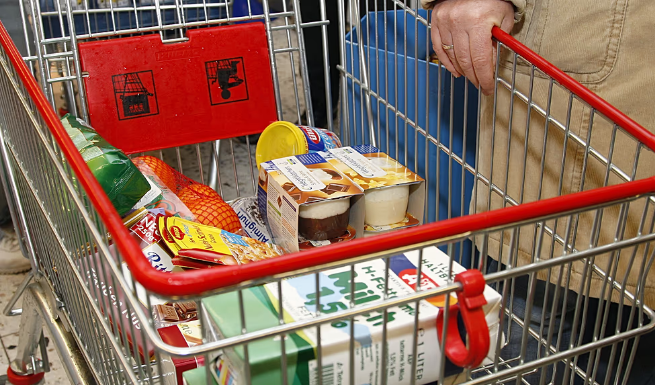
Italy’s annual inflation rate accelerated sharply in September, reaching its highest level in three years as energy and fresh food prices increased and consumer and business confidence weakened.
Preliminary figures from Italy’s national statistics agency Istat showed that consumer prices rose 0.7% in September from the previous month. The annual inflation rate climbed to 4.2%, up from 3.3% in August. It was the highest rate since September 2023, when inflation stood at 5.3%.
The latest increase was driven primarily by energy prices. The annual rate for energy goods accelerated to 22.3% from 17.1% in August. Regulated energy prices rose 25.9%, compared with 18.6% a month earlier, while non-regulated energy prices increased 22.2%, up from 17%.
On a monthly basis, regulated energy prices rose 5.9% and non-regulated energy prices increased 4.4%, according to Istat.
Food prices also added to pressure on households. Prices for unprocessed food, including fresh fruit and vegetables, increased 5.5% year on year, compared with 3.8% in August. They rose 2.2% from the previous month.
Prices for recreational, cultural and personal care services also accelerated, while transport services recorded a 2.5% monthly decline but still showed stronger annual growth than in August.
Underlying inflation remained considerably lower than the headline figure. Core inflation, which excludes energy and fresh food, increased from 1.5% to 1.7%. Inflation excluding energy rose from 1.7% to 2.0%. Goods prices increased 5.4% annually, compared with 4.1% in August, while services prices rose 2.6%, up from 2.4%.
The harmonised consumer price index, used for comparisons across the European Union, rose 2% month on month and 4.1% annually. The monthly increase was partly linked to the end of summer sales, which are treated differently under the harmonised measure.
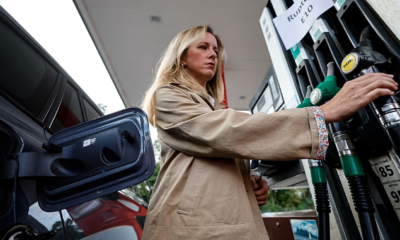
Fuel prices also remained high. Data monitored by Italy’s Ministry for Business and Made in Italy showed average self-service prices of about €2.11 a litre for petrol and €2.32 for diesel on the road network. Prices varied considerably between retailers and locations.
The rise in prices was accompanied by a sharp deterioration in sentiment. Istat said consumer confidence fell from 94.5 points in August to 91.2 in September, while its composite business confidence indicator dropped from 97.0 to 95.9.
The decline suggests that rising household costs and uncertainty are weighing on expectations for the months ahead. Istat noted that part of the movement in consumer confidence reflected changes to its survey organisation, although the underlying indicators also showed weaker assessments of current and future economic conditions.



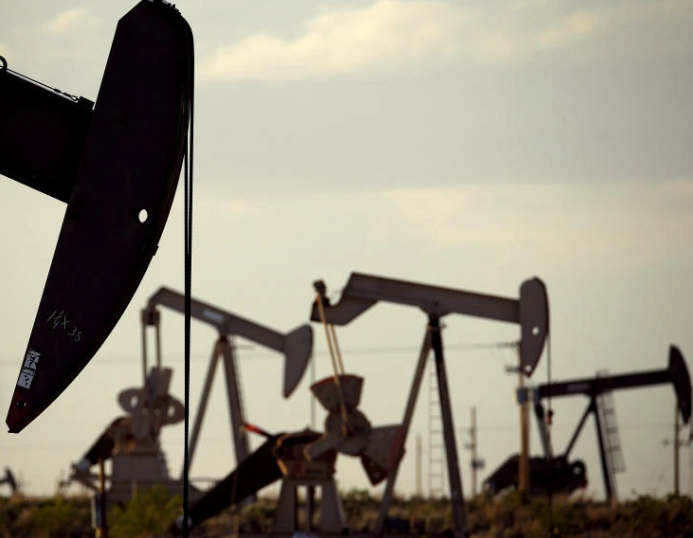
Oil prices rose on Wednesday as US President Donald Trump rejected reports that Washington was prepared to ease sanctions on Iran, while Qatar continued efforts to bring the two sides closer to negotiations.
Brent crude for November delivery, which expires on Wednesday, rose 71 cents, or 0.69 per cent, to $103.30 a barrel by 7:08 a.m. Saudi time. The more active December contract gained 35 cents to $96.51, while US West Texas Intermediate crude increased 43 cents, or 0.48 per cent, to $89.81.
Brent was on track for a monthly gain of about 14 per cent, which would be its strongest monthly increase since July. WTI was heading for a rise of around 4 per cent after briefly moving above $106 a barrel earlier in the month. Reuters reported that oil prices had fallen 2.5 per cent on Tuesday as traders focused on signs of recovering crude supplies from the Middle East.
The market has remained sensitive to developments surrounding the conflict and diplomatic efforts between Washington and Tehran. Qatar said it was continuing shuttle diplomacy between the United States and Iran in an attempt to establish common ground for negotiations.
Trump has denied reports that he was willing to provide Iran with sanctions relief and release frozen Iranian funds in exchange for steps by Tehran on its nuclear programme. The disagreement has added uncertainty to expectations for a possible diplomatic breakthrough.
At the same time, oil supplies from the Middle East have improved. Saudi Arabia resumed tanker loadings at its Red Sea port of Yanbu after restarting its East-West Pipeline, restoring an important route for crude exports.
Data from Kpler showed crude exports from major Middle Eastern producers reached 16.328 million barrels per day in September, the highest level since the conflict began in late February. However, exports remained about 3.2 million barrels per day below the February level of 19.513 million barrels per day.
The improving supply outlook has limited some of the upward pressure on prices, but traders remain concerned about the security of regional energy infrastructure and shipping routes.
In the United States, preliminary industry data indicated that crude and gasoline inventories increased last week while distillate stocks declined. Official figures from the US Energy Information Administration were due later on Wednesday.
US plans affecting diesel exports are also being monitored by traders. The Trump administration is considering allowing wider sales of red-dyed diesel as it seeks to ease fuel prices, while restrictions on diesel exports could influence refinery demand for crude.
The combination of recovering Middle Eastern supply and continued geopolitical uncertainty is keeping oil markets volatile as traders assess the prospects for diplomacy and the pace of the region’s export recovery.
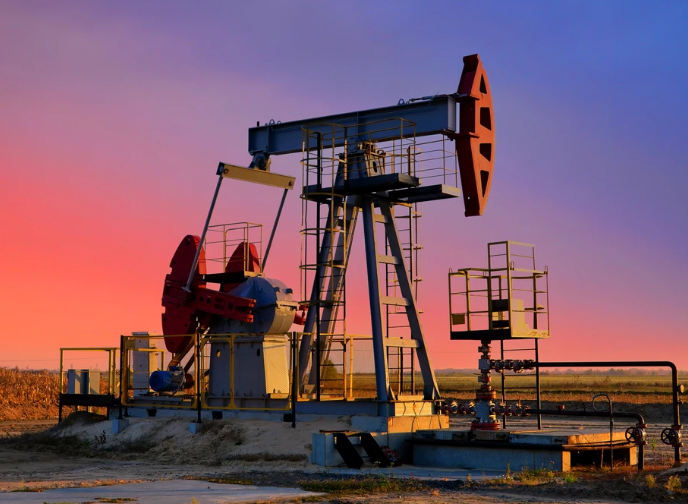
Oil prices rose for a second consecutive session on Tuesday as concerns about disruptions to Middle East supplies continued to outweigh signs that crude exports from the region were recovering.
Brent crude futures rose $1.49, or 1.4%, to $106.77 a barrel by 0326 GMT, while US West Texas Intermediate crude gained $1.34, or 1.5%, to $93.94. Both benchmarks had gained nearly $1 a barrel in the previous session.
The market remains focused on the impact of the conflict involving the United States, Israel and Iran, particularly the disruption to oil shipments through the Strait of Hormuz. The waterway is a major route for global energy supplies, making any prolonged restriction a significant concern for crude markets.
At the same time, oil exports from major Middle Eastern producers have been recovering. Preliminary data from Kpler showed regional crude exports reached 16.328 million barrels per day in September, the highest level since the conflict began in February. However, exports remained about 3.2 million barrels per day below the February level of 19.513 million bpd.
Saudi Arabia and the United Arab Emirates have accounted for much of the increase. Saudi Arabia has also resumed crude loadings from its Red Sea port of Yanbu after restarting the East-West Pipeline, which was shut following attacks earlier this month. Trade sources estimated Yanbu loadings at about 2 million barrels per day, while Kpler said pipeline throughput could rise further in coming days.
KCM Trade chief market analyst Tim Waterer said higher export volumes were becoming more visible, although some shipments were still being moved through alternatives such as ship-to-ship transfers. Such arrangements are less efficient and more expensive than normal shipping operations, he said, helping keep oil prices elevated.
Diplomatic efforts have also continued. US and Iranian officials held separate discussions with mediators as efforts resumed to find a way to end the seven-month conflict. Further negotiations are expected to consider a revised version of a seven-day proposal put forward by Iran during the United Nations General Assembly.
UOB analysts said the US-Iran confrontation remained a key risk for energy prices and inflation expectations, with uncertainty surrounding the Strait of Hormuz continuing to influence market sentiment.
Meanwhile, the United States is considering regulatory changes that could allow broader sales of red-dyed diesel, potentially reducing fuel costs for some buyers. The proposal has emerged as an alternative to a possible diesel export restriction as Washington seeks to ease pressure on domestic fuel prices.
The competing signals from recovering exports and continuing geopolitical risks are keeping oil markets volatile, with traders closely watching developments around shipping routes and diplomatic efforts.
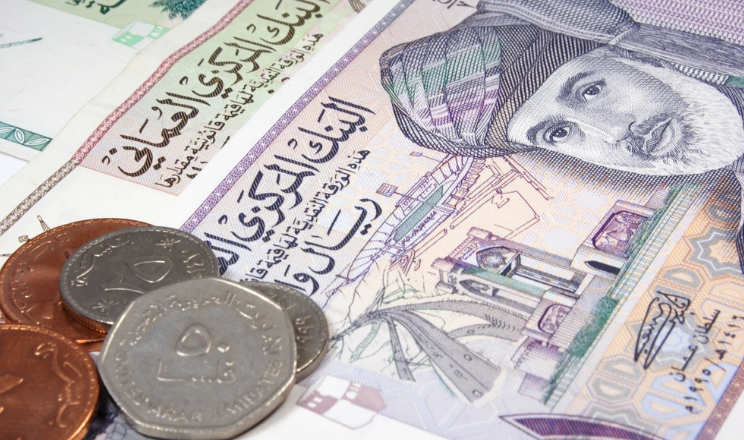
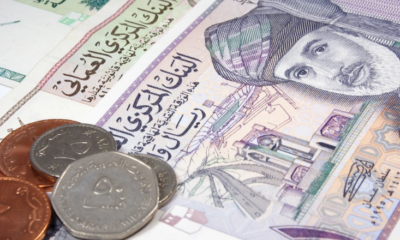
Assets held by Islamic banks and Islamic banking windows in Oman increased 10.5% year on year to 10.1 billion Omani rials ($26.2 billion) in July, according to data from the Central Bank of Oman.
The central bank’s monthly statistical bulletin showed that Islamic banking entities provided 8 billion rials in financing by the end of July, an increase of 10.9% compared with the same month last year. Deposits held by Islamic banks and windows also rose 10.3% to 8 billion rials.
The growth comes as Islamic banks across the Gulf Cooperation Council are expected to continue expanding at a faster pace than conventional lenders. Moody’s Ratings has said demand for Shariah-compliant financing and greater public-sector exposure across retail and corporate portfolios are supporting the sector.
The wider Omani banking sector also recorded strong credit growth during the period. Total credit extended by other depository corporations, which include conventional and Islamic banks, increased 12.2% to 38.3 billion rials.
Credit to the private sector rose 11.5% to 31.1 billion rials. Non-financial companies accounted for the largest share at 48.2%, followed by households at 42.7%. Financial companies accounted for 5.9%, while other sectors represented 2.6%.
Conventional banks recorded 12.7% growth in total credit, while lending to the private sector increased 11.9% to 23.8 billion rials.
Deposits also expanded across the banking system. Total deposits held by other depository corporations rose 13.2% to 37.3 billion rials, while private-sector deposits increased 12.7% to 24.7 billion rials.
Households accounted for 48.5% of private-sector deposits, followed by non-financial corporations at 35.2% and financial corporations at 14.6%.
At conventional banks, deposits increased 14.6% to 29.3 billion rials. Broad money supply grew 15% to 29.3 billion rials, with narrow money increasing 28% and quasi-money rising 9.9%.
Investment activity also increased. Conventional banks’ securities investments rose 26.2% to 7.3 billion rials. Holdings of government development bonds increased 20.4% to 2.5 billion rials, while foreign securities holdings rose 30.8% to 2.7 billion rials.
Borrowing costs eased during the year. The weighted average deposit rate at conventional banks fell to 2.19% from 2.57%, while the average lending rate declined to 5.31% from 5.51%. The overnight interbank lending rate dropped to 3.48% from 4.14%.
The central bank’s average repo rate also fell to 4.25% from 5%.
Oman’s nominal GDP contracted 2% in the first quarter of 2026, mainly because petroleum activity fell 11.7%. The non-hydrocarbon sector grew 5.9%, while real GDP expanded 2.6%. The average Omani oil price reached $83.90 a barrel in July, up 15.7% from a year earlier.

Italy Inflation Hits Three-Year High as Energy and Food Prices Rise

Oil Prices Rise as Trump Rejects Iran Sanctions Relief Reports

France and Britain Discuss Ending One-in, One-out Migration Deal

Explosions Rock Kyiv as Ukraine Reports Fresh Ballistic Missile Attack

Oil Prices Rise as Middle East Supply Risks Persist

Oman Islamic Banking Assets Rise 10.5% to OMR10.1 Billion

Birdwatching Offers New Approach to Stroke Recovery for People With Aphasia

AI Agents Take Centre Stage as Qatar Expands Training and Testing

Oil Rises as Markets React to Trump Rejection of Iran Truce Proposal

Chinese Car Brands Gain Ground in Norway Despite Rising Consumer Concerns

Meta Acquires Tilda Swinton VR Doc ‘Impulse: Playing With Reality’

China’s Historic Olympic Victory Sparks National Pride Amid Controversy

Saudi Arabia’s Model for Sustainable Aviation Practices

Recent Developments in Small Business Taxes

Effective Drain Cleaning: A Key to a Healthy Plumbing System

Who was Ebrahim Raisi and his status in Iranian Politics?

Keely Hodgkinson Wins Britain’s First Athletics Gold at Paris Olympics in 800m

Carrectly: Revolutionizing Car Care in Chicago

Nobel Laureate Muhammad Yunus Proposed as Head of Bangladesh’s Interim Government Following Hasina’s Resignation

Chinese Hackers Infiltrate Major U.S. Telecom Firms in Possible National Security Breach

Sony WF-10XM4: Headphones Are Our Absolute Favorite

10 Places You Can’t Miss If It’s Your First Time in European

New Census Data Will Shake Up Alabama Politics

16 Top of Our Favorite Outdoor Clothing Brands

Fashionable Summer Accessories to Dress Up Your Travel Look

How Sleeping Less than 7 Hours a Night Can Lead to Weight Gain
-
 Entertainment2 years ago
Meta Acquires Tilda Swinton VR Doc ‘Impulse: Playing With Reality’
-
 Sports2 years ago
China’s Historic Olympic Victory Sparks National Pride Amid Controversy
-
 Business2 years ago
Saudi Arabia’s Model for Sustainable Aviation Practices
-
 Business2 years ago
Recent Developments in Small Business Taxes
-
 Home Improvement2 years ago
Effective Drain Cleaning: A Key to a Healthy Plumbing System
-
 Politics2 years ago
Who was Ebrahim Raisi and his status in Iranian Politics?
-
 Sports2 years ago
Keely Hodgkinson Wins Britain’s First Athletics Gold at Paris Olympics in 800m
-
 Business2 years ago
Carrectly: Revolutionizing Car Care in Chicago
You must be logged in to post a comment Login